

Top 7 Tube Integrated Amplifiers for Music Lovers
Ranking in 2026

04.07.2026 17:26 | ~6 min read
Tube amplifiers are becoming a cult again - their not-too-high power is offset by a warm sound, while a certain right kind of nonlinearity, with its emphasis on even harmonics, guarantees a magical delivery that is very pleasant to the ear. With the right choice of speakers, a tube amplifier with an output of 2 x 8 W easily runs rings around 200 W of digital amplification, and that is no joke, which is why the segment keeps growing year after year and new brands keep appearing. In our new expert ranking we have gathered seven of the most interesting modern tube amplifiers priced up to twenty thousand euros.
A Few Words About Tube Amplification
Tubes (the cathode, or source of electrons; the anode, or collector of electrons; the control grids; and the whole assembly sealed inside a glass bulb) dominated amplification technology until roughly the 1960s. After that they were almost completely displaced by the more practical, compact and reliable transistor.
The revival, or second birth, of tube amplification began back in the 1990s, moving in step with the development of the High-End sector - audiophiles started to notice those qualities of tube sound that were unattainable with transistor gear.
And there are many such qualities - from the already-mentioned harmonics that are pleasant to the ear, of the second order (an octave) and the third order (an octave plus a fifth), as opposed to the odd-order distortions from transistors that are unpleasant to the human ear. Or the smooth clipping behavior: a transistor simply clips the signal once it reaches the limit of its capabilities and shifts to an aggressive presentation, whereas a tube, on entering that regime, produces soft clipping that feels like gentle compression. The low damping factor of tube amplifiers narrows the field of suitable speakers on the one hand, but on the other is precisely what is responsible for their airy and very agile sound.
Tube Amplifier Topologies
Push-pull - a pair (or quartet) of tubes work in antiphase, which provides higher power.
Ultra-linear - a variant of push-pull in which the output tubes operate between triode and pentode modes. It offers a compromise between power and refinement of presentation. Most modern push-pull amplifiers allow switching between ultra-linear and triode modes.
Single-ended - one tube per channel handles the full signal. Traditional sonic magic, but noticeably less power.
Class A or Class AB? - Class A means the output tubes conduct current throughout the entire cycle, but with large energy losses. In Class AB the tubes conduct current only during part of the cycle, but with transitional moments at the point of switching. Efficiency rises, while sound quality drops somewhat.
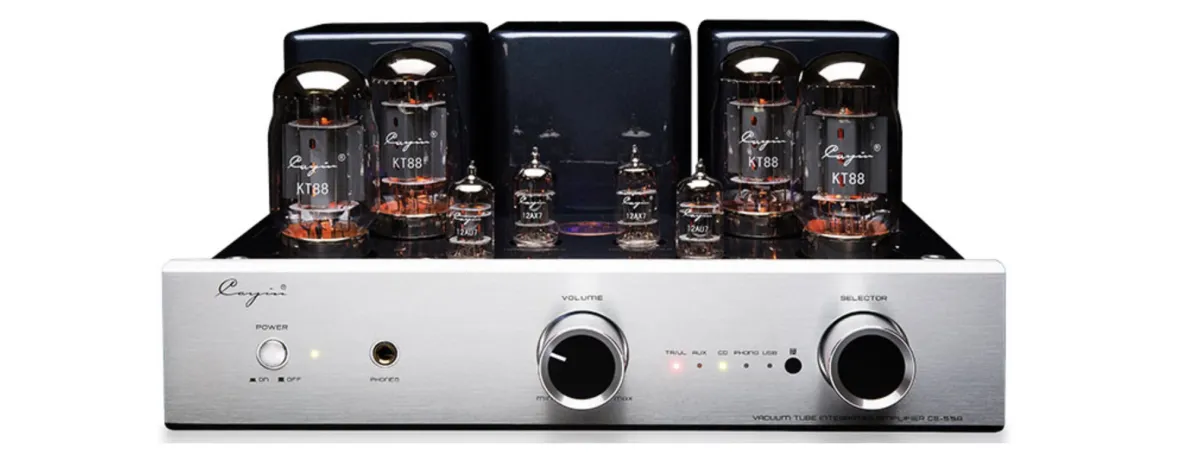
7. Cayin CS-55A - €1,790
Say affordable tube integrated, and you mean the Cayin CS-55A. A push-pull circuit based on KT88 or EL34 tubes and an output of 2 x 35 W in ultra-linear mode and 2 x 24 W in triode mode is a real revelation for this price group. The build is of high quality, and the signal path uses audiophile-grade components. The Cayin CS-55A sounds full-bodied and rich, especially in triode mode. As for shortcomings, the only one worth noting is the manual bias adjustment.
Specifications
Model name
CS-55A
Type
Tube Integrated Amplifier
Analog inputs (balanced)
N/A
Analog inputs (single-ended)
2
Input sensitivity (mV)
280
Input impedance (balanced) (Ω)
N/A
Input impedance (single-ended) (Ω)
100 000
Output impedance (balanced) (Ω)
4, 8
Output impedance (single-ended) (Ω)
N/A
D/A conversion
Yes
Phono MM/MC current-sensing input impedance (Ω)
N/A
Output power (8Ω) (W)
20 (RMS Triode), 38 (RMS Ultralenar)
Output power (4Ω) (W)
N/A
Gain (dBu)
N/A
Frequency response low +/- 3dB (Hz)
5
Frequency response high +/- 3dB (Hz)
48 000
Signal to Noise Ratio (dB)
92
Total Harmonic Distortion + Noise (%)
1
Damping factor
N/A
Dimensions (mm)
360 x 334 x 180
Weight (kg)
17
Official link
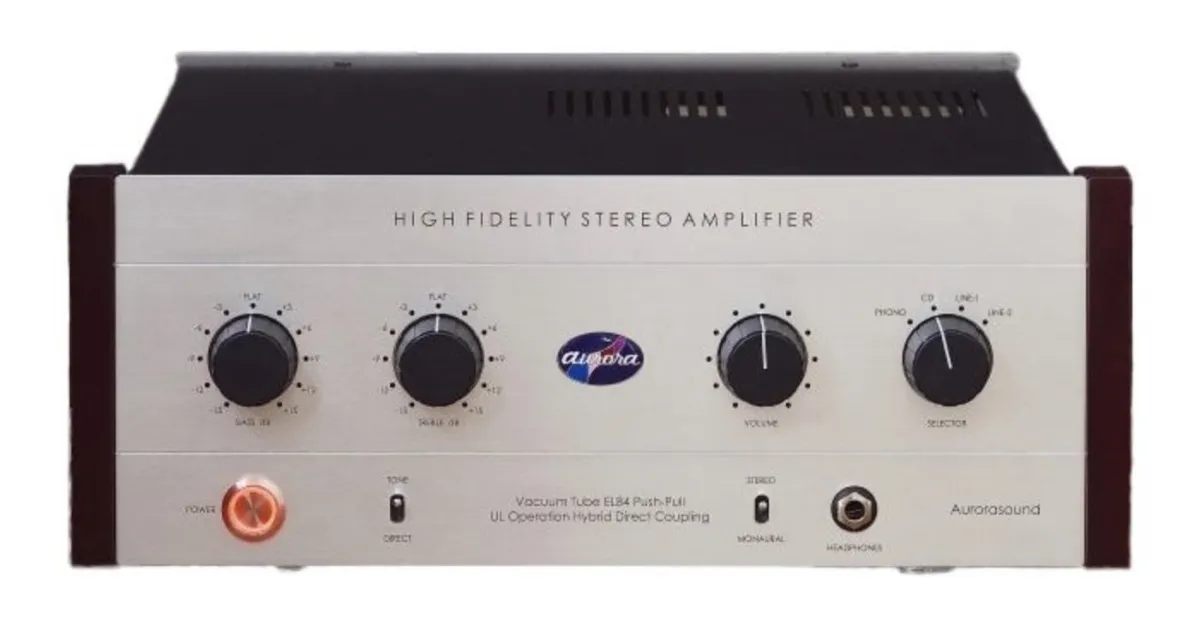
6. Aurorasound HFSA01 - €4,890
The Japanese tube integrated amplifier Aurorasound HFSA01 is one of the more respectable models from this renowned brand. The unit hits the ground running, offering a level of microdynamics and sonic purity unheard of in its group. True, there is no full wall-of-sound effect here, but for those who value tonal authenticity or exceptional emotional expression, the Aurorasound HFSA01 will have very few rivals. The amplifier uses a push-pull circuit on EL34 tubes and puts out a relatively modest 2 x 14 W of output power in pure Class A. The cherries on top are a superb built-in phono stage and a headphone amplifier.
Specifications
Model name
HFSA-01
Type
Integrated Amplifier with Phono
Analog inputs (balanced)
N/A
Analog inputs (single-ended)
2 + 1 (Phono) + 1 (CD)
Input sensitivity (mV)
N/A
Input impedance (balanced) (Ω)
N/A
Input impedance (single-ended) (Ω)
N/A
Output impedance (balanced) (Ω)
N/A
Output impedance (single-ended) (Ω)
N/A
D/A conversion
N/A
Phono MM/MC current-sensing input impedance (Ω)
N/A
Output power (8Ω) (W)
2 x 14
Output power (4Ω) (W)
N/A
Gain (dBu)
40
Frequency response low +/- 3dB (Hz)
10
Frequency response high +/- 3dB (Hz)
40 000
Signal to Noise Ratio (dB)
93
Total Harmonic Distortion + Noise (%)
0.08
Damping factor
N/A
Dimensions (mm)
360 х 320 х 145
Weight (kg)
10.3
Official link
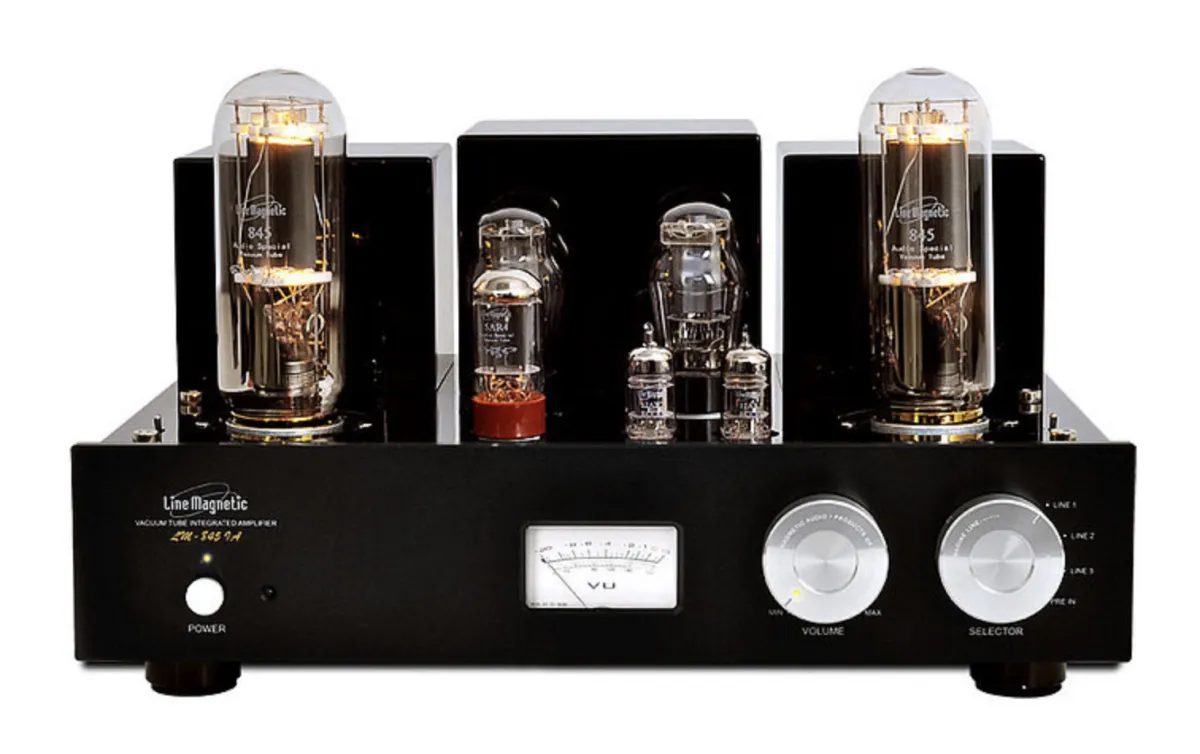
5. Line Magnetic LM-845IA - €5,199
The Line Magnetic LM-845IA is one of the few models at this price that offers pure Class A and a single-ended design based on a pair of 845 output tubes. At 2 x 22 W, that approach is a major achievement, because the sound comes out crystal clear, truly three-dimensional, quicksilver and painted with the full range of colors and emotions. The 35 kg of mass and the Japanese output transformers complete the picture.
Specifications
Model name
LM-845IA
Type
Tube Integrated Amplifier
Analog inputs (balanced)
N/A
Analog inputs (single-ended)
3
Input sensitivity (mV)
Line: 300 Pre in: 1000
Input impedance (balanced) (Ω)
N/A
Input impedance (single-ended) (Ω)
100 000
Output impedance (balanced) (Ω)
N/A
Output impedance (single-ended) (Ω)
N/A
D/A conversion
N/A
Phono MM/MC current-sensing input impedance (Ω)
N/A
Output power (8Ω) (W)
22 + 22
Output power (4Ω) (W)
N/A
Gain (dBu)
N/A
Frequency response low +/- 3dB (Hz)
20
Frequency response high +/- 3dB (Hz)
50 000
Signal to Noise Ratio (dB)
87
Total Harmonic Distortion + Noise (%)
1
Damping factor
N/A
Dimensions (mm)
430 x 365 x 255
Weight (kg)
33
Official link
4. PrimaLuna EVO 300 - €5,600
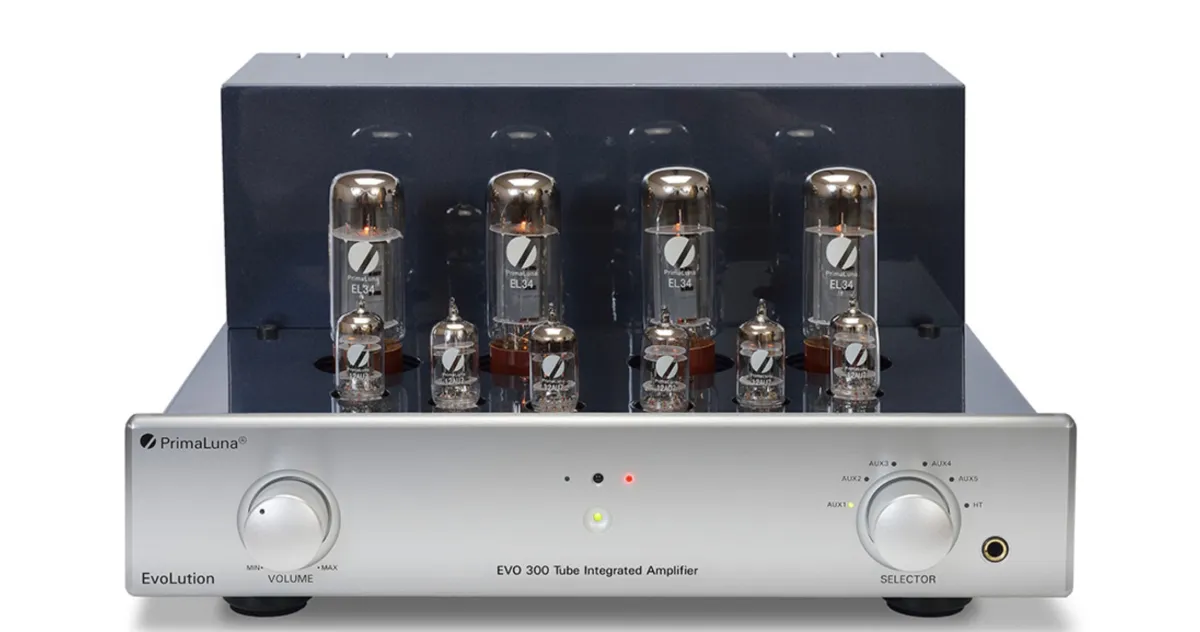
PrimaLuna can today rightly be called a cult name in the tube-gear market, and the PrimaLuna EVO 300 integrated amplifier seems doubly cult. Judge for yourself: a solid push-pull on a quartet of EL34 tubes puts out 2 x 42 W in ultra-linear and 2 x 24 W in triode mode. The Adaptive AutoBias system requires no user adjustment of the current for each output tube, automatically correcting the value and extending tube life. Finally, there is a tube-rolling option for as many as 12 tube types: 6L6G, 6L6GC, 7581A, EL34, EL37, 6550, KT66, KT77, KT88, KT90, KT120 and KT150. In its sound the PrimaLuna EVO 300 combines a transparent, signature presentation and excellent detail with traditional tube fluidity. A very strong player.
Specifications
Model name
EVO 300
Type
Integrated Amplifier
Analog inputs (balanced)
N/A
Analog inputs (single-ended)
5
Input sensitivity (mV)
270 / 285 / 290 / 300
Input impedance (balanced) (Ω)
N/A
Input impedance (single-ended) (Ω)
100 000
Output impedance (balanced) (Ω)
N/A
Output impedance (single-ended) (Ω)
N/A
D/A conversion
N/A
Phono MM/MC current-sensing input impedance (Ω)
N/A
Output power (8Ω) (W)
42 / 43 / 45 / 48
Output power (4Ω) (W)
N/A
Gain (dBu)
N/A
Frequency response low +/- 3dB (Hz)
8
Frequency response high +/- 3dB (Hz)
75 000
Signal to Noise Ratio (dB)
86 / 87 / 87 / 87
Total Harmonic Distortion + Noise (%)
<0.2 @ 1W
Damping factor
N/A
Dimensions (mm)
405 x 385 x 205
Weight (kg)
31
Official link
3. Cary Audio SLI-80HS - €6,500
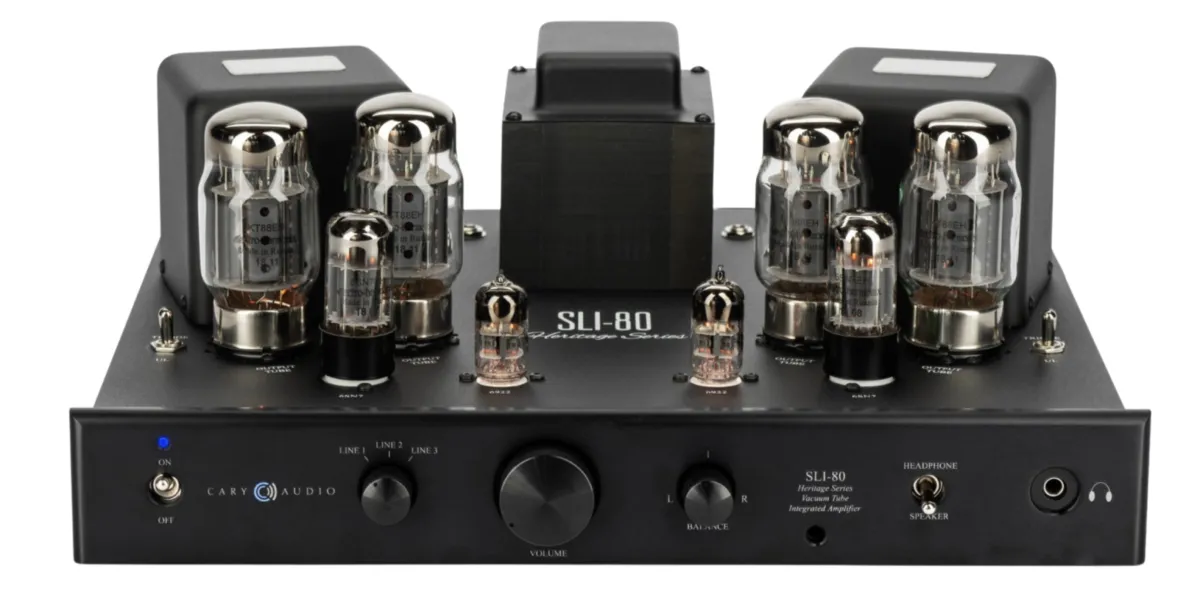
The American Cary Audio SLI-80HS uses a push-pull circuit and a quartet of KT88 tubes, which lets this integrated amplifier comfortably deliver 2 x 40 W. The company traditionally avoids AutoBias; here a fixed bias with user adjustment is used instead. The powerful output transformers were specially developed for the model, and the entire signal path is built on precision components, from Mundorf and United Chemi-Con capacitors to Dale and Eaton resistors. A minimal negative feedback of 4 dB guarantees open sound and proper control of the speakers. The amplifier sounds very powerful and large-scale, and in terms of punch it can sometimes even be mistaken for a transistor model - but, most importantly, the traditional tube aesthetic and charm are plain to see here.
Specifications
Model name
SLI-80HS
Type
Tube Integrated Amplifier
Analog inputs (balanced)
N/A
Analog inputs (single-ended)
3
Input sensitivity (mV)
450
Input impedance (balanced) (Ω)
N/A
Input impedance (single-ended) (Ω)
100 000
Output impedance (balanced) (Ω)
N/A
Output impedance (single-ended) (Ω)
N/A
D/A conversion
N/A
Phono MM/MC current-sensing input impedance (Ω)
N/A
Output power (8Ω) (W)
40 (triode) / 80 (ultralinear)
Output power (4Ω) (W)
N/A
Gain (dBu)
34
Frequency response low +/- 3dB (Hz)
19
Frequency response high +/- 3dB (Hz)
23 000
Signal to Noise Ratio (dB)
82
Total Harmonic Distortion + Noise (%)
N/A
Damping factor
N/A
Dimensions (mm)
177 x 431 x 406
Weight (kg)
19.05
Official link
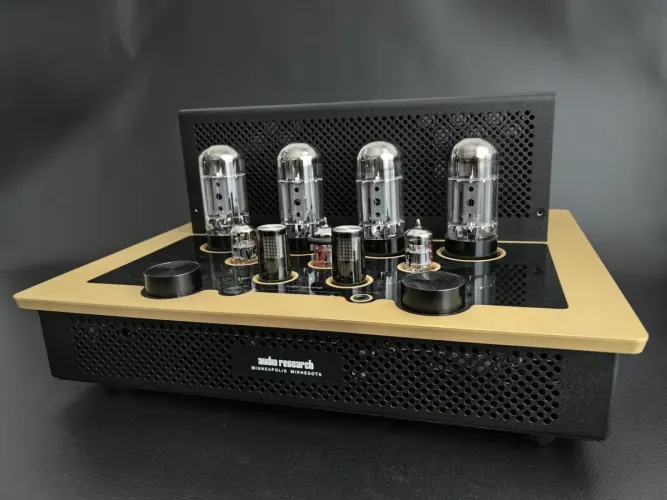
2. Audio Research I/50 - €7,390
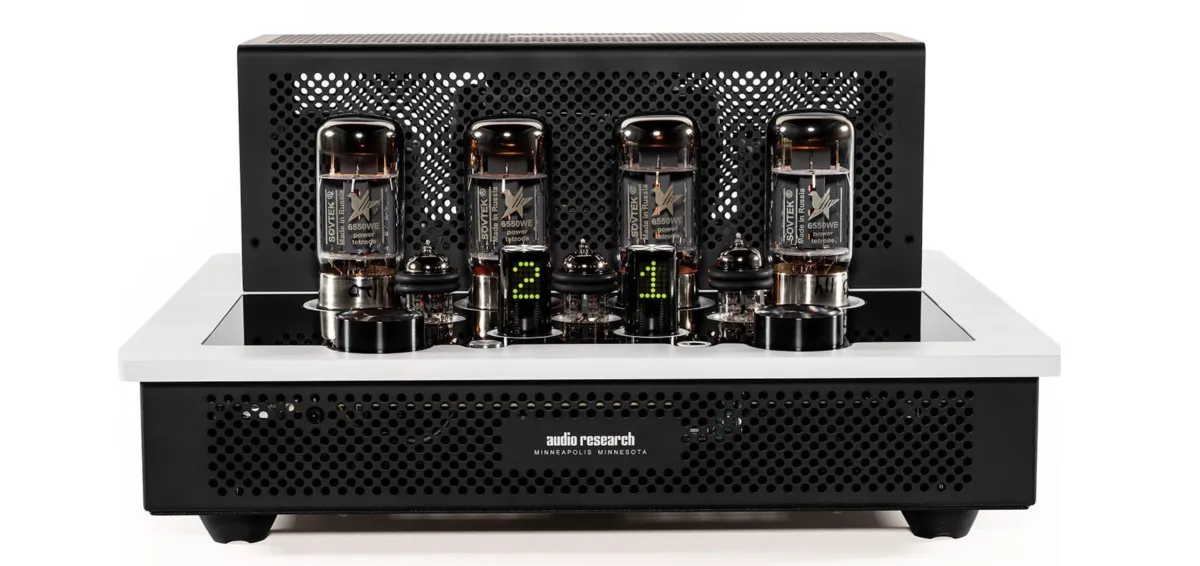
The Audio Research I/50 tube integrated amplifier is a real beauty. We know this model well: a push-pull circuit, a quartet of 6550WE tubes, the shortest possible signal path and up to 50 W of power per channel. The model allows a modular upgrade - for an extra charge you can install digital-to-analog converter and MM phono stage modules. There is not all that much warmth in the model's sound, but it always remains open, agile and weighty, and the effect of musicians materializing in the room turns out to be downright fantastic.
Specifications
Model name
I/50
Type
push-pull tube integrated amplifier
Analog inputs (balanced)
N/A
Analog inputs (single-ended)
N/A
Input sensitivity (mV)
1250
Input impedance (balanced) (Ω)
100 000
Input impedance (single-ended) (Ω)
47 000
Output impedance (balanced) (Ω)
N/A
Output impedance (single-ended) (Ω)
N/A
D/A conversion
N/A
Phono MM/MC current-sensing input impedance (Ω)
N/A
Output power (8Ω) (W)
2 х 50
Output power (4Ω) (W)
2 х 50
Gain (dBu)
N/A
Frequency response low +/- 3dB (Hz)
7
Frequency response high +/- 3dB (Hz)
30000
Signal to Noise Ratio (dB)
N/A
Total Harmonic Distortion + Noise (%)
1
Damping factor
N/A
Dimensions (mm)
430 x 180 x 340
Weight (kg)
18.1
Official link
1. Audio Note Meishu Phono 300B Tonmeister - €15,740
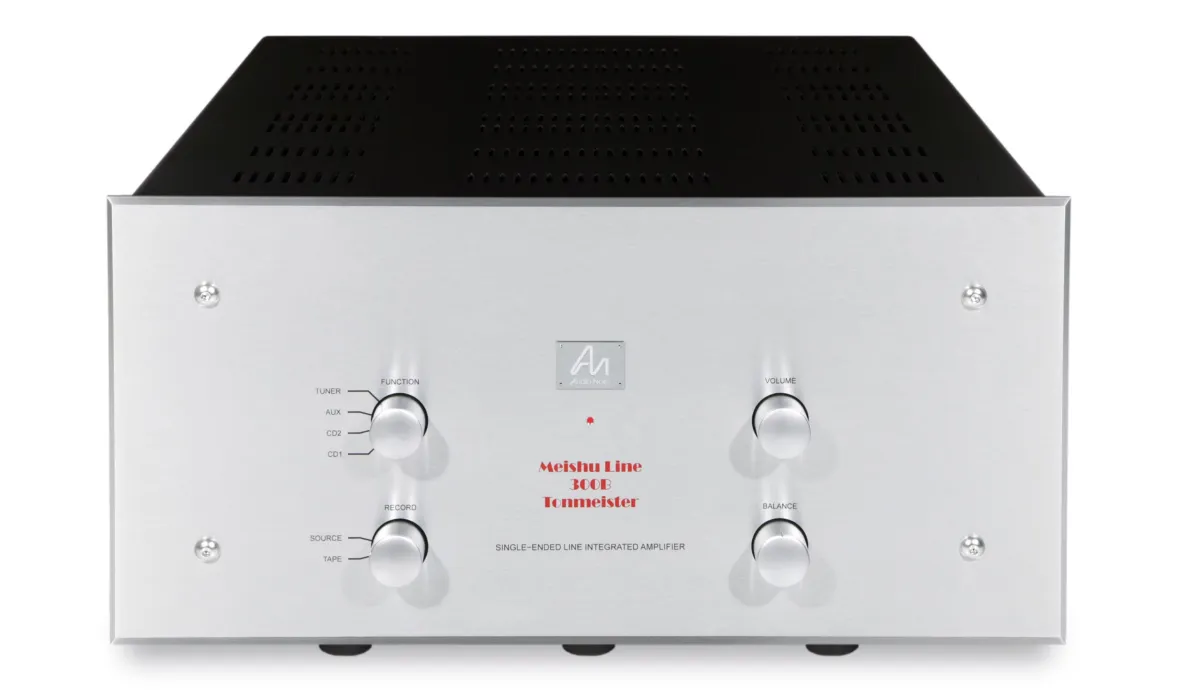
And finally, the flagship of the selection. The Audio Note Meishu Line Tonmeister integrated tube amplifier is built on 300B tubes, operates in pure Class A with zero feedback, has internal wiring made of the brand's own silver cable, and in the signal path carries Audio Note tantalum film resistors, Audio Note copper-foil capacitors and Black Gate capacitors, as well as R36 double C-core output transformers. The real output power of the device, at five watts per channel (a touch below the rated spec), is hardly surprising for such a design - what matters is that, in terms of texture, density and authenticity of sound, it has few equals in any price group.
Specifications
Model name
Meishu Phono 300B Tonmeister
Type
Tube Integrated Amplifier
Analog inputs (balanced)
N/A
Analog inputs (single-ended)
1 + 1 (Tuner) + 1 (AUX) + 2 (CD)
Input sensitivity (mV)
240
Input impedance (balanced) (Ω)
N/A
Input impedance (single-ended) (Ω)
100 000
Output impedance (balanced) (Ω)
N/A
Output impedance (single-ended) (Ω)
N/A
D/A conversion
N/A
Phono MM/MC current-sensing input impedance (Ω)
N/A
Output power (8Ω) (W)
8
Output power (4Ω) (W)
N/A
Gain (dBu)
N/A
Frequency response low +/- 3dB (Hz)
N/A
Frequency response high +/- 3dB (Hz)
N/A
Signal to Noise Ratio (dB)
N/A
Total Harmonic Distortion + Noise (%)
N/A
Damping factor
N/A
Dimensions (mm)
220 x 460 x 530
Weight (kg)
29.5
Official link
A Quick Buyer's Guide
First tube amp, budget up to €2,000 - Cayin CS-55A
Versatile mid-tier, budget €5,600 - PrimaLuna EVO 300
Reference 300B SET, budget €15,740 - Audio Note Meishu Phono 300B Tonmeister