

Active or Passive Loudspeakers - The Choice, Minus the Marketing, 2026
A detailed look at circuit topology, engineering and real-world use cases


08.08.2026 11:05 | ~9 minutes read
What is the actual difference between an active and a passive loudspeaker? We are willing to bet you will get it wrong. The widespread belief that the difference lives in built-in amplification is simply not correct. Built-in amplification is a consequence, not a cause, and there are active systems on the market that use external amplifier packs. The real difference sits in the crossover: specifically, whether it does its work before amplification or after it.
Everything else is architecture that follows from that one founding principle. And it is exactly that principle which shapes the sonic signature of a speaker - how tightly the amplifier controls the driver, what happens to phase at the crossover point, and whether, years from now, you will be able to change the character of your installation without changing the loudspeakers. Intrigued? Let us work through it properly.
Glossary - what the terms actually mean
A passive loudspeaker - the audio signal arrives at the speaker terminals already amplified. Inside the cabinet sits a filter built from inductors, capacitors and resistors, and it splits the frequency band between the drivers. That filter works at high signal level: the entire current the power amplifier delivers passes through the coil.
An active loudspeaker - the audio signal arrives at the speaker at low, line level. Filtering happens before amplification, either in the analogue domain or digitally. Each driver gets its own amplifier wired straight to the voice coil. There are no passive components between the output stage and the coil.
A loudspeaker with a built-in amplifier - a marketing trick, nothing more. The amplifier has been moved inside the cabinet, but the crossover is still passive and still sits after amplification. Functionally this is a passive speaker with an integrated amplifier.
The distinction between the second and third definitions is fundamental, and it matters commercially. A substantial share of the "active" loudspeakers on today's market are active on paper only; in reality they are powered speakers with a passive filter. Genuinely active systems are rarer, and they cost more.
The passive crossover and why it is a compromise
A passive crossover is a filter operating at the output of a power amplifier. The amplifier's full current runs through its components. The result is a cascade of losses.
Signal level - inductors have DC resistance, and attenuator resistors dissipate energy as heat. A three-way passive filter typically eats somewhere between 0.5 and 2 dB.
Damping - between the amplifier output and the woofer voice coil sits a filter inductor with a DC resistance in the order of 0.2 to 0.5 ohm. An amplifier with an excellent output impedance of 0.01 ohm and a damping factor of 800 ends up, on the far side of that inductor, working with an effective damping factor of roughly 20. The consequence is straightforward: the cone is controlled less tightly, and bass quality becomes a fair question to ask.
Thermal drift - the voice coil heats up under load and its resistance rises. A crossover point calculated for cold impedance creeps upward during long sessions at high level. The effect is more pronounced the lower the sensitivity of the speaker and the higher the signal level.
Phase, timing - passive components introduce phase shifts, so aligning the drivers in time calls for physical workarounds: raked baffles, stepped front panels, angled driver mounting. Those measures narrow the usable soundstage.
What changes in an active topology
An active filter works at line level, where current is measured in milliamps rather than amps. The amplifier connects to the voice coil directly, with nothing in between. The amplifier's damping factor therefore reaches the driver intact: what the output stage is capable of is what the cone actually gets.
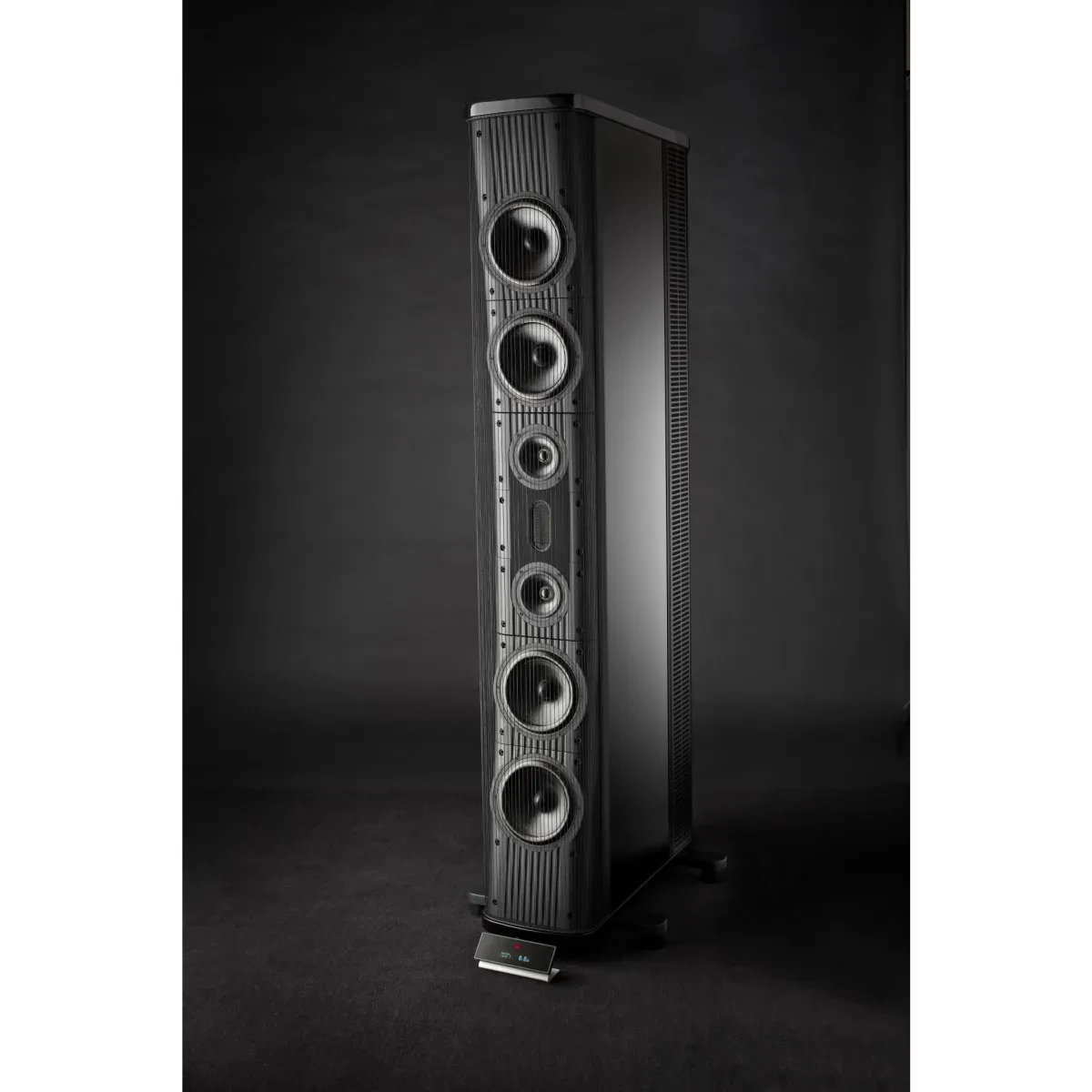
Then there is power distribution across the bands. In an active design the bass is always fed considerably harder than the rest of the spectrum, simply because most of the energy in music lives at low frequencies. The ATC SCM40A splits its onboard amplification 150 W to the bass, 60 W to the midrange and 32 W to the treble, for 242 W in total. The Genelec 8361A goes further still: 700 W for the bass, 150 W each for midrange and tweeter.
Arranging anything comparable in a passive three-way is extremely difficult. You would need a dedicated outboard crossover, three pairs of amplifiers, three pairs of speaker cables and gain matching to the sensitivity of each band. The bill multiplies, and in most cases the game is not worth the candle.
Finally, digital correction. Once the active filter is digital, you can run linear-phase FIR filtering, set individual delay for every driver to microsecond precision, correct the frequency response of individual drivers and compensate for the room through equalisation.
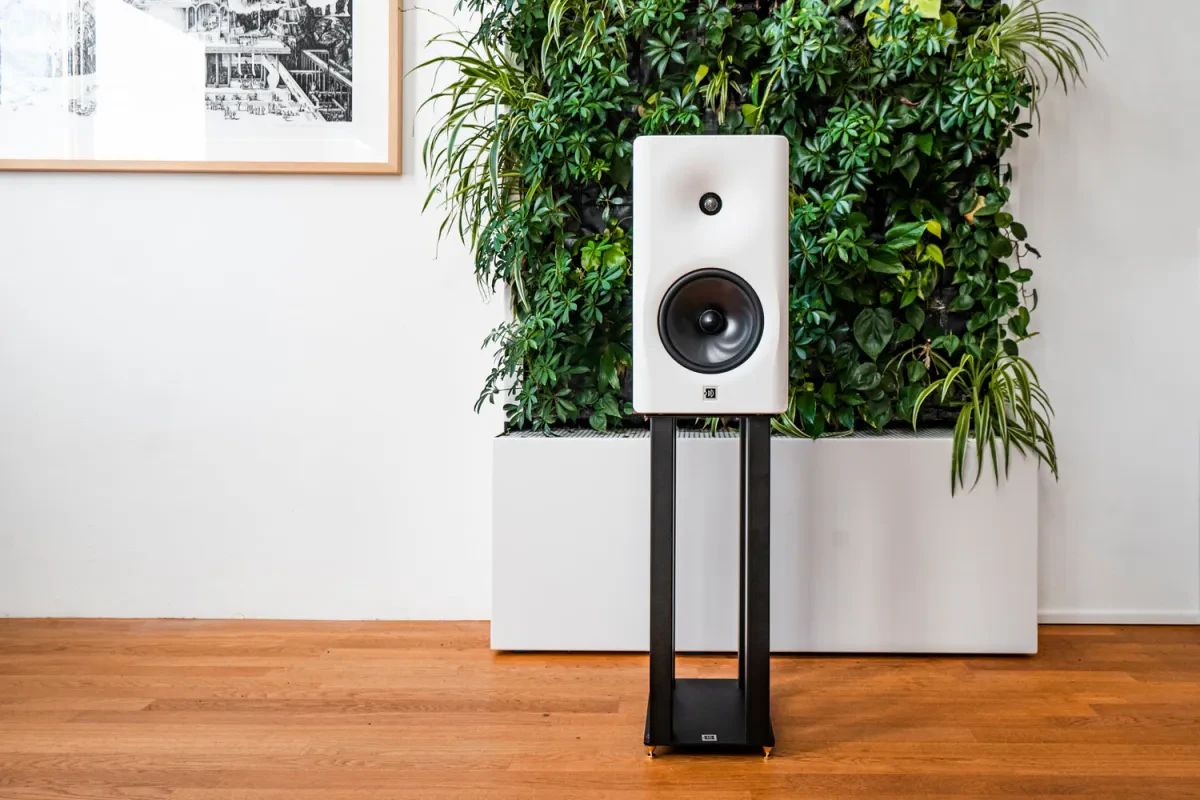
Dutch & Dutch, for instance, implements a cardioid radiation pattern through the midrange, effectively removing the rear wall of your room from the equation. Genelec measures the response at the listening position and builds a compensating curve. Focal offers automatic room correction in its active models. None of those tricks are available to a passive design. On top of that, the manufacturer of an active speaker knows exactly how much excursion the cone has and how much thermal headroom the coil has, and can therefore build in genuinely intelligent protection against amplifier clipping at high levels.
The drawbacks of going active
Active operation naturally comes with its own set of downsides. As a rule the amplification electronics sit inside the speaker cabinet, where they live with vibration, mechanical stress and heat. That affects both sound quality and service life. Solutions with outboard amplification and separate crossovers do exist, but they are expensive.
There is also the fact that an active speaker ages unevenly. DSP modules and digital boards can fall behind the competition within a few years, and you have to hope the manufacturer releases an upgrade by then, or at the very least is still in business. Service, likewise, is tied to a single manufacturer in every respect.
If a digital filter is used, the analogue input on the speaker will be converted to digital, which breaks the purity of an analogue chain. Vinyl passes through an ADC, then back through a DAC, and something is inevitably lost across those conversions. If you own a valve phono stage and a serious turntable, you are unlikely to want to play that game, so digital active amplification is best recommended to owners of fully digital systems.
And of course every speaker needs its own mains supply. Resale values on the used market also run lower for active designs, because the complexity of the system means more risk for the buyer. Nor will you be able to make any meaningful adjustment to the sonic signature later on: swapping digital transports or power cables will not change how the amplification interacts with the drivers. Active loudspeakers are not for the serial upgrader.
The case for passive
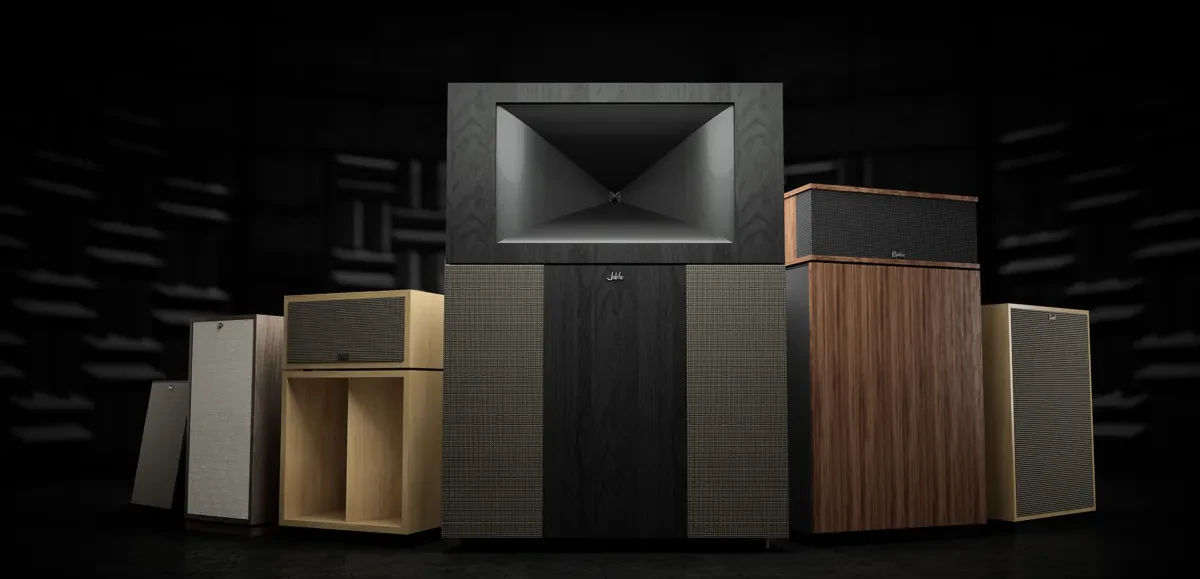
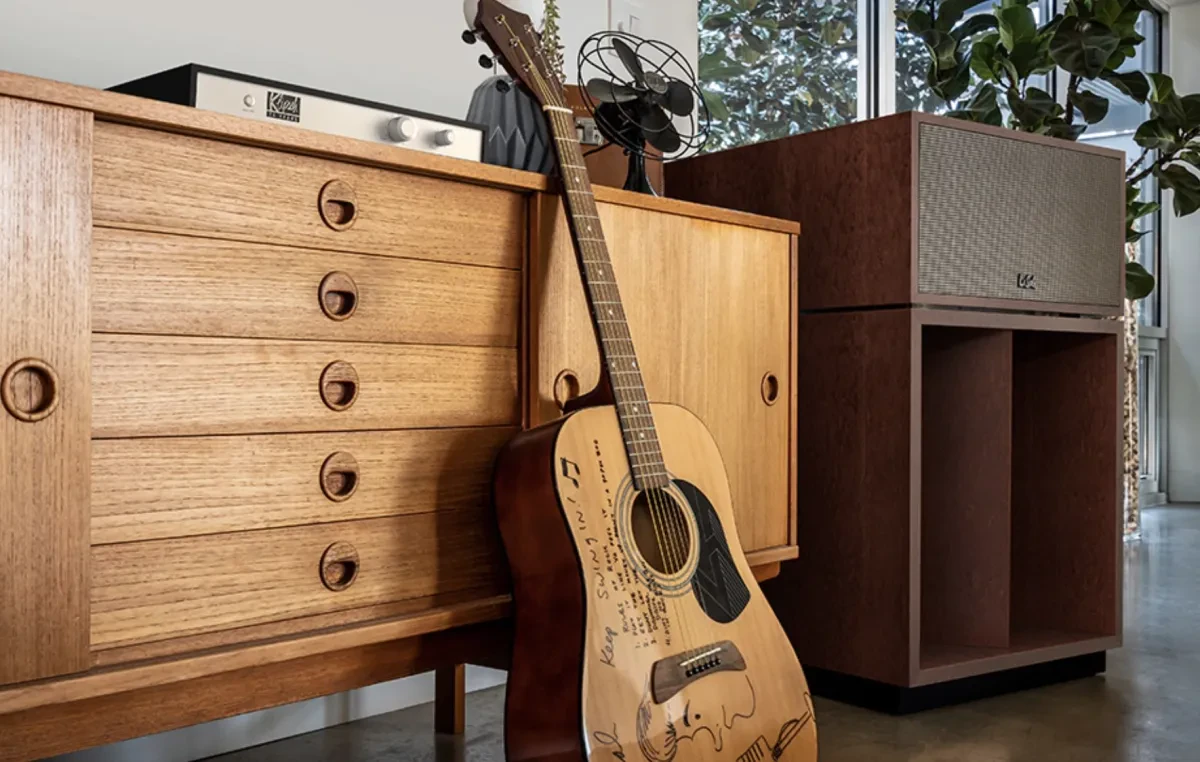
A single-ended 300B valve amplifier paired with horn loudspeakers of 100 dB sensitivity is a completely different proposition from a usual fully loaded 4th way all-in-one active system. Soft, analogue presentation with gorgeous midrange, balm for the soul of a vinyl listener. And yes, in that kind of setup you can spend years experimenting with amplifier and speaker pairings, voicing the system through output impedance and distortion spectrum. But if it not necessary - the latest generation of the Klipsch Heritage series offers Klipschorn and La Scala models featuring a new architecture that allows for switching between passive and active modes.
A passive system also keeps a full upgrade path open. Buy the expensive speakers first and economise on amplification; a year later sell the amplifier and buy something better suited, and so on. In other words, a passive system retains residual value piece by piece. Selling half an active loudspeaker is not possible. Over a two-year planning horizon that hardly matters. Over ten years and several upgrades it becomes a real problem. The passive catalogue is also an order of magnitude broader, so the choice is far wider and there is something to suit every taste.
Passive loudspeakers are also exceptionally durable: twenty to thirty years of service, without drama. You may have to spend a hundred euros on replacing crossover capacitors, and re-foam the cone surrounds after a quarter of a century. That is the extent of it. Selling the amplifier and keeping the speakers is an entirely routine operation.
Myths, debunked
"Active is always more accurate" - no. Accuracy is determined by execution, not by topology. Mediocre DSP and a cheap ADC inside an active cabinet will sound considerably worse than a well-engineered passive filter built on polypropylene capacitors and air-core inductors.
"The passive crossover eats power" - we can always compensate 2 dB with more watts. The real issue is elsewhere: the interaction between the filter and the driver impedance, the loss of damping and the thermal drift of the crossover point.
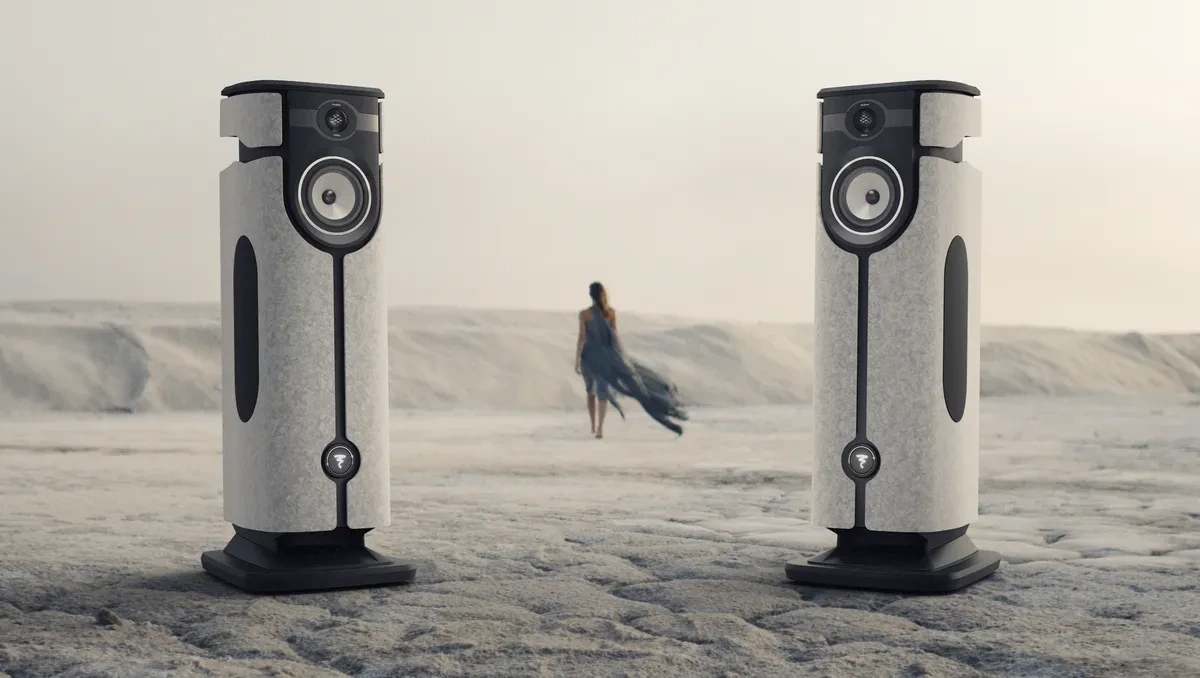
"Active means studio sound, unsuitable for the home" - ten years ago there may have been something in that. Today Focal and Naim have released the fully active wireless Diva Utopia with the IAL2 beryllium tweeter, and KEF made a great deal of noise with the LS60 Wireless, combining Uni-Q with four force-cancelling woofers. Complaints about clinical, bleached-out presentation belong to the voicing of a particular model, not to the operating principle itself.
Hybrid solutions
The market naturally offers intermediate options that combine some of the advantages of both approaches, though only some of them.
First, 2+1: passive loudspeakers plus an active subwoofer. You keep the freedom to choose your amplifier and your presentation, but you extend the bass and gain the ability to adjust it separately by level, phase, crossover point and position in the room.
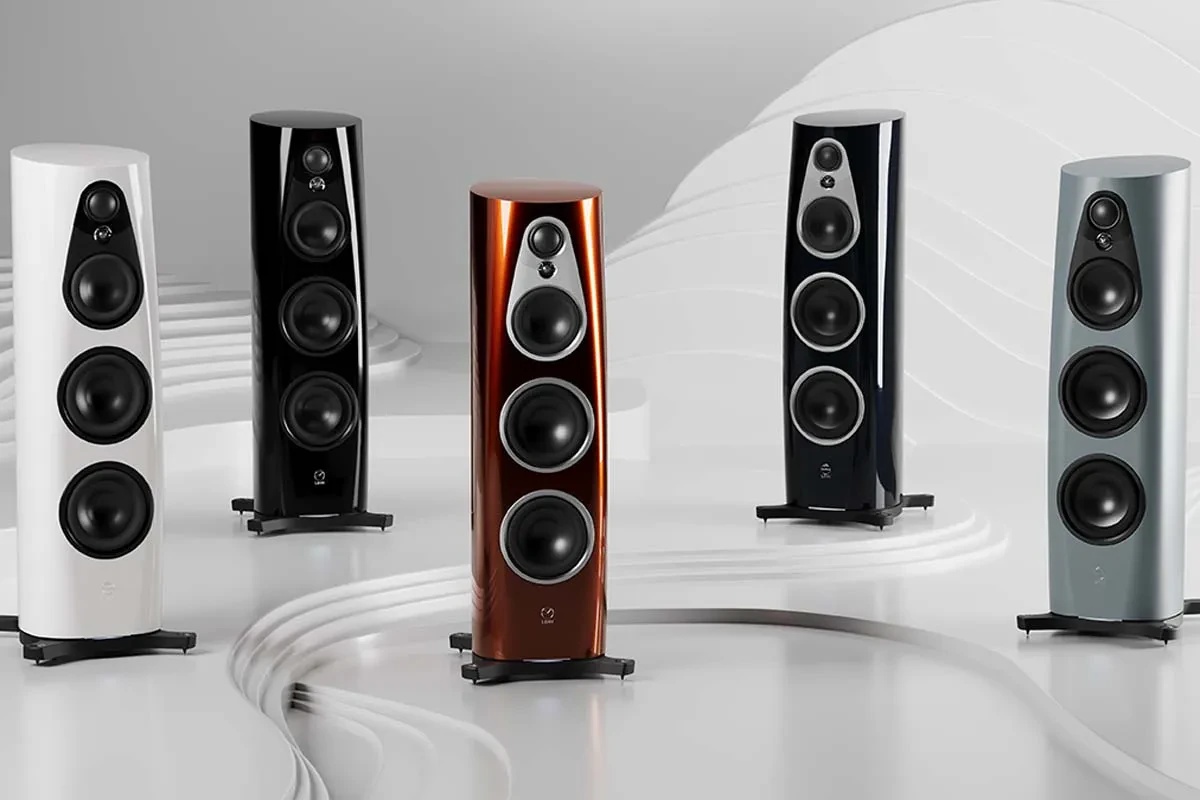
Second, as mentioned above, expensive active solutions with partially external components: an outboard processor plus multichannel amplification, built in or standalone. Linn with its Exakt architecture and Steinway Lyngdorf systems work exactly this way.
Third, floorstanders with powered bass. A compromise that solves the principal problem at low frequencies without touching the rest of the spectrum, but a compromise all the same, because achieving a seamless transition between the bands in that configuration is very difficult.
The maths decides everything
The answer to why an active system can sound so much more impressive than a passive one is largely hidden in the budget. Take 10,000 euros and look at how it splits.
A passive system: 4,500 on loudspeakers, 3,000 on an integrated amplifier, 1,500 on a DAC with streaming, 1,000 on cables and a rack. The component that actually produces the physical sound, the loudspeakers, receives less than half the total.
An active system: 8,500 to 9,500 on speakers with amplification, conversion and processing built in, and 500 to 1,500 on a source or transport. No speaker cables required, no rack for electronics required, no amplifier matching required. The drivers themselves will be better, and the sound may well have more life in it.
Five scenarios - what should you choose?
Vinyl and valve amplification. Usually passive, with horns or other high-sensitivity designs. Don't forget about Klipsch Klipschorn and La Scala models featuring switching between passive and active modes.
Streaming in a modern living room. Active, starting with the KEF LS60 Wireless and going up from there as far as you care to.
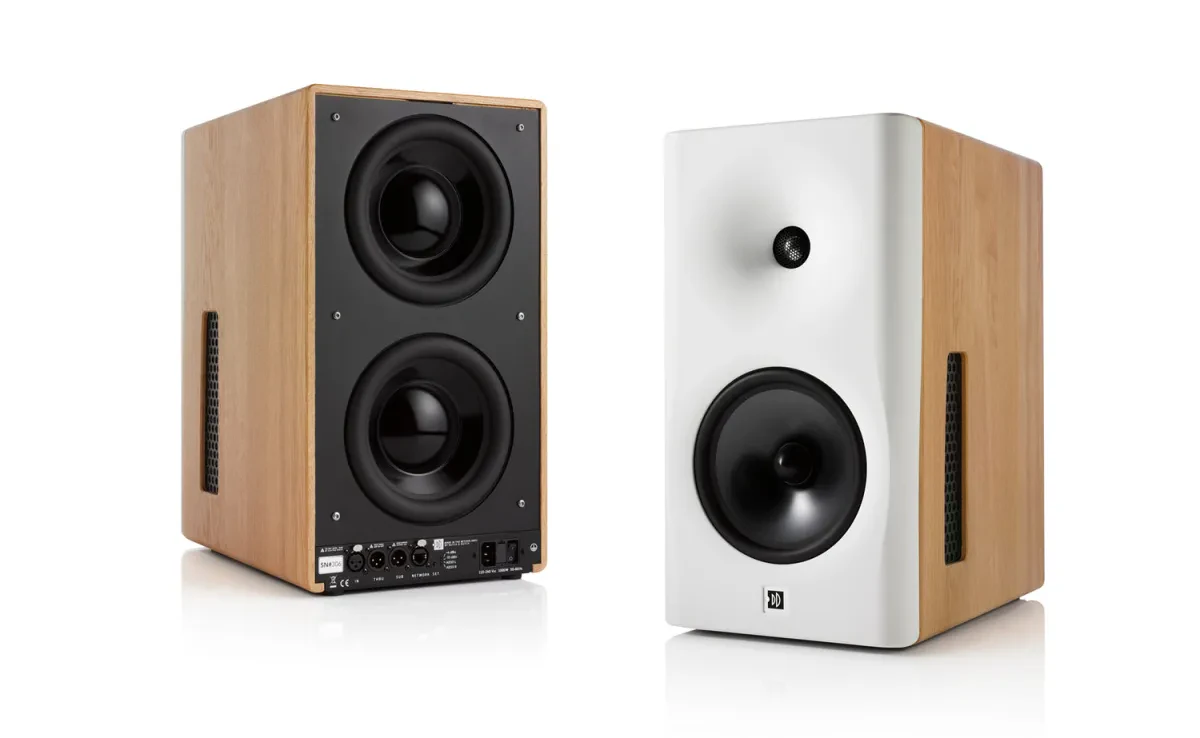
A small room. Active, with digital correction and directivity control. The Dutch & Dutch 8c will slot in perfectly.
Constant upgrading. Passive, for reasons that should be obvious by now.
A limited budget but an appetite for serious sound. Active, most likely; the ATC SCM40A is a good place to start.
The verdict
Active wins on engineering. Direct connection between amplifier and driver, targeted power distribution across the bands, linear-phase filtering: these are advantages a passive topology simply cannot reproduce.
Passive wins on freedom. The ability to choose the character of your amplification, to upgrade the system in stages, and much else besides.
Choose whichever speaks to you.