
EAT Introduces E-Glo CB and E-Glo SB Phono Preamplifiers with Balanced Connectivity

21.07.2026 04:55 | ~3 minutes read
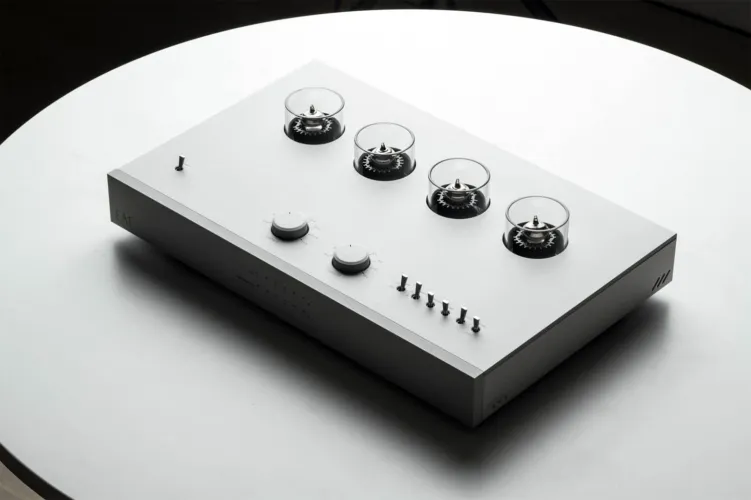
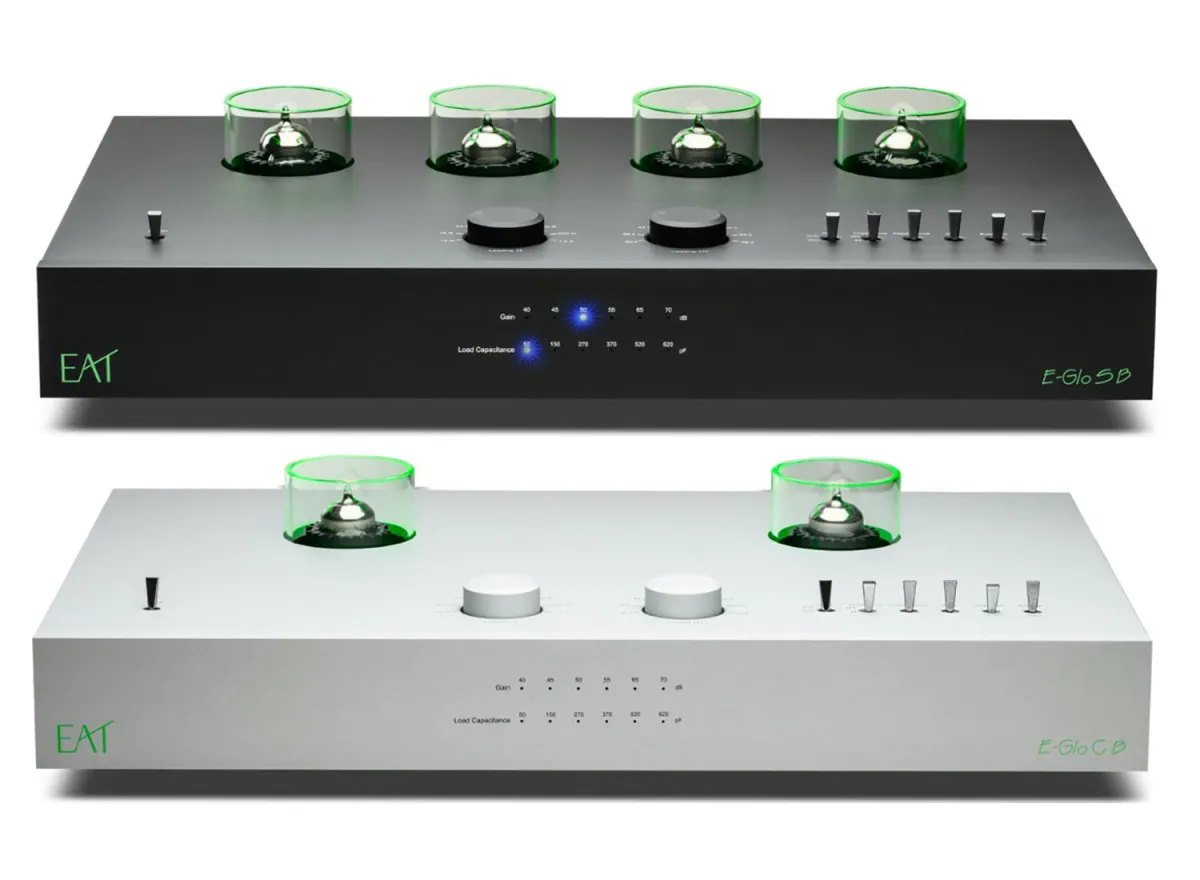
European Audio Team has expanded its product range with two full-size phono preamplifiers, the EAT E-Glo CB and E-Glo SB. Both models are designed for high-end vinyl systems and combine tube-based stages, discrete circuitry, separate channel architecture, and an extensive range of adjustments for matching different MM and MC cartridges.
Within the manufacturer’s lineup, the new models are positioned between the compact EAT Petit B and the flagship E-Glo FB phono preamplifier. They are based on a three-stage amplification circuit designed without integrated operational amplifiers. Signal processing is handled by discrete components, a combination of passive and active RIAA equalization, and dedicated DC servo circuits intended to reduce offset at the outputs.
The input amplification stage consists of three discrete solid-state sections. Two of them process the positive and negative phases of the audio signal, while the third combines them to help suppress common-mode interference. The high-frequency portion of the standard RIAA equalization curve is also implemented at this point in the signal path.
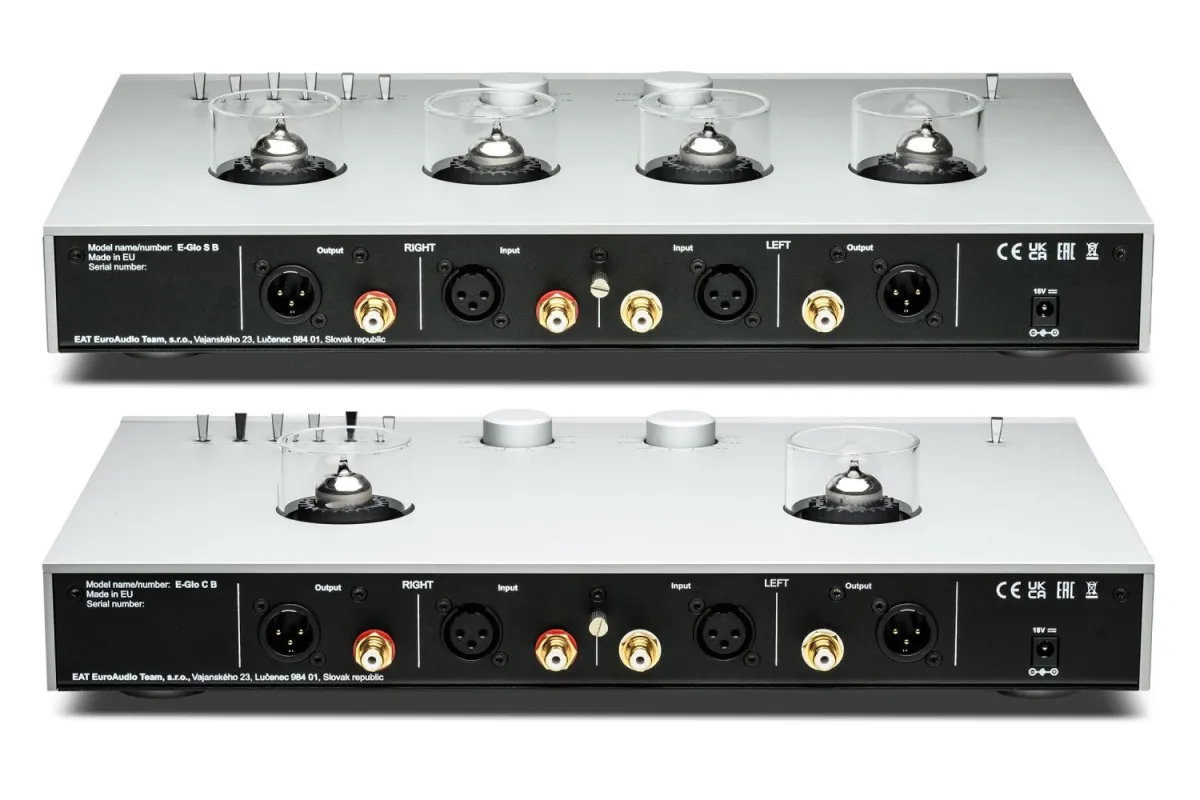
Balanced XLR inputs are provided for use with MC cartridges. The unbalanced RCA inputs support both MM and MC cartridges. The output signal can be sent simultaneously through the XLR and RCA connectors. According to the manufacturer, balanced transmission is particularly beneficial when using MC cartridges, which have extremely low output voltages and are therefore more sensitive to interference.
The more affordable EAT E-Glo CB is built around a hybrid single-ended circuit using two ECC83S vacuum triodes and one transistor. This stage handles the low-frequency portion of the RIAA equalization and operates the switchable subsonic filter. After passing through the balanced input stage, the signal is converted to an unbalanced format, while the balanced output is recreated at the final processing stage.
The more expensive EAT E-Glo SB is considerably closer in architecture to the flagship E-Glo FB. Its second amplification stage uses a fully symmetrical tube circuit with two ECC83S triodes and two E88CC tubes. As a result, balanced signal processing is maintained throughout a larger portion of the signal path. High-quality polypropylene capacitors with a semi-crystalline hydrocarbon dielectric are also used in the amplification and RIAA equalization circuits.
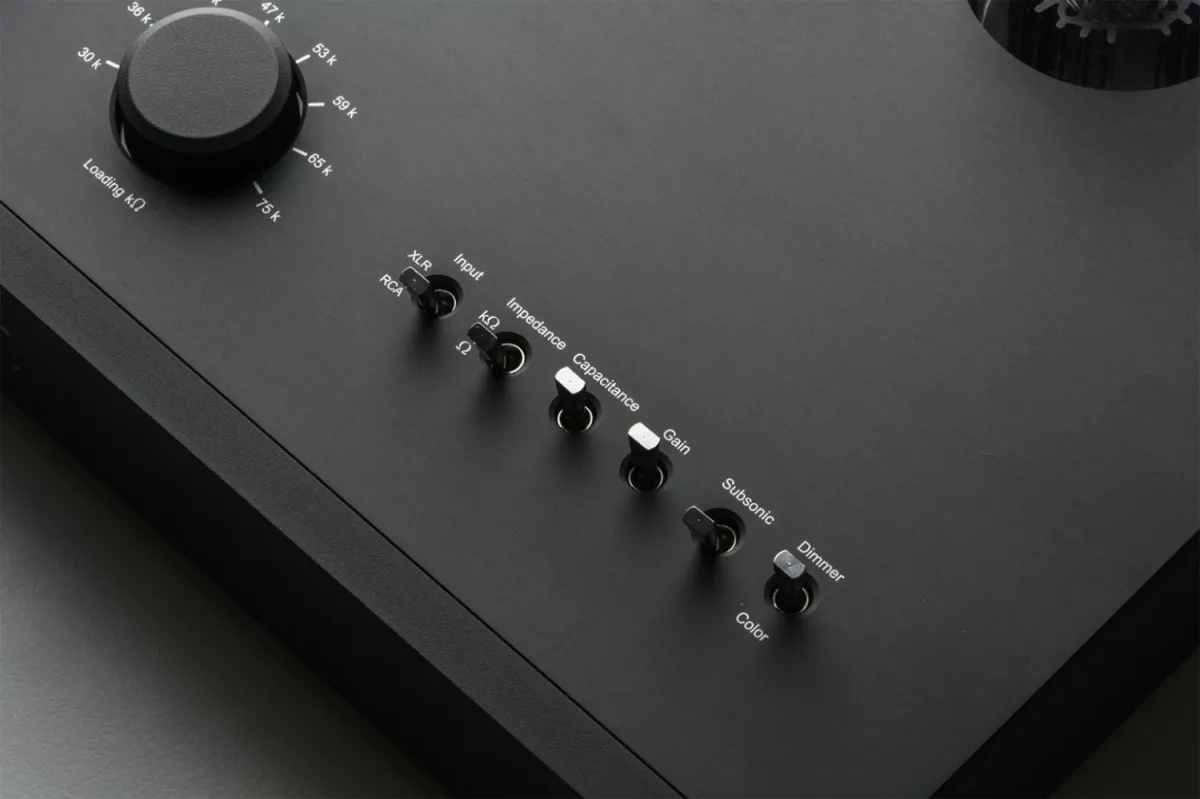
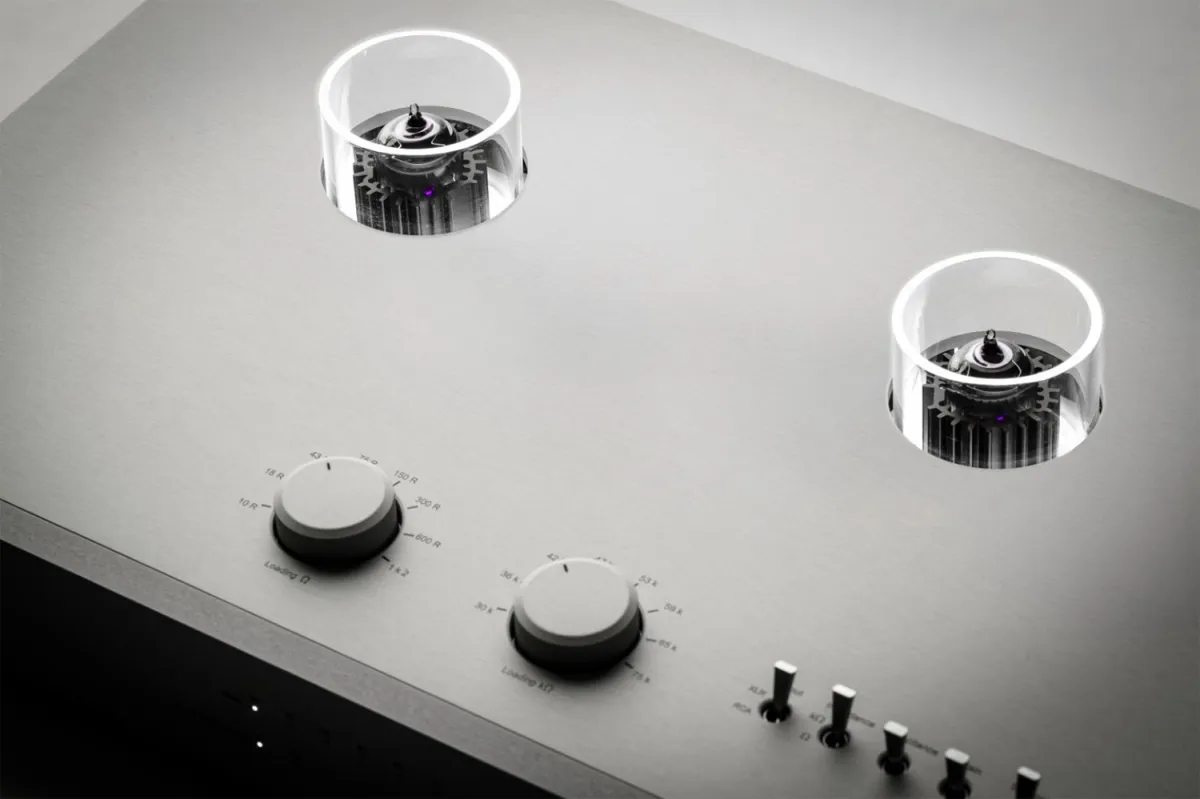
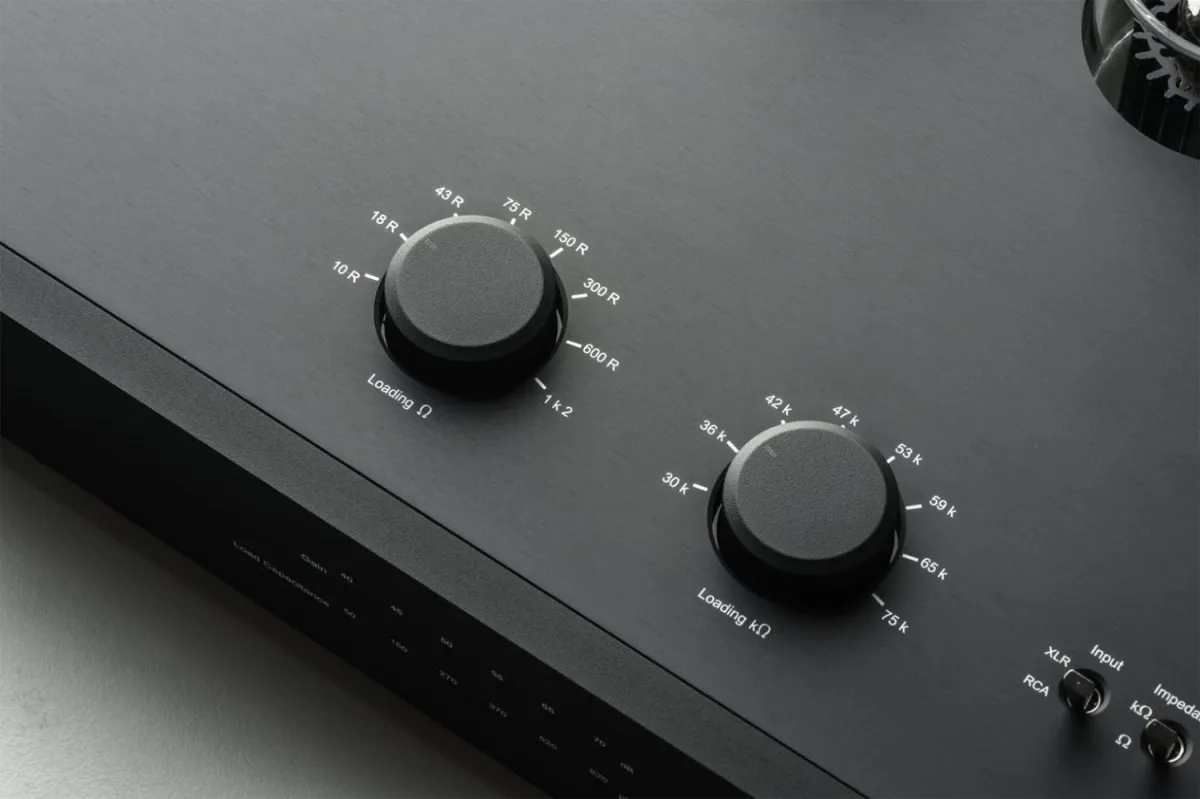
Both models provide extensive cartridge-matching options. For MM cartridges, load resistance can be adjusted from 30 to 75 kOhms, while input capacitance ranges from 50 to 620 pF. MC cartridge users can select load resistance values between 10 Ohms and 1.2 kOhms. Gain is available in six settings: 40, 45, 50, 55, 65, or 70 dB. Using the balanced XLR outputs adds a further 6 dB of gain.
The phono preamplifiers are equipped with a switchable subsonic filter featuring a 20 Hz cutoff frequency and an attenuation slope of 18 dB per octave. RIAA equalization accuracy is specified at ±0.5 dB across the frequency range from 20 Hz to 20 kHz. The E-Glo CB and E-Glo SB share the same dimensions of 395 × 86 × 262 mm, while their respective weights are 5 and 5.1 kg.
Both models are powered by an external 18 V power supply. This solution allows the power transformer to be placed outside the main enclosure, reducing its influence on the sensitive amplification circuits handling the low-level signal from the cartridge. The EAT E-Glo CB has a recommended retail price of $4,599 in the United States, while the more advanced E-Glo SB is priced at $6,250.
Specifications
Model name
E-Glo CB
Inputs (balanced)
1
Inputs (single-ended)
1
MC current-sensing input impedance (Ω)
30 - 75 000 (MM), 10 - 1200 (MC)
MM/MC voltage input impedance (Ω)
N/A
Output impedance (Ω)
N/A
Gain (dB)
40, 45, 50, 55, 65 and 70
Playback EQ curves accuracy (dB)
N/A
Frequency response low +/- 3dB (Hz)
20
Frequency response high +/- 3dB (Hz)
20 000
Total Harmonic Distortion + Noise (%)
N/A
Dimensions (mm)
395 × 86 × 262
Weight (kg)
5
Official link
Specifications
Model name
E-Glo SB
Inputs (balanced)
1
Inputs (single-ended)
1
MC current-sensing input impedance (Ω)
30 - 75 000 (MM), 10 - 1200 (MC)
MM/MC voltage input impedance (Ω)
N/A
Output impedance (Ω)
N/A
Gain (dB)
40, 45, 50, 55, 65 and 70
Playback EQ curves accuracy (dB)
N/A
Frequency response low +/- 3dB (Hz)
20
Frequency response high +/- 3dB (Hz)
20 000
Total Harmonic Distortion + Noise (%)
N/A
Dimensions (mm)
395 × 86 × 262
Weight (kg)
5.1
Official link