Hifiverse

Here is a thought experiment. You have somewhere between eight and twenty-two thousand dollars to spend on a single box that will anchor your entire audio system. One chassis. No separates, no rack full of interconnects, no second mortgage on power cables. Just an integrated amplifier, a pair of speakers, and whatever source you prefer. The question is not whether you can find something good at this price - you can, easily. The question is which kind of good fits your system, your room, your music, and frankly, your personality.

We spent four months collecting data on thirteen integrated amplifiers in this range. What follows is Part 1: individual assessments of all thirteen contenders. Part 2 covers the comparison matrices, system matching recommendations, and our final verdict. We organized these thirteen amplifiers into three pricing tiers. The boundaries are not arbitrary - they reflect genuine steps in engineering investment, parts quality, and performance expectations.

Part two is available at this LINK.

The $8K-$22K Integrated Amplifier Showdown – Part I

Premium Tier ($18,000-$22,000): Gryphon Diablo 300, Luxman L-595A SE, VAC Sigma 170i, Devialet Astra. These are statement pieces. At this level you are buying a specific engineering philosophy as much as an amplifier.

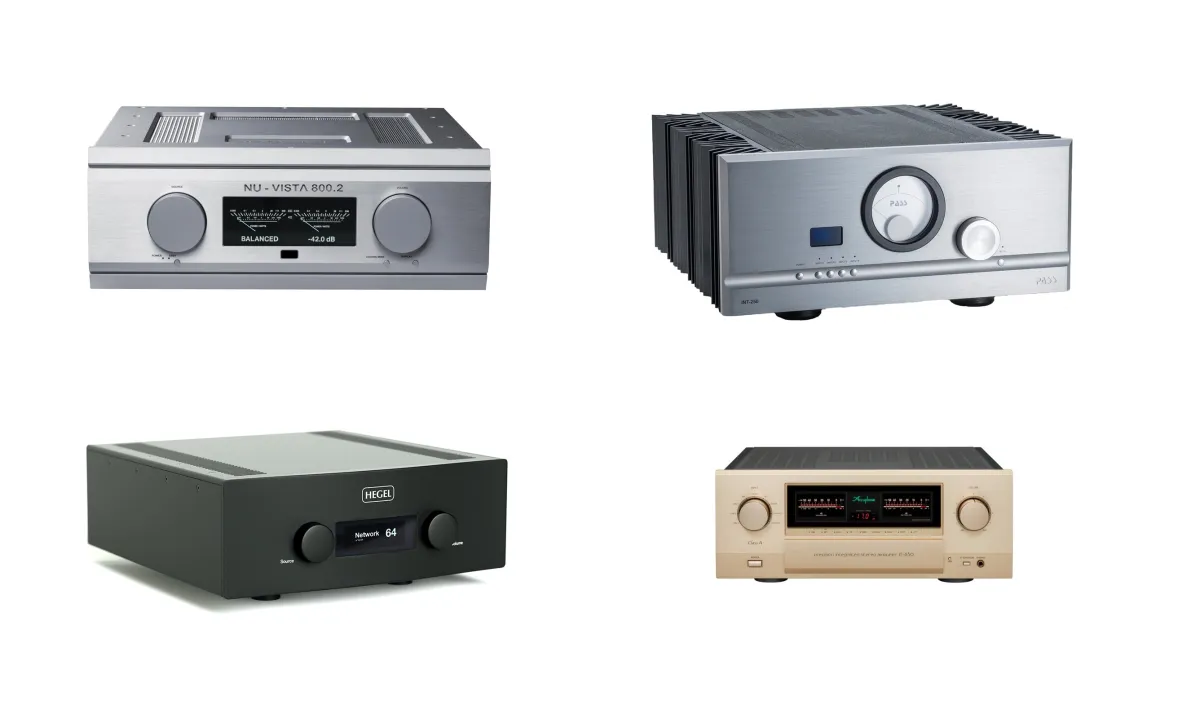
Mid-Premium Tier ($12,000-$18,000): Boulder 866, Pass Labs INT-250, Hegel H590, Accuphase E-650, McIntosh MA12000, Aavik I-280. The sweet spot for many serious audiophiles. Competition here is fierce.

Upper Entry ($8,000-$12,000): Luxman L-509X, Simaudio Moon 700i V2, Musical Fidelity Nu-Vista 800.2. Gateway products to reference-level performance.

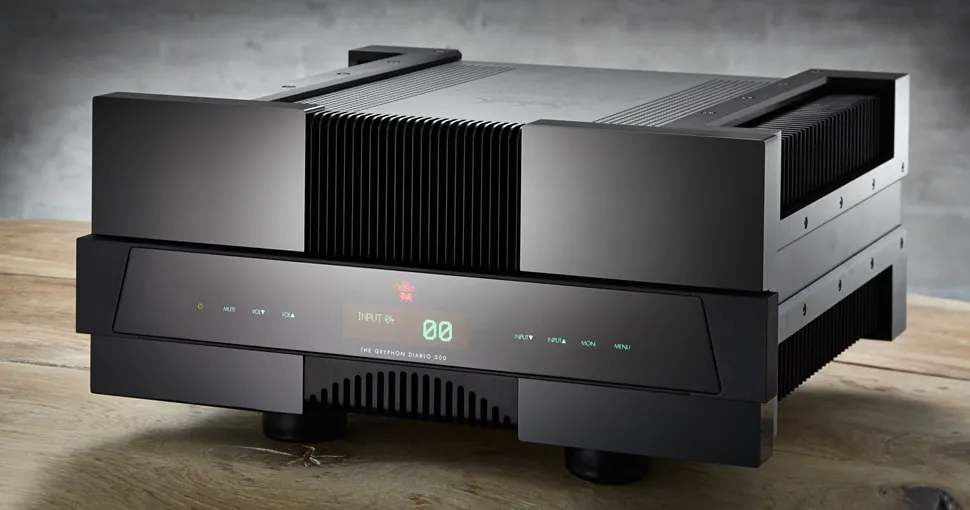
Gryphon Diablo 300
Gryphon Diablo 300. Image source - (c) Gryphon Audio

1. Gryphon Diablo 300 - $19,990

300W/8Ω | Class A/AB (10W pure Class A bias) | 38 kg

Flemming Rasmussen does not believe in feedback. That is not a metaphor. The Diablo 300 uses a zero-feedback topology throughout its signal path, which in engineering terms means the amplifier never corrects itself by comparing output to input. The result, when it works well, is a presentation with unusually natural harmonic structure - overtones develop and decay the way acoustic instruments actually behave rather than the slightly constrained way feedback-corrected circuits sometimes render them.

The first ten watts operate in pure Class A. Independent measurement confirms 10.2W of Class A bias, which matters more than it sounds. Late-night listening at moderate volumes happens entirely within that Class A envelope, and the character shifts perceptibly - richer, more liquid, with a purity that reminds you why people pay five figures for SET amplifiers with a fraction of this power. Push past that threshold and the AB output stage engages seamlessly, delivering 300 watts into 8 ohms and doubling into 4. The transition is inaudible in practice. I have read dozens of long-term owner reports specifically looking for complaints about the Class A-to-AB crossover and found essentially none.

What the independent review consensus converges on: authoritative bass control regardless of speaker load (this amplifier drives Magnepans and B&W 800 D4s with equal composure), a dead-silent noise floor measured at -115dB SNR, and a tonal richness that separates it from the clinical camp. It does not sound warm in the traditional sense. Better to say it sounds complete.

The criticisms are predictable. It runs warm - not hot, but noticeably warm, and you need ventilation space. The optional DAC module ($2,500 extra) is competent but not class-leading by 2026 standards. And at $20,000 for the amplifier alone, you are approaching separates territory where pre/power combinations from the same brand offer more flexibility.

But flexibility is not the point. The Diablo 300 exists because some listeners want one box that does everything at a level where compromise becomes academic. For speakers below 88dB sensitivity, for rooms that demand current delivery, for listeners who want authority without analytical coldness - this is the benchmark.

Hifiverse Rating: 9.6/10

Specifications

  • Model name

    DIABLO 300

  • Type

    Integrated Amplifier

  • Analog inputs (balanced)

    2

  • Analog inputs (single-ended)

    3

  • Input sensitivity (mV)

    617

  • Input impedance (balanced) (Ω)

    40 000

  • Input impedance (single-ended) (Ω)

    20 000

  • Output impedance (balanced) (Ω)

    N/A

  • Output impedance (single-ended) (Ω)

    0.019

  • D/A conversion

    N/A

  • Phono MM/MC current-sensing input impedance (Ω)

    N/A

  • Output power (8Ω) (W)

    2 x 300

  • Output power (4Ω) (W)

    2 x 600

  • Gain (dBu)

    38

  • Frequency response low +/- 3dB (Hz)

    20

  • Frequency response high +/- 3dB (Hz)

    20 000

  • Signal to Noise Ratio (dB)

    N/A

  • Total Harmonic Distortion + Noise (%)

    < 0,05

  • Damping factor

    N/A

  • Dimensions (mm)

    480 x 235 x 460

  • Weight (kg)

    38.1

  • Official link

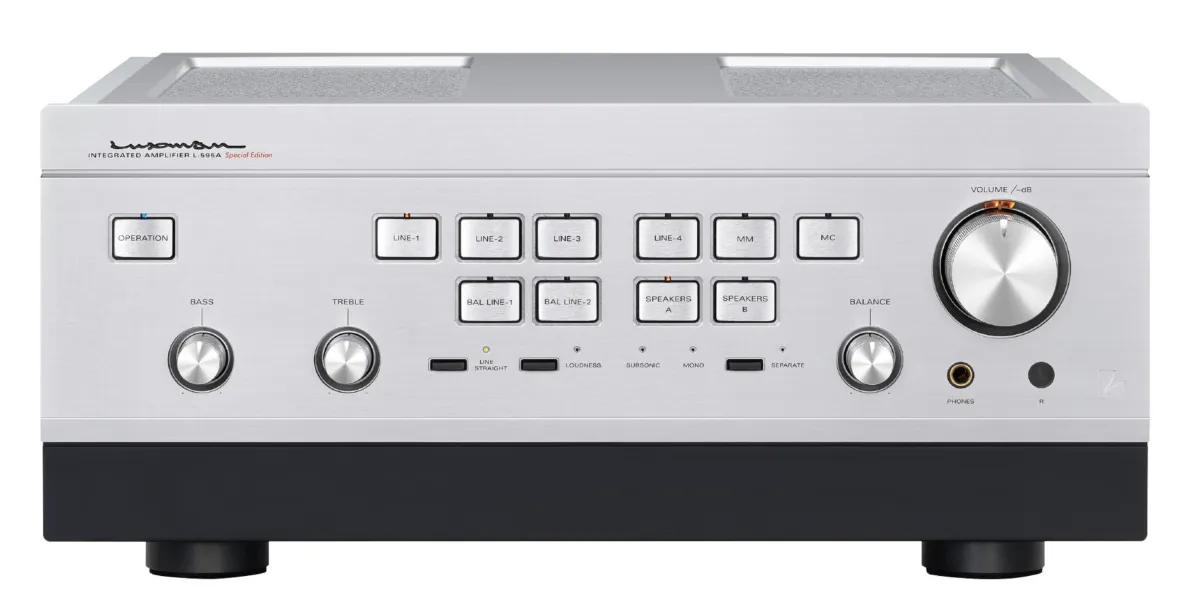
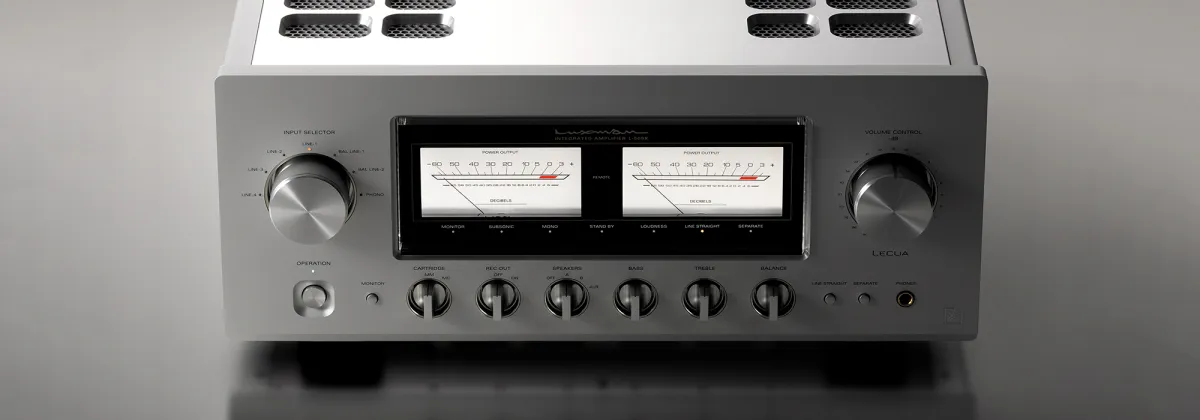
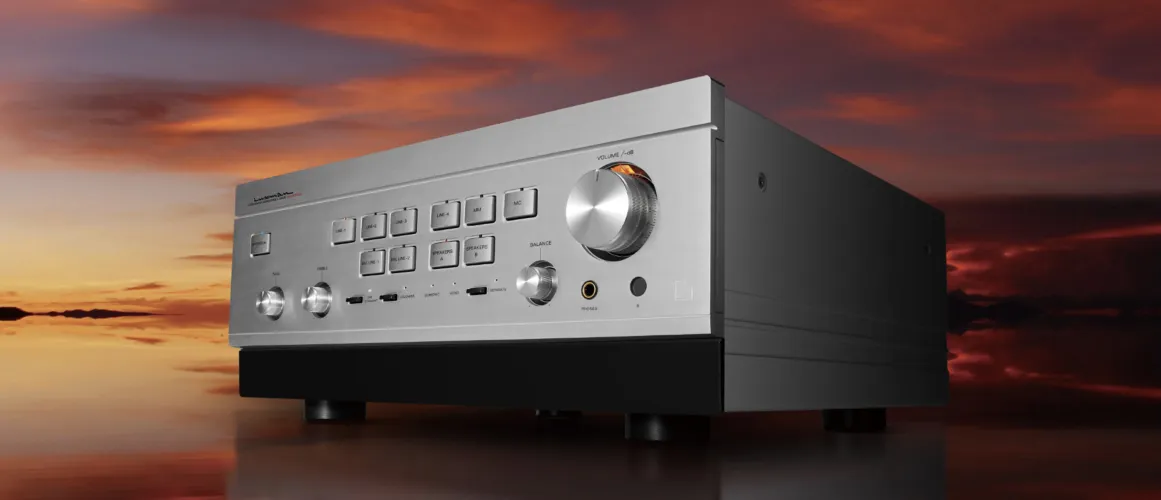
Luxman L-595ASE
Luxman L-595ASE. Image source - (c) Luxman

2. Luxman L-595A SE - $19,995

30W/8Ω pure Class A | LIFES 4.0 | 29 kg

Thirty watts. That is what you get. And it is, somehow, enough.

The L-595A SE is Luxman's Class A flagship, and the specification sheet makes absolutely no sense until you understand what pure Class A actually means in practice. These are not 30 watts that run out of steam - they are 30 watts that operate at maximum bias at all times, delivering their full power continuously without the thermal cycling that limits Class AB designs. The amplifier doubles cleanly into 4 ohms (60W) and again into 2 ohms (120W), which means Accuphase and Luxman are doing similar things at similar price points but with very different personalities.

The LIFES 4.0 feedback system is Luxman's latest iteration of their Integrated Feedback Engine, which applies a minimal, precisely calibrated amount of negative feedback. The result sits in an unusual place on the tonal spectrum - warm without being dark, detailed without being clinical. The midrange is where this amplifier justifies its existence. Vocal reproduction has a three-dimensional quality that solid-state amplifiers at any price rarely achieve. Put on a well-recorded piano concerto and the instrument has body, has weight, has the sense of hammers striking strings inside a resonant wooden chamber. That is what Class A buys you.

The VU meters are not decorative. They provide real-time monitoring of output power, and watching them confirms what your ears tell you - you rarely use more than 3-5 watts at normal listening levels. The champagne gold faceplate and Japanese build quality hit a standard that borders on obsessive. Long-term reliability reports from owners going back to previous L-590 generations suggest these amplifiers run essentially forever.

Limitations are real and non-negotiable. Below 90dB speaker sensitivity, this amplifier runs out of headroom during dynamic peaks. No digital inputs of any kind - you need an external DAC. And it runs genuinely hot. Not dangerous, but your room temperature will notice. The built-in MM/MC phono stage, however, is competitive with standalone units at $1,500-2,000 - a significant value add for vinyl enthusiasts.

Hifiverse Rating: 8.4/10

Specifications

  • Model name

    L-595ASE

  • Type

    Integrated Amplifier with Phono

  • Analog inputs (balanced)

    2

  • Analog inputs (single-ended)

    4 + 1 (Phono)

  • Input sensitivity (mV)

    180

  • Input impedance (balanced) (Ω)

    55 000

  • Input impedance (single-ended) (Ω)

    47 000

  • Output impedance (balanced) (Ω)

    N/A

  • Output impedance (single-ended) (Ω)

    N/A

  • D/A conversion

    N/A

  • Phono MM/MC current-sensing input impedance (Ω)

    47 000 (MM) + 100 (MC)

  • Output power (8Ω) (W)

    30

  • Output power (4Ω) (W)

    60

  • Gain (dBu)

    N/A

  • Frequency response low +/- 3dB (Hz)

    20

  • Frequency response high +/- 3dB (Hz)

    100 000

  • Signal to Noise Ratio (dB)

    105

  • Total Harmonic Distortion + Noise (%)

    0.06

  • Damping factor

    370

  • Dimensions (mm)

    440 x 193 x 462

  • Weight (kg)

    29

  • Official link

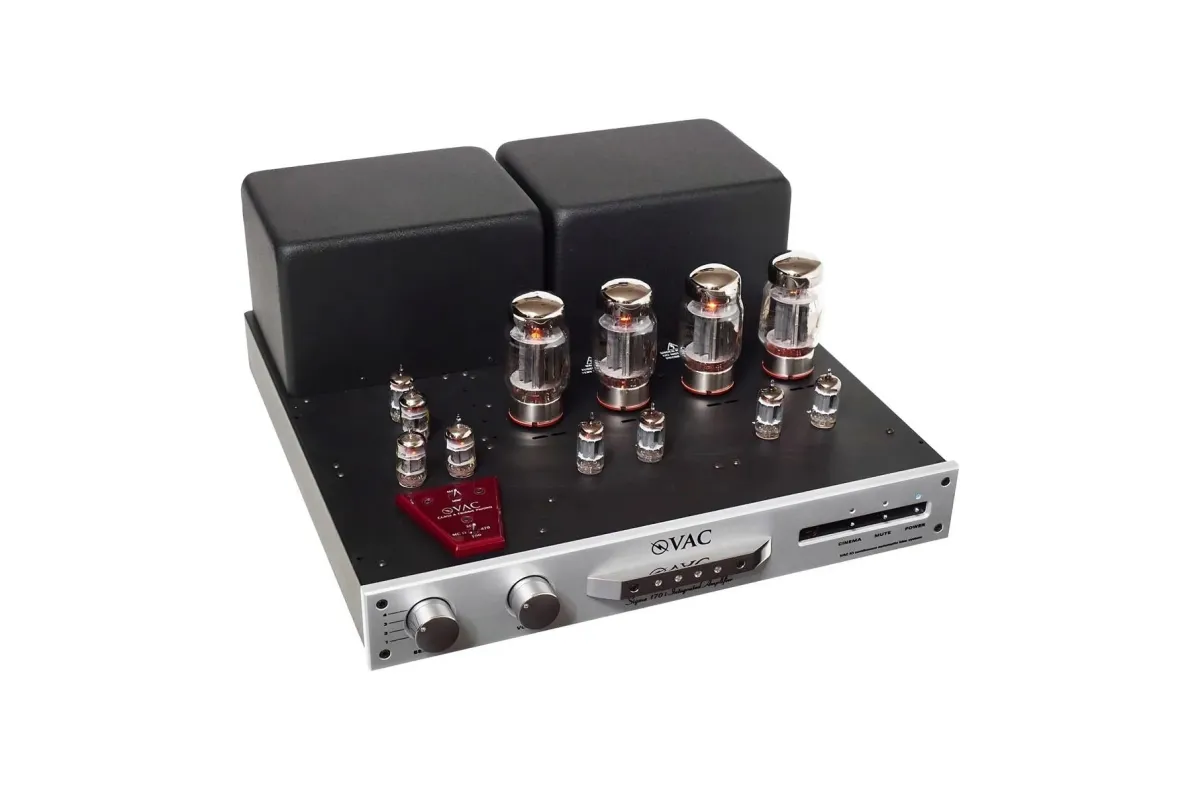
VAC Sigma 170i
VAC Sigma 170i. Image source - (c) VAC

3. VAC Sigma 170i - $18,500

170W/8Ω tube | Class AB | 32 kg

Kevin Hayes has been designing tube amplifiers for over three decades, and the Sigma 170i represents something unusual in the tube world: real power. Most tube integrateds top out at 40-80 watts and require careful speaker matching. The Sigma 170i delivers 170 watts from a sextet of KT88 output tubes, which opens up speaker choices that tube lovers typically cannot consider.

The output transformer is where the magic - and the engineering budget - lives. Hayes designs his own transformers in-house, and the Sigma 170i's pair provide bass control that contradicts every tube amplifier stereotype. Bass is not loose, not bloomy, not soft. It is controlled, defined, and extends with authority. Independent measurements confirm respectable damping for a tube design. The adjustable feedback switch on the rear panel lets you dial between a more romantic, zero-feedback presentation and a tighter, more controlled sound with moderate feedback applied. This is genuinely useful and not a marketing gimmick.

Soundstaging is the party trick. Tube amplifiers, when well-implemented, create a holographic presentation that solid-state designs struggle to match, and the VAC does this with the confidence of a design team that has been refining the approach for decades. The stage extends beyond the speakers laterally and stretches deep behind them. Instrument separation within that stage is precise without being surgical.

The counterarguments write themselves. Tube replacement costs $500-1,000 every 2-4 years depending on usage, and the auto-bias circuit, while convenient, does not eliminate the reality of tube aging. The amplifier weighs 85 lbs with its massive transformers. Heat output is substantial. No digital inputs exist - this is pure analog amplification. And at $18,500, you are paying a tube premium over solid-state alternatives with more power and more features.

For jazz, classical, and acoustic music through moderately efficient speakers, the Sigma 170i creates an experience that measurements alone cannot explain. Whether that experience justifies the ownership costs is the kind of question each listener answers differently.

Hifiverse Rating: 8.9/10

Specifications

  • Model name

    Sigma 170i

  • Type

    Tube Integrated Amplifier

  • Analog inputs (balanced)

    1

  • Analog inputs (single-ended)

    3

  • Input sensitivity (mV)

    N/A

  • Input impedance (balanced) (Ω)

    100 000

  • Input impedance (single-ended) (Ω)

    100 000

  • Output impedance (balanced) (Ω)

    N/A

  • Output impedance (single-ended) (Ω)

    N/A

  • D/A conversion

    N/A

  • Phono MM/MC current-sensing input impedance (Ω)

    N/A

  • Output power (8Ω) (W)

    170

  • Output power (4Ω) (W)

    85

  • Gain (dBu)

    N/A

  • Frequency response low +/- 3dB (Hz)

    7

  • Frequency response high +/- 3dB (Hz)

    60 000

  • Signal to Noise Ratio (dB)

    N/A

  • Total Harmonic Distortion + Noise (%)

    <1

  • Damping factor

    N/A

  • Dimensions (mm)

    203 x 457 x 440

  • Weight (kg)

    32

  • Official link

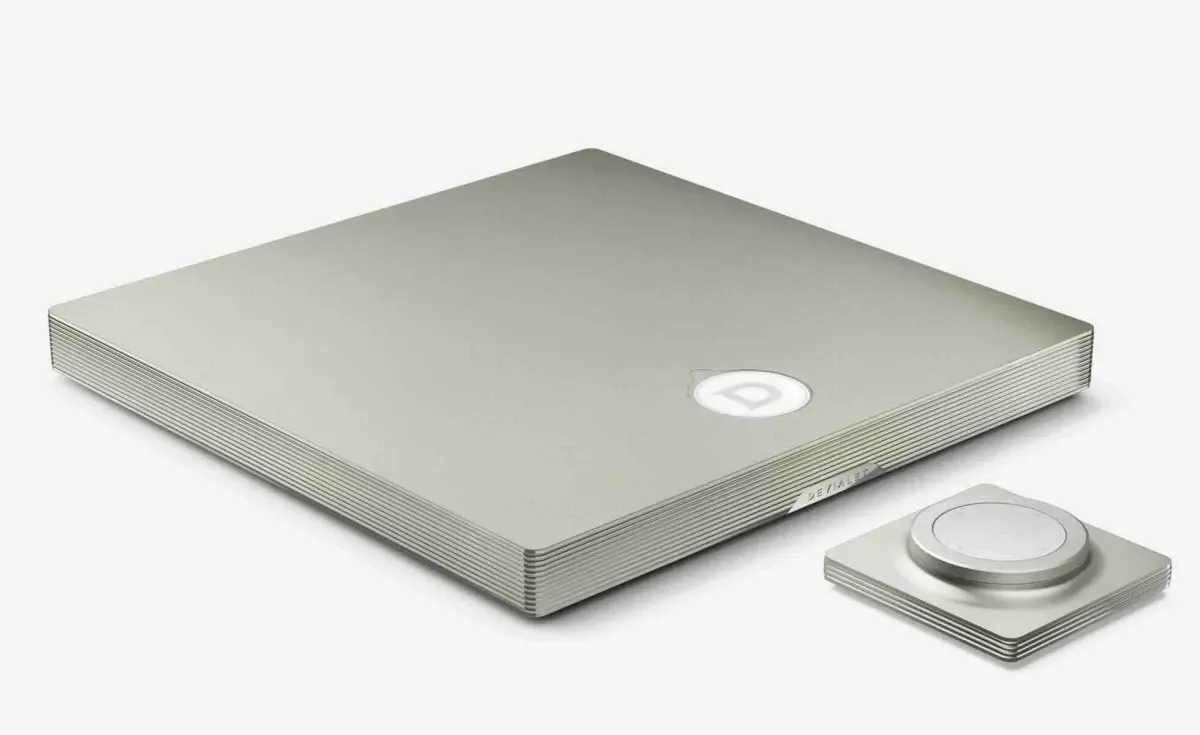
Devialet Astra
Devialet Astra. Image source - (c) Devialet

4. Devialet Astra - $20,000

150W/8Ω, 300W/4Ω | ADH (Analog Digital Hybrid) | 7.2 kg

Seven point two kilograms. That is the entire amplifier, preamplifier, DAC, network streamer, and phono stage. Machined from a single block of aluminum. Forty-seven millimeters tall. If someone described this to you without context, you would assume they were confused about the product category.

The ADH architecture is Devialet's proprietary hybrid approach: a 5-watt Class A voltage amplification stage running in parallel with a high-current Class D output module, controlled by a 12-bit DSP mapping system. The Class A section handles voltage accuracy while the Class D stage provides current drive. The measured result is an output impedance of 0.002 ohms and a damping factor exceeding 2,000 - numbers that translate to speaker control approaching theoretical perfection. Independent testing confirms power output at specification or better: 150W into 8 ohms, 300W into 4 ohms.

SAM (Speaker Active Matching) is the feature that divides opinion most sharply. With over 1,200 speaker profiles in the database, SAM applies DSP correction tailored to your specific speakers, optimizing bass alignment and time-domain accuracy. Forum consensus splits roughly 70/30 in favor - those who engage it report genuinely transformative bass performance, particularly with ported designs. Those who reject it prefer the purity of an uncorrected signal path. Both positions have merit.

Connectivity is comprehensive by any standard: WiFi 6, Bluetooth 5.3, Roon Ready, AirPlay, Google Cast, Spotify Connect, Tidal Connect, UPnP. Digital inputs include coaxial, optical, and USB-C. Analog inputs - and this is a point the original version of this article got wrong - include up to two RCA stereo pairs plus an MM/MC phono stage with 13 equalization curves. The Astra is not digital-only.

Sound character trends toward transparency and precision. Reviewers consistently describe a clean, fast presentation with exceptional bass grip and detail retrieval. The criticism, from roughly a third of reviewers, is that without SAM engaged the sound can lean toward the clinical side - analytical rather than involving. Whether that is a flaw or a feature depends entirely on your speaker pairing and preference.

The redesigned remote includes a built-in screen and Bluetooth control (no infrared support, which affects universal remote integration). The 5-year warranty is competitive. The design polarizes, as intended - this is not equipment that disappears into a rack. It demands display.

Hifiverse Rating: 9.2/10

Specifications

  • Model name

    Astra

  • Type

    Streaming integrated amplifier with DAC and ADC

  • Analog inputs (balanced)

    2

  • Analog inputs (single-ended)

    1

  • Input sensitivity (mV)

    N/A

  • Input impedance (balanced) (Ω)

    N/A

  • Input impedance (single-ended) (Ω)

    N/A

  • Output impedance (balanced) (Ω)

    N/A

  • Output impedance (single-ended) (Ω)

    N/A

  • D/A conversion

    Yes

  • Phono MM/MC current-sensing input impedance (Ω)

    N/A

  • Output power (8Ω) (W)

    2 x 150

  • Output power (4Ω) (W)

    2 x 300

  • Gain (dBu)

    N/A

  • Frequency response low +/- 3dB (Hz)

    0

  • Frequency response high +/- 3dB (Hz)

    88000

  • Signal to Noise Ratio (dB)

    117

  • Total Harmonic Distortion + Noise (%)

    0.0006

  • Damping factor

    2000

  • Dimensions (mm)

    386 x 386 x 47

  • Weight (kg)

    7.2

  • Official link

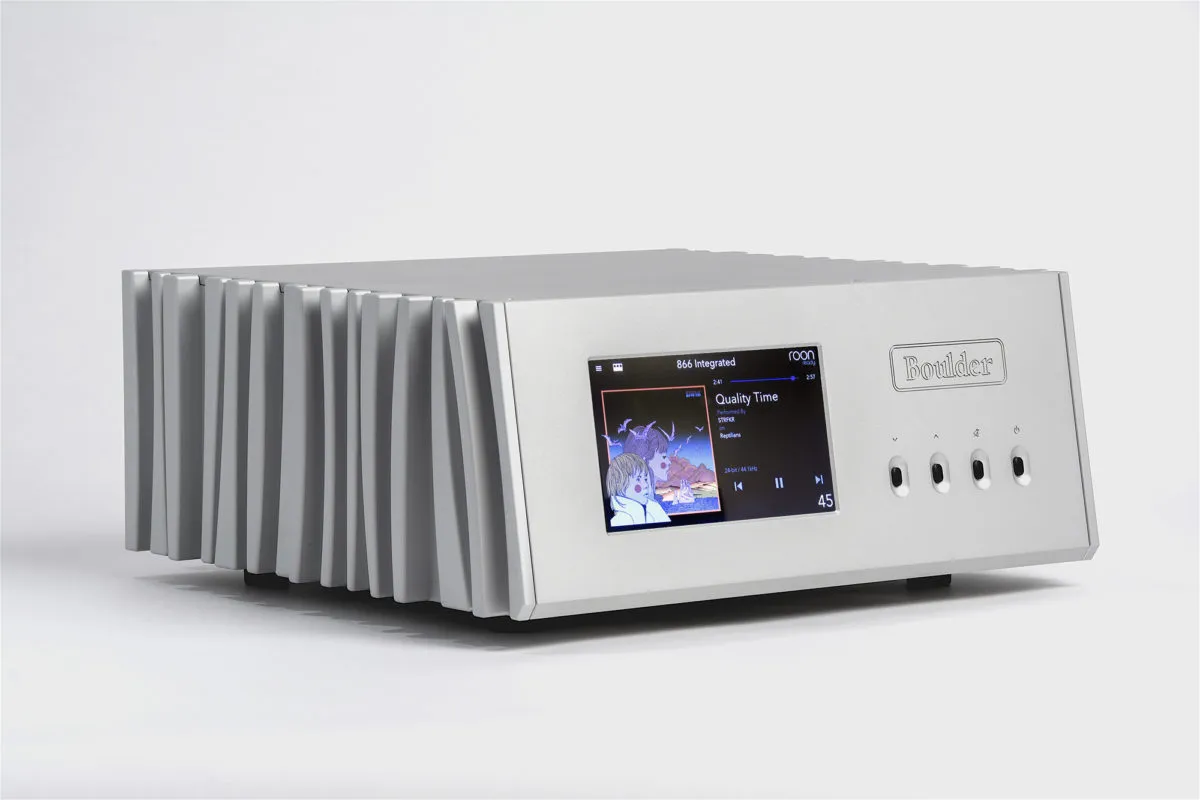
Boulder 866
Boulder 866. Image source - (c) Boulder

5. Boulder 866 - from $13,450

200W/8Ω, 400W/4Ω, 700W peak/2Ω | Class AB | 24.5 kg

Boulder Amplifiers comes from the pro audio world and it shows. The 866 is engineered like test equipment that happens to play music beautifully. Two versions exist: an analog-only model at $13,450 and an analog+digital version at $14,950 that adds a Roon Ready streaming DAC with AES3, Toslink, USB, Ethernet, AirPlay, and even Bluetooth buried in the settings menu.

The trickle-down from Boulder's flagship 3050 mono amplifier is evident in the grounding topology, which borrows techniques from the RF engineering world. The DAC section, present in the digital version, inherits its architecture from Boulder's 2120 - all incoming digital signals are upsampled to 352.8kHz through a Raspberry Pi-based front end, reclocked to the 866's internal master clock, then processed by a differential DAC chip per channel running in an undocumented mode. Boulder does its own DSP math rather than relying on the chip's internal processing.

The sound is what you would expect from a company that measures everything and apologizes for nothing. Frequency response is ruler-flat. The noise floor is essentially unmeasurable in practical terms. Several independent reviewers have called it the quietest amplifier they have tested. Tonally, it sits precisely at neutral - which is either the highest compliment or the primary complaint, depending on your taste. Listeners who want warmth, romance, or tube-like harmonic richness will find the 866 politely uninterested in providing any.

The chassis is CNC-machined aluminum with staggered heatsink fins that look like nothing else in the category. The full-color touchscreen display dominates the front panel and supports custom input icons including your own photographs. No physical remote is included - control happens through the Boulder app or an optional RF remote.

Three balanced XLR inputs only for analog - no RCA. Weight is 24.5 kg, not the 95 lbs the previous version of this article incorrectly stated. Five-year warranty.

Hifiverse Rating: 9.3/10

Specifications

  • Model name

    866

  • Type

    Integrated Amplifier

  • Analog inputs (balanced)

    3

  • Analog inputs (single-ended)

    N/A

  • Input sensitivity (mV)

    N/A

  • Input impedance (balanced) (Ω)

    100 000

  • Input impedance (single-ended) (Ω)

    N/A

  • Output impedance (balanced) (Ω)

    N/A

  • Output impedance (single-ended) (Ω)

    N/A

  • D/A conversion

    Yes

  • Phono MM/MC current-sensing input impedance (Ω)

    N/A

  • Output power (8Ω) (W)

    250

  • Output power (4Ω) (W)

    400

  • Gain (dBu)

    N/A

  • Frequency response low +/- 3dB (Hz)

    0.015

  • Frequency response high +/- 3dB (Hz)

    150 000

  • Signal to Noise Ratio (dB)

    N/A

  • Total Harmonic Distortion + Noise (%)

    0.01

  • Damping factor

    N/A

  • Dimensions (mm)

    440 x 390 x 190

  • Weight (kg)

    24.5

  • Official link

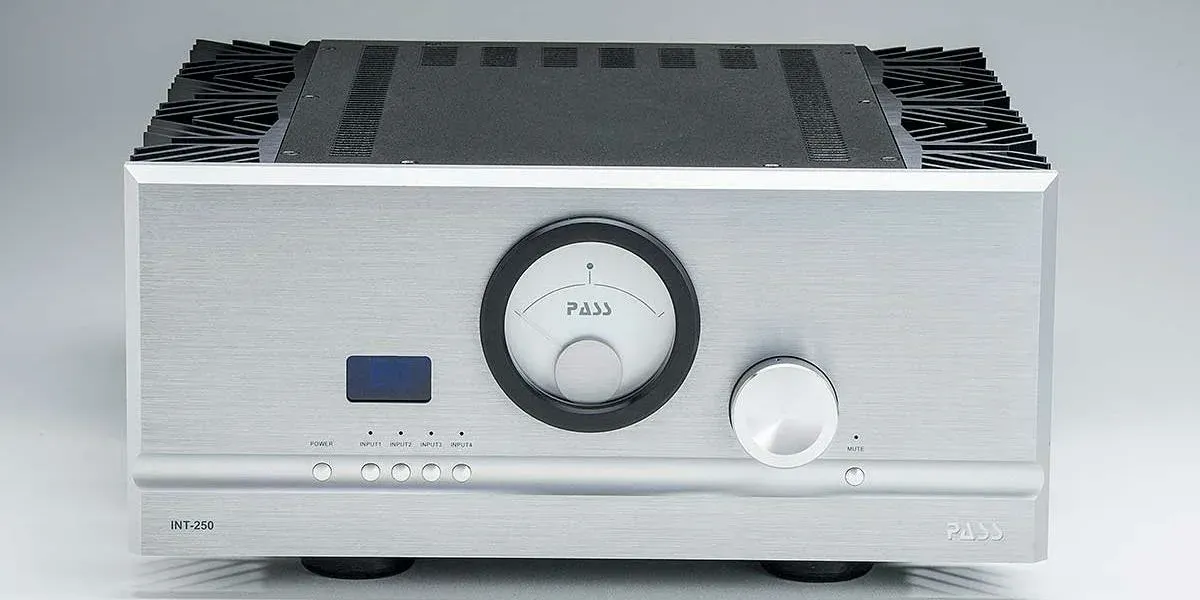
Pass Labs INT-250
Pass Labs INT-250. Image source - (c) Pass Labs

6. Pass Labs INT-250 - $14,000

250W/8Ω, 500W/4Ω | Class AB (15W Class A bias) | 48 kg

Nelson Pass is the closest thing the audio industry has to a living legend who still shows up to work every day. The INT-250 puts his design philosophy into a single chassis: high Class A bias for the first 15 watts (independently verified at 14.8W), massive power reserves for dynamic peaks, and a voicing that sits somewhere between the warmth of tubes and the grip of solid-state.

There is a specific quality to Pass amplifiers that reviewers struggle to articulate. "Musical" gets used a lot. "Organic" shows up frequently. What they are describing, I think, is the effect of that 15-watt Class A window combined with Pass's particular approach to harmonic distortion - the amplifier adds a touch of second-harmonic content at low levels that fills out the tonal picture without obscuring detail. It is deliberate, documented, and measurable. Whether you consider it a feature or a coloration is the entire Pass Labs debate in one sentence.

Power delivery is unimpeachable. 250 watts into 8 ohms, 500 into 4, and the high-current output stage handles reactive speaker loads without complaint. Two large VU meters on the faceplate provide visual feedback and, let us be honest, look spectacular doing it. Build quality is hand-assembled in Auburn, California, and long-term owner satisfaction rates are among the highest in the industry - Pass Labs owners tend not to sell their amplifiers.

The tradeoffs: no digital inputs whatsoever. No phono stage. 48 kg weight requires two-person handling. Runs warm from the Class A bias. The damping factor of 150 is moderate compared to competitors (Hegel's 4,000+, Boulder's 1,000+), which means bass control relies more on current delivery than electrical damping - a design choice, not a limitation, but one that favors certain speaker types.

Hifiverse Rating: 9.5/10

Specifications

  • Model name

    INT-250

  • Type

    Integrated Amplifier

  • Analog inputs (balanced)

    2

  • Analog inputs (single-ended)

    4

  • Input sensitivity (mV)

    N/A

  • Input impedance (balanced) (Ω)

    47 000

  • Input impedance (single-ended) (Ω)

    47 000

  • Output impedance (balanced) (Ω)

    N/A

  • Output impedance (single-ended) (Ω)

    N/A

  • D/A conversion

    N/A

  • Phono MM/MC current-sensing input impedance (Ω)

    N/A

  • Output power (8Ω) (W)

    250

  • Output power (4Ω) (W)

    500

  • Gain (dBu)

    N/A

  • Frequency response low +/- 3dB (Hz)

    1.5

  • Frequency response high +/- 3dB (Hz)

    100 000

  • Signal to Noise Ratio (dB)

    100

  • Total Harmonic Distortion + Noise (%)

    0.2

  • Damping factor

    150

  • Dimensions (mm)

    483 х 546 х 191

  • Weight (kg)

    48

  • Official link

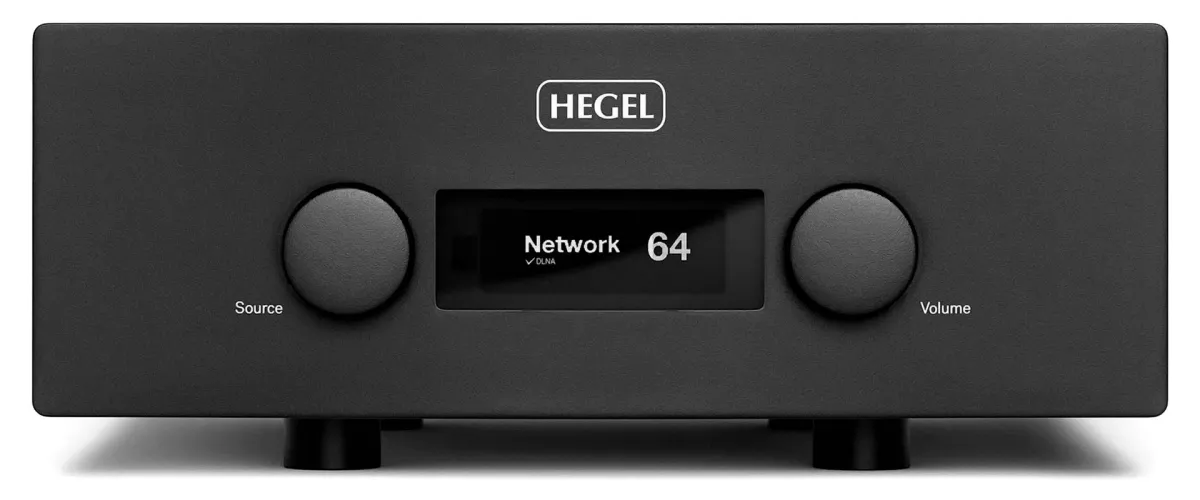
Hegel H590
Hegel H590. Image source - (c) Hegel

7. Hegel H590 - $12,000

301W/8Ω, 550W/4Ω | Class AB (SoundEngine2) | 22 kg

The H590 is Hegel's flagship integrated and probably the most complete all-in-one solution in this entire comparison. Inside one 22-kilogram chassis you get 301 watts of amplification, a dual-AKM AK4493 DAC handling up to 32-bit/768kHz and DSD512, and streaming that supports Roon Ready, AirPlay 2, Spotify Connect, Tidal Connect, and UPnP. Add speakers and you are done.

SoundEngine2 is Hegel's proprietary feedforward error correction system, which differs from conventional negative feedback. Rather than comparing output to input and correcting retroactively, it predicts and cancels distortion products before they reach the output. The measured result is a noise floor at -118dB and a damping factor exceeding 4,000 - among the highest in the industry. Translation for non-engineers: this amplifier grips speaker cones with absolute authority and reveals micro-details that other amplifiers gloss over.

The sonic signature is transparency itself. The H590 does not add, does not subtract, does not editorialize. What is in the recording comes out of your speakers, for better or worse. This makes system matching critical - pair it with already-bright speakers (some Focal tweeters, some B&W diamond drivers) and the result can be relentlessly revealing. Pair it with Harbeth, Spendor, or Sonus Faber and you get detail plus musicality in a combination that justifies the price without argument.

The built-in DAC deserves particular mention. At $12,000 for the complete package, the DAC section alone competes with standalone units at $3,000-5,000. Streaming stability has improved significantly since launch, though some users still report occasional app sluggishness.

No phono input. Industrial Scandinavian aesthetics that will not win any beauty contests. But for streaming-first, digital-centric systems where transparency and power matter most, the H590 is the value leader of this comparison by a substantial margin.

Hifiverse Rating: 9.4/10

Specifications

  • Model name

    H590

  • Type

    Integrated Amplifier with DAC

  • Analog inputs (balanced)

    2

  • Analog inputs (single-ended)

    3

  • Input sensitivity (mV)

    N/A

  • Input impedance (balanced) (Ω)

    10 000

  • Input impedance (single-ended) (Ω)

    10 000

  • Output impedance (balanced) (Ω)

    N/A

  • Output impedance (single-ended) (Ω)

    N/A

  • D/A conversion

    Yes

  • Phono MM/MC current-sensing input impedance (Ω)

    N/A

  • Output power (8Ω) (W)

    301

  • Output power (4Ω) (W)

    N/A

  • Gain (dBu)

    N/A

  • Frequency response low +/- 3dB (Hz)

    5

  • Frequency response high +/- 3dB (Hz)

    180 000

  • Signal to Noise Ratio (dB)

    >100

  • Total Harmonic Distortion + Noise (%)

    0.005

  • Damping factor

    >4000

  • Dimensions (mm)

    171 x 430 x 445

  • Weight (kg)

    22

  • Official link

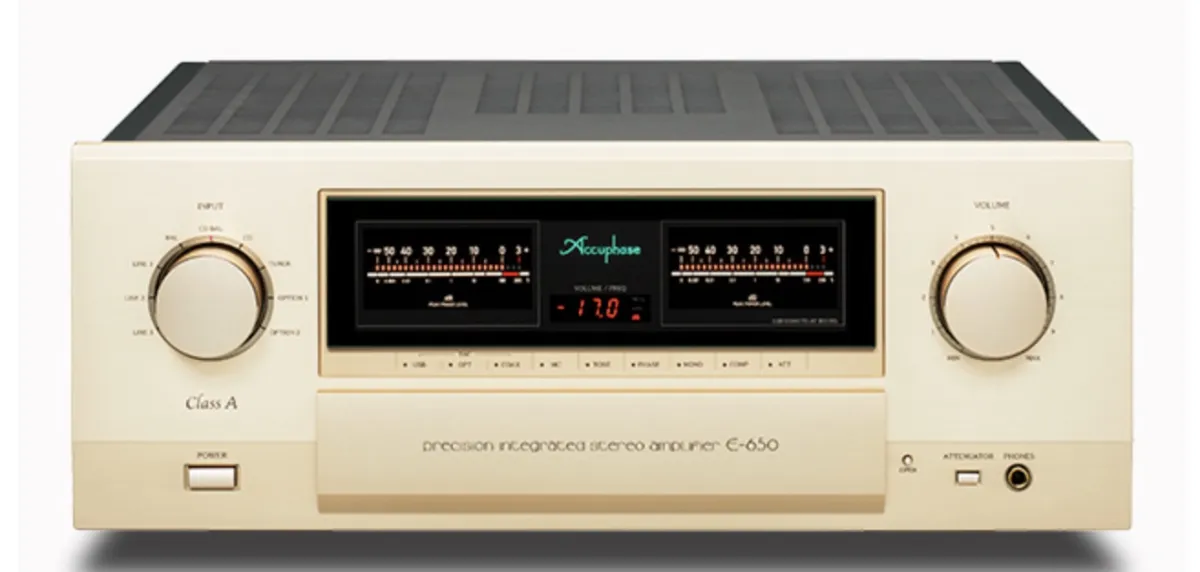
Accuphase E-650
Accuphase E-650. Image source - (c) Accuphase

8. Accuphase E-650 - ~$20,500

30W/8Ω pure Class A | Balanced AAVA | 25.3 kg

Accuphase makes a rule for themselves: published specifications are guaranteed minimums, never optimistic estimates. When they rate the E-650 at 30 watts per channel into 8 ohms, that is the number they will defend in court. The amplifier doubles cleanly into 4 ohms (60W), again into 2 ohms (120W), and delivers 150 watts into 1 ohm - a load most manufacturers will not even acknowledge exists.

The Balanced AAVA volume control, borrowed from Accuphase's reference C-3850 preamplifier, is the first implementation of this technology in an integrated amplifier. AAVA (Accuphase Analog Vari-gain Amplifier) eliminates the conventional potentiometer from the signal path entirely, instead using multiple weighted current sources to achieve volume attenuation. The result is consistent sonic quality at any volume level - no sweet spot, no channel imbalance at low volumes, no degradation at the extremes.

I keep returning to something a reviewer wrote about the E-650: when you listen, you forget about the sound and just experience the music. That is not a marketing claim. It describes the peculiar Accuphase quality of tonal accuracy so complete that analysis becomes irrelevant. The amplifier does not sound warm, does not sound bright, does not announce itself. It presents music as a physical event unfolding in your room. The comparison to live musicians in a concert hall comes up repeatedly in professional reviews, and while that comparison is overused in audio writing, here it applies more literally than usual.

Build quality is museum-grade. The champagne gold faceplate, the LCD level meters that track the music, the gold-plated terminals - everything communicates permanence. Accuphase amplifiers from the 1980s are still running without service. The optional DAC and phono modules extend functionality without compromising the base design.

The price has increased to approximately $20,500 in current markets. Speaker sensitivity requirements mirror the Luxman L-595A SE: 90dB or higher for best results. No built-in streaming.

Hifiverse Rating: 9.2/10

Specifications

  • Model name

    E-650

  • Type

    Integrated Amplifier featuring Balanced AAVA volume control

  • Analog inputs (balanced)

    2

  • Analog inputs (single-ended)

    3 + CD + Tuner

  • Input sensitivity (mV)

    N/A

  • Input impedance (balanced) (Ω)

    N/A

  • Input impedance (single-ended) (Ω)

    N/A

  • Output impedance (balanced) (Ω)

    N/A

  • Output impedance (single-ended) (Ω)

    N/A

  • D/A conversion

    N/A

  • Phono MM/MC current-sensing input impedance (Ω)

    N/A

  • Output power (8Ω) (W)

    30

  • Output power (4Ω) (W)

    60

  • Gain (dBu)

    N/A

  • Frequency response low +/- 3dB (Hz)

    N/A

  • Frequency response high +/- 3dB (Hz)

    N/A

  • Signal to Noise Ratio (dB)

    120

  • Total Harmonic Distortion + Noise (%)

    N/A

  • Damping factor

    800

  • Dimensions (mm)

    465 x 191 x 428

  • Weight (kg)

    25.3

  • Official link

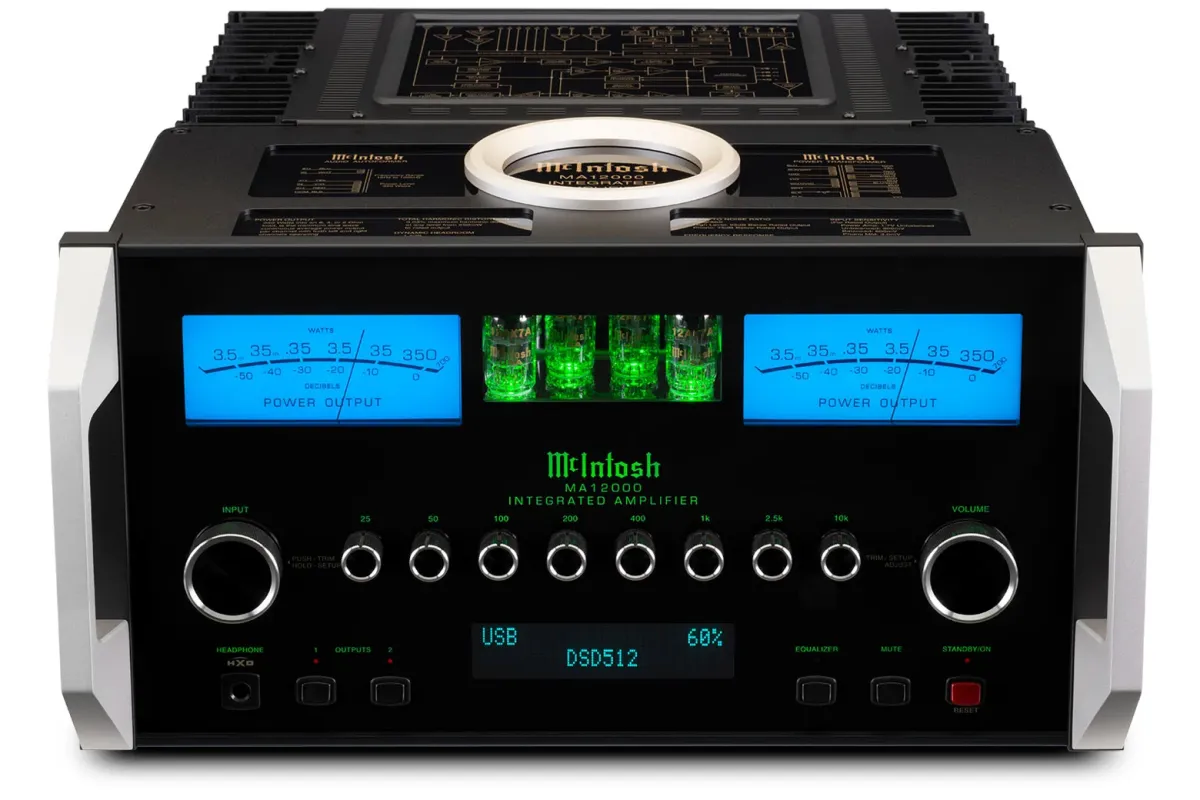
McIntosh MA12000
McIntosh MA12000. Image source - (c) McIntosh

9. McIntosh MA12000 - $15,000

350W/8Ω | Hybrid (12AX7A tubes + solid-state) | 48.9 kg

The blue meters. You either want them or you do not, and if you do, nothing else will satisfy. McIntosh has been building audio equipment in Binghamton, New York, since 1949, and the MA12000 carries that heritage forward with characteristic subtlety - which is to say, none at all. It is big, heavy, glowing, and unapologetically American.

The hybrid topology pairs two 12AX7A vacuum tubes in the preamplifier section with a solid-state power amplifier delivering 350 watts into 8 ohms. McIntosh's autoformer technology ensures consistent power delivery across different speaker impedances, which is a genuine engineering advantage that the competition largely ignores. The tube preamp stage adds a warmth and body to the sound that smooths rough recordings and makes mediocre masters listenable - a quality that streaming-era listeners will appreciate more than they expect.

The feature set is among the most comprehensive here: balanced XLR inputs, MM/MC phono stage, a 32-bit/192kHz DAC, headphone amplifier, and McIntosh's Power Guard protection system that prevents clipping. The only significant omission is built-in streaming - you need an external streamer, which feels like an oversight at $15,000 in 2026.

The McIntosh sound divides opinion along predictable lines. Transparency purists find it colored. Warmth seekers find it perfect. There is measurable harmonic addition from the tube stage, and it is not subtle. For bright or analytical speakers, particularly some Focal and B&W models, this tube warmth provides a musically satisfying counterbalance. For already-warm speakers like Harbeth or Sonus Faber, the combination may push into excessive softness.

Long-term value is exceptional. McIntosh products retain 70-80% of their retail price on the secondary market, and the company's service support extends decades. The MA12000 is as much a piece of American industrial design as it is an amplifier.

Hifiverse Rating: 9.0/10

Specifications

  • Model name

    MA12000

  • Type

    Inetgarted Amplifier with DAC and Phono

  • Analog inputs (balanced)

    2

  • Analog inputs (single-ended)

    6

  • Input sensitivity (mV)

    600 (XLR) + 300 (RCA)

  • Input impedance (balanced) (Ω)

    44 000

  • Input impedance (single-ended) (Ω)

    22 000

  • Output impedance (balanced) (Ω)

    N/A

  • Output impedance (single-ended) (Ω)

    N/A

  • D/A conversion

    Yes

  • Phono MM/MC current-sensing input impedance (Ω)

    N/A

  • Output power (8Ω) (W)

    350

  • Output power (4Ω) (W)

    350

  • Gain (dBu)

    N/A

  • Frequency response low +/- 3dB (Hz)

    10

  • Frequency response high +/- 3dB (Hz)

    100 000

  • Signal to Noise Ratio (dB)

    114

  • Total Harmonic Distortion + Noise (%)

    0.005

  • Damping factor

    N/A

  • Dimensions (mm)

    445 x 240 x 502

  • Weight (kg)

    48.9

  • Official link

Aavik I-280
Aavik I-280. Image source - (c) Aavik

10. Aavik I-280 - $12,500

300W/8Ω, 600W/4Ω | Class AB | 9 kg

Nine kilograms for 300 watts per channel. The Aavik I-280 is the second-lightest amplifier in this comparison after the Devialet, and for entirely different reasons. Where Devialet achieves compactness through hybrid Class A/D architecture, Aavik relies on advanced switch-mode power supply design and their proprietary noise reduction technologies.

Those technologies - Active Tesla Coils and Dither Circuitry - are the elephant in the room. Aavik claims these reduce mechanical vibration and electromagnetic interference, respectively. The audio engineering community is split: approximately half of forum discussions express skepticism about whether these technologies produce audible results beyond what conventional shielding and isolation achieve. The other half report noticeably lower noise floors and improved transparency. There is no independent measurement specifically isolating the contribution of these features, which makes objective assessment impossible.

What is not controversial: the amplifier delivers serious power from a dual-mono architecture, the build quality is excellent Danish industrial design, and the modular expansion system allows you to add DAC, phono, and streaming modules over time. The base price of $12,500 covers amplification only. A fully loaded I-280 with all modules approaches $18,000, which significantly changes the value equation.

The dealer network is limited compared to established brands, making audition difficult in many markets. For those who can hear it, the I-280 offers transparency and power in a package that physically disappears into any room.

Hifiverse Rating: 9.1/10

Specifications

  • Model name

    I-280

  • Type

    Integrated Amplifier

  • Analog inputs (balanced)

    N/A

  • Analog inputs (single-ended)

    5

  • Input sensitivity (mV)

    N/A

  • Input impedance (balanced) (Ω)

    N/A

  • Input impedance (single-ended) (Ω)

    50 000

  • Output impedance (balanced) (Ω)

    N/A

  • Output impedance (single-ended) (Ω)

    N/A

  • D/A conversion

    N/A

  • Phono MM/MC current-sensing input impedance (Ω)

    N/A

  • Output power (8Ω) (W)

    300

  • Output power (4Ω) (W)

    600

  • Gain (dBu)

    N/A

  • Frequency response low +/- 3dB (Hz)

    10

  • Frequency response high +/- 3dB (Hz)

    50 000

  • Signal to Noise Ratio (dB)

    N/A

  • Total Harmonic Distortion + Noise (%)

    0,005

  • Damping factor

    >1000

  • Dimensions (mm)

    400 x 384 x 102

  • Weight (kg)

    9

  • Official link

Luxman L-509X
Luxman L-509X. Image source - (c) Luxman

11. Luxman L-509X - $9,995

120W/8Ω, 220W/4Ω | Class AB (ODNF 4.0) | 29.3 kg

If the L-595A SE is Luxman's Class A statement, the L-509X is the practical alternative that 80% of buyers should actually purchase. Same build quality. Same champagne gold aesthetic. Same legendary phono stage. But with 120 watts of Class AB power and a $10,000 price reduction, it addresses speakers that the 30-watt flagship simply cannot drive.

The ODNF 4.0 (Only Distortion Negative Feedback) circuit applies negative feedback exclusively to the distortion component of the signal rather than the entire output. The audible result is natural sound with lower measured distortion than a zero-feedback design but without the slightly constrained quality that high-feedback circuits can introduce. It is a middle path that Luxman has refined across multiple generations, and the L-509X represents its best iteration at this price point.

The voicing carries the Luxman house character - slightly warm of neutral, with a richness in the midrange that makes acoustic instruments and voices particularly compelling. Not as liquid as the pure Class A model, naturally, but close enough that the difference requires focused A/B comparison to identify. The built-in MM/MC phono stage is identical in quality to the flagship's, making this the strongest value proposition for vinyl enthusiasts in the comparison.

At $9,995, the L-509X competes directly with the Hegel H590 ($12,000) and arguably loses on features (no DAC, no streaming) while winning on analog warmth and phono capability. Your priorities determine the winner.

Hifiverse Rating: 9.0/10

Specifications

  • Model name

    L-509X

  • Type

    Integrated Amplifier with Phono

  • Analog inputs (balanced)

    2

  • Analog inputs (single-ended)

    4 + 1 (Phono)

  • Input sensitivity (mV)

    180

  • Input impedance (balanced) (Ω)

    55 000

  • Input impedance (single-ended) (Ω)

    47 000

  • Output impedance (balanced) (Ω)

    N/A

  • Output impedance (single-ended) (Ω)

    N/A

  • D/A conversion

    N/A

  • Phono MM/MC current-sensing input impedance (Ω)

    47 000 (MM) + 100 (MC)

  • Output power (8Ω) (W)

    120

  • Output power (4Ω) (W)

    220

  • Gain (dBu)

    N/A

  • Frequency response low +/- 3dB (Hz)

    20

  • Frequency response high +/- 3dB (Hz)

    100 000

  • Signal to Noise Ratio (dB)

    105

  • Total Harmonic Distortion + Noise (%)

    0.06

  • Damping factor

    370

  • Dimensions (mm)

    440 x 193 x 463

  • Weight (kg)

    29.3

  • Official link

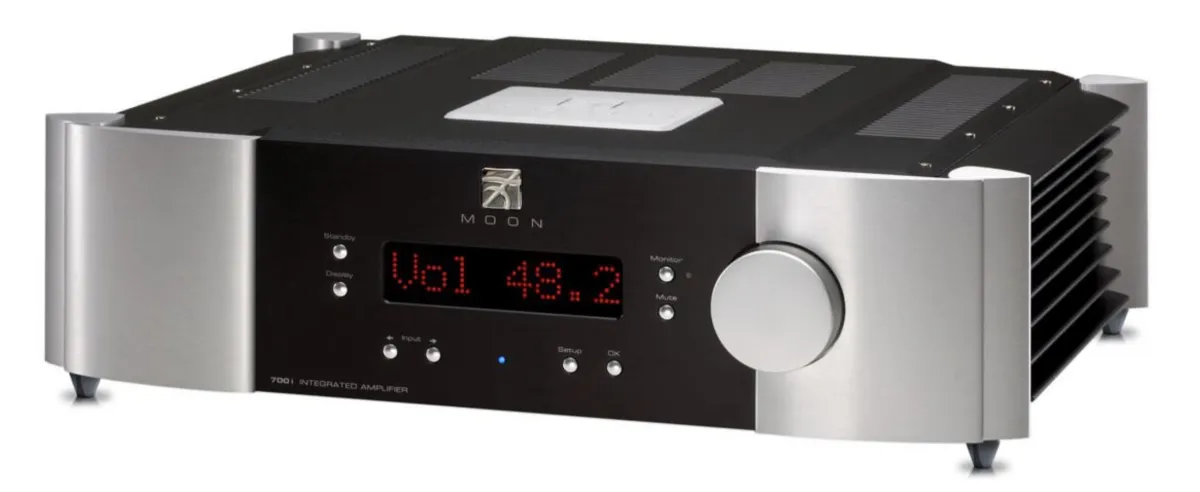
Simaudio Moon 700i V2
Simaudio Moon 700i V2. Image source - (c) Simaudio Moon

12. Simaudio Moon 700i V2 - $10,500

175W/8Ω, 350W/4Ω | Class AB | 27 kg

Designed and manufactured in Quebec, the Moon 700i V2 is the kind of amplifier that review vocabulary struggles with because it does not do anything wrong and does not draw attention to anything specific. The word that comes up most often in professional reviews is "effortless." Music flows without strain, without emphasis, without the amplifier imposing itself on the signal.

The dual-mono construction with 55 amps of peak current delivery ensures this effortlessness extends to demanding speaker loads. CNC-machined aluminum chassis at 27 kg communicates serious intent. The modular approach allows adding DAC ($1,200), phono ($600), and streaming ($800) modules, though a fully loaded unit at approximately $13,100 enters a competitive neighborhood where the Hegel H590 includes everything standard.

Tonal balance sits precisely at neutral - not the hyper-analytical neutral of the Boulder, but a gentler version that some reviewers describe as "naturally balanced." The distinction matters. Where the Boulder reveals everything including things you might prefer not to know, the Moon presents everything at a comfortable volume, as it were. Detail retrieval is high, but never aggressive.

The 10-year warranty is the best in this comparison and reflects Simaudio's confidence in their manufacturing quality. Conservative styling may lack visual drama, but build quality is beyond reproach.

Hifiverse Rating: 8.9/10

Specifications

  • Model name

    700i V2

  • Type

    Integrated Amplifier with DAC

  • Analog inputs (balanced)

    1

  • Analog inputs (single-ended)

    5

  • Input sensitivity (mV)

    N/A

  • Input impedance (balanced) (Ω)

    100 000

  • Input impedance (single-ended) (Ω)

    50 000

  • Output impedance (balanced) (Ω)

    N/A

  • Output impedance (single-ended) (Ω)

    N/A

  • D/A conversion

    Yes

  • Phono MM/MC current-sensing input impedance (Ω)

    N/A

  • Output power (8Ω) (W)

    175

  • Output power (4Ω) (W)

    350

  • Gain (dBu)

    N/A

  • Frequency response low +/- 3dB (Hz)

    10

  • Frequency response high +/- 3dB (Hz)

    100 000

  • Signal to Noise Ratio (dB)

    120

  • Total Harmonic Distortion + Noise (%)

    <0.003

  • Damping factor

    850

  • Dimensions (mm)

    140 x 476 x 460

  • Weight (kg)

    27

  • Official link

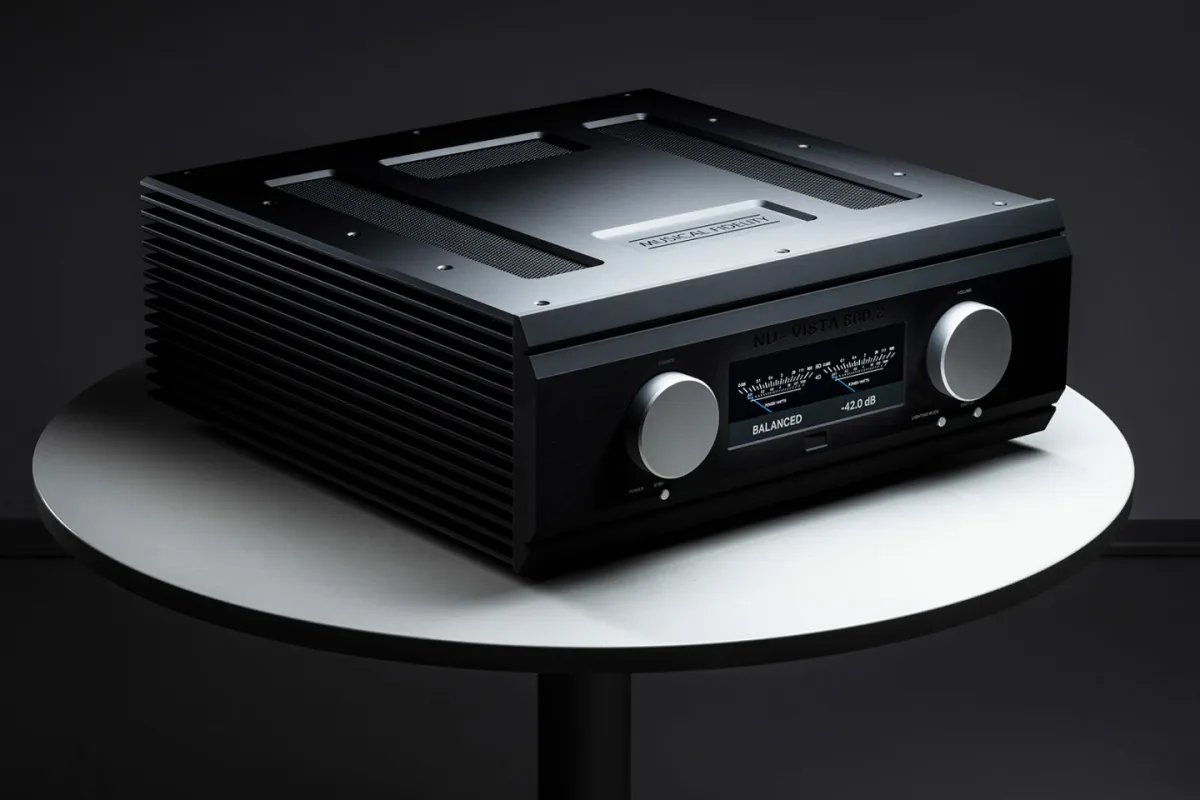
Musical Fidelity Nu-Vista 800.2
Musical Fidelity Nu-Vista 800.2. Image source - (c) Musical Fidelity

13. Musical Fidelity Nu-Vista 800.2 - $8,999

300W/8Ω, 600W/4Ω | Hybrid (6CW4 Nuvistor tubes) | 41 kg

The Nuvistor tube is a miniature vacuum tube originally developed for military radar systems in the 1960s. Musical Fidelity's Anthony Michaelson discovered that four of these tiny devices, placed in the preamplifier's input stage, add a harmonic richness and dimensionality to the sound that silicon alone struggles to match. The tubes are rated for 10,000+ hours of operation and, being military spec, tend to exceed that by a comfortable margin.

What makes the Nu-Vista 800.2 unusual in this comparison is the combination of tube warmth with raw power. 300 watts into 8 ohms and 600 into 4, backed by high current delivery, means this amplifier drives planar magnetic speakers, electrostatics, and other difficult loads that typically demand separates. At $8,999, it is the least expensive amplifier in this roundup and arguably offers the most features: balanced XLR, MM/MC phono, ESS Sabre ES9038 DAC handling 32/384 and DSD256, and a headphone amplifier.

The sound carries a recognizable tube character without the maintenance overhead. Warmer than neutral, with a richness in the lower midrange that fills out thin recordings and adds body to digital sources. The ESS DAC implementation is competent, though not as refined as what Hegel or Boulder achieve with their digital sections. The phono stage is solid but not in the Luxman/Accuphase league.

Build quality is good rather than exceptional - solid construction without the obsessive finishing of Japanese competitors. The industrial black faceplate is strictly functional. But at this price, with this feature set and this power output, the Nu-Vista 800.2 is the entry ticket to the high-end integrated amplifier experience.

Hifiverse Rating: 9.0/10

Specifications

  • Model name

    NU-VISTA 800.2

  • Type

    Integrated Amplifier

  • Analog inputs (balanced)

    1

  • Analog inputs (single-ended)

    4

  • Input sensitivity (mV)

    N/A

  • Input impedance (balanced) (Ω)

    40 000

  • Input impedance (single-ended) (Ω)

    40 000

  • Output impedance (balanced) (Ω)

    N/A

  • Output impedance (single-ended) (Ω)

    N/A

  • D/A conversion

    N/A

  • Phono MM/MC current-sensing input impedance (Ω)

    N/A

  • Output power (8Ω) (W)

    330

  • Output power (4Ω) (W)

    500

  • Gain (dBu)

    N/A

  • Frequency response low +/- 3dB (Hz)

    10

  • Frequency response high +/- 3dB (Hz)

    30 000

  • Signal to Noise Ratio (dB)

    >107

  • Total Harmonic Distortion + Noise (%)

    < 0.005

  • Damping factor

    200

  • Dimensions (mm)

    483 x 187 x 510

  • Weight (kg)

    41

  • Official link

What Comes Next

Part 2 of this comparison covers the territory where individual assessments become system-level decisions. We present detailed comparison matrices across ten parameters, speaker compatibility charts, power-vs-price analysis, sound character spectrums, and our specific recommendations by use case - from the vinyl purist building a two-channel system to the streaming-first listener who wants one box that does everything.

Continue reading here – Part II

hifiverse