
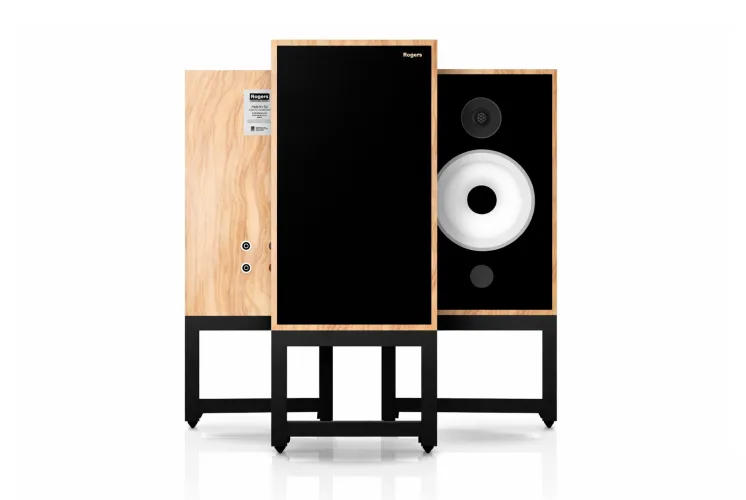

Rogers PM510 S3 – the Return of a Classic Monitor Inspired by the BBC Legacy

British company Rogers, long regarded as one of the iconic loudspeaker manufacturers, has introduced a new version of one of its signature models – the PM510 S3. The new product is a modern interpretation of a system that first appeared back in the 1980s. Historically, the Rogers PM510 was created as a passive loudspeaker based on the technical solutions of the famous BBC LS5/8 Grade One studio monitor, developed for professional broadcast monitoring, where tonal accuracy, low distortion, and predictable system behavior are critically important. By releasing a passive version of this platform, Rogers once gave studios and demanding audio enthusiasts the opportunity to use external amplification while preserving the character and advantages of the BBC reference monitoring approach.
The new Rogers PM510 S3 loudspeaker system continues this engineering line. According to the manufacturer, the model was developed using the same core principles that defined classic BBC monitoring systems: the emphasis is placed on neutral tonal balance, control across the entire frequency range, and the minimization of unwanted coloration. The design is built around a 12-inch long-throw woofer engineered to deliver deep bass reproduction without sacrificing clarity in the upper-bass region. The high frequencies are handled by a 34 mm soft-dome tweeter with phase correction, designed to ensure a smooth response and stable high-frequency dispersion.
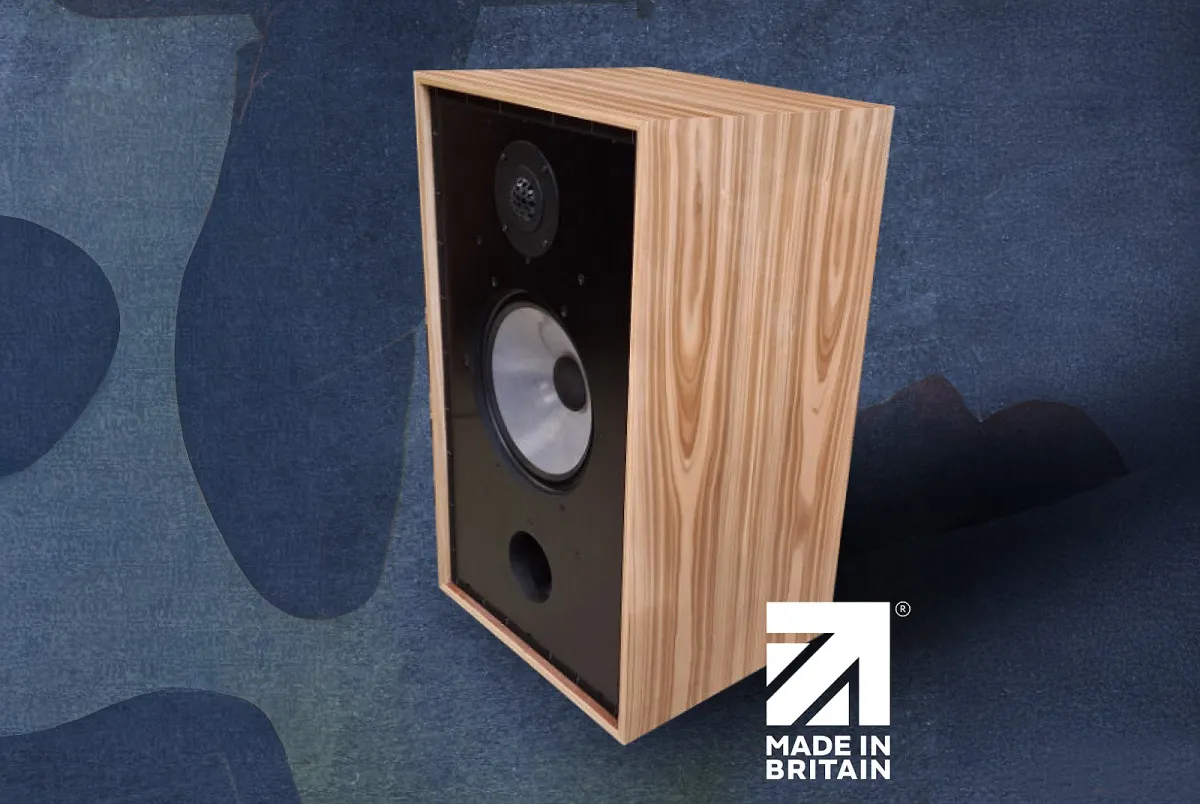
The joint operation of the drivers is managed by an 18-component crossover built around third-order filters for both drivers. The crossover point is set at 2.6 kHz. According to Rogers, this configuration helps achieve better phase coherence and a more unified sonic presentation while preserving the tonal character traditionally associated with classic BBC monitor systems.
The PM510 S3 cabinet is built in the spirit of the famous thin-wall damped BBC enclosure design. Unlike the modern approach based on massive and ultra-rigid panels, this concept relies on relatively thin walls combined with carefully calculated damping that dissipates parasitic vibrational energy. The purpose of this solution is to reduce the cabinet’s influence on the final sound and allow the drivers to operate as neutrally as possible. It is precisely this philosophy that shaped the sound of many classic British monitors.

Baltic birch plywood is used for the cabinet, a material chosen by the manufacturer for its uniform structure, stable resonant properties, and predictable acoustic behavior. Rogers believes this material provides an effective balance between rigidity and controlled compliance, allowing the enclosure to remain stable even at high volume levels. The exterior is finished in natural wood veneer, underscoring the company’s commitment to traditional cabinet craftsmanship. The front baffle is also made of Baltic birch in order to maintain consistent material properties throughout the entire structure.
Despite its respect for the original concept, the PM510 S3 cannot be described as a simple replica of the old model. Rogers emphasizes that the system has been adapted to meet modern manufacturing standards: the materials have been improved, production precision has been increased, and quality control has become more stringent. At the same time, the company claims that the key sonic character of the original version has been preserved. Although the model has its roots in professional studio monitoring, the new version is also positioned as a serious solution for home Hi-Fi systems. Based on BBC broadcast monitor principles, the loudspeaker is designed to offer wide frequency extension and serious dynamic capability, allowing it to reproduce both the finest recording details and large-scale musical contrasts with equal confidence.

According to Rogers, the combination of deep bass, a rich and expressive midrange, and a smooth, extended treble allows the system to convincingly reproduce the scale and naturalness of musical material – whether symphonic works or live recordings. The manufacturer also highlights the PM510 S3’s ability to create a large, open soundstage while maintaining the balanced and natural tonal presentation that has long been associated with the Rogers brand among admirers of classic British loudspeakers.
The official price of the Rogers PM510 S3 monitors has not yet been disclosed. However, judging by the pricing of comparable models in the company’s lineup, it can be assumed that a pair of the new monitors will cost around £15,500 or approximately €18,000.
Specifications
Model name
PM510 S3
Frequency Response low +/- 3dB (Hz)
45
Frequency Response high +/- 3dB (Hz)
20 000
Sensitivity (dB at 1 W/1m)
93
Impedance (Ohms)
15
Power amplifier requirements (W)
N/A
Has internal amplification
N/A
Internal amplification power (W)
N/A
Size (sm)
76.0 x 46.0 x 40.0
Weight (kg)
32
Official link