
Octave Jubilee Preamp SE – Flagship Hybrid Preamplifier

05.04.2026 07:21 | ~3 minutes read
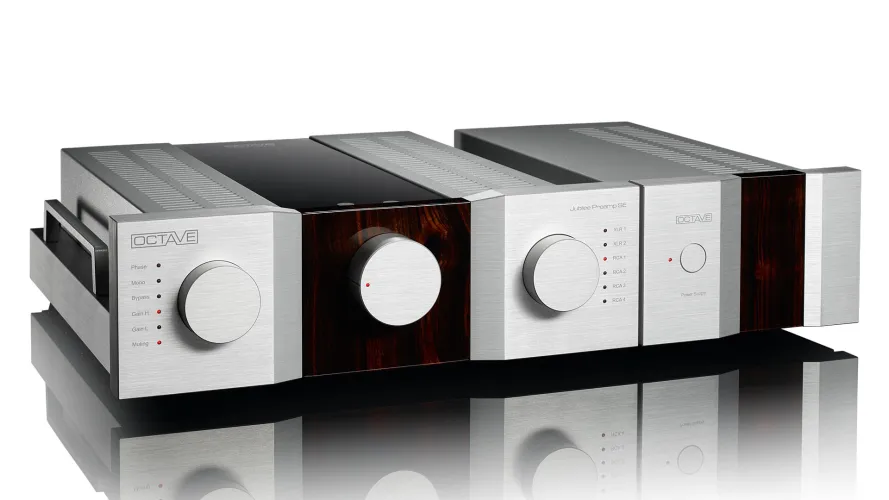
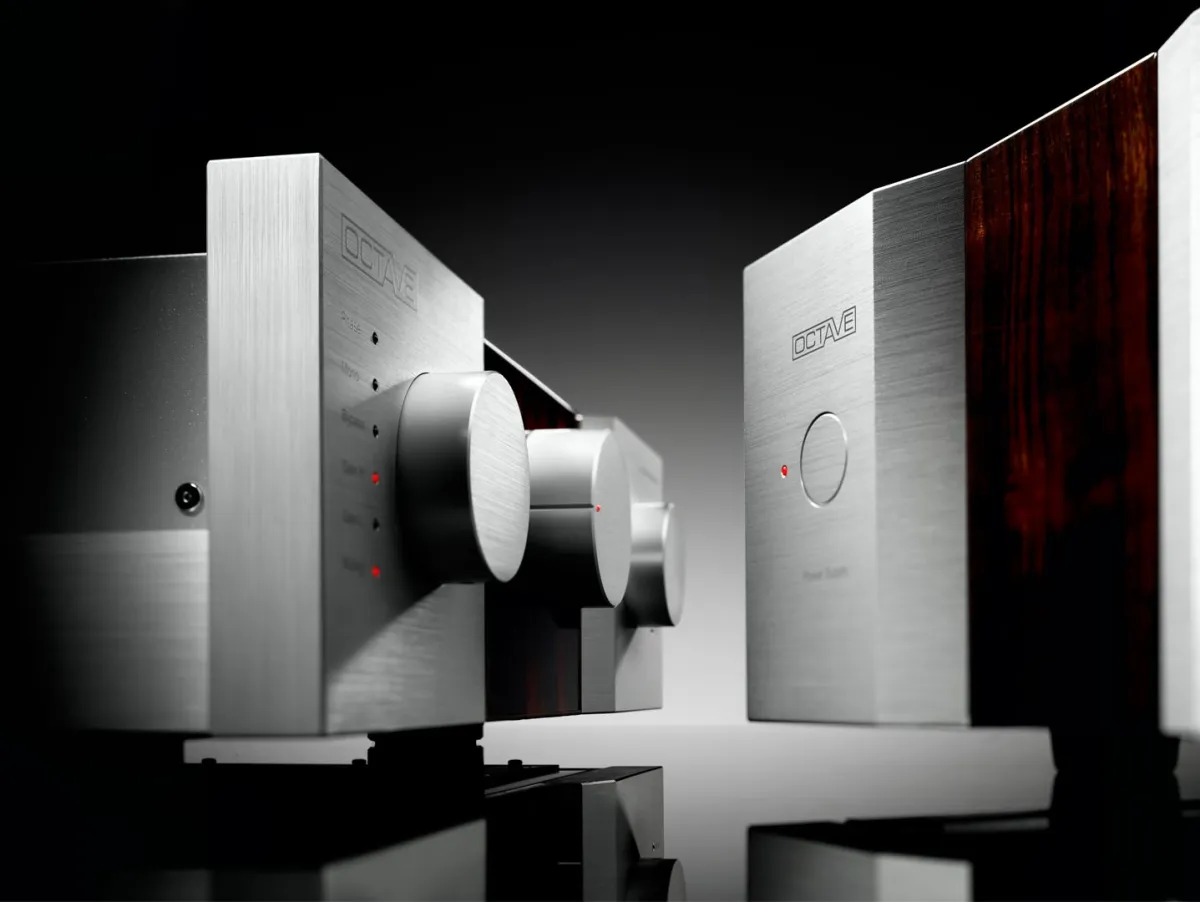
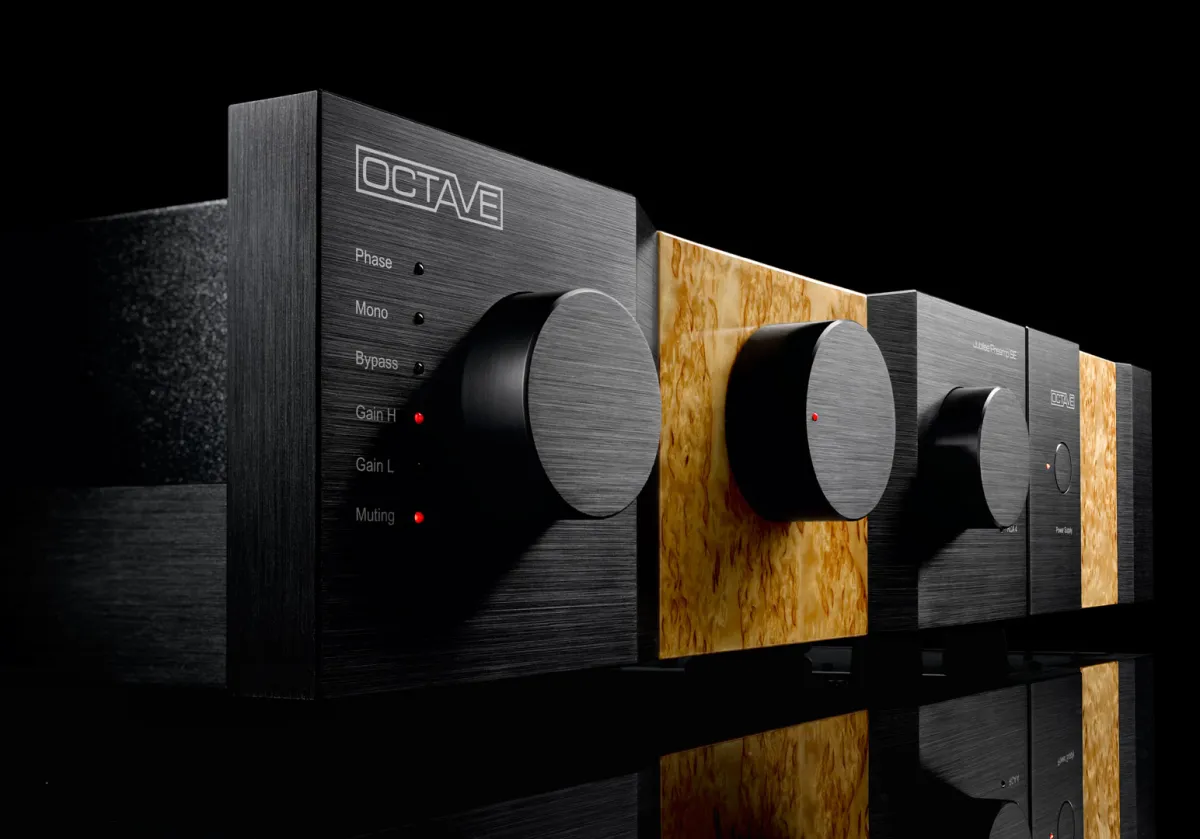
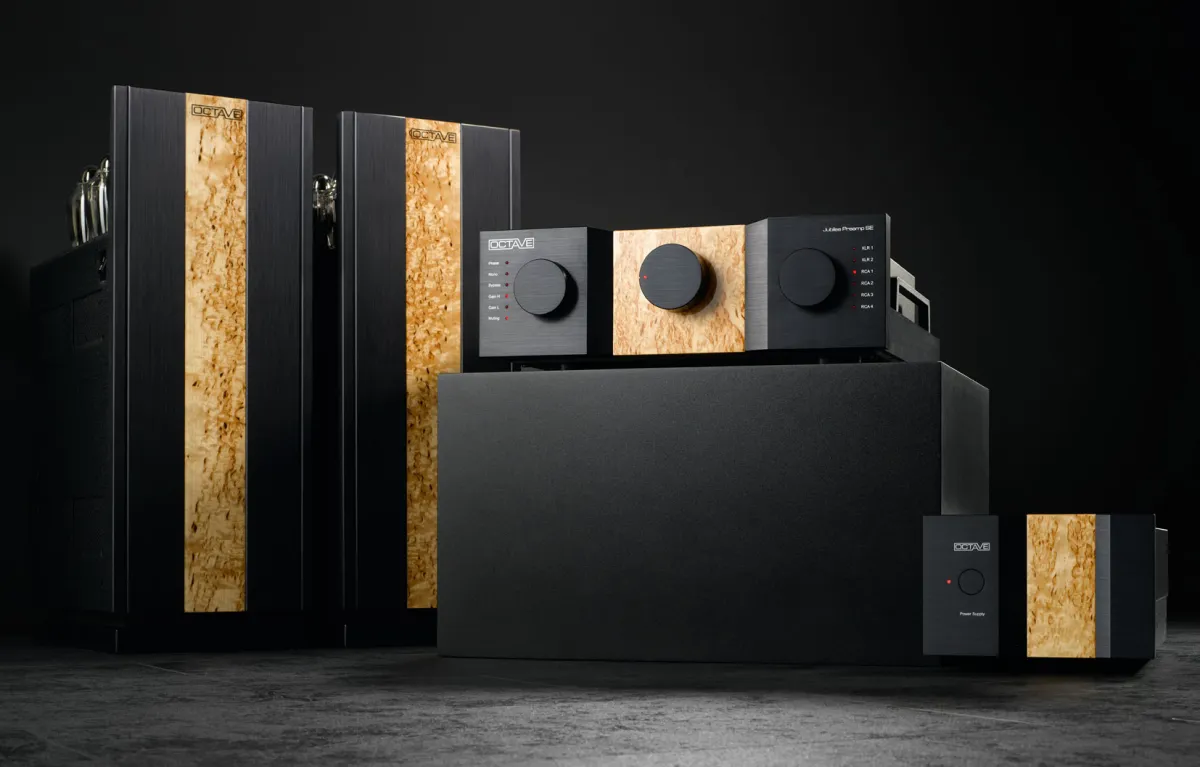
Octave has announced the Jubilee Preamp SE, a new flagship preamplifier that succeeds the Jubilee model, which had been regarded as the pinnacle of the company’s range since 1998. The manufacturer emphasizes that the new model is not a cosmetic update, but a thoroughly reworked design in which the sonic section, technical architecture, feature set, and ease of operation have all been improved.
At the core of the Jubilee Preamp SE remains Octave’s characteristic hybrid circuit design. A precision tube-balanced stage is responsible for generating a fully symmetrical signal for power amplifiers, while a discrete solid-state output stage обеспечивает low output impedance and high current delivery. As before, the circuitry is designed without negative feedback – an approach that Octave considers one of the key elements of its signature sound.
One of the most important areas of modernization is the XLR input. It uses the company’s own custom-designed input transformers, engineered to work with modern digital-to-analog converters delivering a high output level of up to 8 V RMS. The stated specifications include an input impedance of 80 kOhms, a frequency range from 5 Hz to 150 kHz, and total harmonic distortion of just 0.005%. According to the company’s concept, this should allow the full potential of top-tier digital sources to be realized without the unwanted influence of a transistor input stage on the musical signal.
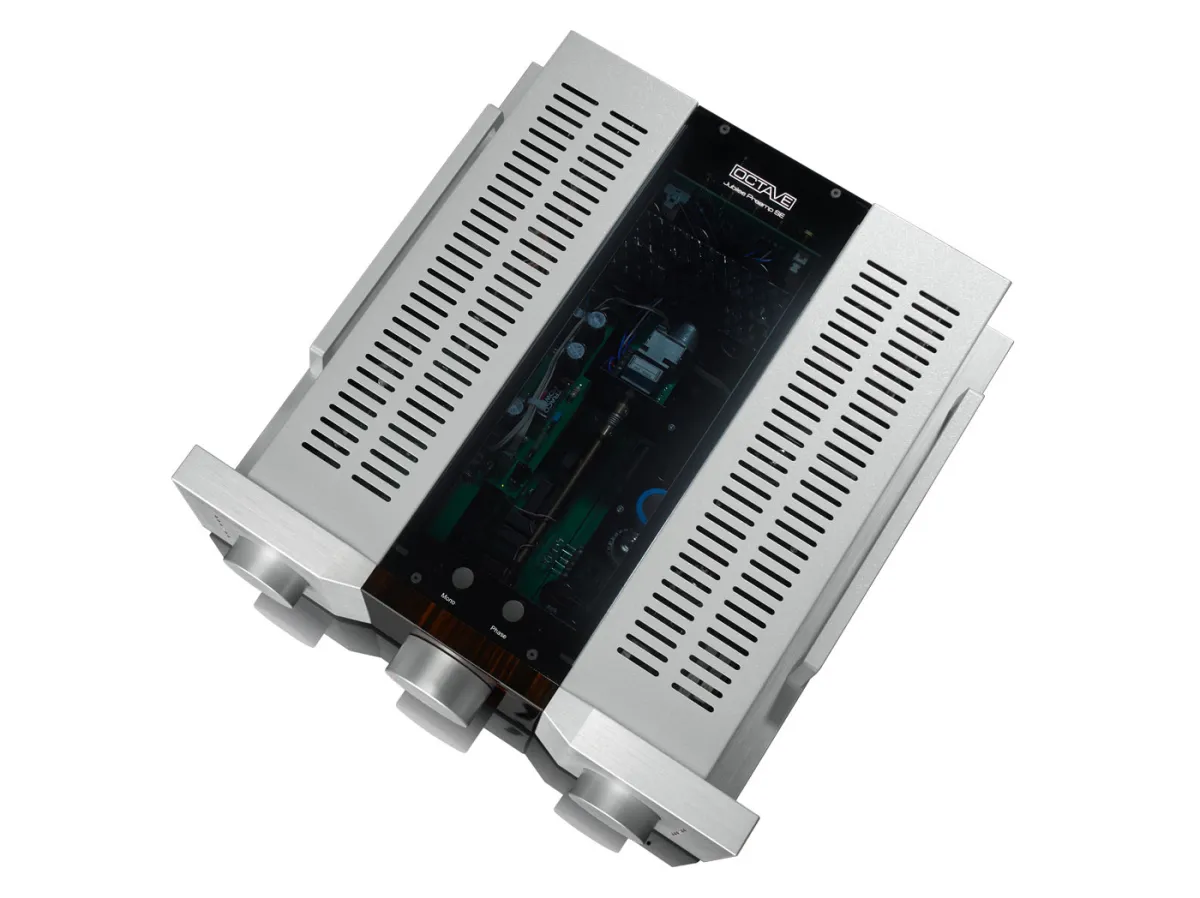
Substantial changes have also been made to the four-tube amplification stage itself. The unit uses a new printed circuit board with 70-micron copper traces manufactured by Matsushita, developed specifically for sensitive analog signal paths. Octave notes in particular that modern PCB production technologies provide high stability, precise repeatability, and excellent connection quality, and in some respects can even surpass traditional point-to-point wiring, which many audiophiles still regard as the reference solution.
The analog section uses Vishay/Beyschlag resistors, chosen for their low noise and high long-term stability. The power supply employs European-made Epcos electrolytic capacitors. According to the manufacturer, the selected components are designed for more than two decades of operation and should maintain stable performance even under varying climatic conditions.
Taken together, all of these refinements have made it possible to widen the bandwidth while simultaneously reducing the noise floor by 3 dB. In real listening conditions, this should translate into higher resolution, better soundstage depth, and a more composed presentation. At the same time, one of the typical challenges of tube preamplifiers – matching with power amplifiers – is addressed here by a discrete semiconductor output stage with an output impedance of just 33 Ohms.
Thanks to this design, the Jubilee Preamp SE can work effectively with virtually any power amplifier, including models with input impedance starting from 600 Ohms. In addition, the unit allows the use of interconnect cables up to 8 meters long without noticeable impact on signal transmission stability. Dual RCA and XLR outputs are provided, opening up possibilities for bi-amping, tri-amping, and quad-amping configurations. Additional features include switchable gain, phase inversion, mono mode, soft start, monitor/record output, and serial HT bypass.
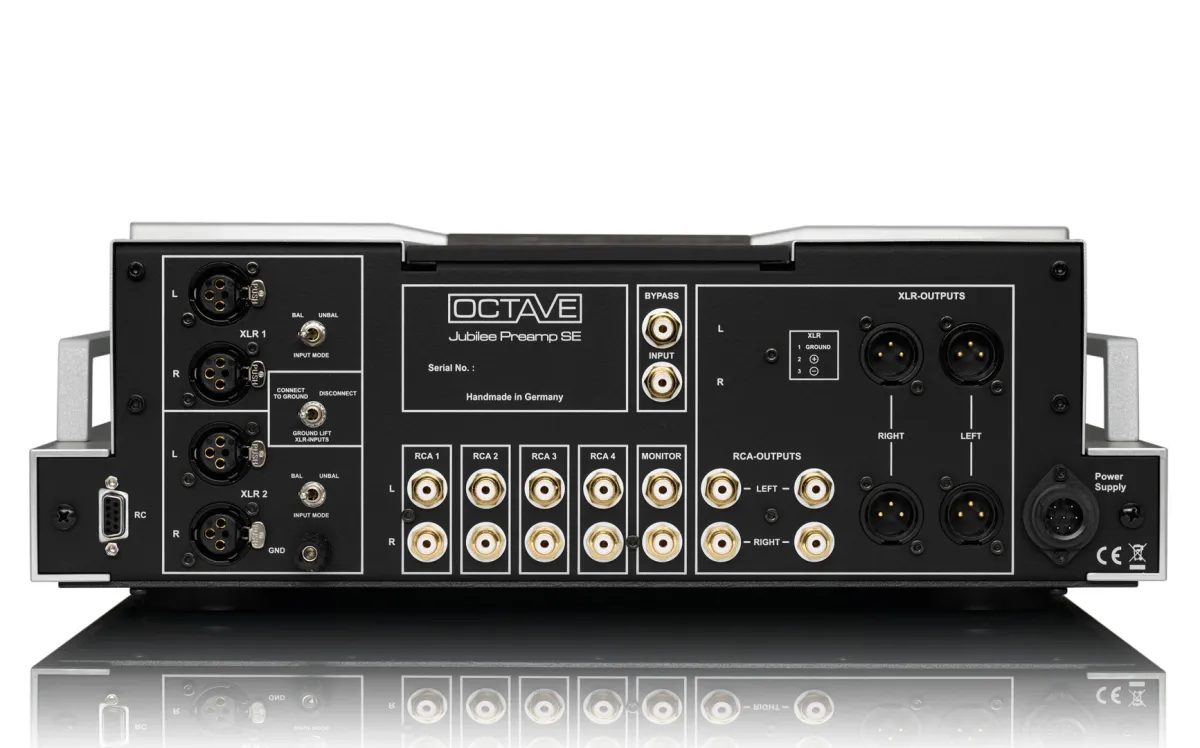
Octave views the Jubilee Preamp SE as a natural evolution of an already proven concept rather than a departure from its existing philosophy. The device is designed and manufactured in Germany, and an optional stepped volume control is available. According to the manufacturer’s vision, the new model is intended to become not just another flagship for the brand, but a long-term reference for the entire Octave range.
Specifications
Model name
Jubilee Preamp SE
Analog inputs (balanced)
2
Analog inputs (single-ended)
5
Analog outputs (balanced)
2
Analog outputs (single-ended)
2
Gain (dBu)
10 RCA, 16 XLR
Input sensitivity (mV)
N/A
Output voltage (V)
N/A
Input impedance (balanced) (Ω)
N/A
Input impedance (single-ended) (Ω)
N/A
Output impedance (balanced) (Ω)
N/A
Output impedance (single-ended) (Ω)
N/A
Maximum output level (balanced) (dBu)
N/A
Maximum output level (single-ended) (dBu)
N/A
Volume control range (dBu)
N/A
Frequency response low +/- 3dB (Hz)
3
Frequency response high +/- 3dB (Hz)
100 000
Signal to Noise Ratio (SNR, unweighted) (dB)
100
Total Harmonic Distortion + Noise (THD+N) (%)
0.1
Dimensions (mm)
445 x 152 x 480 (Preamp) + 220 x 152 x 480 (PSU)
Weight (kg)
17.2 (Preamp) + 11.5 (PSU)
Official link