
Econik 1851 – Active Suspended Loudspeaker with a Quartz Sand Enclosure

18.05.2026 20:56 | ~3 minutes read
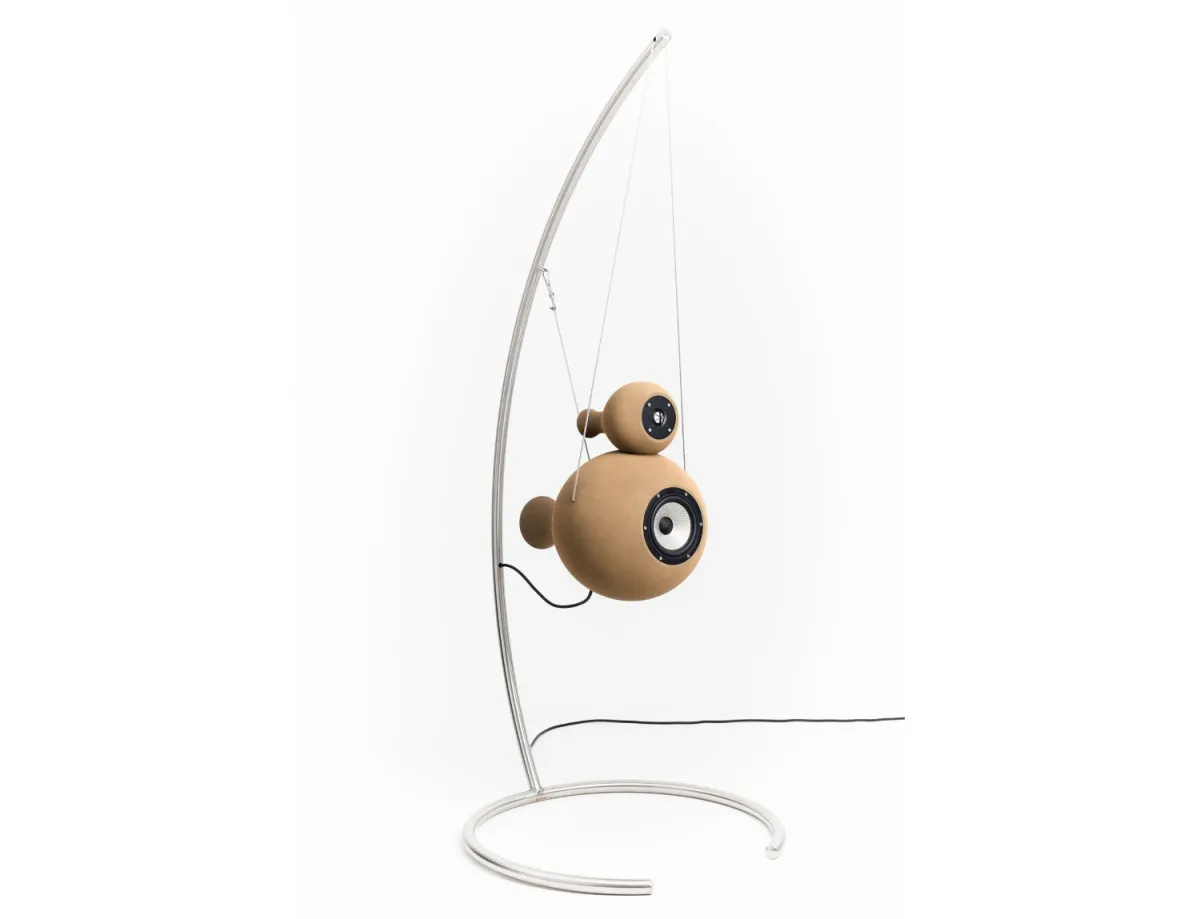
German company Econik has introduced the active loudspeaker system Econik 1851 – a two-way model with an unusual suspended design and an enclosure made from quartz sand. For a brand that only began releasing its first loudspeaker systems in 2023, the new model marks a noticeable step toward a more experimental design language and a less conventional engineering philosophy.
The Econik 1851 is built as a fully active system: amplifiers, DSP processors and signal-processing circuitry are housed directly inside the speaker enclosure. This approach allows the manufacturer to match the electronics more precisely with the acoustic volume, the drivers and the internal geometry of the cabinet. As a result, crossover tuning, frequency response and the operation of each driver are controlled not by external components, but by the system itself.
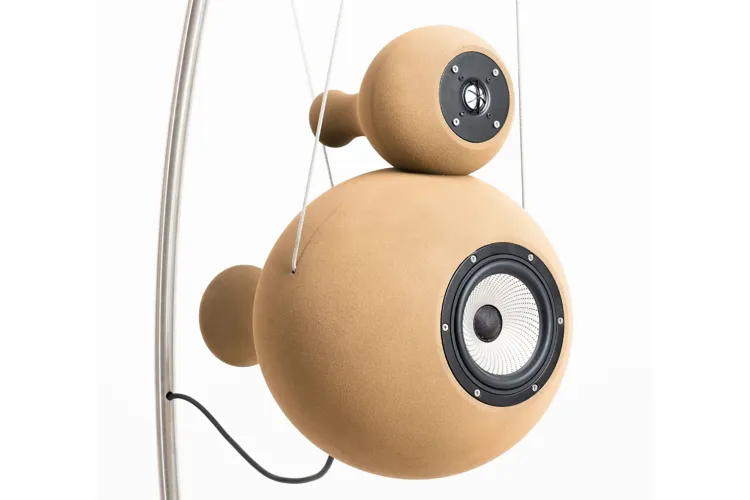
The main structural feature of the Econik 1851 is its quartz sand enclosure, produced using 3D printing and then impregnated with epoxy resin. The resulting structure forms a rigid monolithic shell with a high degree of internal damping. According to the developers’ concept, this material helps suppress micro-vibrations and cabinet resonances more effectively – problems that traditional MDF, wood or aluminium enclosures usually address through additional engineering measures.
Externally, the loudspeaker looks like a minimalist interior object with strict geometric lines, while internally the enclosure has a shape close to spherical. This internal architecture was chosen to reduce standing waves and minimise sound-pressure reflections. The wall thickness and overall cabinet structure were calculated using FEM modelling, allowing the acoustic and mechanical properties of the design to be optimised.
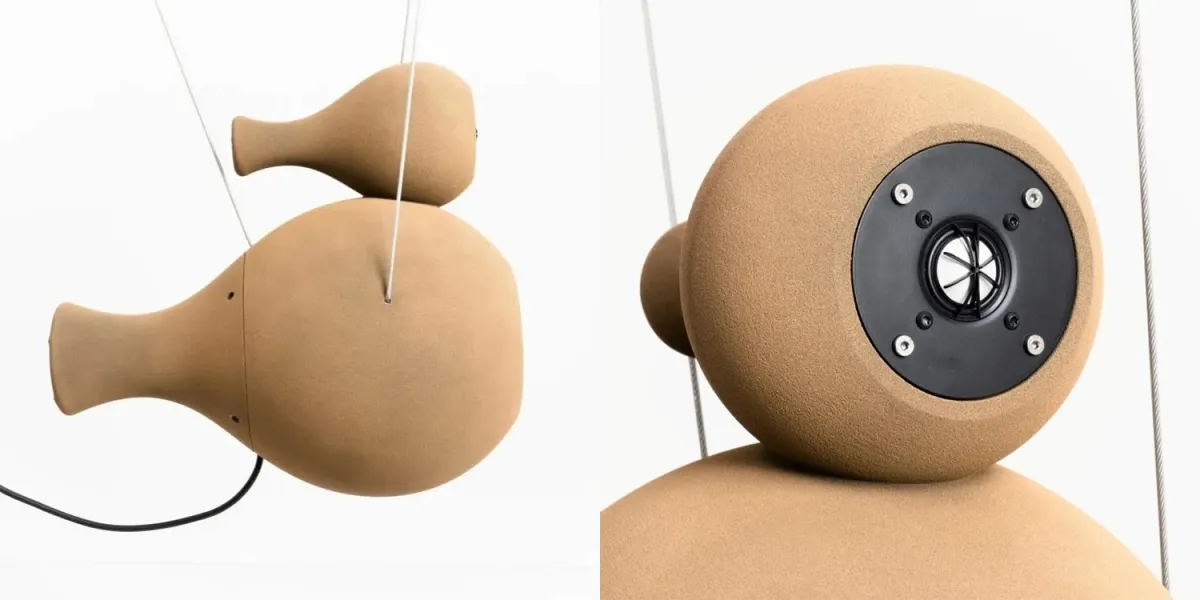
The Econik 1851 loudspeakers use drivers from the German company Eton Audio, featuring ceramic diaphragms designed for high rigidity, low self-resonance and precise operation at high volume levels. The ceramic coating provides a favourable stiffness-to-mass ratio, which should have a positive effect on detail, attack and distortion levels.
Each driver is manufactured in Germany, individually measured and then matched to the enclosure and its internal acoustic geometry using the built-in DSP. Frequency separation is implemented through an active, phase-optimised design, with the crossover frequency set at 3.2 kHz. Each driver is powered by its own 150 W Class D amplifier.
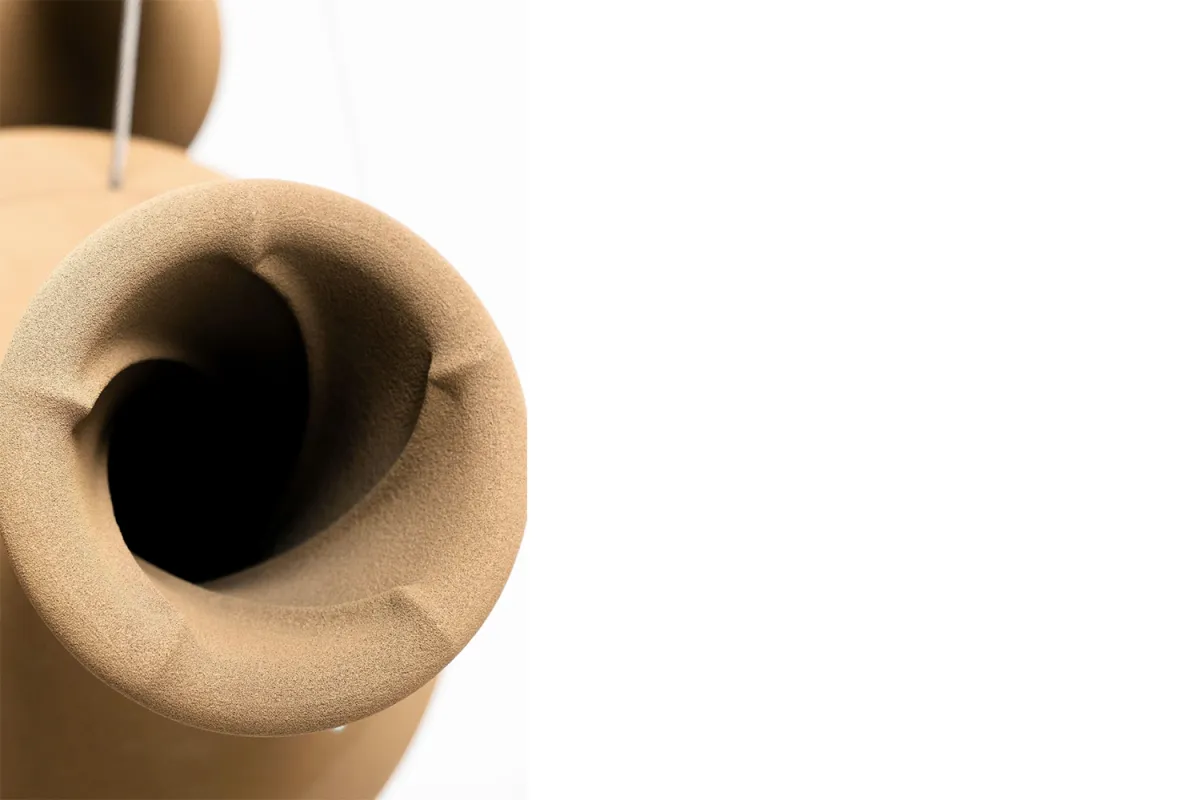
The installation system of the Econik 1851 is no less unusual. The speakers are suspended on a specially developed steel cable structure, making the massive loudspeakers appear almost as if they are floating in space. In addition to the visual effect, the suspension also serves a practical purpose: it reduces vibration transmission to the floor and minimises contact resonances that can affect low-frequency reproduction.

Signal transmission is handled via the WiSA wireless standard, so no speaker cables are required – each system only needs a power cable. The claimed frequency range of the Econik 1851 is 34 Hz – 40 kHz at ±3 dB. Each speaker weighs 28.3 kg, while the suspension system adds another 9.3 kg. The loudspeaker measures 370 × 535 × 565 mm, while the suspension measures 1,950 × 800 × 950 mm. The recommended retail price of the Econik 1851 active loudspeaker system in Europe is €16,800 per pair.
Specifications
Model name
Econik 1851
Frequency Response low +/- 3dB (Hz)
34
Frequency Response high +/- 3dB (Hz)
40 000
Sensitivity (dB at 1 W/1m)
N/A
Impedance (Ohms)
N/A
Power amplifier requirements (W)
N/A
Has internal amplification
Yes
Internal amplification power (W)
150 + 150
Size (sm)
37.0 × 53.5 × 56.5 (Speaker) + 195.0 x 80.0 × 95.0 (Suspenion)
Weight (kg)
28.3 (Speaker) + 9.3 (Suspension)
Official link