
Chord Quartet – New Digital Upscaler with Blackbird WTA Filter

30.05.2026 08:16 | ~3 minutes read
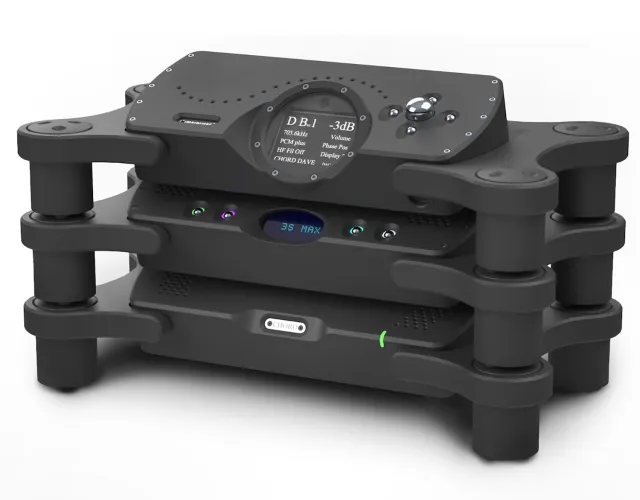
British company Chord Electronics has completed work on the Quartet digital upscaler, a device that has been in development for around two years. Its first prototype was shown at the High End Show in Munich in 2024, although at that stage it was more of a demonstration sample. Now, the Quartet is preparing for commercial launch, while Chord Electronics itself describes the new product as one of the most significant in the company’s 37-year history.
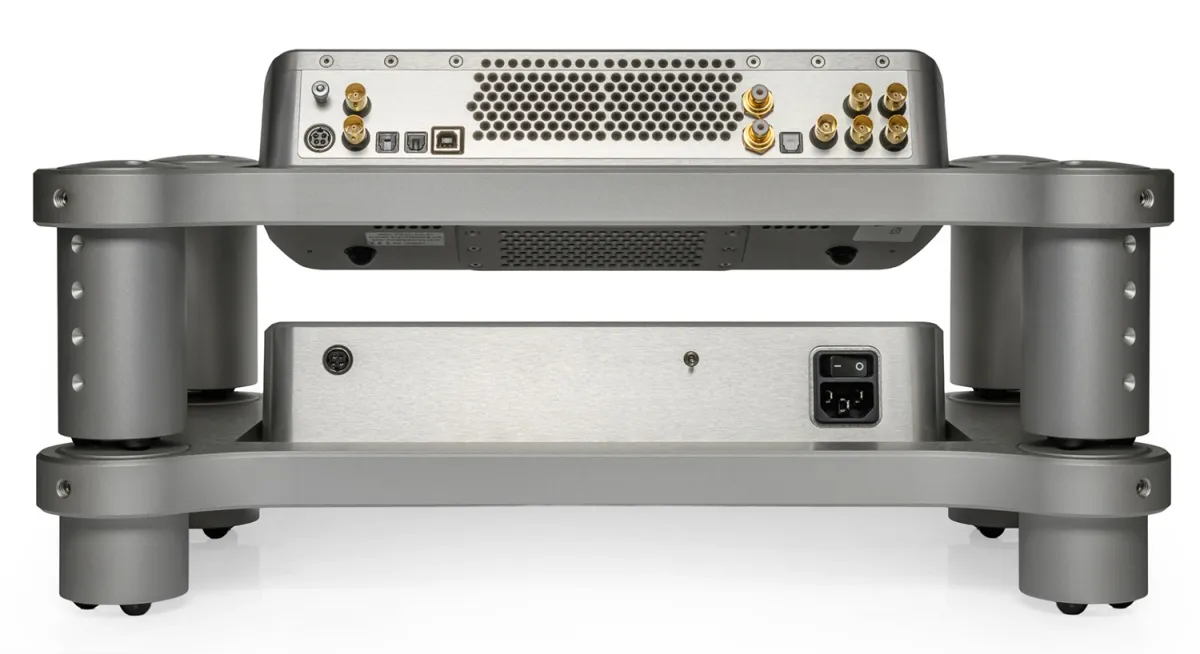
The Chord Quartet is designed to increase the resolution of a digital audio signal before it is sent to a DAC. The device accepts a signal via two BNC lines in dual BNC mode, two optical TOSLINK lines, or a galvanically isolated USB-B input. After processing by the proprietary Blackbird WTA filter, developed by Rob Watts, the upscaler sends the signal to a digital-to-analogue converter via a single S/PDIF output, TOSLINK at up to 192 kHz, or dual BNC with support for resolutions up to 768 kHz.
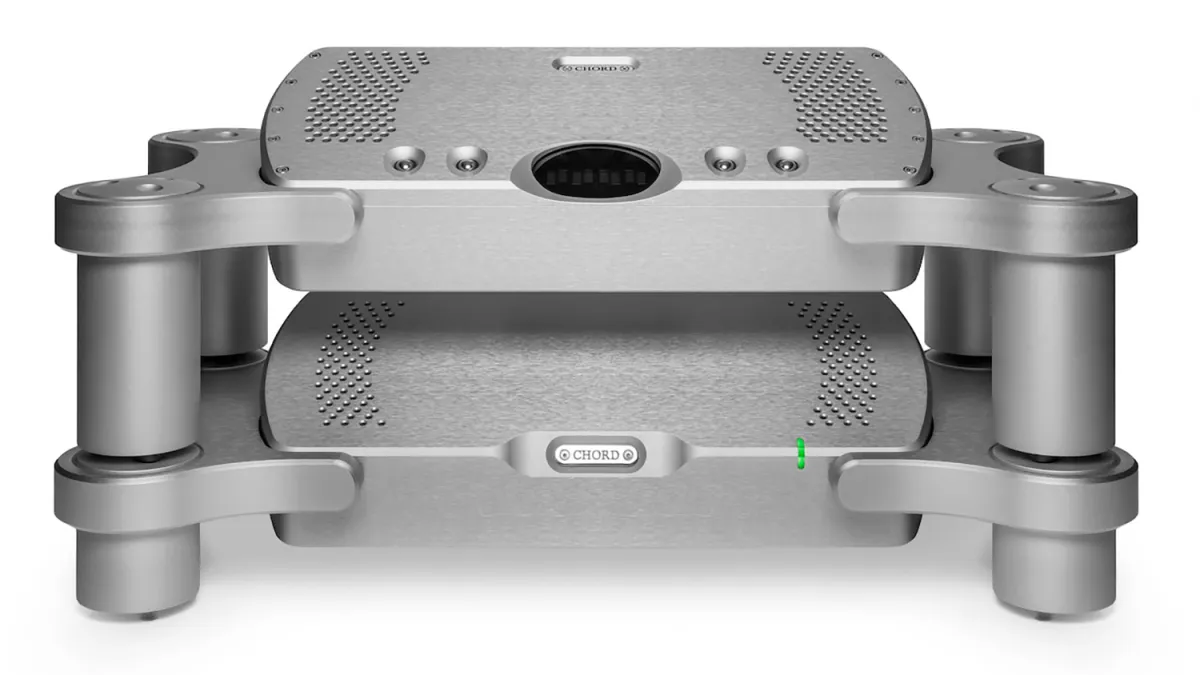
The new model is compatible with Chord Electronics DACs, but it is primarily intended to work with the flagship Chord DAVE. This DAC is capable of accepting signals at resolutions of up to 768 kHz, so pairing it with the Quartet should allow its full potential to be realised. In this configuration, the upscaler becomes a key link between the digital source and the converter.
One of the Quartet’s important features is support for analogue sources. For this, the device is equipped with a pair of analogue RCA inputs, with the incoming signal sent to a built-in analogue-to-digital converter. In this way, Chord Electronics is offering, for the first time, the possibility of integrating analogue components into its own upscaling chain. The company’s proprietary Pulse Array ADC is responsible for analogue-to-digital conversion. It operates with a noise shaper running at 104 MHz and uses patented decimation filters. According to Chord, this architecture makes it possible to deal with aliasing distortion at the signal-conversion stage, rather than attempting to correct it after processing. In this context, aliasing is treated as one of the factors capable of disrupting phase accuracy and the temporal structure of the audio signal.
At the heart of the Chord Quartet is the new Blackbird WTA filter. The previous M Scaler used one million filter taps, while the Quartet now works with four million taps distributed across five Xilinx FPGA arrays. Chord Electronics claims that this design provides a tenfold increase in the accuracy of transient timing reconstruction compared with the previous-generation WTA filter.
The company separately emphasises that all signal processing in the Quartet is performed in hardware. The device does not use FFT convolution, a software-based method in which the signal is first converted into frequency-domain data, then filtered and converted back again. According to Chord Electronics, this type of processing can itself become a source of phase errors, whereas the Quartet’s philosophy is built around the most accurate possible reconstruction of timing information.
Transient accuracy remains one of the key ideas in Rob Watts’ designs. Transients are the initial attacks of sounds and musical notes, carrying information about pitch, timbre, localisation and the recording space. Chord believes that even small timing errors in this area can reduce soundstage depth, image focus and the impression of a live performance.
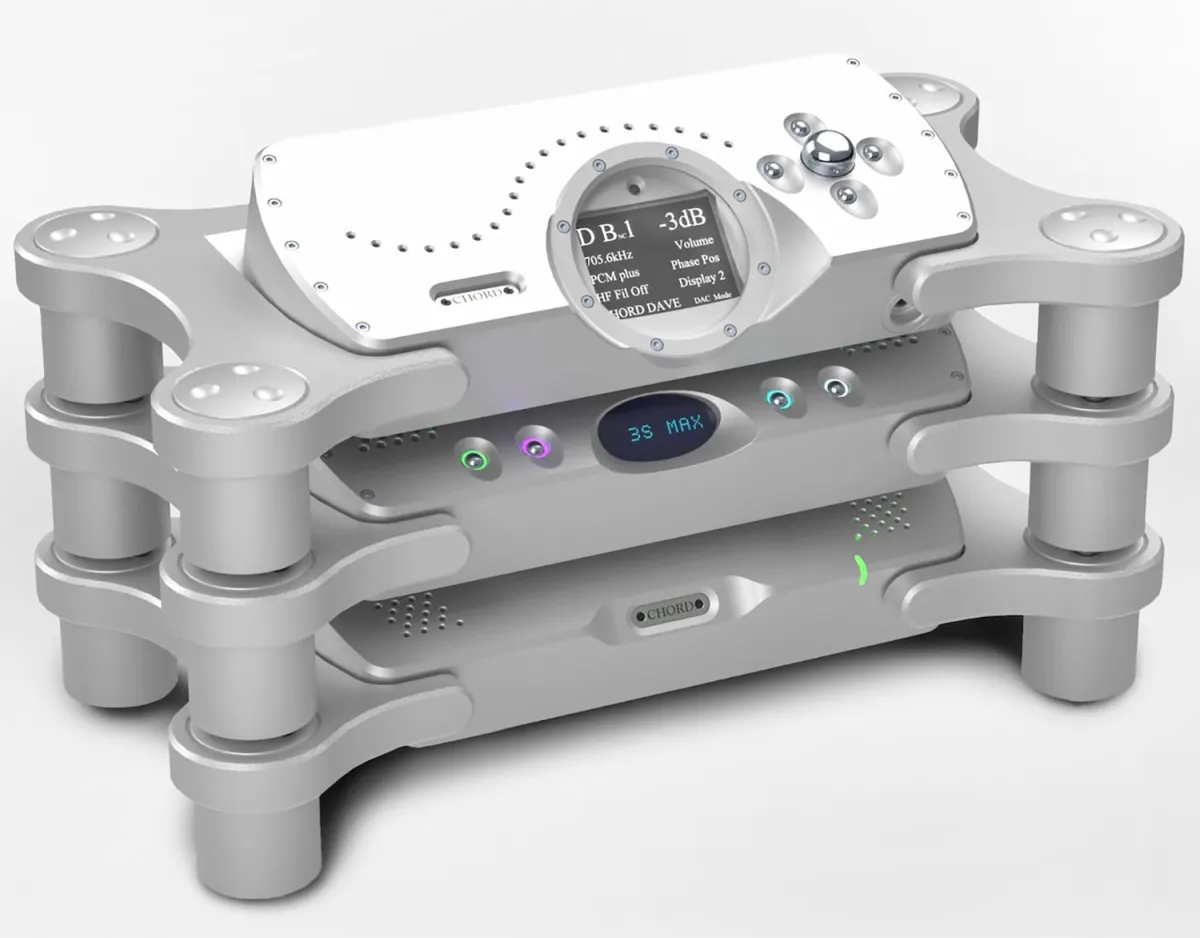
The Chord Quartet uses a two-box design with a separate external power supply. The latter was also developed by Rob Watts and uses patented pinch-off RF filtering, intended to physically suppress radio-frequency interference at the input. In addition, the upscaler includes a 108-bit lossless equaliser with 10 bands and an adjustment range of ±18 dB, as well as adjustable delay from 10 ms to 3 seconds for synchronising audio with a television.
The Chord Electronics Quartet will be available in two finishes: Argent Silver and Jett Black. The production version of the device will be presented at High End Vienna 2026, which opens in Vienna on 4 June. The recommended retail price of the upscaler will be 35,995 US dollars. By comparison, the flagship Chord DAVE DAC costs 14,900 US dollars, while the company’s dedicated stand for integrating the system’s components is priced at a further 2,550 US dollars.
Specifications
Model name
Quartet
Highlights
Full Power consumption: 130 W, Standby power consumption: 20W
Dimensions (mm)
78 x 335 x 152
Weight (g)
3 (main) + 3.2 (PSU)
Official link