
Best R2R DACs in 2026: Entry and Mid-Price Levels
The Analog-Sounding Digital Revival

R2R (resistor-ladder) conversion in modern DACs is experiencing a renaissance. At the dawn of the digital era, the technology dominated the market (TDA1541A from Philips, Burr-Brown PCM63 and PCM1704 in implementations by Sony, Wadia, and Mark Levinson), but was subsequently supplanted by delta-sigma architecture. Since 2015, an R2R renaissance has begun – modern SMD resistors with 0.01% tolerance have become available, FPGAs have become powerful enough to replace ASIC architecture within the chip, and a clear demand has emerged from audiophiles for analog sound over digital, a field in which R2R has been and remains very strong. In this article, we'll explore the optimal, affordable solutions and mid-range DACs using R2R technology these are available on the market today.
Modern approaches to digital audio are limited by physics: digital sources produce a stream of ones and zeros, and a digital-to-analog converter converts this stream into an analog voltage that can be amplified and fed to speakers. Delta-sigma DACs (ESS Sabre, AKM, Cirrus Logic) operate using high-frequency feedback modulation, which converts quantization noise into the ultrasonic range and easily filters it out. Performance characteristics are excellent (SNR above 120 dB, THD below 0.001%, dynamic range greater than 130 dB), offering a breakthrough price-performance ratio. R2R (resistor-ladder or multibit DAC) is a different approach, with each bit of the digital signal assigned a separate resistor or pair of resistors (in an R2R configuration, hence the name). When the bit is set to "1," the resistor is connected to the reference voltage; when set to "0," it's connected to ground. The sum of these voltages forms the final output voltage - without feedback. This purist approach often produces a denser, more textured, and richer sound, somewhat reminiscent of analog signal sources. This is especially true when using the NOS (Non-Oversampling) mode, which feeds the signal directly to the resistor ladder without oversampling. However, distortion in this format will also be higher, so modern R2R DACs typically feature a second mode, OS (Oversampling), with digital oversampling. This reduces noise and enhances high-frequency detail, but may lose some of the analog magic.
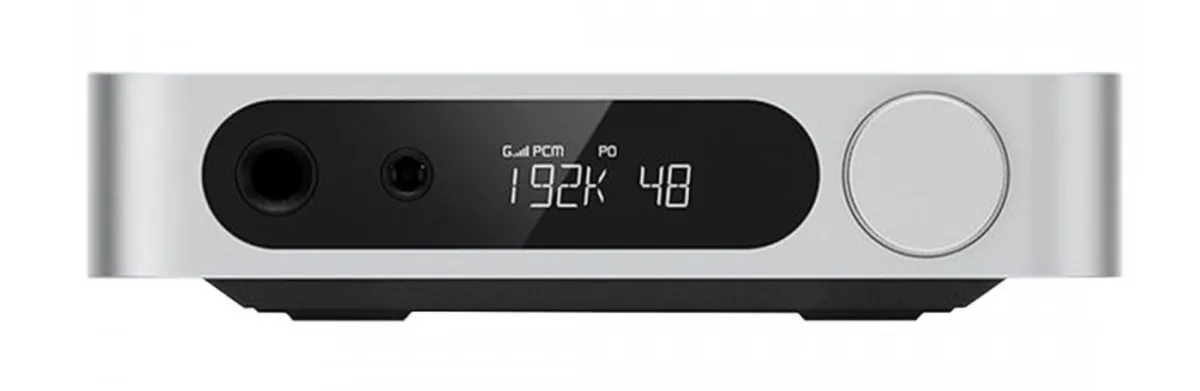
1. FiiO K11 R2R - €169
The FiiO K11 R2R DAC costs next to nothing - R2R technology has never been so accessible. It also features a headphone amplifier (up to 1.3 W at 32 ohms), and digital-to-analog conversion is implemented using 96 high-precision resistors per channel. The model supports PCM signals up to 24-bit/384 kHz and DSD up to DSD256, features switchable NOS and OS modes, and uses high-quality Texas Instruments OPA1642 operational amplifiers. The FiiO K11 R2R's sound may not match the resolution of its higher-end siblings in its class, but it easily outperforms delta-sigma solutions three times the price – the sound always remains fluid, smooth, and exceptionally agile. The velvety bass deserves special praise.
Specifications
Model name
K11 R2R
Conversion type
R2R
Engine
Texas Instruments OPA1642
DSD compatability
Yes
Parameters
up to 32 bit / 384 kHz and DSD256
Frequency response low +/- 3dB (Hz)
20
Frequency response high +/- 3dB (Hz)
50 000
Gain (dBu)
N/A
Output Level (balanced) (V)
N/A
Output Level (single-ended) (V)
2.7
Input Impedance (balanced) (Ω)
N/A
Input Impedance (single-ended) (Ω)
N/A
Output Impedance (balanced) (Ω)
N/A
Output Impedance (single-ended) (Ω)
N/A
Analog outputs
N/A
Signal to Noise Ratio (dB)
≥115
Total Harmonic Distortion + Noise (% at 22 kHz)
0.025
Dimensions (mm)
147x133x32.3
Weight (kg)
0.42
Official link
2. FiiO Warmer R2R - €379
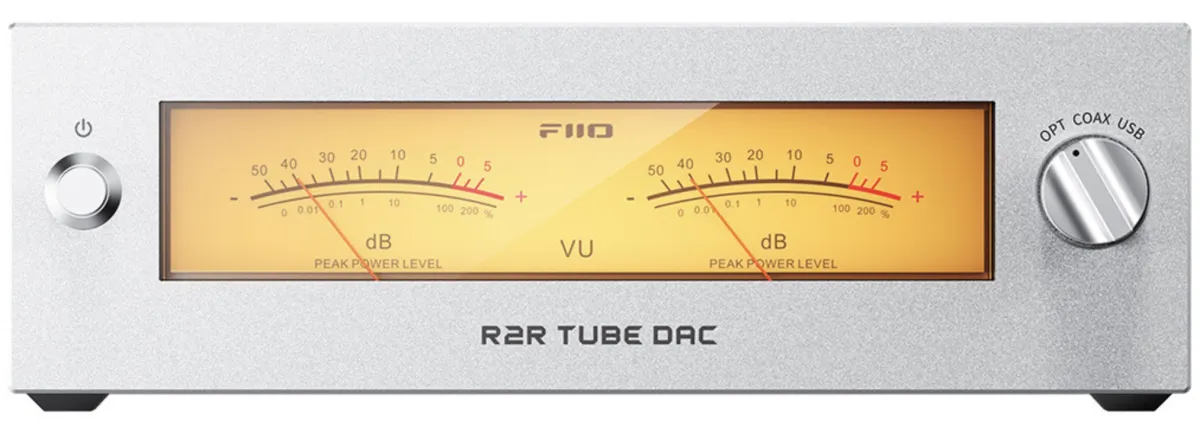
A more serious "artillery," the FiiO Warmer R2R uses four JJ Electronic E88CC vacuum tubes (two per channel in a balanced configuration) and four discrete R2R arrays, also in a fully differential 24-bit balanced configuration. Such chip density in a matrix was until recently the preserve of devices costing two thousand euros! Equal attention has been paid to the power supply – it's linear with a 46W transformer, and the power lines are separated for the analog and digital sections. Of course, it supports PCM signals up to 24-bit/384 kHz and DSD up to DSD256, as well as switchable NOS and OS modes (the optical and coaxial inputs only work in NOS mode). The FiiO Warmer R2R's signature sound is meaty, dense, and slightly dark, perfect for building a "wall of sound."
Specifications
Model name
Warmer R2R
Conversion type
R2R
Engine
N/A
DSD compatability
Yes
Parameters
up to 32 bit / 368 kHz and DSD256
Frequency response low +/- 3dB (Hz)
20
Frequency response high +/- 3dB (Hz)
45 000
Gain (dBu)
N/A
Output Level (balanced) (V)
3.8
Output Level (single-ended) (V)
1.8
Input Impedance (balanced) (Ω)
N/A
Input Impedance (single-ended) (Ω)
N/A
Output Impedance (balanced) (Ω)
N/A
Output Impedance (single-ended) (Ω)
N/A
Analog outputs
N/A
Signal to Noise Ratio (dB)
114
Total Harmonic Distortion + Noise (% at 22 kHz)
0.053
Dimensions (mm)
223.5 x 213 x 66.8
Weight (kg)
2.865
Official link
3. Denafrips Enyo 15TH - €779
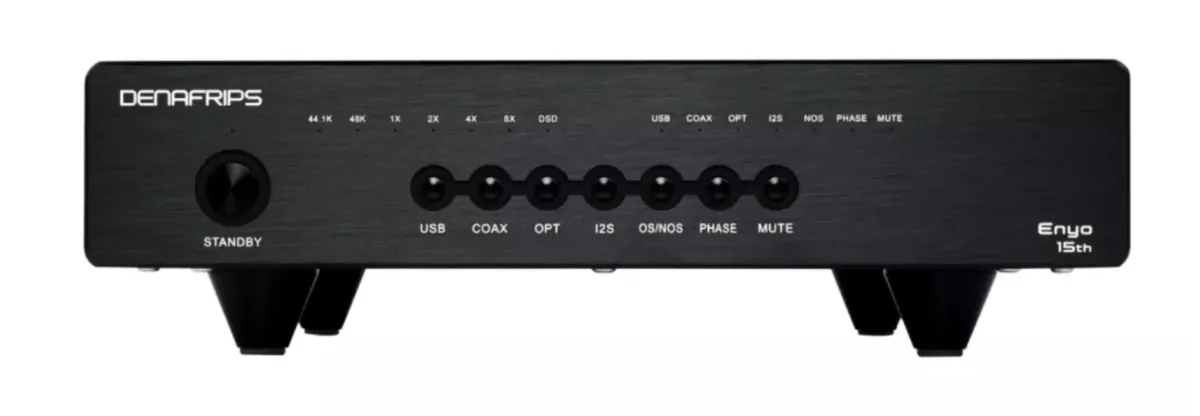
The Denafrips Enyo 15TH is based on a discrete resistor array with hand-selected resistors with a 0.005% tolerance. Supplemented with a FEMTO clock and FIFO buffering to suppress input jitter, the DAC uses an O-core 60 VA power transformer, which has significantly lower magnetic flux dissipation and less impact on the signal path. The DAC supports PCM signals up to 24-bit/192 kHz and DSD256, delivering a very wide soundstage, excellent detail, and rich timbres.
Specifications
Model name
ENYO 15TH
Conversion type
R2R
Engine
N/A
DSD compatability
Yes
Parameters
up to 24 bit / 192 kHz and DSD1024
Frequency response low +/- 3dB (Hz)
20
Frequency response high +/- 3dB (Hz)
70 000
Gain (dBu)
N/A
Output Level (balanced) (V)
N/A
Output Level (single-ended) (V)
N/A
Input Impedance (balanced) (Ω)
N/A
Input Impedance (single-ended) (Ω)
N/A
Output Impedance (balanced) (Ω)
1250
Output Impedance (single-ended) (Ω)
625
Analog outputs
N/A
Signal to Noise Ratio (dB)
115
Total Harmonic Distortion + Noise (% at 22 kHz)
<0.002
Dimensions (mm)
231 x 64 x 220
Weight (kg)
3.5
Official link
4. Gustard R26 - €1,599
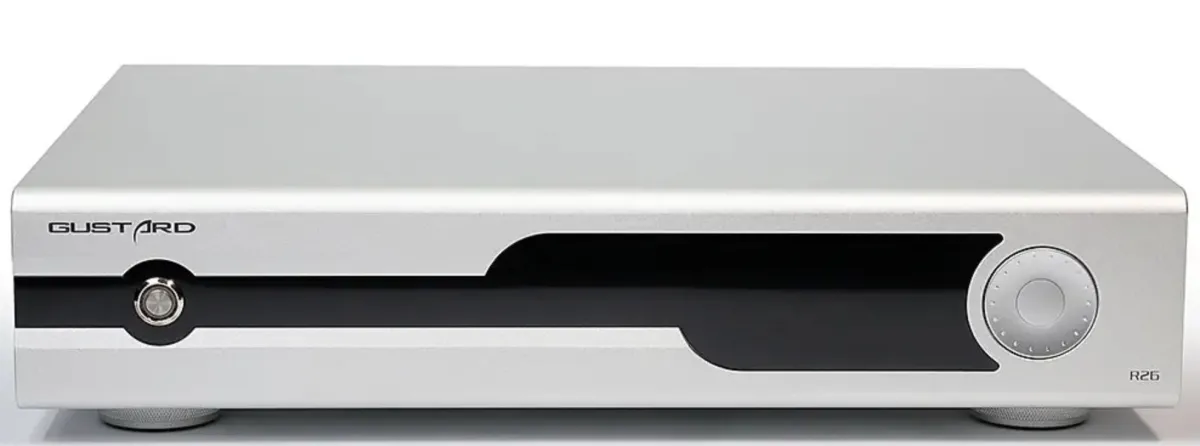
Gustard has gained a reputation for its affordable solutions based on ESS Sabre chips, but the Gustard R26 DAC breaks with tradition. This model has been in production for several years and has earned plaudits during this time – its soundstage is truly three-dimensional, and the overall soundstage is mature and full of emotion. Each channel has its own one-of-a-kind R2R power supply with high-precision resistors – designed in-house, not purchased as an OEM solution. There are also two power transformers: one for the analog circuits, the other for the digital ones. The icing on the cake is a full-fledged network streamer (Roon Ready, AirPlay, DLNA, UPnP, Bluetooth 5.0 with LDAC, aptX HD, AAC), a 10 MHz BNC clock input, and support for signals up to PCM 768 kHz and DSD512.
Specifications
Model name
R26
Conversion type
R2R
Engine
N/A
DSD compatability
Yes
Parameters
up to 32bit 768kHz and DSD512
Frequency response low +/- 3dB (Hz)
20
Frequency response high +/- 3dB (Hz)
20 000
Gain (dBu)
N/A
Output Level (balanced) (V)
5
Output Level (single-ended) (V)
2.5
Input Impedance (balanced) (Ω)
N/A
Input Impedance (single-ended) (Ω)
N/A
Output Impedance (balanced) (Ω)
100
Output Impedance (single-ended) (Ω)
100
Analog outputs
N/A
Signal to Noise Ratio (dB)
>122
Total Harmonic Distortion + Noise (% at 22 kHz)
≤ 0.003
Dimensions (mm)
330 x 260 x 65
Weight (kg)
N/A
Official link
5. Denafrips Pontus 15TH - €2,065
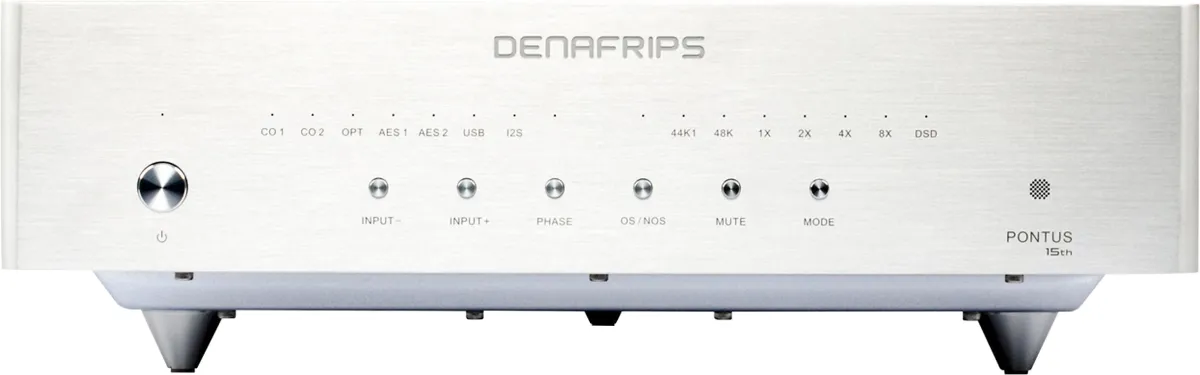
The Denafrips Pontus 15TH is the company's iconic model, which brought the company worldwide fame. The digital-to-analog converter, released to commemorate the brand's 15th anniversary, has become a true standard for its price range – its sound is reminiscent of an open window, and its micro- and macrodynamics are impeccable. The Denafrips Pontus 15TH uses a discrete balanced R2R array with hand-selected transistors with a 0.005% tolerance. The system is complemented by dual FEMTO clocks, an adaptive FIFO buffering system, and a powerful Xilinx Spartan-6 FPGA processor. The device easily handles maximum PCM streams of 1536 kHz and pure DSD 1024. And the 100 VA O-core transformer is perfectly suited for a small amplifier – bravo.
Specifications
Model name
Pontus 15TH
Conversion type
R2R
Engine
N/A
DSD compatability
Yes
Parameters
up to 24bits / 192 kHz amd DSD1024
Frequency response low +/- 3dB (Hz)
20
Frequency response high +/- 3dB (Hz)
70 000
Gain (dBu)
N/A
Output Level (balanced) (V)
N/A
Output Level (single-ended) (V)
N/A
Input Impedance (balanced) (Ω)
N/A
Input Impedance (single-ended) (Ω)
N/A
Output Impedance (balanced) (Ω)
1250
Output Impedance (single-ended) (Ω)
625
Analog outputs
N/A
Signal to Noise Ratio (dB)
120
Total Harmonic Distortion + Noise (% at 22 kHz)
0.0025
Dimensions (mm)
320 x 330 x 80
Weight (kg)
11
Official link
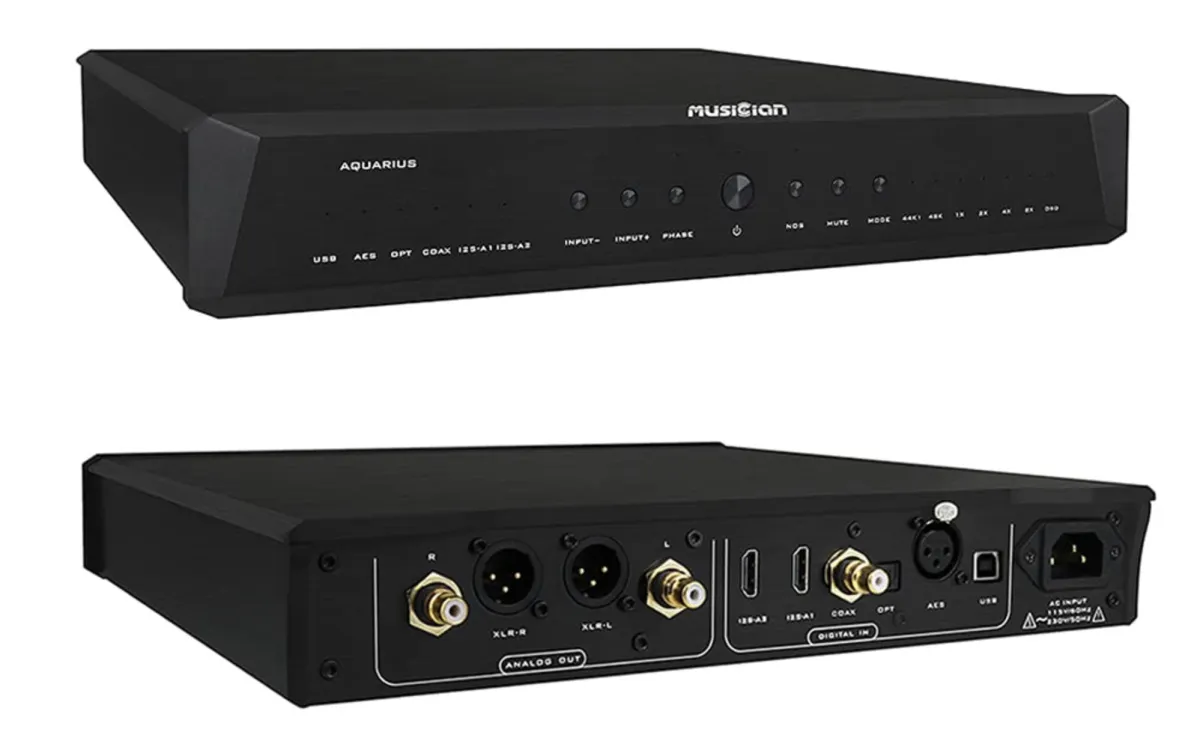
6. Musician Audio Aquarius - €2,862
The Musician Audio Aquarius is based on four R2R power amplifier ladders in a fully balanced configuration with hand-selected resistors - a solution designed for future growth. Two Altera Cyclone IV FPGAs serve the left and right channels, and digital filtering is implemented using a proprietary solution with 16x oversampling and 32-bit precision in each stage. Most interestingly, the entire signal path is also discrete, from input to output (no stock op amps are used, instead using proprietary transistor circuitry). We've previously seen similar solutions only in expensive high-end devices. Signal reception parameters reach impressive PCM 32-bit/1536 kHz and DSD1024. The Musician Audio Aquarius delivers a bass-heavy and powerful sound, with exceptionally well-defined soundstage and a wealth of detail.
Specifications
Model name
Aquarius
Conversion type
R2R
Engine
N/A
DSD compatability
Yes
Parameters
up to 24bits / 192 kHz and DSD1024
Frequency response low +/- 3dB (Hz)
10
Frequency response high +/- 3dB (Hz)
58 000
Gain (dBu)
N/A
Output Level (balanced) (V)
3.59
Output Level (single-ended) (V)
1.79
Input Impedance (balanced) (Ω)
N/A
Input Impedance (single-ended) (Ω)
N/A
Output Impedance (balanced) (Ω)
N/A
Output Impedance (single-ended) (Ω)
N/A
Analog outputs
N/A
Signal to Noise Ratio (dB)
128
Total Harmonic Distortion + Noise (% at 22 kHz)
0.01
Dimensions (mm)
330 x 300 x 60
Weight (kg)
5.8
Official link
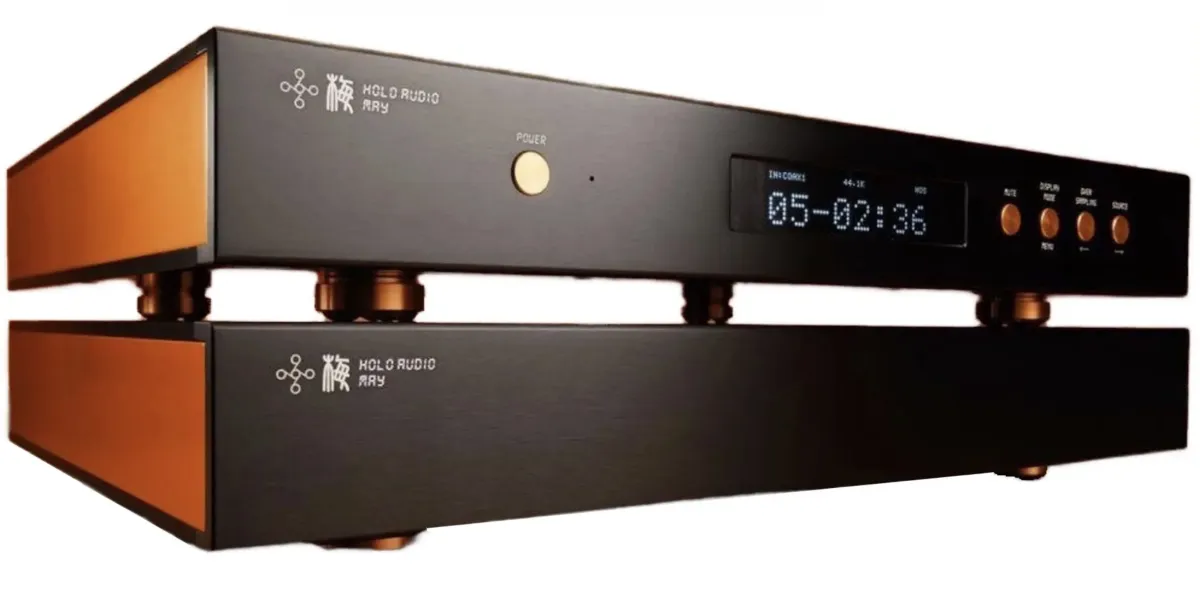
7. Holo Audio MAY DAC KTE – Kitsune Edition (R2R – DSD1024) - €6,296
The Holo Audio MAY DAC KTE – Kitsune Edition (R2R – DSD1024) is the company's flagship DAC, boasting some of the best measurements in the world. A true reference standard that has earned a place in the golden pantheon of audio equipment, its sound, matching its performance specifications, is captivating. It possesses true brilliance, timbral authenticity, and sound density, coupled with exceptional agility and a mercurial delivery. The Holo Audio MAY DAC KTE is based on a discrete dual-mono R2R array with FPGA-controlled linear compensation. The company's proprietary solution corrects resistor accuracy errors in real time, ensuring conversion accuracy within 0.00005%. Essentially, we have all the advantages of delta-sigma chips transferred to the R2R architecture, while maintaining the sonic signature of R2R conversion. A signal-to-noise ratio of 115 dB and a dynamic range of 130 dB - not long ago, R2R solutions couldn't even come close to this. Add a dual power supply, voltage-controlled crystal oscillators for jitter suppression, and theoretical support for PCM streams up to 3.072 MHz, and we have a true king.
Specifications
Model name
MAY DAC KTE
Conversion type
Full discrete R2R
Engine
N/A
DSD compatability
Yes
Parameters
44.1kHz up to 1,536kHz and DSD1024
Frequency response low +/- 3dB (Hz)
N/A
Frequency response high +/- 3dB (Hz)
N/A
Gain (dBu)
N/A
Output Level (balanced) (V)
5.8
Output Level (single-ended) (V)
2.9
Input Impedance (balanced) (Ω)
N/A
Input Impedance (single-ended) (Ω)
N/A
Output Impedance (balanced) (Ω)
N/A
Output Impedance (single-ended) (Ω)
N/A
Analog outputs
N/A
Signal to Noise Ratio (dB)
N/A
Total Harmonic Distortion + Noise (% at 22 kHz)
N/A
Dimensions (mm)
429×300×152
Weight (kg)
9
Official link
What to pay attention to
When planning an installation, follow a simple budget rule: the cost of a digital-to-analog converter should roughly equal the price of a preamplifier (or be half the retail price of an integrated amplifier). Spending more than this is impractical, as the bottleneck in the system will then shift to the speaker system or signal amplification. In the context of the overall cost of a component system, an optimal DAC should cost approximately 10-20% of the total cost. Ultimately, the FiiO K11 R2R, for example, is a great choice for a basic Hi-Fi setup under a thousand euros, while the Pontus 15TH or Aquarius will be excellent companions for a system costing twelve to twenty thousand euros, and so on.
R2R technology itself produces a rich, analog sound, but if you're looking for more warmth, consider models with a tube output stage. If resolution and soundstage are your top priorities, the May KTE will deliver brilliant results. When it comes to bass, the Musician Audio Aquarius is a killer.
Do you need XLR connections? If your amplifier is fully balanced, a balanced DAC topology will certainly provide better results. If your amplifier only has a single-ended input, the cost will be less obvious.
Finally, a crucial point: the R2R outputs of DACs built with this design have a higher output impedance than delta-sigma DACs with active stages. If your amplifier has a low input impedance (some Class D assemblies do this), the R2R DAC may sound less dynamic and more subdued. The ideal pairing for an R2R DAC is an amplifier with an input impedance greater than 47 kOhm (tube or transistor).
Selection Guide
Budget under 200 euros: FiiO K11 R2R
Need a serious Hi-Fi: Denafrips Pontus 15TH
Need a reference solution: Holo Audio May KTE