
The Best 300B Single-Ended Amplifiers of 2026
The most musical tube in audio, and the most demanding

10.09.2026 17:11 | ~7 minutes read
The 300B was designed in 1938 to amplify telephone signals. Today it is the de facto standard for (almost) the most musical amplifiers ever built. Extraordinary midrange transparency, real magic in the way a performance is rendered - the 300B has no shortage of devotees among audiophiles. We went through the most compelling tube amplifiers built around it and assembled a deliberately varied selection of integrated amplifiers and power amplifiers. The machines in this ranking show how differently one and the same engineering problem can be solved, and every one of them delivers outstanding sound.
Why the 300B?
The 300B directly heated triode brings together a rare set of properties: a highly linear transfer characteristic with no feedback applied, low self-noise, and 40 W of plate dissipation. Direct heating means the filament itself acts as the cathode, with no intermediate heater, which removes one more source of thermal inertia and noise from the signal path. The consequence of that linearity is that the circuit can be built with very few stages and without global negative feedback. The distortion spectrum that results is low in level and short, dominated by the second harmonic, which the ear reads as enrichment of the signal rather than as damage to it.
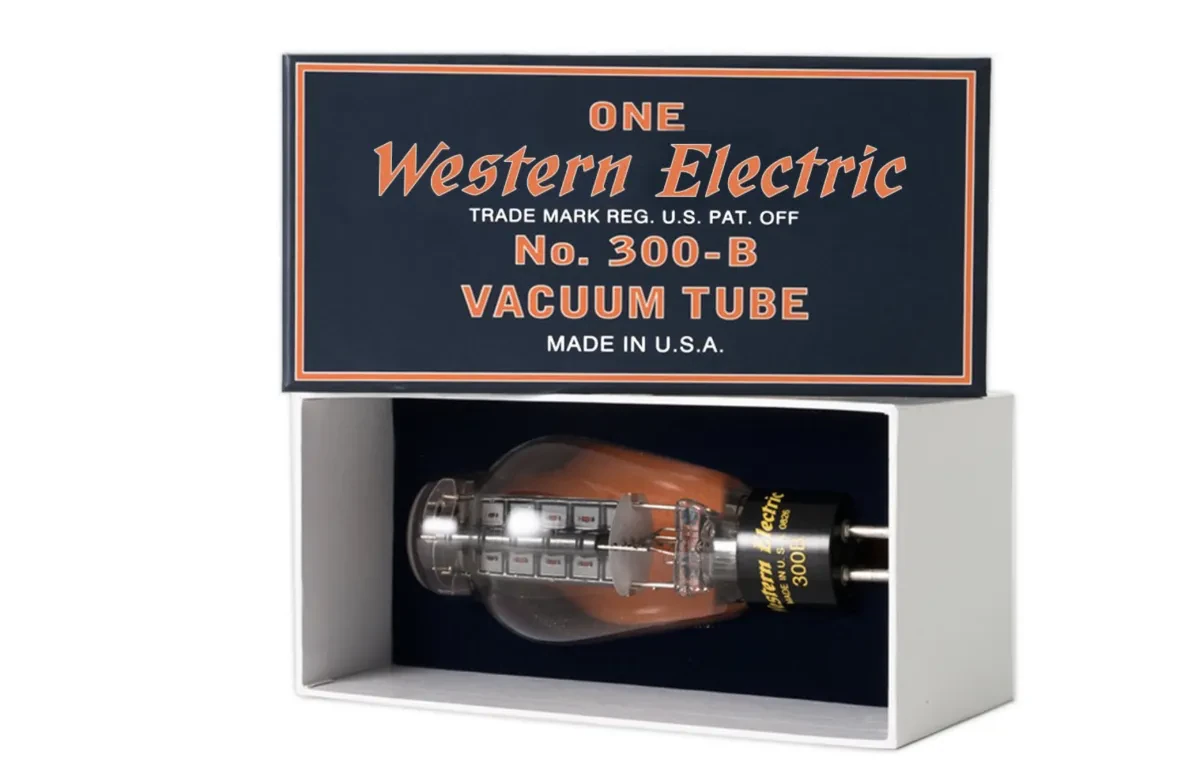
There are limits. A single tube in single-ended operation yields around 8 W. That is the physical ceiling of the classic topology, and there are only two ways past it: paralleling tubes, or an unconventional approach to powering the output stage.

Either way, the demands placed on loudspeaker impedance and sensitivity are severe.
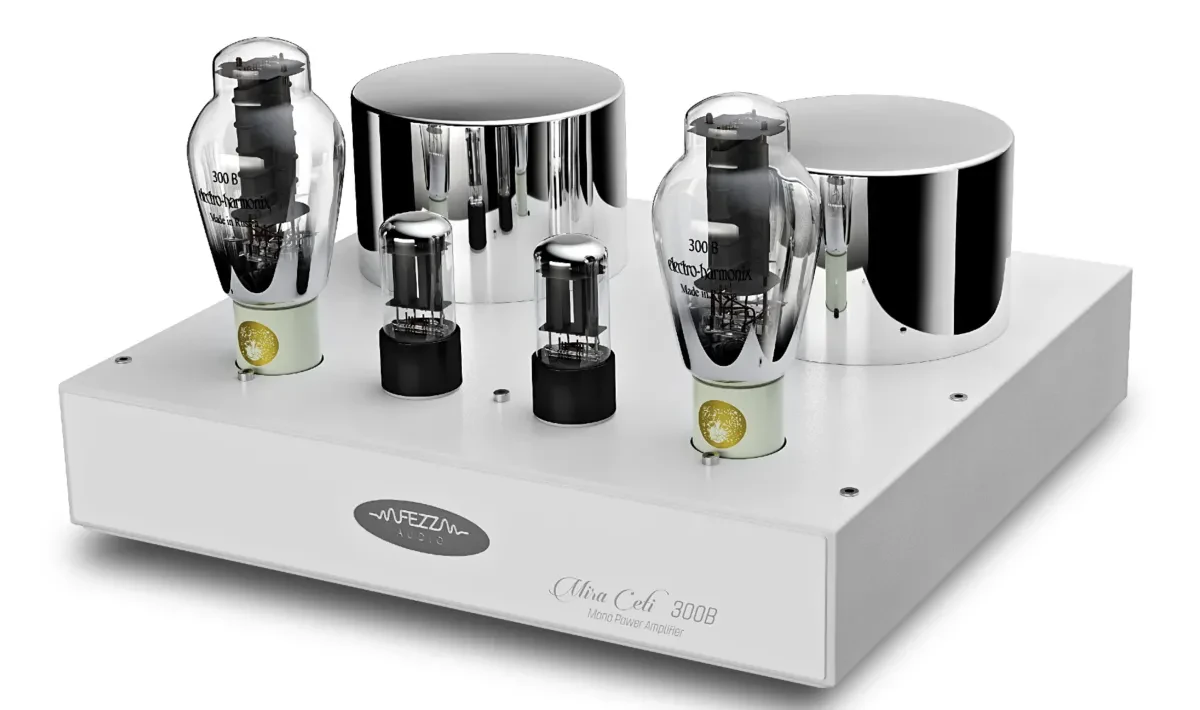
7. Fezz Audio Mira Ceti 300B
EUR 4,219
A Polish integrated built around an unusual choice: toroidal output transformers in place of the classic EI-core design. Output reaches 2 x 8 W in pure class A, the circuit is single-ended, and total harmonic distortion is quoted below 0.4%. Driver duty falls to 6SN7s, and bias is automatic, which spares the owner any routine adjustment. A monoblock version is also offered, using parallel single-ended (PSE) operation for 15 W per channel. The Mira Ceti sounds musical and remarkably self-assured.
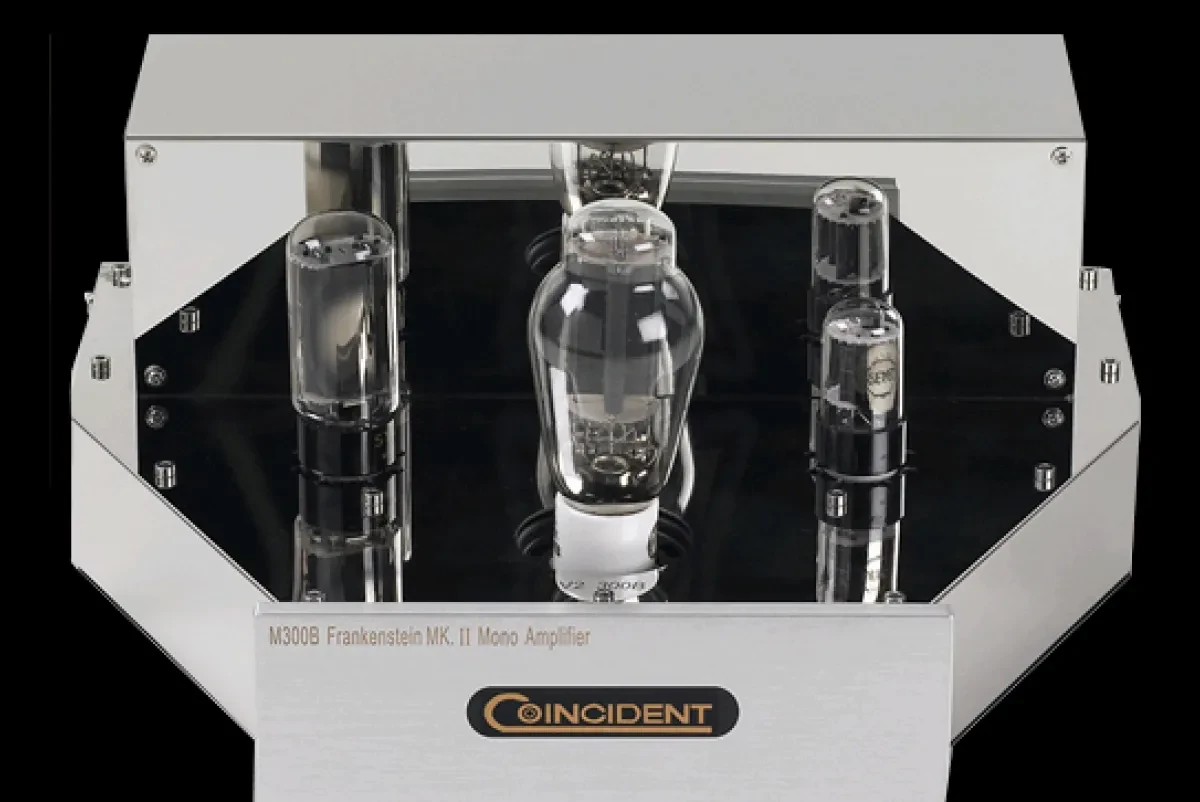
6. Coincident Frankenstein MkII
EUR 5,999 per pair
Canadian monoblocks built on the principle of the shortest possible signal path, hand-wired point to point with the minimum number of parts. The mono version uses a 6EM7 input tube and a 5U4GB rectifier; the stereo version substitutes a 6SL7 and a 5AR4 while keeping the same component philosophy. The Frankenstein MkII made its name above all as one of the few single-ended designs that delivers genuinely dense, well-textured bass, normally a rarity in this group. Output is the standard 8 W.
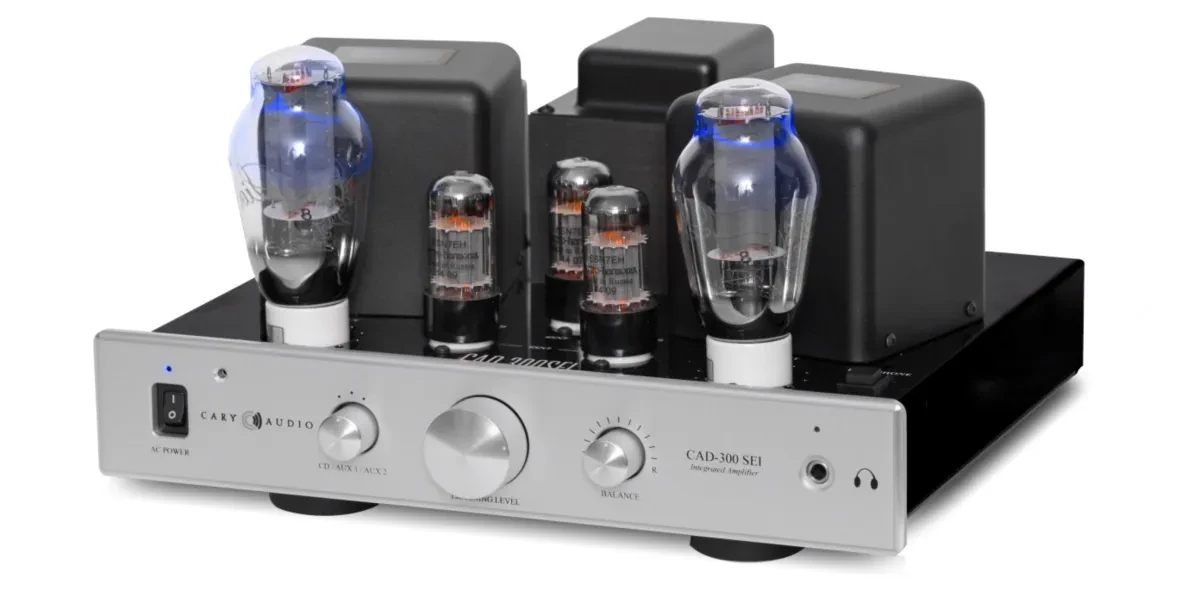
5. Cary Audio CAD-300SEI
EUR 8,000
Thirty years on the market. A single-ended integrated running pure class A on a pair of 300Bs with 6SN7 drivers, the CAD-300SEI went on sale in the 1990s and is still a bestseller: a healthy 2 x 15 W gives far more room to maneuver when choosing speakers, and the dynamic behaviour is superb. If you want a proven classic at a relatively modest price by the standards of this group, all roads lead to the Cary Audio CAD-300SEI.
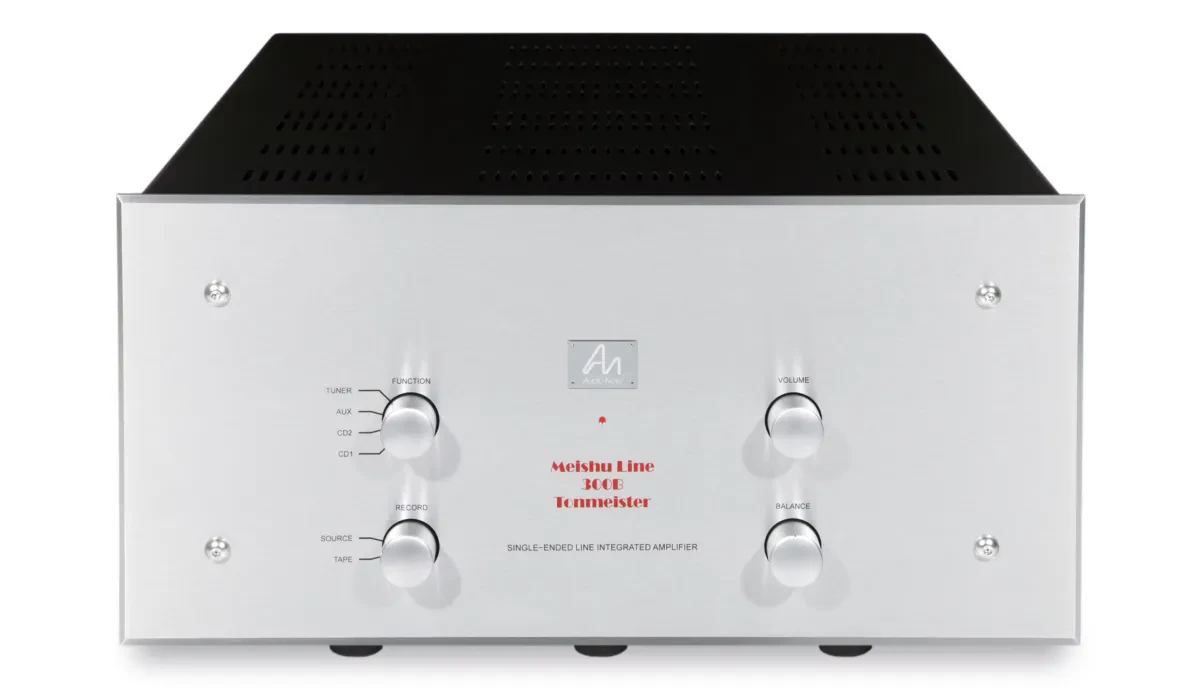
4. Audio Note (UK) Meishu Tonmeister Line
EUR 14,000
The Meishu Tonmeister is the new integrated from the cult British manufacturer, offered in several trim levels and available with a built-in phono stage. The maker quotes 2 x 8 W per channel into 4 or 8 ohms, pure class A, zero global feedback and tube rectification (the complement includes a 5U4G rectifier, a pair of 300Bs and a set of small-signal tubes).
The range follows the company’s signature level system: the same circuit is offered in several versions that differ in the quality of the parts used, from transformers, resistors and capacitors to the internal wiring. Quoted input figures are 100 kohm input impedance on the line input and 47 kohm on phono, sensitivity of roughly 110-240 mV for full rated output depending on the level of execution, and channel imbalance no greater than 0.3 dB. With the Meishu Tonmeister, though, the numbers turn out not to matter much - the amplifier simply casts a spell, which is why professional consensus places it in the very highest class.
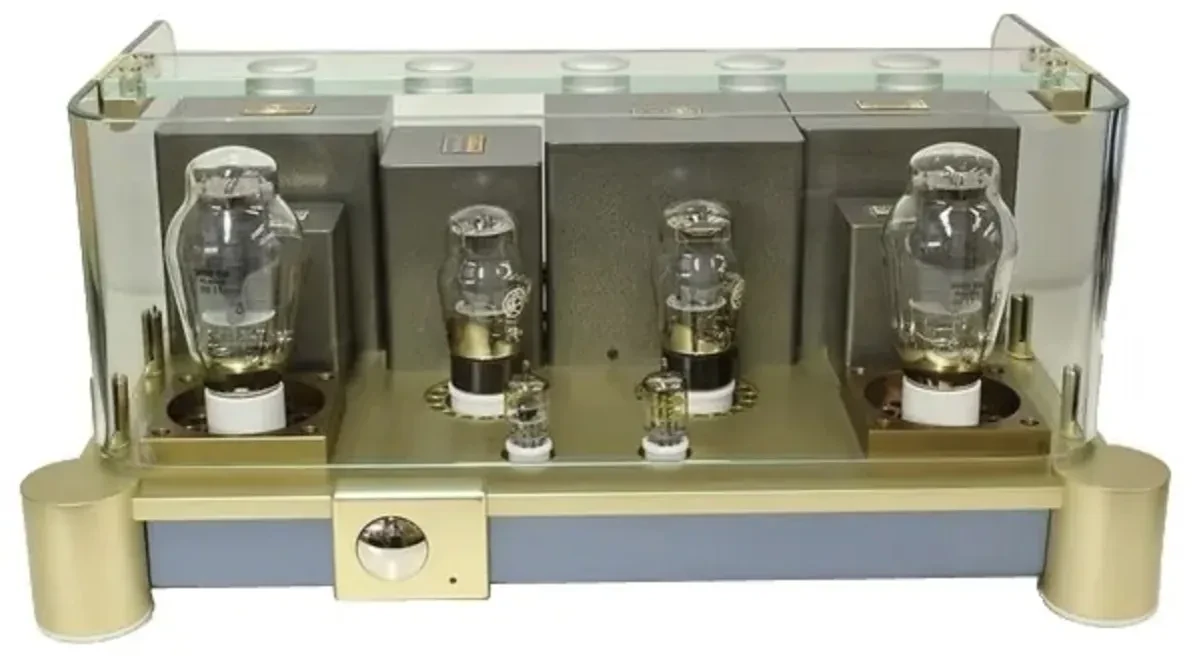
3. Wavac EC-300B
EUR 14,000
Japan’s Wavac EC-300B coaxes slightly more out of the familiar circuit than is customary, offering 2 x 8 W of output power. The sound is unmistakable, exceptionally airy and three-dimensional, from a single-ended circuit running pure class A. The signature feature is a proprietary interstage coupling scheme using an inverted transformer, devised by Nobu Shishido. It removes coupling capacitors from the signal path entirely, and in classic designs those are one of the principal sources of colouration. The output transformers are custom-wound. The amplifier weighs 27 kg.
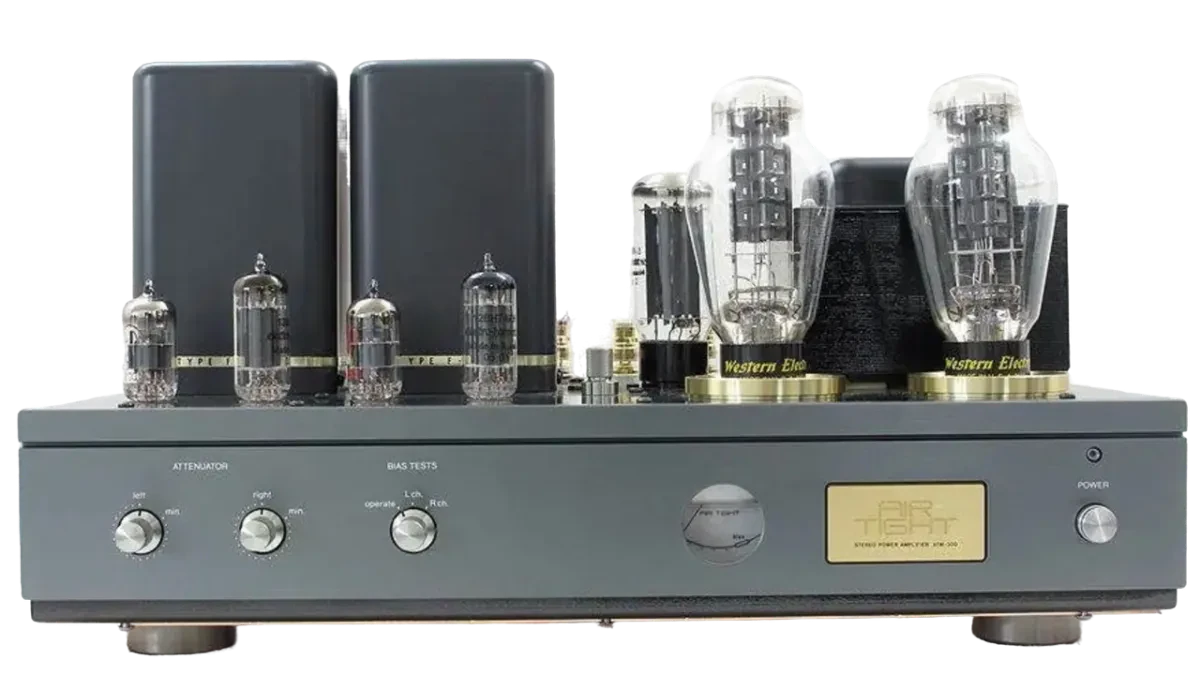
2. Air Tight ATM-300R
EUR 16,999
An expensive Japanese power amplifier, the third generation of a model that debuted in 1999. The ATM-300R makes 2 x 8 W per channel, with total harmonic distortion below 1% at 6 W, a damping factor of 7 at 1 kHz, and a frequency response from 30 Hz to 40 kHz within -1 dB at 1 W. One construction detail stands out: the power supply filter choke and the mains transformer are wound by hand with paper insulation. The cherry on top is a pair of level controls, which means the unit can run without a preamplifier if the system has only one source.
The tube complement is two 300Bs, two 12BH7As, two 12AU7s and a 5U4GB rectifier. The circuit runs three stages, with the 12AU7 at the input and paralleled 12BH7As in the driver stage. Feedback depth is user-switchable in three positions, 0, 4 and 6 dB, which allows the output impedance to be tailored to a particular loudspeaker. Input sensitivity follows accordingly at 230, 300 and 450 mV. Weight is 24.5 kg.
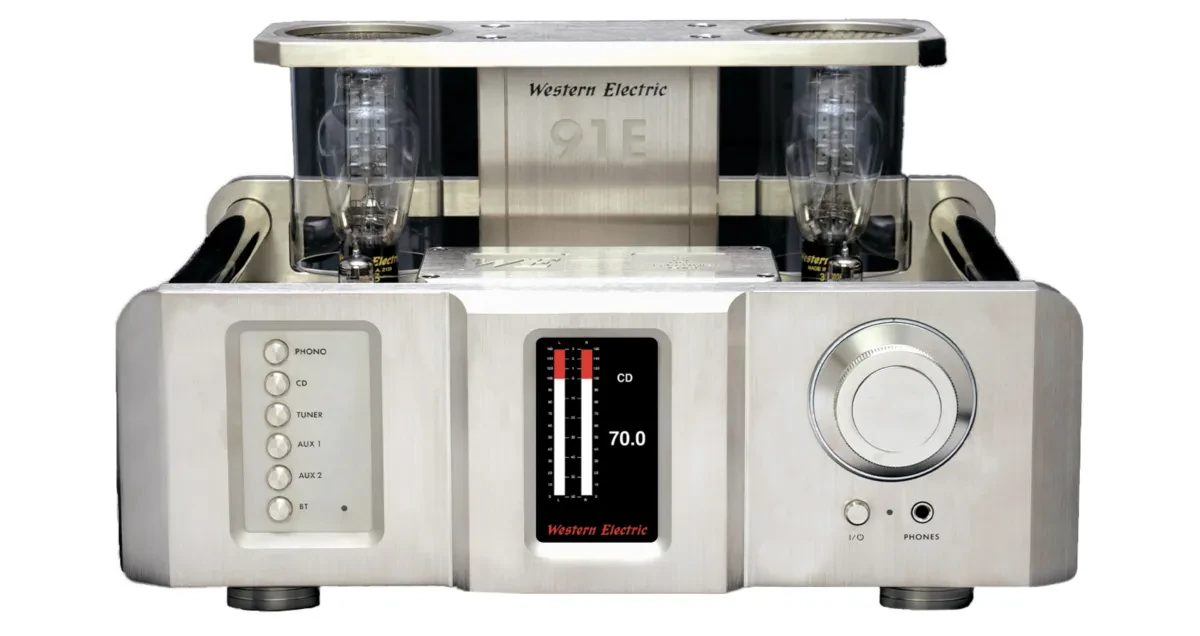
1. Western Electric 91E
EUR 18,500
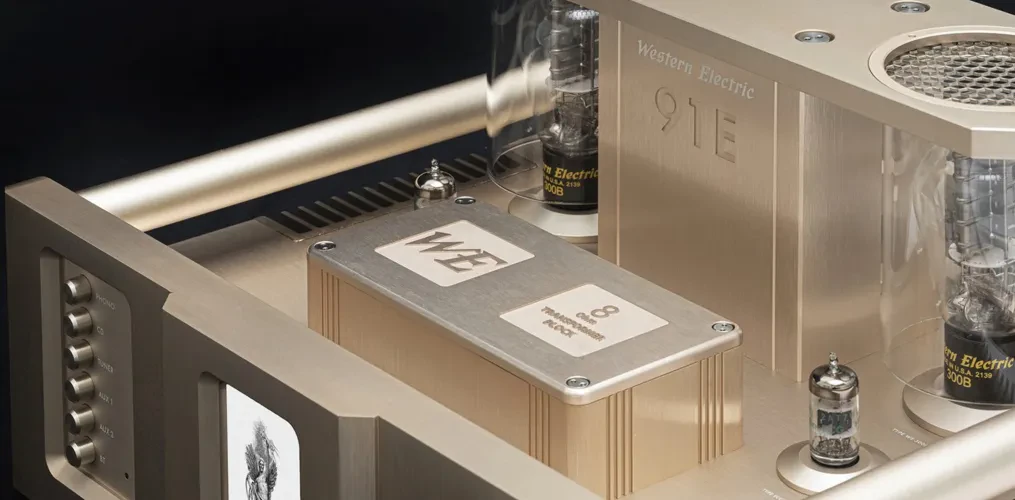
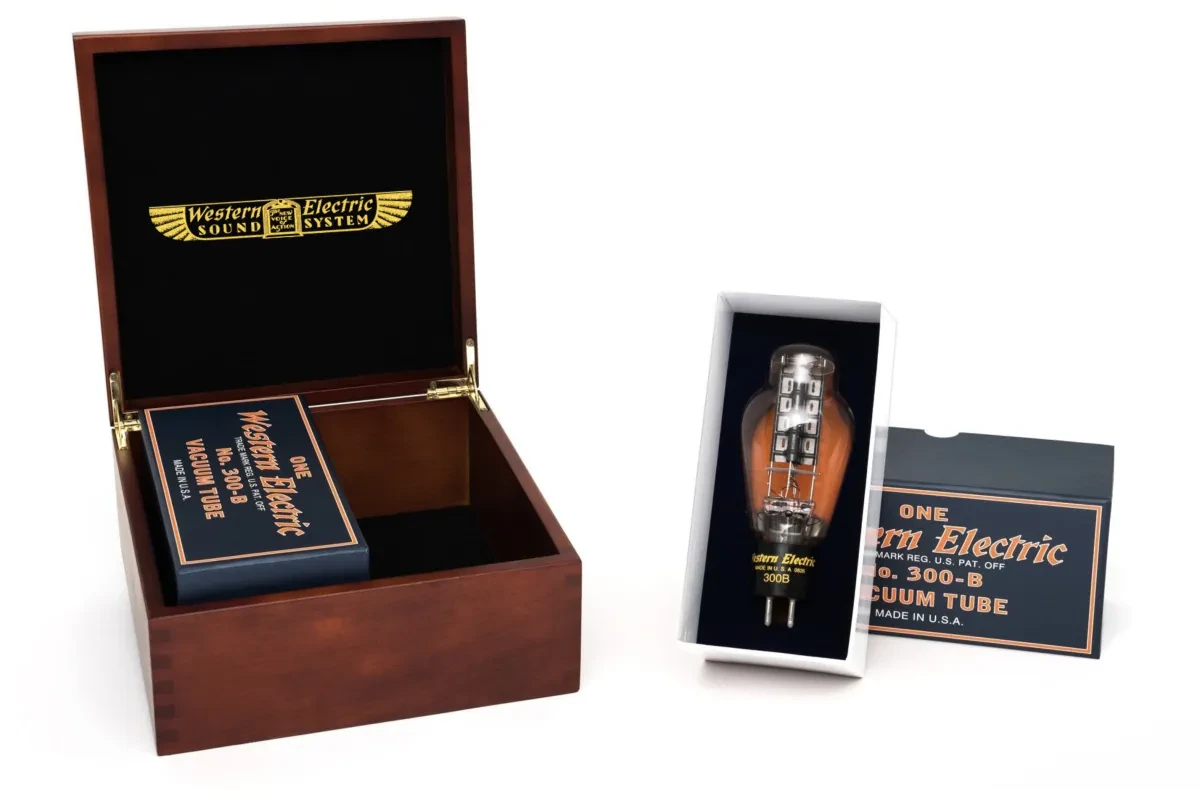
A class A integrated from the company that created the 300B in 1938 and has brought it back into production today. A full 2 x 20 W is a breakthrough for this class, and you hear it immediately: the sound is muscular and precise, yet it keeps the transparency and the tube signature intact.
That comes from a patented Steered Current Source technology, which controls a current source referenced solely to the tube’s output voltage and so extracts twice the usual power from a 300B while staying in single-ended class A. Other notable features: the output transformers are built as removable modules, so the owner can change the impedance matching to suit their speakers without going inside the amplifier. There is also a built-in phono stage switchable between MM and MC, and a preamplifier-only mode for driving an external power amp. The mains transformer is toroidal. This is the most practical option in the category for anyone whose speakers measure around 90-93 dB and for whom the classic 8 W is simply not enough.
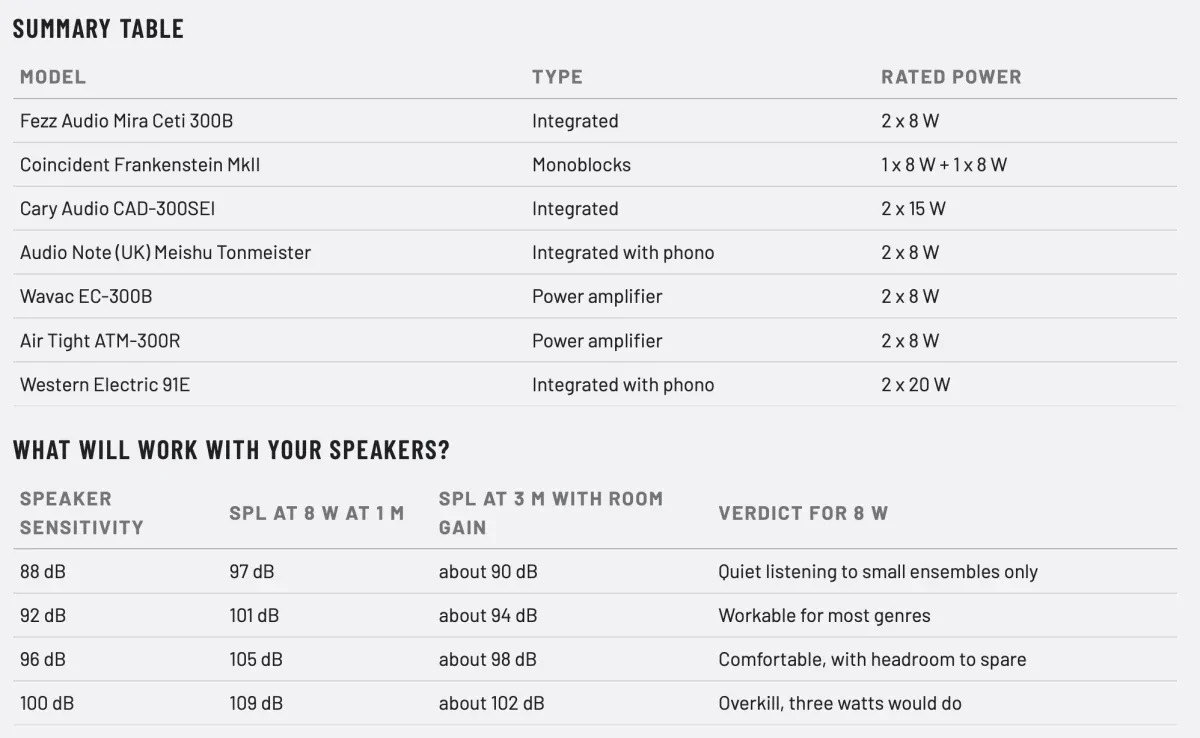
A correction then has to be applied for the dynamic range of the material. A full symphony orchestra needs roughly 20 dB of headroom above the average level. If your comfortable average is 80 dB, peaks will reach 100 dB, and the table above shows that below 92 dB of sensitivity you will run into the ceiling.
Impedance matters just as much
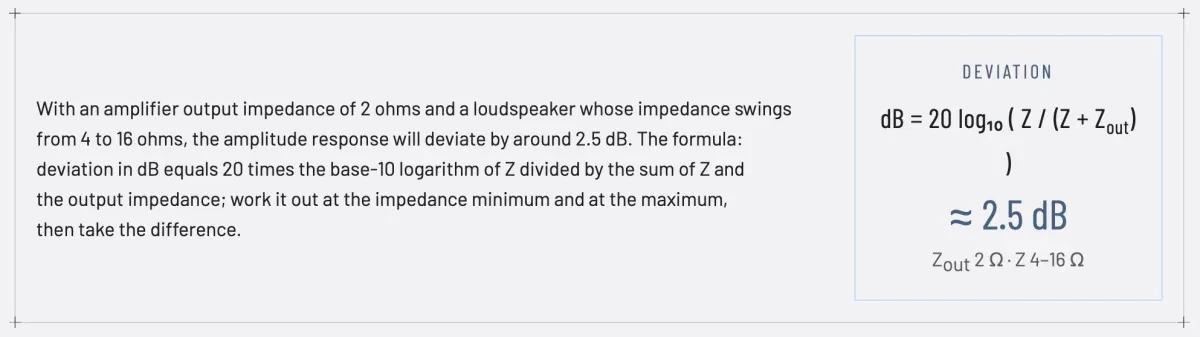
The practical conclusion is that a loudspeaker for a single-ended amplifier needs not only high sensitivity but a flat impedance curve. The ideal is a nominal 8 or 16 ohms with swings held within a two-to-one ratio.
Tubes - what you need to know about living with them
• Who makes 300Bs. The triode is currently produced in the USA, China, Slovakia, the Czech Republic and several other countries. The sonic spread between samples from different makers is real and measurable: gain, transconductance and distortion spectrum all differ.
• Matching a pair. In a single-ended circuit, matching two tubes to each other matters less than it does in push-pull, since each tube drives its own channel independently. Demanding a pair matched to fractions of a percent is not essential, though it is still desirable.
• Bias. Automatic bias takes maintenance out of the equation. Fixed bias needs periodic checking.
• Retubing budget. A set of output tubes from a well-known manufacturer can cost a noticeable fraction of the price of the entry-level amplifier in this category.
• Heat. Every machine in this class throws off a serious amount of heat. Allow at least 50 cm of clearance above for ventilation.
Pre-purchase checklist
• Find the impedance plot for your speakers. Not the nominal figure, the plot itself.
• Calculate the power you need from sensitivity, listening distance and your usual listening level.
• Ask the manufacturer for the output impedance or damping factor, with the measurement frequency stated.
• Ask for the measured noise level, especially if your speakers are more sensitive than 95 dB.
• Confirm whether the output tubes are included. Some manufacturers ship without them.
• Check that replacement tubes are available in your market, and what they cost.
• Arrange a home audition.