
Pilot Radio Revives the 232 Tube Amplifier Based on a 1959 Design

28.07.2026 00:41 | ~3 minutes read
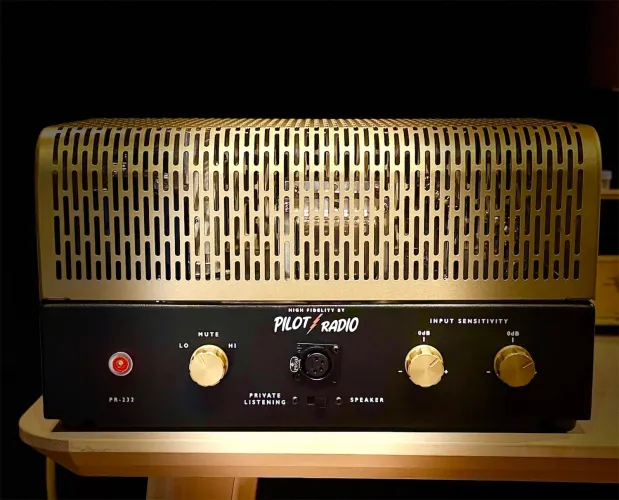
The revived American brand Pilot Radio unveiled the Pilot Radio 232 stereo tube power amplifier at the Southwest Audio Fest in Dallas. Priced at $4,790, the model is inspired by the company’s proprietary Curtain of Sound circuit, originally developed in 1959. The modern version was designed by Damon Coffman of Coffman Labs, while production has been established at facilities in Portland and Dallas.
The return of the Pilot Radio brand is being led by Barak Isidor Epstein, the great-grandson of Isidor Goldberg, founder of the Pilot Electric Manufacturing Company. The relaunch is therefore not simply a case of licensing a historic name, but a family-led attempt to revive the company and continue using its original engineering concepts. Following a prolonged absence, Pilot Radio officially returned to the market in 2025.
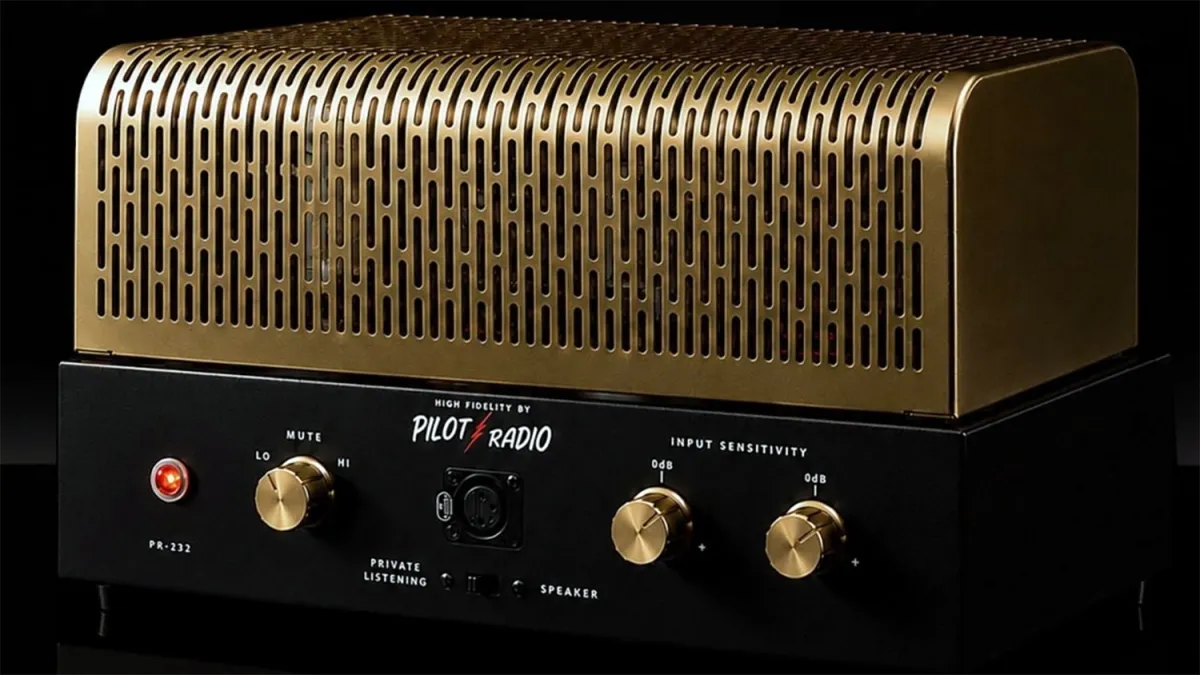
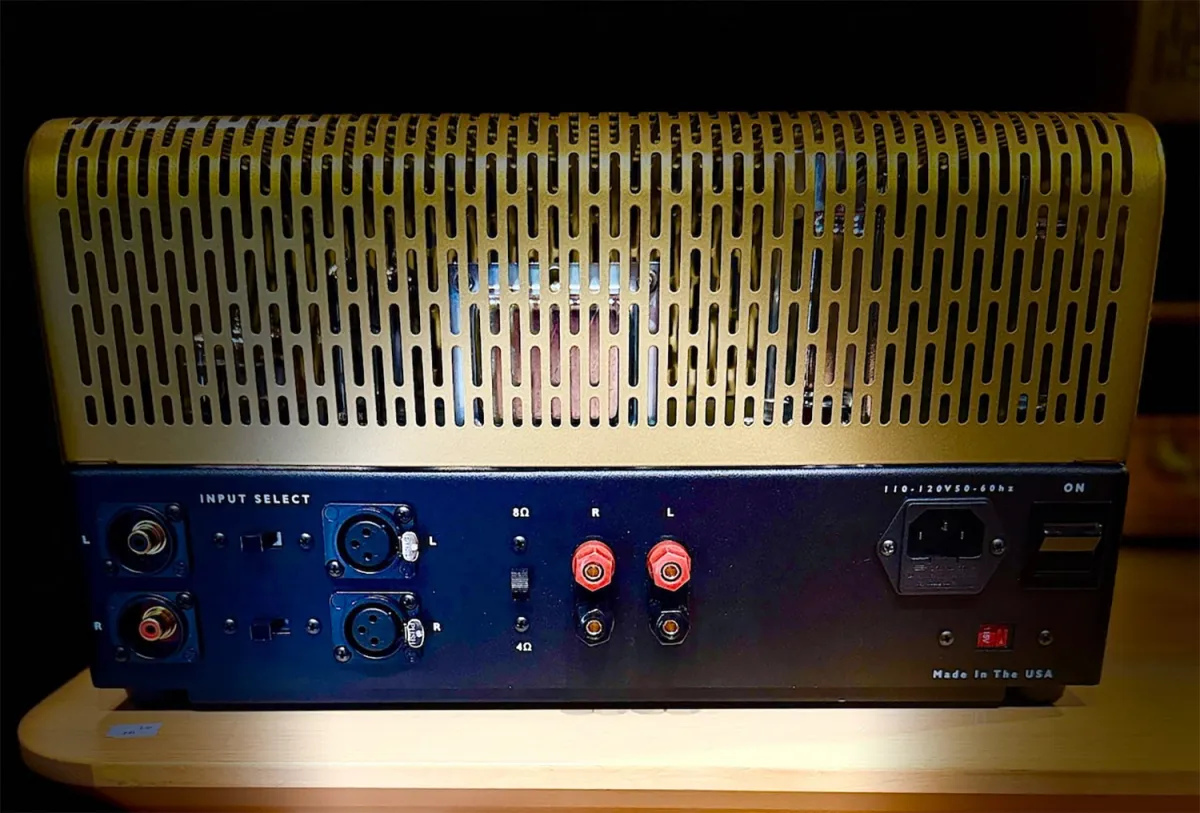
The Pilot Radio 232 power amplifier is built around EL84 output tubes. It delivers 15 watts per channel and, according to the manufacturer, operates in pure Class A. Its construction includes custom-made transformers manufactured in the United States, vintage paper-in-oil capacitors, and hand-wired point-to-point assembly. The amplifier provides speaker outputs for 4-ohm and 8-ohm loads.
The amplifier’s moderate output power means that matching it with suitable loudspeakers requires careful consideration. The most appropriate partners for the Pilot 232 will be speakers with a sensitivity of at least 90 dB and without severe impedance dips. Potentially compatible options include models from DeVore Fidelity, Klipsch Heritage, Audio Note, Omega, and PureAudioProject. At the same time, the amplifier is unlikely to be an ideal choice for low-sensitivity floorstanding speakers, Magnepan planar magnetic panels, or use in large rooms.
Connectivity includes unbalanced RCA inputs and balanced XLR inputs. When the XLR connection is used, the signal is fed directly into the differential amplification stage. Independent sensitivity and balance controls are provided for the left and right channels. Another distinctive feature is a four-pin balanced XLR headphone output mounted on the front panel, an unusual addition for a stereo tube power amplifier.
Pilot Radio has not yet disclosed detailed specifications for the headphone output. The manufacturer does not state its output power, output impedance, or recommended headphone impedance range. As a result, it is not yet possible to determine how effectively the Pilot 232 will drive demanding planar magnetic headphones from HIFIMAN or Audeze. The complete tube configuration and a full specification sheet have also not yet been published.
The history of the Pilot Electric Manufacturing Company began in Brooklyn in 1919. Over the years, the company produced radios, shortwave equipment, televisions, cinema electronics, and home audio components. In 1952, it shifted its entire focus to high-quality audio equipment. Pilot products were developed with the involvement of engineers Sid Smith and Dick Sequerra, who later became associated with Marantz. The company was sold in 1962, and the brand gradually disappeared from the market over the following decade.
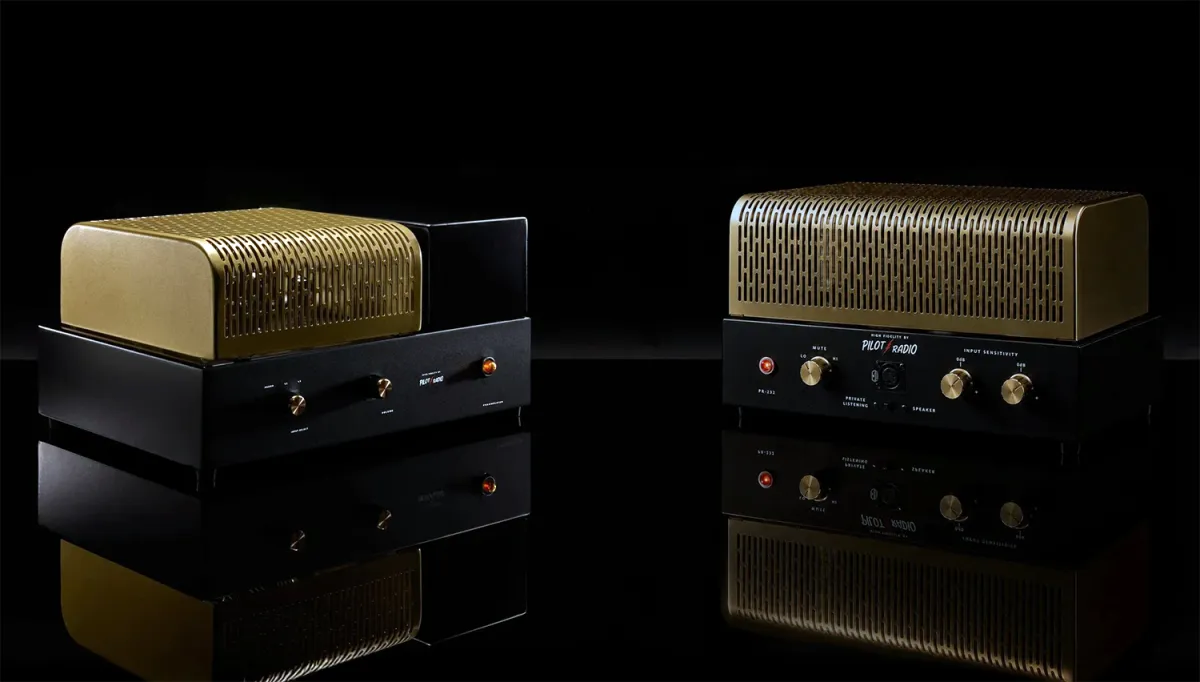
Pilot Radio’s current product range also includes the Pilot Phono and Line Preamplifier, with prices starting at $3,590. A complete Pilot electronics system consisting of the preamplifier and power amplifier will therefore cost at least $8,380, excluding interconnect cables and replacement tubes. The Pilot Radio 232 is already available directly from the manufacturer and through selected dealers in the United States and Canada.
Specifications
Model name
Radio 232
Input sensitivity (mV)
N/A
Input impedance (balanced) (Ω)
N/A
Input impedance (single-ended) (Ω)
N/A
Output impedance (balanced) (Ω)
N/A
Output impedance (single-ended) (Ω)
N/A
Max current (A)
N/A
Output power (8Ω) (W)
N/A
Output power (4Ω) (W)
N/A
Gain (dBu)
N/A
Frequency response low +/- 3dB (Hz)
N/A
Frequency response high +/- 3dB (Hz)
N/A
Signal to Noise Ratio (dB)
N/A
Total Harmonic Distortion + Noise (0% global feedback) (%)
N/A
Total Harmonic Distortion + Noise (100% global feedback) (%)
N/A
Max power consumption (W)
N/A
Damping factor
N/A
Dimensions (mm)
N/A
Weight (kg)
N/A
Official link
Specifications
Model name
Pilot Phono and Line Preamplifier
Analog inputs (balanced)
N/A
Analog inputs (single-ended)
2 + Phono MM + Phono MC
Analog outputs (balanced)
N/A
Analog outputs (single-ended)
N/A
Gain (dBu)
17.5
Input sensitivity (mV)
N/A
Output voltage (V)
N/A
Input impedance (balanced) (Ω)
47 000
Input impedance (single-ended) (Ω)
N/A
Output impedance (balanced) (Ω)
N/A
Output impedance (single-ended) (Ω)
N/A
Maximum output level (balanced) (dBu)
N/A
Maximum output level (single-ended) (dBu)
N/A
Volume control range (dBu)
N/A
Frequency response low +/- 3dB (Hz)
N/A
Frequency response high +/- 3dB (Hz)
N/A
Signal to Noise Ratio (SNR, unweighted) (dB)
N/A
Total Harmonic Distortion + Noise (THD+N) (%)
N/A
Dimensions (mm)
N/A
Weight (kg)
N/A
Official link