
Gryphon Hyperion – Power Amplifier Instead of Mephisto

20.06.2026 08:18 | ~3 minutes read
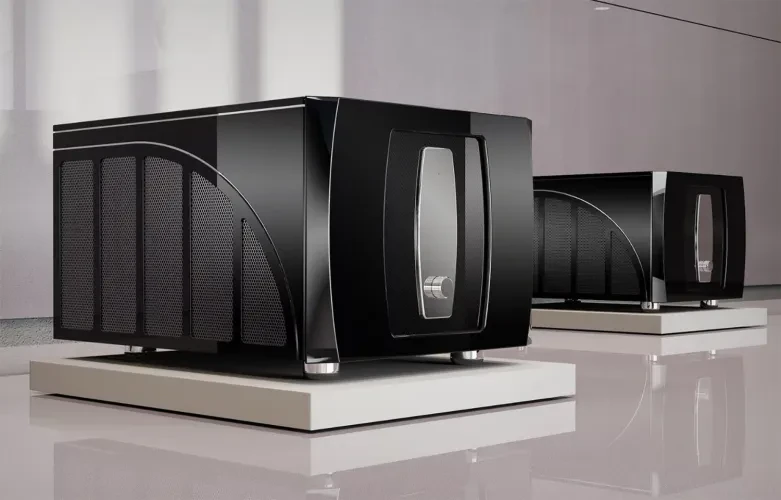
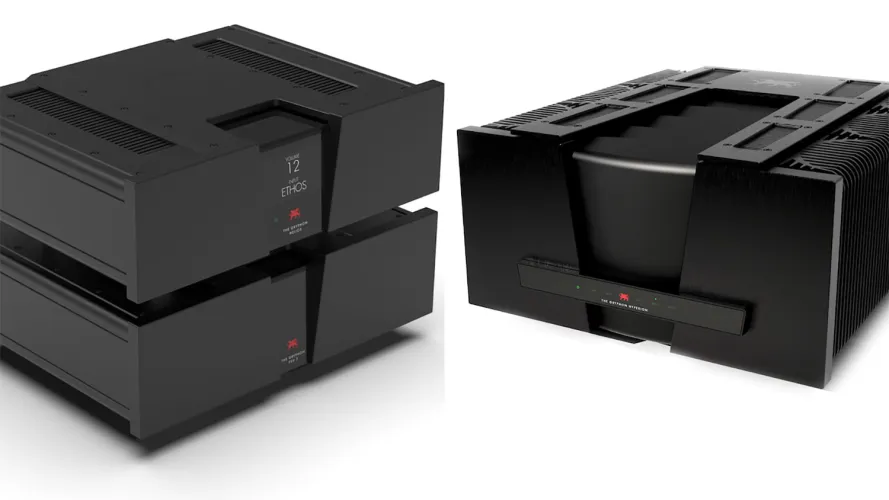
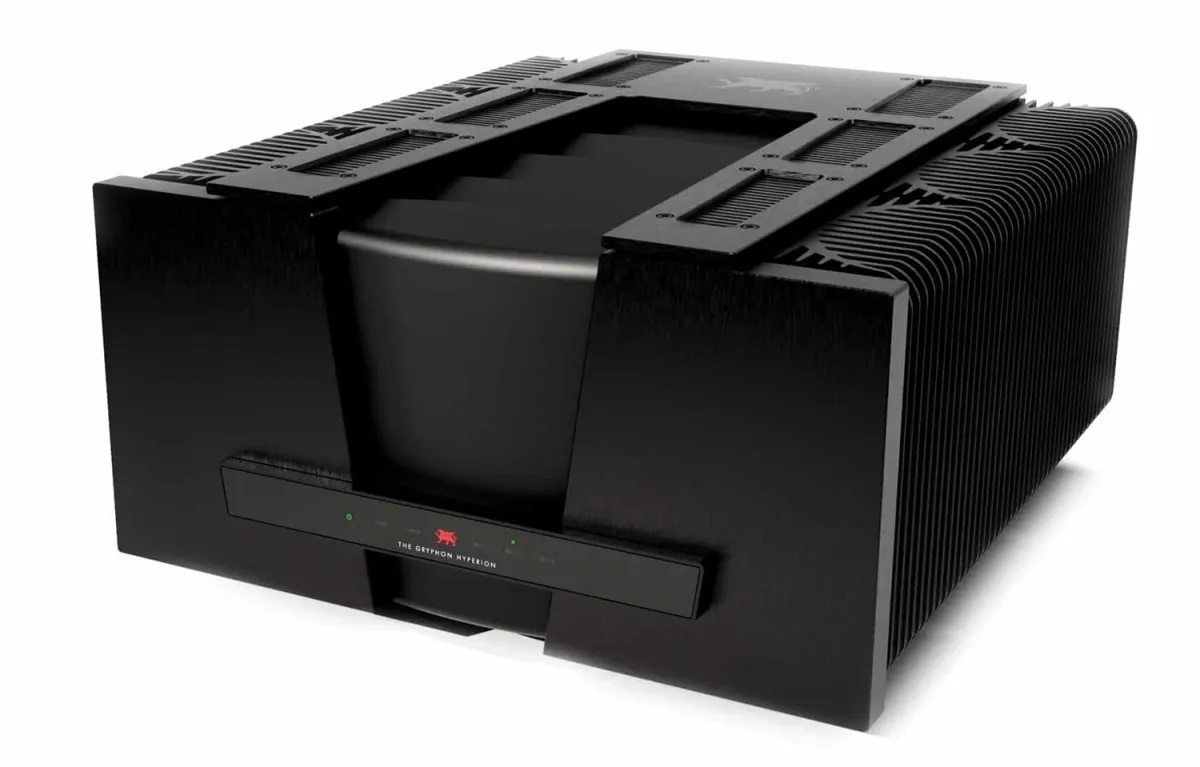
Danish company Gryphon Audio has brought to market a new power amplifier, the Hyperion. The model is a direct development of the famous Mephisto and takes its place as one of the key components in the upper part of the brand’s catalogue. Like its predecessor, the Gryphon Hyperion will be available in two versions: stereo and monoblock. In terms of positioning, this is uncompromising High End, where everything is measured in large numbers – from the weight of the chassis and the circuitry to the output power and expected price.
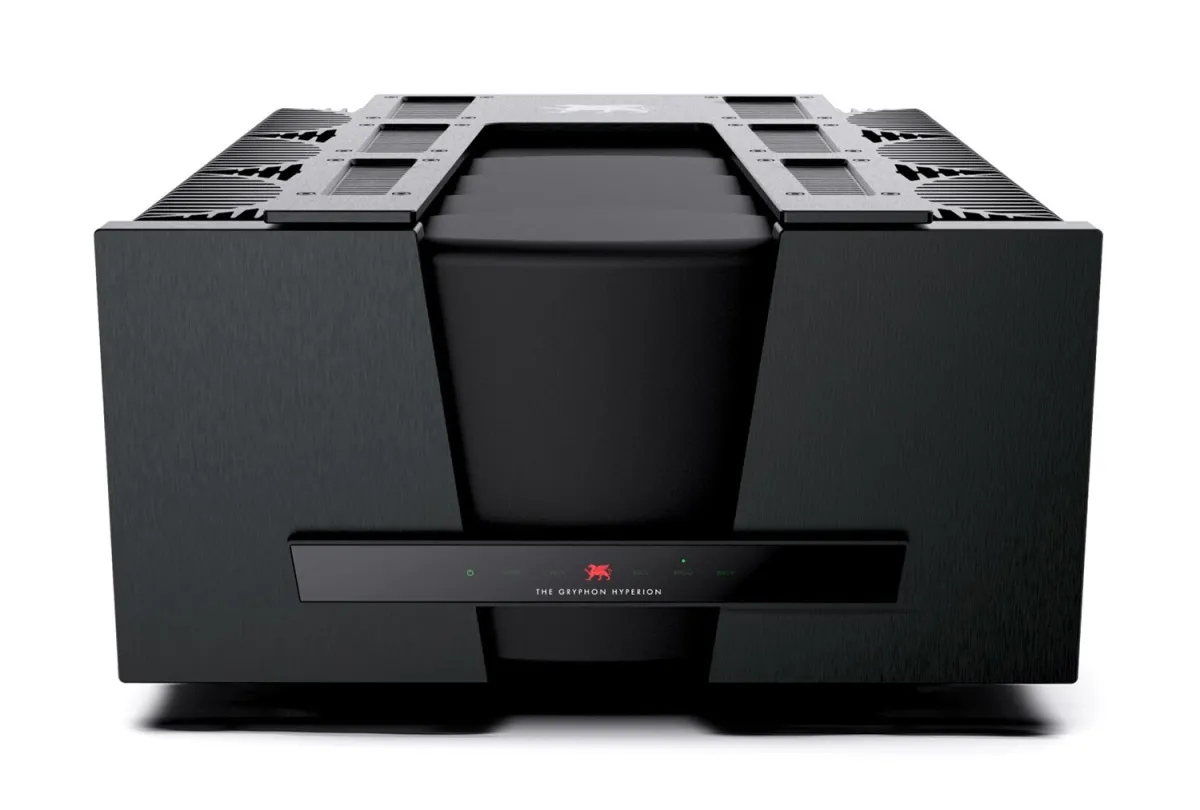
One of the most striking characteristics of the Gryphon Hyperion is its weight of 126 kilograms. If the monoblock configuration is chosen, a stereo system will require a pair of such units, meaning that the total weight of the amplifiers will exceed a quarter of a tonne. At the same time, Gryphon positions the Hyperion as a more compact and comparatively more accessible alternative to the flagship Apex. However, the word “accessible” can only be understood here in the context of ultra-expensive audio: the estimated price of the stereo version is around 80,000 US dollars, while a set of two monoblocks will cost roughly twice as much.
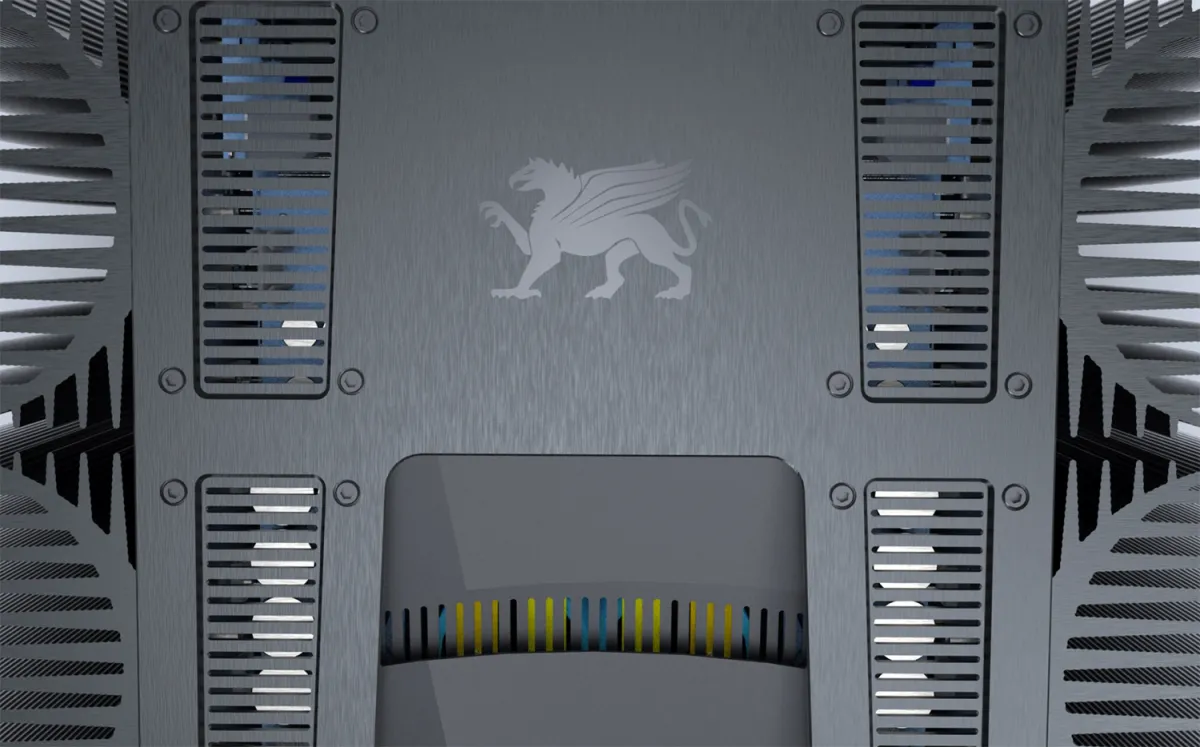
In terms of construction, the Gryphon Hyperion remains faithful to the key principles of the brand’s senior amplifiers. The unit operates in Class A across its entire power range and does not use global negative feedback. The output stage uses transistors of the same type as those found in the flagship Apex Reference. Each chassis contains 40 powerful output transistors, underlining the scale of the modernization: the Hyperion cannot be described as a simple update of the Mephisto with a revised design.
Gryphon’s engineers have also revised the amplifier’s internal architecture. The Hyperion uses a new version of the company’s Class A topology with two JFET transistors and a specially selected, matched pair of BJT transistors. A new printed circuit board was developed for this model, with an updated bias system and a different organization of the signal paths. The internal signal wiring uses a solid pure-silver bus – the same as in the Apex amplifier.
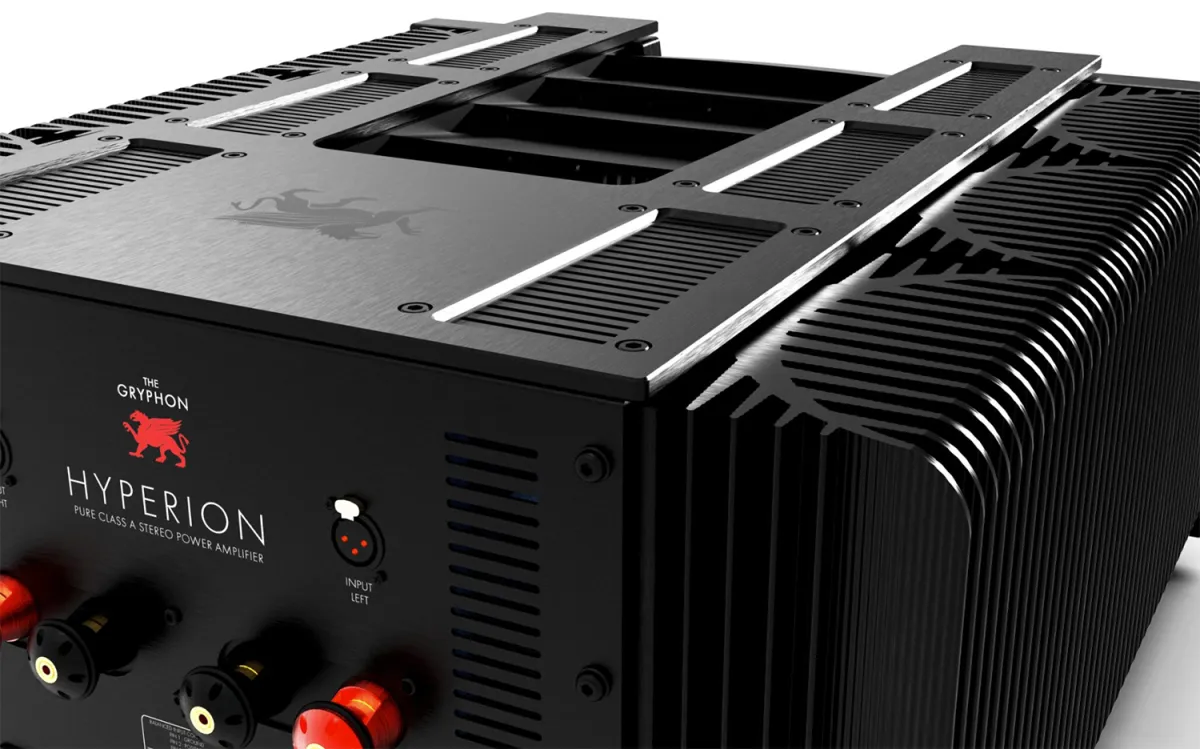
The power supply has also undergone significant changes. Unlike the Mephisto, which used a common transformer section for both channels, the Gryphon Hyperion is equipped with separate power transformers. In addition, separate linear power supplies are provided for the digital and analogue circuits. The total capacitance of the filter capacitors reaches 500,000 µF, which, according to Gryphon, is more than 10% higher than that of the Mephisto.
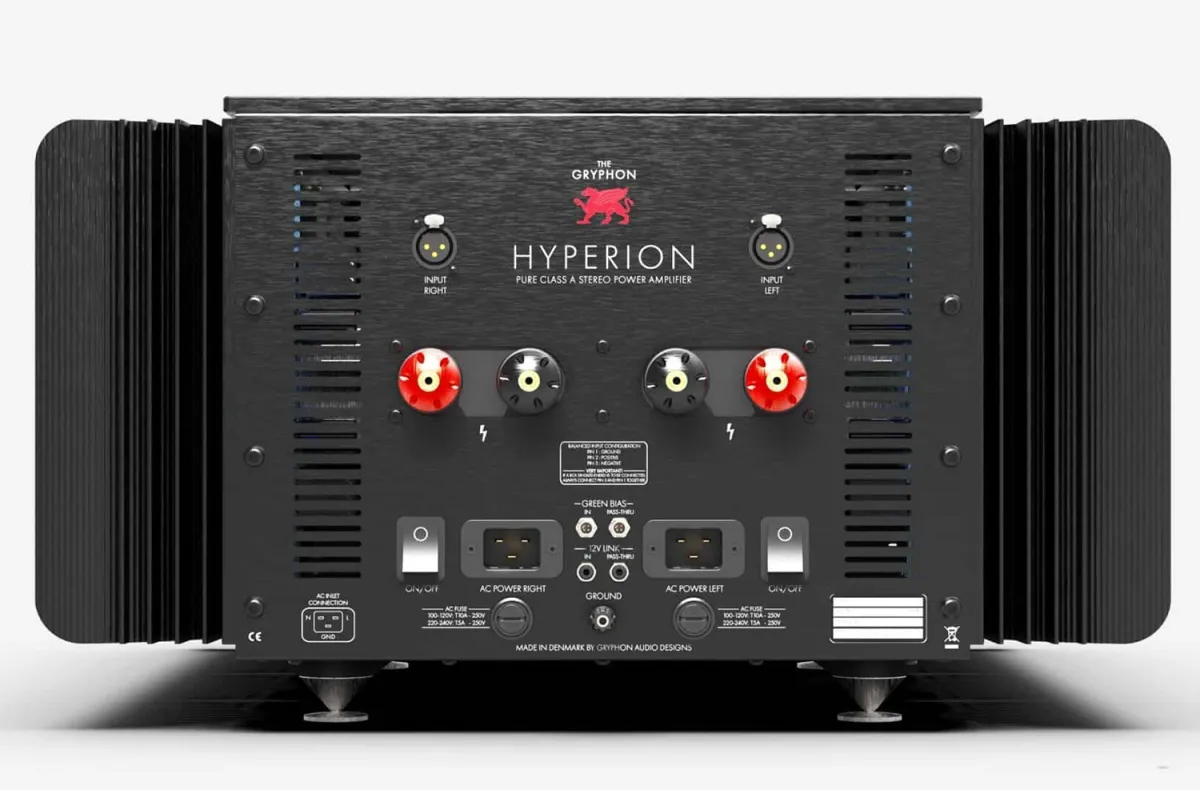
The Hyperion’s specifications match its status. The frequency response at -3 dB is stated as extending from 0.3 Hz to 330 kHz. The stereo version delivers 180 watts per channel into an 8-ohm load and doubles its power each time the impedance is halved. The monoblock version produces 200 watts into 8 ohms and also maintains the principle of doubling power as load impedance decreases. The output impedance is just 0.01 ohm, which gives a damping factor of 800 with 8-ohm loudspeakers. Externally, the amplifier retains Gryphon’s signature look with the inverted-triangle motif, but together with the Helios model it marks a new stage in the company’s industrial design – already after the brand’s founder, Flemming Rasmussen, ceased to be involved in shaping the visual appearance of its products.
Specifications
Model name
Hyperion
Input sensitivity (mV)
N/A
Input impedance (balanced) (Ω)
0.01
Input impedance (single-ended) (Ω)
N/A
Output impedance (balanced) (Ω)
N/A
Output impedance (single-ended) (Ω)
N/A
Max current (A)
N/A
Output power (8Ω) (W)
2 x 180
Output power (4Ω) (W)
N/A
Gain (dBu)
N/A
Frequency response low +/- 3dB (Hz)
0.3
Frequency response high +/- 3dB (Hz)
330000
Signal to Noise Ratio (dB)
N/A
Total Harmonic Distortion + Noise (0% global feedback) (%)
N/A
Total Harmonic Distortion + Noise (100% global feedback) (%)
N/A
Max power consumption (W)
N/A
Damping factor
800
Dimensions (mm)
N/A
Weight (kg)
126
Official link
Specifications
Model name
Hyperion Mono
Input sensitivity (mV)
N/A
Input impedance (balanced) (Ω)
N/A
Input impedance (single-ended) (Ω)
N/A
Output impedance (balanced) (Ω)
N/A
Output impedance (single-ended) (Ω)
N/A
Max current (A)
N/A
Output power (8Ω) (W)
200
Output power (4Ω) (W)
N/A
Gain (dBu)
N/A
Frequency response low +/- 3dB (Hz)
0.3
Frequency response high +/- 3dB (Hz)
330000
Signal to Noise Ratio (dB)
N/A
Total Harmonic Distortion + Noise (0% global feedback) (%)
N/A
Total Harmonic Distortion + Noise (100% global feedback) (%)
N/A
Max power consumption (W)
N/A
Damping factor
800
Dimensions (mm)
N/A
Weight (kg)
126
Official link