

Power amplifiers mono - Hifiverse audio equipment catalog
Mono power amplifiers, or monoblocks, drive a single loudspeaker each, so a stereo system uses a pair and a multichannel system one per channel. Each unit has its own transformer, supply and output stage, and nothing is shared between left and right. This subcategory covers single-channel amplifiers from about 100 W to beyond 1,000 W into 8 ohms, while two-channel models sit with stereo power amplifiers.


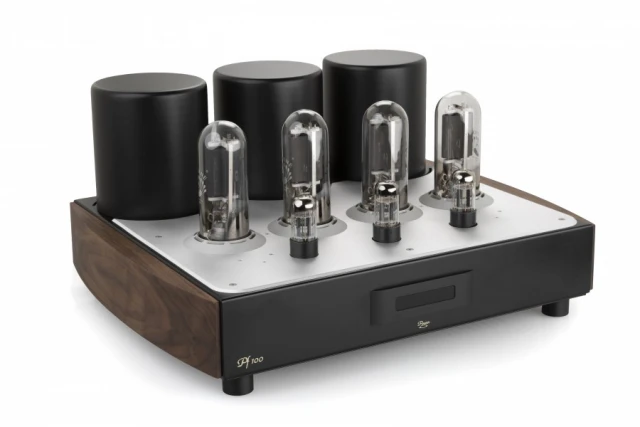


How to choose mono power amplifiers
First decide whether you need the extra chassis. Monoblocks make most sense with difficult speakers, low sensitivity or impedance falling to 2 ohms, where a dedicated supply per channel keeps current available. Look for output that roughly doubles from 8 to 4 ohms as a sign of a stiff supply. Next, think about placement. Two amplifiers can sit close to each speaker, which shortens speaker cables but lengthens the interconnect, so balanced XLR inputs are a practical advantage. Check mains needs too, since large Class A or Class AB models can draw several hundred watts at idle and each needs its own outlet. Finally, confirm weight and footprint, as some pairs exceed 100 kg in total.
Key specs that matter
Continuous power into 8, 4 and 2 ohms shows how well the supply holds up under load. Transformer rating, often 1 to 3 kVA in larger designs, hints at reserve current. Gain, usually 26 to 32 dB, should suit your preamplifier output. Idle consumption tells you how much heat the units will produce in a small room.
Price ranges & what you get
Below USD 4,000 per pair you mostly find Class D monoblocks or compact Class AB units of 150 to 300 W. Between USD 4,000 and 20,000, expect large linear supplies, balanced circuits and bias that keeps the first watts in Class A. Above USD 20,000, pairs bring separate supply chassis, heavy machined casework and outputs into four figures.
Related - stereo amplifiers & reading
Power amplifiers stereo offer two channels in one case for less shelf space. Every monoblock pair still needs a unit from preamplifiers. Our amplifier articles explain bridging, gain and current delivery.