All


ELAC
Website:https://elac.com/
Est. year: 1926
Location: Germany
ELAC is a German loudspeaker company from Kiel, founded on 1 September 1926 as Electroacustic GmbH. It began with sonar research and underwater acoustics, entered consumer audio in 1948 with the PW1 record player and is now known mainly for loudspeakers, from budget Debut models up to the Concentro range, and for its JET folded-ribbon tweeter.
Range & what it's known for
The current speaker families include Debut, Uni-Fi, Carina, Solano, Vela and Concentro, among others, plus custom-installation and outdoor models. Two driver ideas define the brand. The 4Pi omnidirectional tweeter arrived in 1985, and the JET folded-ribbon tweeter followed in 1993 and still sits in the upper series. In May 2015 designer Andrew Jones, formerly of Pioneer, TAD, KEF and Infinity, joined ELAC to create the Debut series, launched with eight models and three powered subwoofers. Uni-Fi later brought concentric driver arrays to affordable prices. The research roots still show in the company name, a contraction of Electroacustic, and in its long work on how sound behaves in air and water.
Who owns it and where it's made
In 1978 the original company went bankrupt and its nautical division passed to Honeywell, later moving through L3 Technologies, Wärtsilä and Cohort, while the loudspeaker business continued in Kiel. The upper ranges are engineered in Germany. When ELAC returned to North America in 2015, it opened a design facility in Southern California led by Jones, where the Debut series was developed.
The lineup in this catalog
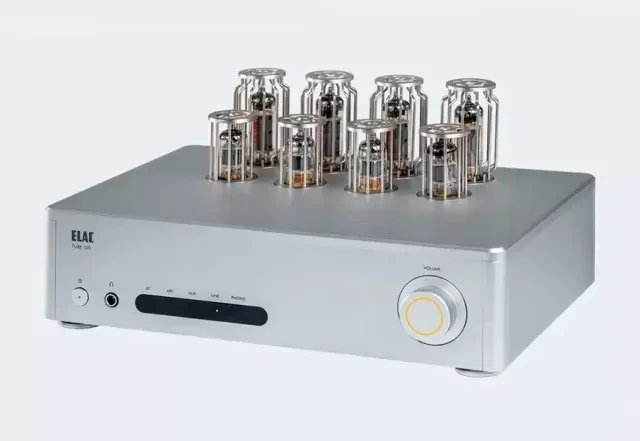
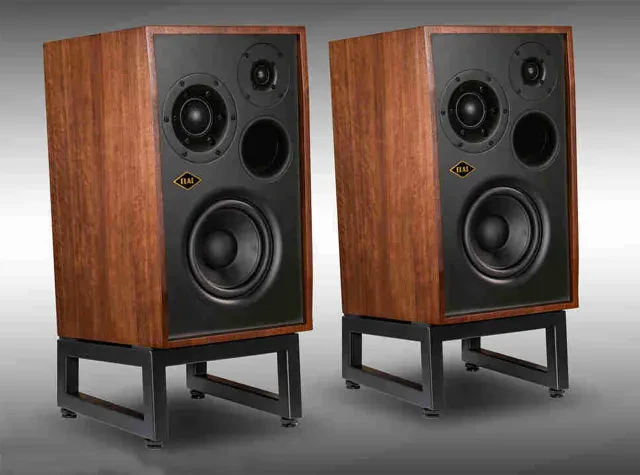
Loudspeakers and electronics across several categories. Debut models cost from roughly EUR 300, while Concentro systems go well past EUR 10,000.
Who it's for
ELAC lets a buyer start cheaply and keep the same maker as the system grows. Debut speakers serve first systems and home cinema setups with subwoofers, Uni-Fi adds coaxial drivers, and Carina, Solano and Vela bring the JET tweeter. Concentro sits at the top for large spaces. Architectural and outdoor models extend the same lineup into multi-room installations around the home.