
Top 7 Moving Coil Cartridges Under €1150 in 2026
How to Choose a Higher-Tier Cartridge

The cartridge is one of the most important components in a vinyl chain. It is the cartridge that forms the original signal picked up from the record, while the phono stage, amplifier and speakers only work with that data afterwards. They can equalize it or amplify it, but they can never add back anything lost at the input. That is exactly why, if the cartridge failed to extract some piece of information from the groove, even a fifty-thousand-dollar phono stage will not save the day. So a cartridge is definitely not the place to cut corners - but overpaying makes no sense either if the rest of the chain cannot reveal what the cartridge delivers.
In our new expert feature we have studied MC cartridges - the most precise and audiophile type of all - but limited the contenders to a price range of €500 to €1,150. This is not yet High-End, but it is the sweet spot, where you get truly luxurious sound at a price far below true high-end territory.
The essence of MC cartridge technology
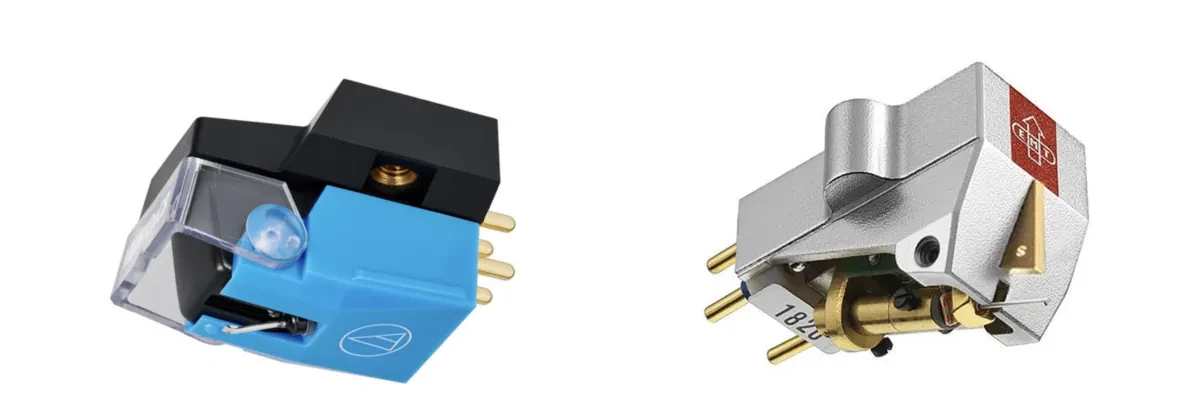
Cartridges work by reading the movements of the stylus in the record groove: the vibrations are passed to the cantilever, then to a magnetic or inductive element, and turned into an electrical signal through electromagnetic interaction. In affordable MM (Moving Magnet) cartridges, a small magnet sits at the end of the cantilever and moves relative to fixed coils, which is how a high output level is achieved (2.5-5 mV). In MC (Moving Coil) cartridges, the coils themselves are mounted at the end of the cantilever and move within a static magnetic field; this approach delivers a low output of 0.2-0.5 mV and requires an additional 20-30 dB of gain at the phono stage.
MC cartridges guarantee far higher playback quality than MM. Because the moving mass is noticeably smaller (coils are lighter than a magnet), the stylus behaves more accurately in the groove. Lower inertia means less coloration, higher resolution and greater dynamics. The frequency response extends further up top, and the overall character becomes more airy and open.
Among the downsides of MC cartridges are the high demands on the phono stage, a stylus that is as a rule effectively non-replaceable (a rebuild can cost almost as much as the original price, so after 1,000-1,500 hours of listening the cartridge usually just has to be replaced with a new one) and mandatory grounding.
A few more touches to the portrait: Low-output MC (output 0.2-0.5 mV) is the classic solution with the highest demands on the phono stage, while High-output MC (output 1.5-2.5 mV) is a compromise with a larger number of coil windings. In some cases this approach even allows the cartridge to be matched with an MM phono stage. And, of course, every cartridge needs to be compatible with the tonearm (in mass and geometry).
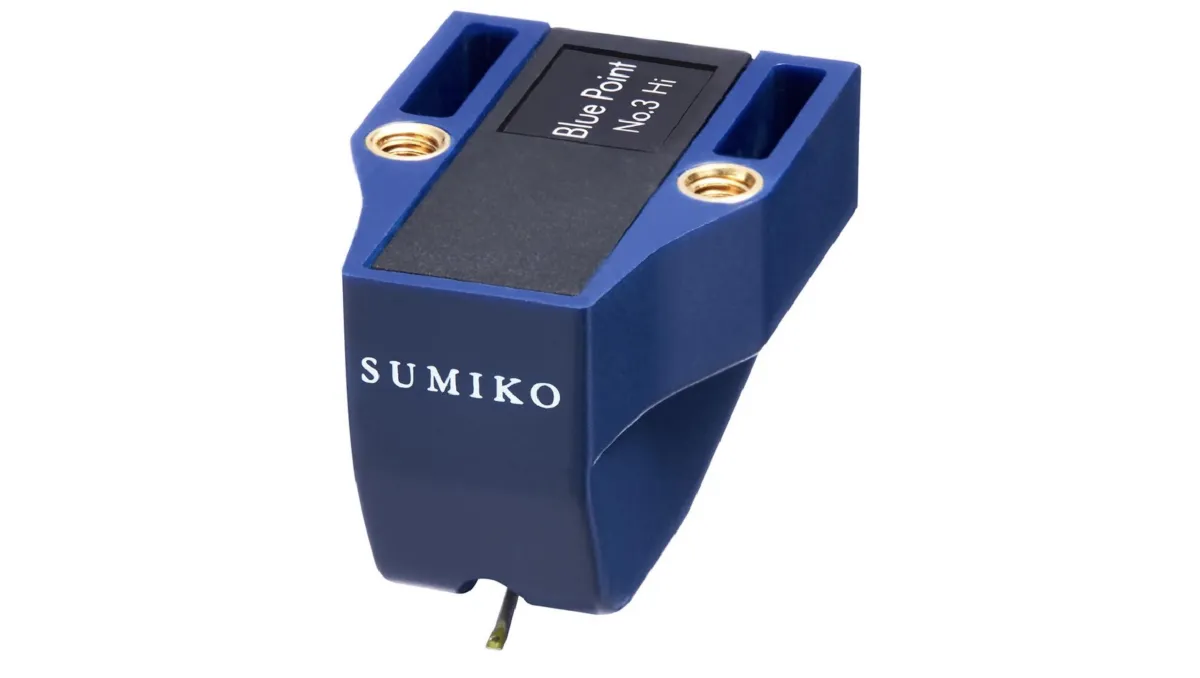
1. Sumiko Blue Point No. 3 High-Output - €499
The Sumiko Blue Point No. 3 High-Output is a superb choice for anyone who already feels at home on the vinyl field and wants to step up from a standard MM cartridge. More than three decades ago the first Sumiko Blue Point sparked a minor revolution on the vinyl market and clearly demonstrated that the notion of an affordable MC had a right to exist. The third generation of this cult cartridge arrived three years ago, and to this day it rightly deserves long and sustained applause - the sound is warm and engaging, with deep, well-extended bass and extended highs.
The cartridge is built around a High-output design with a 2.5 mV output, which means the choice of phono stages turns out to be exceptionally wide. The elliptical stylus and aluminum cantilever are not the most cutting-edge details, but do look at the price. On top of that, the Sumiko Blue Point No. 3 High-Output can boast coils of ultra-pure copper annealed by a special procedure (PCOCC, Pure Copper by Ohno Continuous Casting). The specs are excellent too - channel separation of 28 dB and frequency response up to 25,000 Hz.
Specifications
Model name
Blue Point No. 3 High
Type
MC
Stylus
0.3 x 0.7mil Elliptical
Body
N/A
Cantilever
⌀0.5mm Aluminum Pipe
Coils
High-Purity Copper
Output voltage (mV@5cm/sec)
2.5
Frequency response low +/- 3dB (Hz)
13
Frequency response high +/- 3dB (Hz)
30 000
Internal impedance (Ohm)
135
Channel separation (dB / 1,000 Hz)
30
Compliance (×10-6cm/dyne at 100Hz)
12
Recommended load (Ohm)
47 000
Recommended tonearms
N/A
Weight (g)
6.1
Official link
2. Hana SL - €589
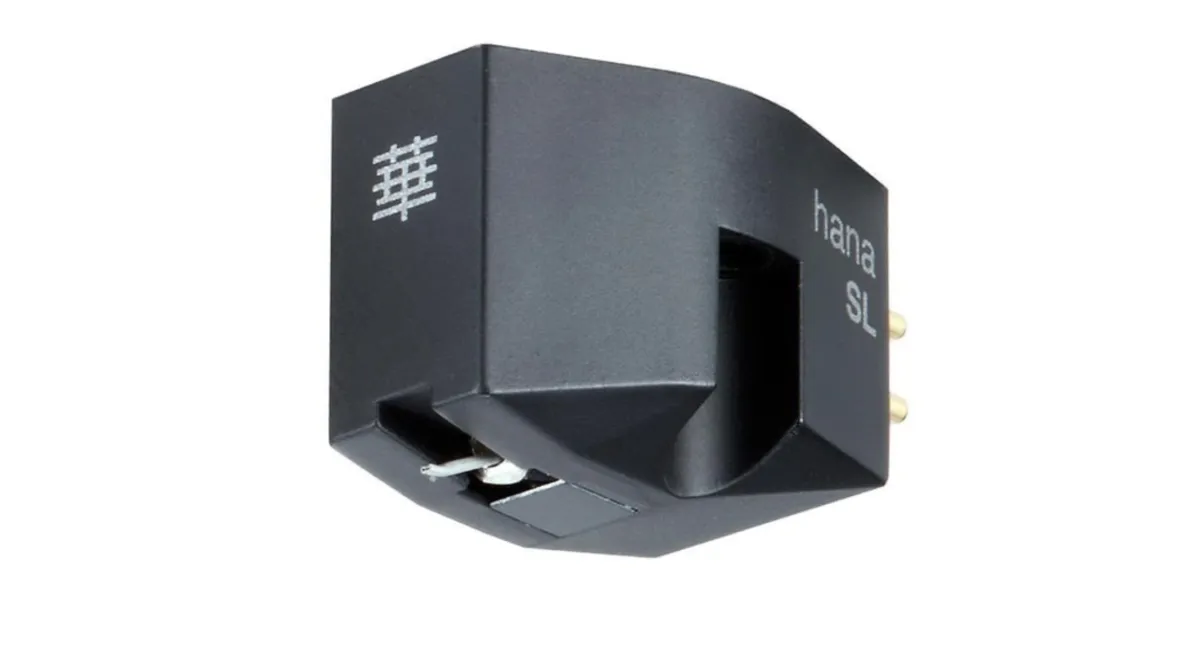
In less than a decade the Japanese brand Hana has become one of the most respected cartridge makers around. The entry-level Hana SL is currently sold at a discount and reaches for the stars when it comes to value for money. Its sound wins you over with musicality, softness, elegance and charm. The Hana SL performs especially well with classical music: the exceptional tonal authenticity of strings is mesmerizing, and the piano materializes in space too.
The Hana SL uses a classic Shibata-profile stylus on an aluminum cantilever and the recognizable black composite body with the highest level of damping. The model offers a 0.5 mV output (you will need an MC phono stage) and guarantees 28 dB of channel separation with frequency response up to 28,000 Hz.
Specifications
Model name
SL MK II
Type
MC
Stylus
Shibata
Body
N/A
Cantilever
Tapered Aluminum
Coils
N/A
Output voltage (mV@5cm/sec)
0.4
Frequency response low +/- 3dB (Hz)
15
Frequency response high +/- 3dB (Hz)
32 000
Internal impedance (Ohm)
8/1kHz
Channel separation (dB / 1,000 Hz)
28dB/1kHz
Compliance (×10-6cm/dyne at 100Hz)
10x10-6cm/dyne
Recommended load (Ohm)
>80
Recommended tonearms
N/A
Weight (g)
8.6
Official link
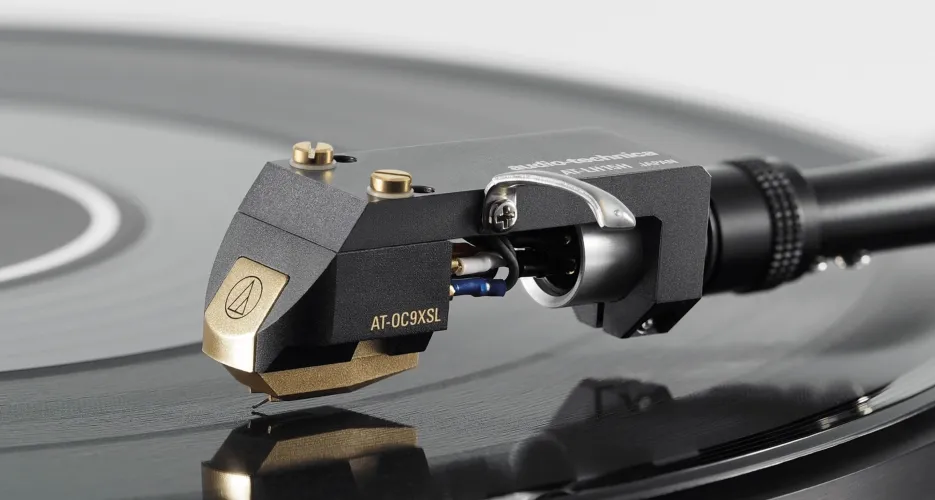
3. Audio-Technica AT-OC9XSL - €625
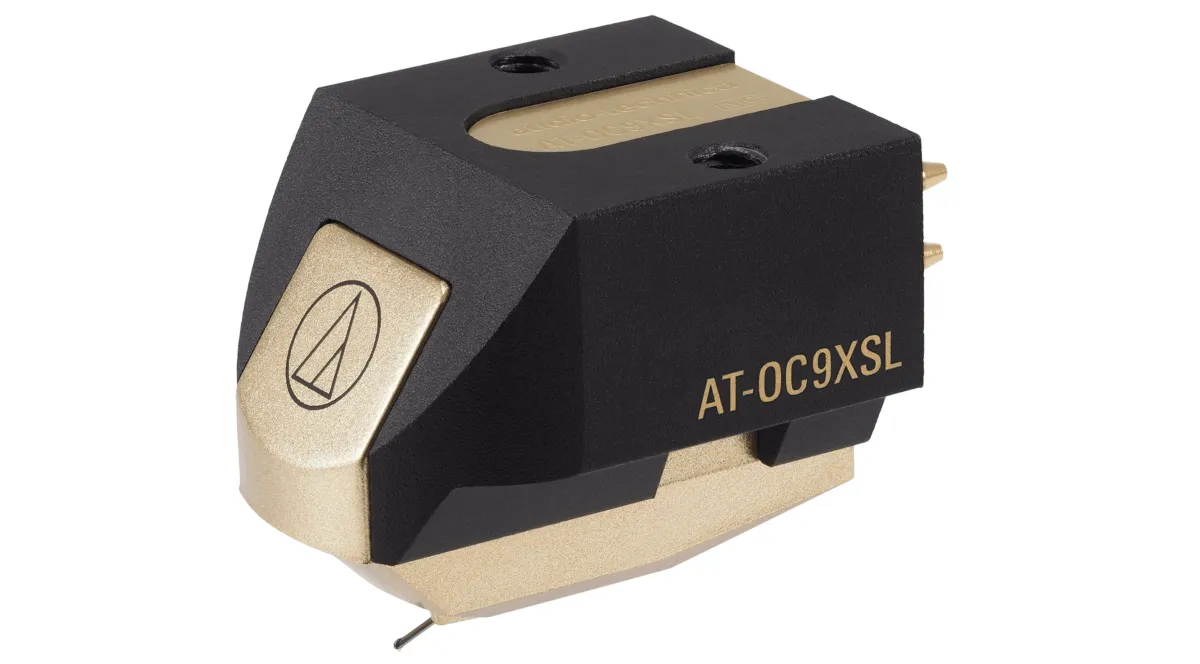
The Audio-Technica AT-OC9XSL is the fourth version of a cartridge first released in 1987. It has been showered with critical praise - and deservedly so: the soundstage here turns out genuinely wide, and the localization superb. The strong suit of the Audio-Technica AT-OC9XSL is vocal reproduction, where the cartridge has few equals in its group, and together with the extended highs the sound comes out beautifully detailed (no wonder the frequency response stretches all the way to 50,000 Hz).
The model uses a Dual Moving Coil design with independent coils for the left and right channels; the reversed V-shaped layout reduces pressure on the stylus and lowers distortion. A boron cantilever, a Special Line Contact stylus (a profile that mimics the geometry of the master cutter used to create vinyl masters), PCOCC coils (Pure Copper by Ohno Continuous Casting) and neodymium magnets with a yoke of an iron-cobalt alloy of very high magnetic saturation, permendur - everything is in good order here. Just pay attention to the 0.4 mV output level - you will need a full-fledged MC phono stage.
Specifications
Model name
AT-OC9XSL
Type
MC
Stylus
Nude rectangular shank
Body
N/A
Cantilever
0.28 mm Ø nude boron
Coils
N/A
Output voltage (mV@5cm/sec)
0.4
Frequency response low +/- 3dB (Hz)
20
Frequency response high +/- 3dB (Hz)
50 000
Internal impedance (Ohm)
12
Channel separation (dB / 1,000 Hz)
28
Compliance (×10-6cm/dyne at 100Hz)
18
Recommended load (Ohm)
>100
Recommended tonearms
N/A
Weight (g)
7.6
Official link
4. Audio-Technica AT33Sa - €799
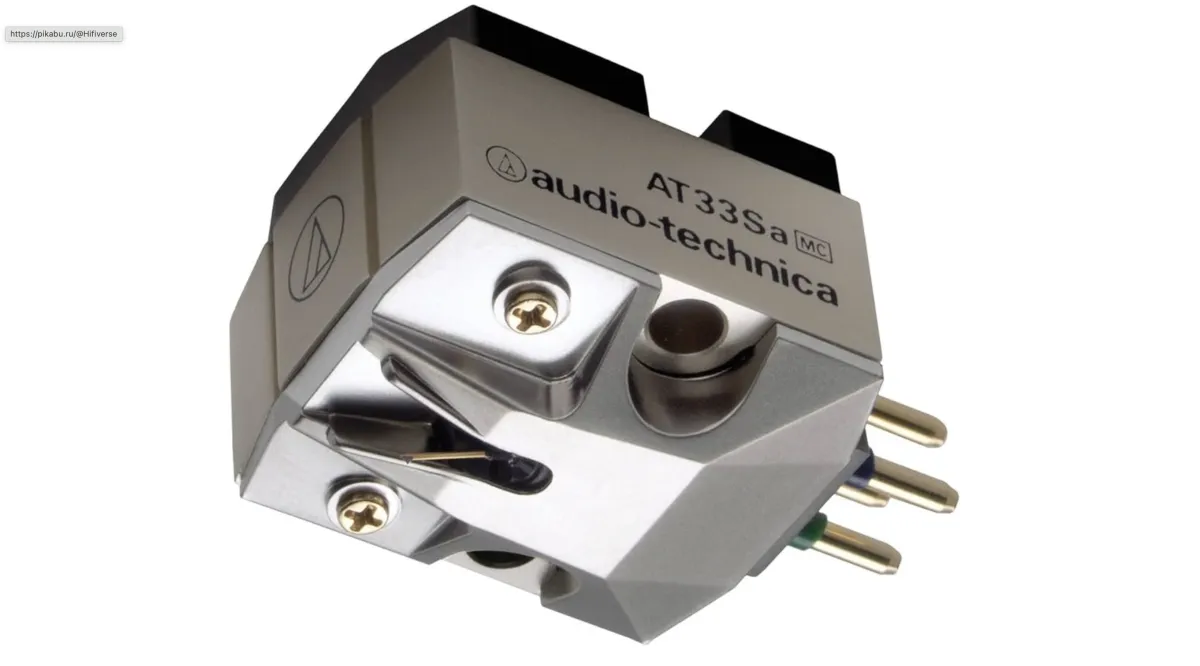
In the years since its release the Audio-Technica AT33Sa has earned cult status and become one of the most respected models in its price segment. The premium is worth it - the cartridge literally pulls the veil away from the system and offers excellent microdynamics and a flood of detail.
The Audio-Technica AT33Sa uses a Shibata stylus instead of the Special Line Contact found on its predecessor in the list, so the sound comes out more fluid and supple. The tapered boron cantilever has reduced mass, which allows fewer coil windings and ensures better responsiveness. A two-part damping system for the cantilever makes it possible to fine-tune compliance and provides accurate tracking. The magnetic system is the same as the one described above for the Audio-Technica AT-OC9XSL, the output level is 0.4 mV and the frequency response reaches 50,000 Hz, but the main thing is that channel separation has grown from 28 to 30 dB - bravo.
Specifications
Model name
AT33Sa
Type
MC
Stylus
Nude square shank
Body
Aluminium/Synthetic Resin
Cantilever
Nude tapered boron
Coils
N/A
Output voltage (mV@5cm/sec)
0.4
Frequency response low +/- 3dB (Hz)
15
Frequency response high +/- 3dB (Hz)
50 000
Internal impedance (Ohm)
10
Channel separation (dB / 1,000 Hz)
30
Compliance (×10-6cm/dyne at 100Hz)
10
Recommended load (Ohm)
>100
Recommended tonearms
N/A
Weight (g)
6.9
Official link
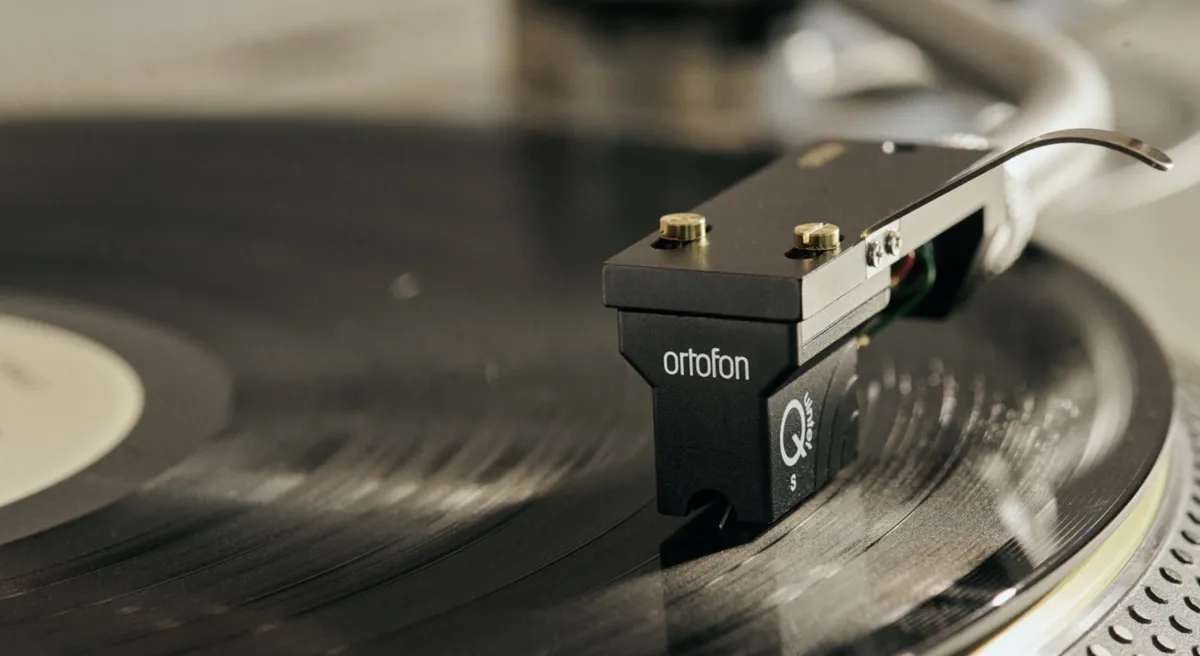
5. Ortofon MC Quintet Black S - €929
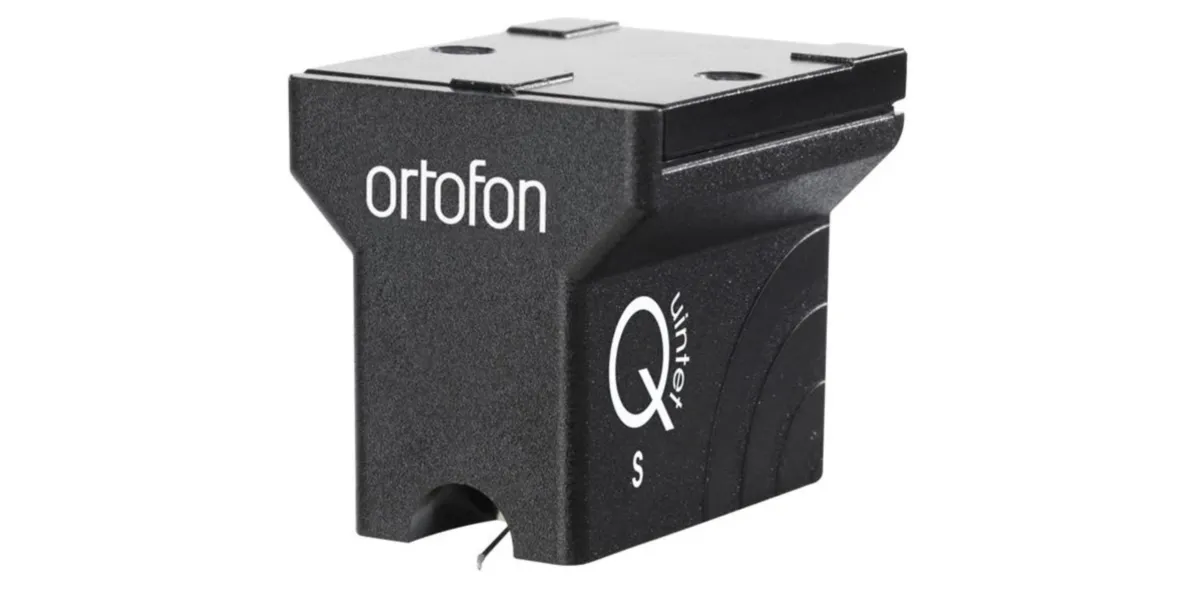
Say "vinyl" and you think of Ortofon. And the Ortofon MC Quintet Black S is a true star of the analog market. The model offers excellent genre versatility - it can handle heavy rock, heartfelt jazz and complex classical compositions alike. Flaunting dense, textured bass, well-developed midrange and extended highs, it comes across as the standard for its group.
The Ortofon MC Quintet Black S is housed in a body of ABS and aluminum, which ideally drains vibrations and damps external influences on the cartridge. The sapphire cantilever is a genuine High-End approach. The Shibata stylus profile with a 6/50 µm radius guarantees excellent tracking, and a tracking force of 2.1 to 2.5 grams lets you pair it with almost any tonearm. The cherry on top - the coils are wound with wire of the patented Aucurum alloy based on gold and copper (as a result, the DC internal resistance of the Ortofon Quintet Black S is 5 ohms).
Specifications
Model name
Quintet Black S
Type
MC
Stylus
Nude Shibata
Body
PC
Cantilever
Sapphire
Coils
Aucurum
Output voltage (mV@5cm/sec)
0.3
Frequency response low +/- 3dB (Hz)
N/A
Frequency response high +/- 3dB (Hz)
N/A
Internal impedance (Ohm)
5
Channel separation (dB / 1,000 Hz)
>23
Compliance (×10-6cm/dyne at 100Hz)
15
Recommended load (Ohm)
>20
Recommended tonearms
N/A
Weight (g)
9
Official link
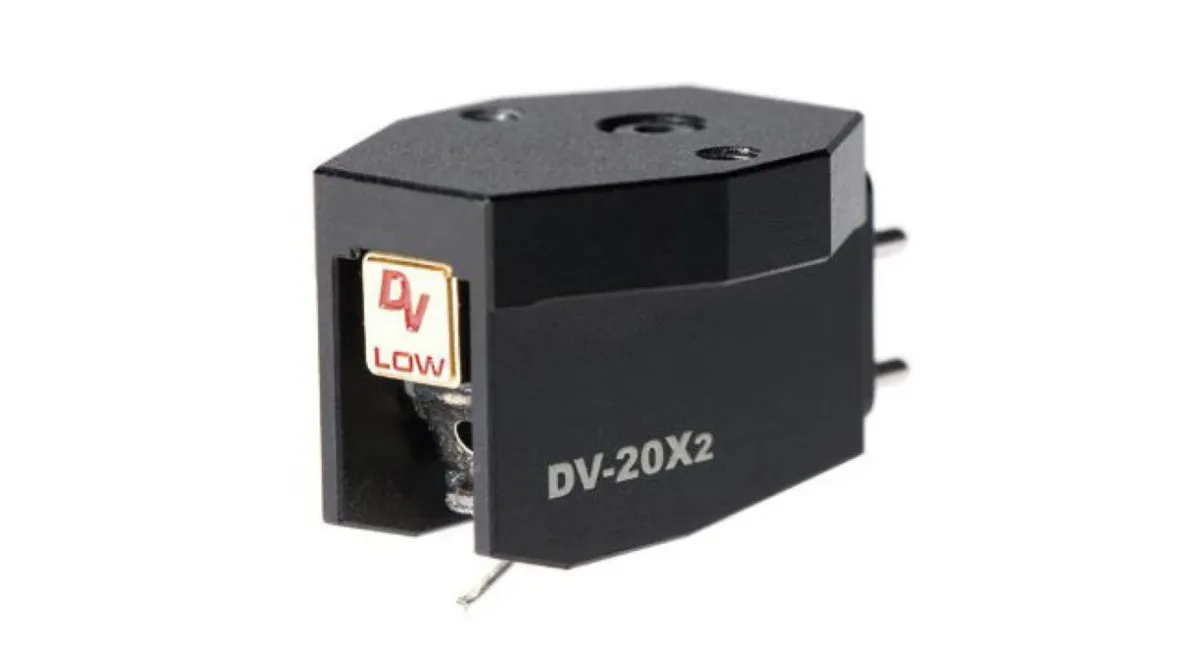
6. Dynavector 20X2 L - €990
Dynavector is a classic of the genre from Japan, a company that traces its history back to 1978. The signature "twenty" series was released for the company's twentieth anniversary in the late 1990s, so our test subject is a modern version of the original.
The cartridge delivers the recognizable signature sound - very precise and clear, with a scattering of detail and exceptionally stable sonic images. The soundstage comes out truly three-dimensional, which for this price group qualifies as a breakthrough.
The Dynavector 20X2 L uses a Micro-Ridge Nude stylus (a profile developed by Audio-Technica and Dynavector back in the 1980s that ensures maximum contact between the stylus and the groove) on an aluminum cantilever. Why aluminum in this price bracket? The company claims that, after countless tests, it was precisely this material that delivered that very musicality. The magnetic system is the unique proprietary Flux Damping with Softened Magnetism, and the magnets themselves are neodymium and very powerful. The specs are not ideal (channel separation of 25 dB, frequency response up to 20,000 Hz), but we value the Dynavector 20X2 L not for its numbers but for its sound.
Specifications
Model name
20X2 L
Type
MC
Stylus
Micro Ridge Nude diamond
Body
N/A
Cantilever
6mm length hard aluminium pipe
Coils
N/A
Output voltage (mV@5cm/sec)
0.3
Frequency response low +/- 3dB (Hz)
20
Frequency response high +/- 3dB (Hz)
20 000
Internal impedance (Ohm)
5
Channel separation (dB / 1,000 Hz)
25
Compliance (×10-6cm/dyne at 100Hz)
12
Recommended load (Ohm)
>30
Recommended tonearms
N/A
Weight (g)
9.2
Official link
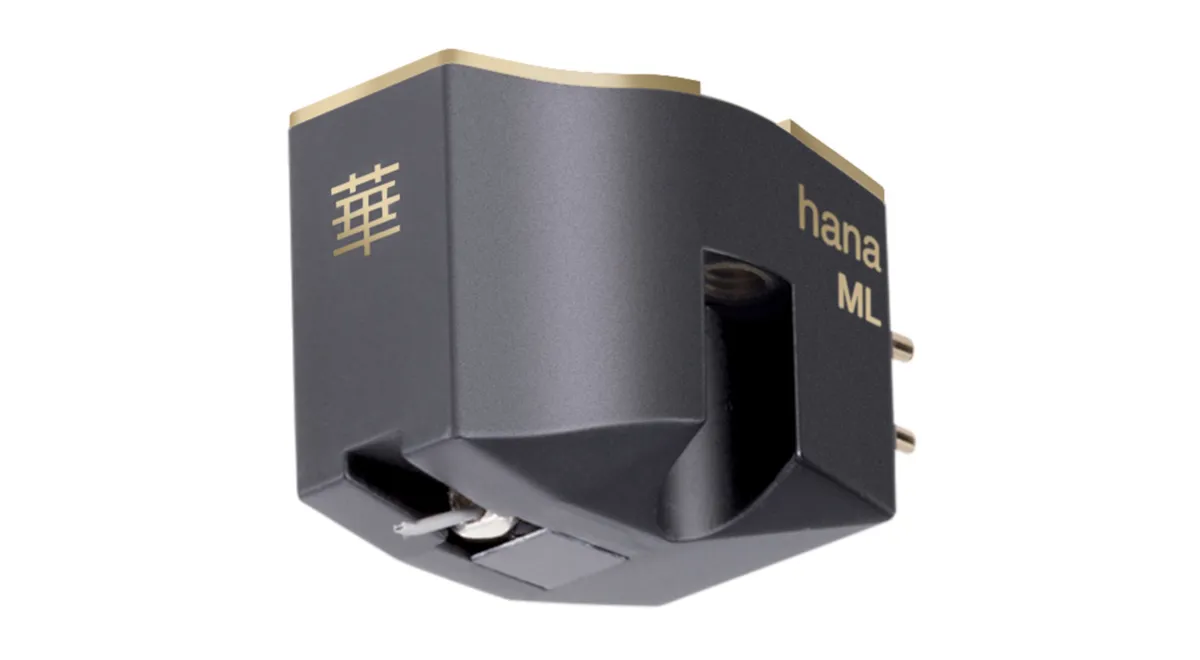
7. Hana ML - €1,150
The Hana ML is a cartridge with a Microline stylus (one of the most advanced profiles available) on a boron cantilever. Its sound is magical - exceptionally beautiful, with real brilliance and a full, life-size rendering of the musicians.
The Hana ML uses an alnico magnetic system with cryogenic treatment, one of the best solutions on the modern market regardless of a cartridge's price. The body construction, with a heavy brass base and a Delrin body, guarantees perfect resonance suppression. An internal impedance of 8 ohms and frequency response up to 45,000 Hz - all good here. The only "but": you will have to fuss a little over mounting and setup, as the Microline stylus will demand precision azimuth alignment.
Specifications
Model name
ML
Type
MC
Stylus
Microline
Body
N/A
Cantilever
Aluminum
Coils
High Purity Copper
Output voltage (mV@5cm/sec)
0.4
Frequency response low +/- 3dB (Hz)
12
Frequency response high +/- 3dB (Hz)
45 000
Internal impedance (Ohm)
N/A
Channel separation (dB / 1,000 Hz)
N/A
Compliance (×10-6cm/dyne at 100Hz)
N/A
Recommended load (Ohm)
N/A
Recommended tonearms
N/A
Weight (g)
9.5
Official link
What to Choose?
If you have:
- a budget of €500 - Sumiko Blue Point No. 3;
- a budget of €800 - Audio-Technica AT33Sa;
- a budget of €1,150 - Hana ML.