

The 12 Most Beautiful and Brilliantly Engineered Loudspeakers
From a plasma tweeter to a diaphragm weighing 0.18 grams
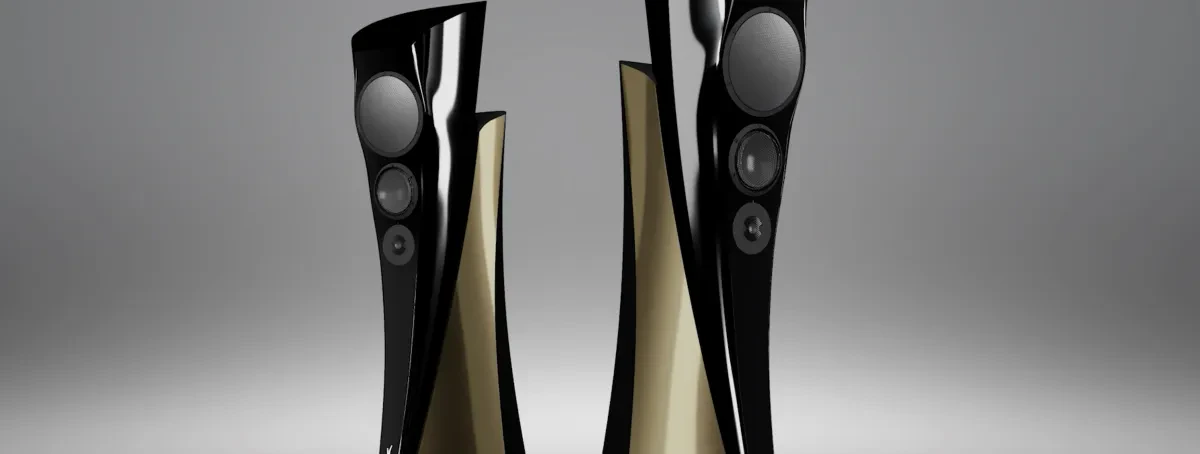

24.10.2026 12:11 | ~14 min read
"Beauty is on the inside" is a familiar phrase, and it applies fully to loudspeakers - we have all grown used to audio gear looking like a "black box". Yet the market is full of examples where form and substance are one, and we are not talking about coats of lacquer or veneers of rare precious woods. When an elegant shape grows out of an engineering problem, technical beauty is amplified by visual beauty. A spiral absorbs the rear wave, a sphere eliminates diffraction, a horn sets directivity, and a plasma discharge in place of a dome creates a stunning sense of presence. So here are twelve examples where technical perfection and design come together.
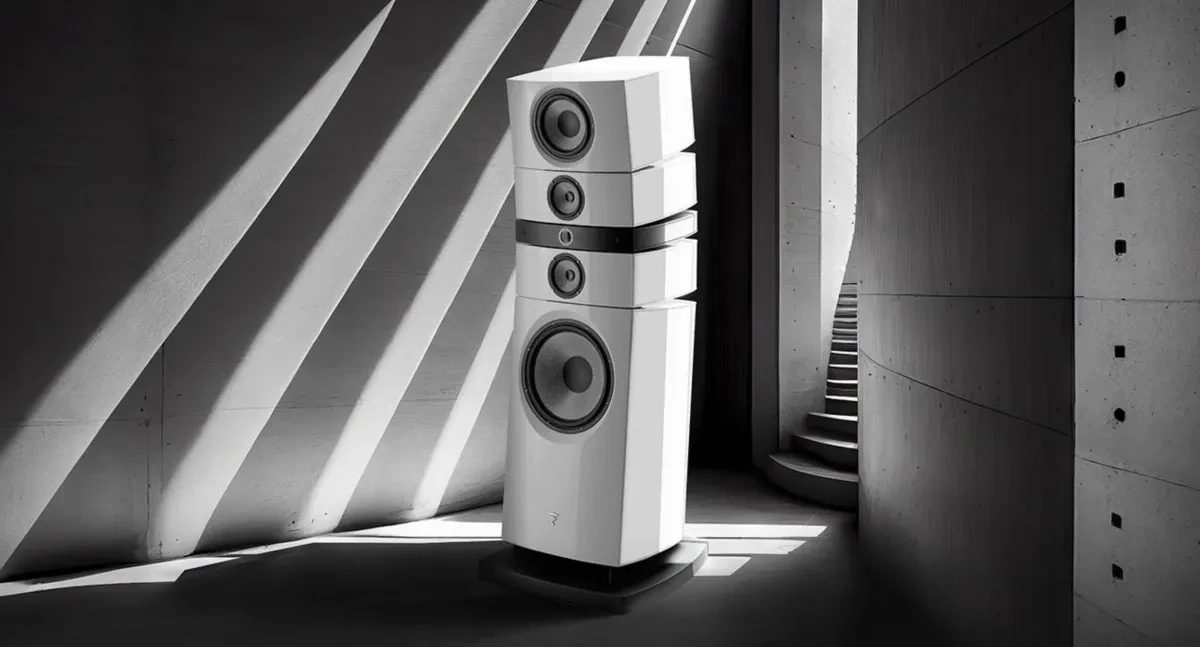
12. Focal Grande Utopia EM Evo
Premiere - 1995 (first Grande Utopia), EM Evo version - 2018
The Focal Grande Utopia is the quintessence of everything the great French company stands for. Focal designs and builds all of its drivers in-house, from the diaphragm to the magnet system. The first version of 1995 was created as a prototype to prove the "W" sandwich cone, made of two layers of glass fibre on a foam core. In 2002 the line-up gained an inverted dome of pure beryllium able to cover more than five octaves, from 1 to 40 kHz. In 2008 the Focal Grande Utopia received a 40 cm woofer in which the permanent magnet was replaced by an electromagnet - the Bl force factor rose from 18.5 to 34 T·m, an increase of 83%, and bass reproduction improved dramatically.
Unveiled in Munich in 2018, the Focal Grande Utopia EM Evo brings together all of the company's know-how. The TMD anti-resonance suspension suppresses spurious vibrations of the moving system, the NIC motor neutralises eddy currents in the magnet system, the IAL2 tweeter dissipates the rear wave in three directions at once using a patented design, and stiffening rings around the drivers further reinforce the cabinet. Each driver sits in its own module, and the modules are articulated like a spine - adjusting its curvature ensures that the output of all drivers is aligned in time at the listening position (the Focus Time system offers 1,458 possible adjustments). Automotive colours such as British Racing Green or Metallic Blue turn these 265 kg giants into a true technological monument.
Specifications
Model name
GRANDE UTOPIA EM EVO
Frequency Response low +/- 3dB (Hz)
18
Frequency Response high +/- 3dB (Hz)
40000
Sensitivity (dB at 1 W/1m)
94
Impedance (Ohms)
8
Power amplifier requirements (W)
50 - 1500
Has internal amplification
N/A
Internal amplification power (W)
N/A
Size (sm)
65.4 × 201.2 × 88.0
Weight (kg)
265
Official link
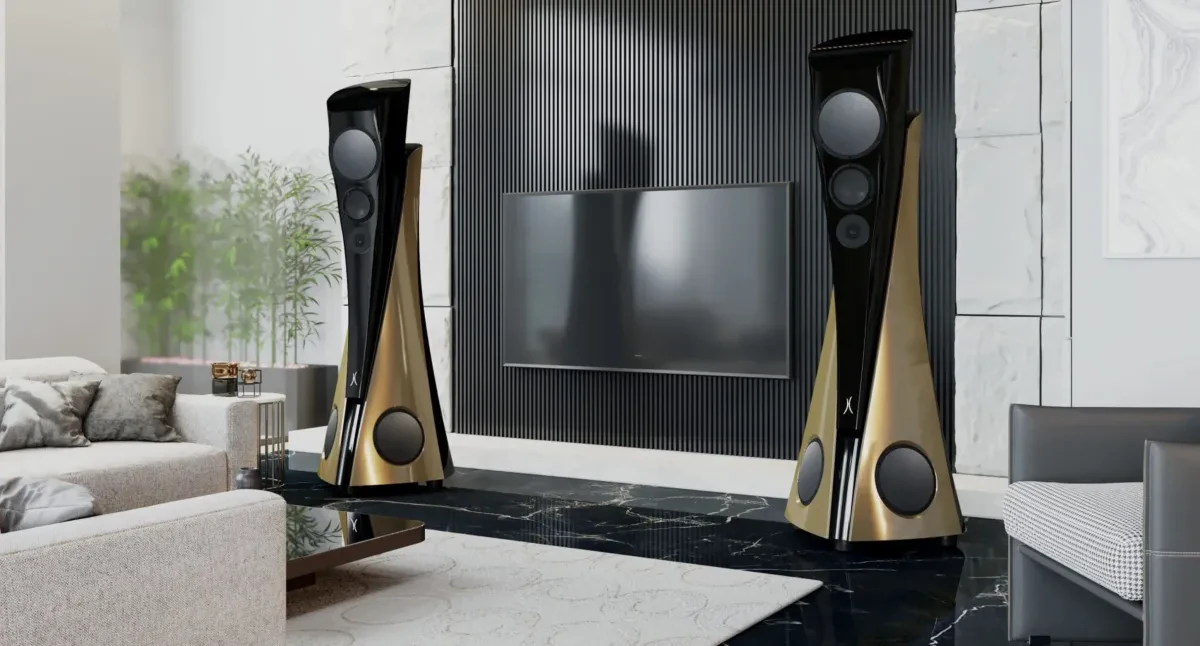
11. Estelon Extreme Mk II
Premiere of the Mk II - 2021
The flagship Estelon Extreme Mk II can change the position of its midrange and tweeter module by remote control - the unit rises by up to 300 mm, adjusting the output precisely to the listening position. There is no need to move the speakers themselves. Tweeter adjustment is even finer - a motorised cam mechanism moves the dome front to back in five steps, aligning it in time with the neighbouring drivers.
The cabinet is cast from Estelon's proprietary marble-based composite, so its shape can be as complex as required - the Extreme has not a single flat wall, and each driver is housed in its own chamber. The crossovers are also placed in isolated compartments. The driver complement consists of custom Accuton CELL units with diamond domes for the treble, ceramic for the midrange and 250 mm aluminium sandwich cones for the bass - the stiffest diaphragms the industry can offer today. The price of such an uncompromising approach is an impedance dipping to 2 ohms and a weight of 250 kg per channel, so the amplifier needs plenty of current in reserve. The limited edition is offered in a Dark Silver Liquid Gloss finish with hand-polished stainless-steel rings around each driver.
Specifications
Model name
Extreme Mk II
Frequency Response low +/- 3dB (Hz)
23
Frequency Response high +/- 3dB (Hz)
60000
Sensitivity (dB at 1 W/1m)
91
Impedance (Ohms)
3
Power amplifier requirements (W)
500
Has internal amplification
N/A
Internal amplification power (W)
N/A
Size (sm)
177 - 207 (adjustable) x 69 x 82
Weight (kg)
250
Official link
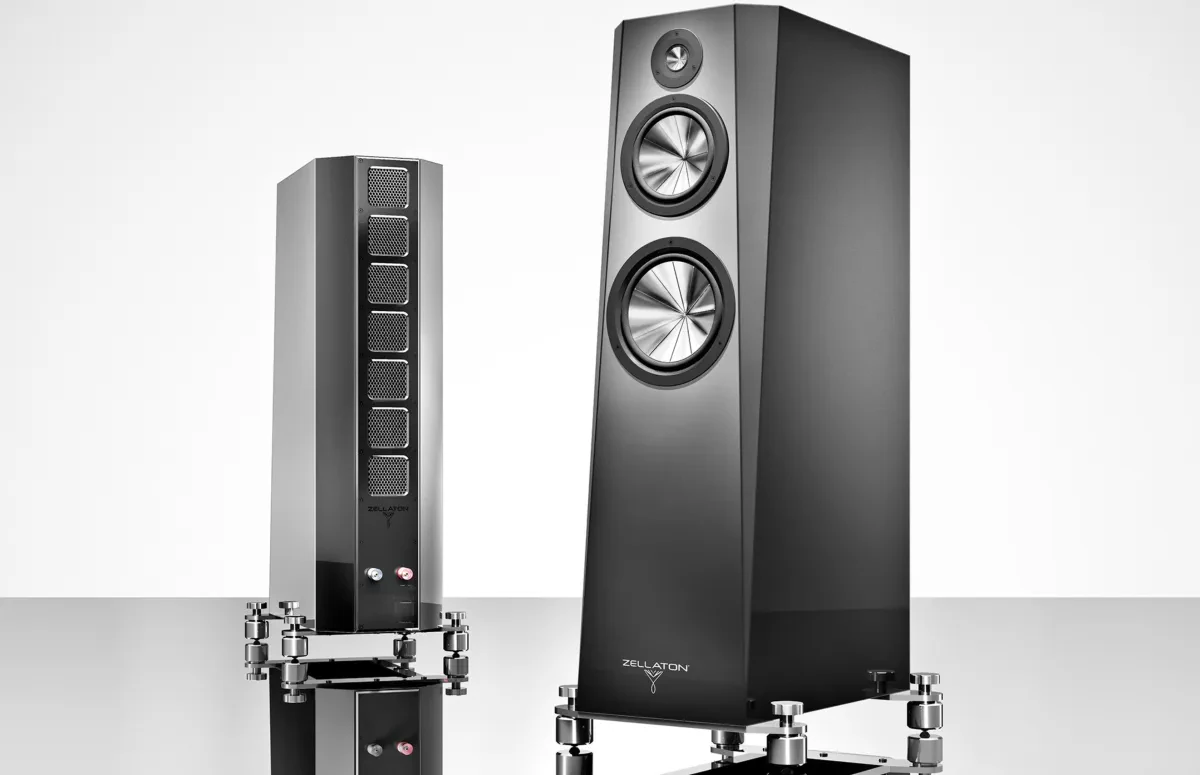
10. Zellaton Stage
Premiere - 2018, Zellaton Stage Ultra - 2023
Although the Zellaton Stage cabinets look restrained and almost classic (the finish is nevertheless luxurious - even the feet were ordered from the Rolls-Royce factory), the drivers inside are unique. The sandwich diaphragm technology with a foam core was patented back in the 1930s by Dr Emil Podszus, and today production in Munich is personally overseen by his grandson Manuel Podszus. The diaphragm consists of two aluminium skins, each 0.006 mm thick, and a filler that is 80% air by volume. The aluminium provides stiffness, the foam suppresses resonances, and together they form a piston weighing just 0.18 g - neither material could achieve this on its own.
Manufacturing is closer to jewellery making - the cones are baked in ovens over several cycles, a single batch takes two to three weeks, and a large share of the blanks is rejected, so the company produces only 50 to 80 pairs of speakers a year. The key engineering innovation is that the 180 mm midrange driver works from 100 Hz to 8 kHz, covering more than six octaves with no filter between it and the amplifier. The entire vocal range comes from a single source, with no crossover points. The semi-open baffle produces a free midrange without box coloration. We published a detailed analysis of the model in our Zellaton Stage review. In 2025 the company presented the next step for the model, the Stage Ultra.
Specifications
Model name
STAGE
Frequency Response low +/- 3dB (Hz)
24
Frequency Response high +/- 3dB (Hz)
40000
Sensitivity (dB at 1 W/1m)
88
Impedance (Ohms)
4
Power amplifier requirements (W)
N/A
Has internal amplification
N/A
Internal amplification power (W)
N/A
Size (sm)
118 x 45 x 64
Weight (kg)
100
Official link
9. Wilson Audio WAMM Master Chronosonic
Premiere - 2016, release - 2017
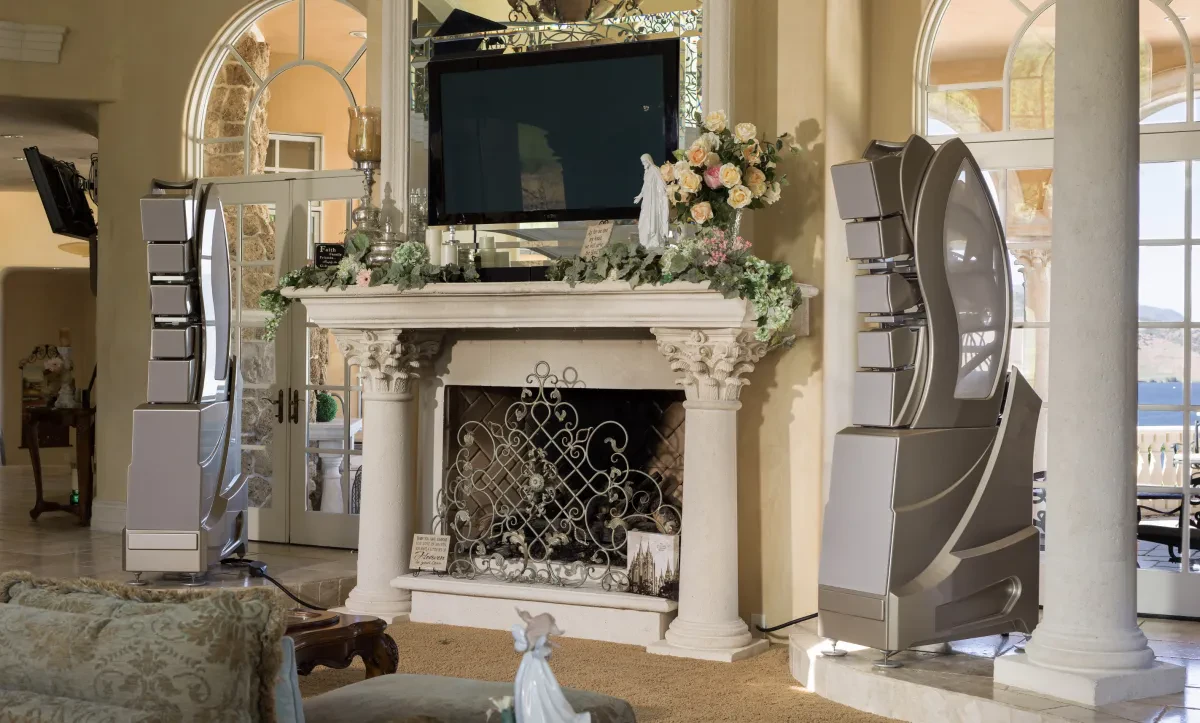
Wilson Audio's first commercial product was the WAMM modular system - the Wilson Audio Modular Monitor. Even then Dave Wilson, who founded the company with his wife Sheryl Lee, bet on modules that could be repositioned in space, allowing the signal delay to be set for a specific room (a solution that was patented). The company calls the Wilson Audio WAMM Master Chronosonic the quintessence of its philosophy - research and development took almost five years, and the result is a true benchmark among high-end loudspeakers. The drivers are spread across separate modules mounted on a frame of aerospace aluminium, and during installation each module can be shifted so that the arrival time of the signal from the different drivers is aligned to within five millionths of a second. It is a rare case of a structure 214 cm tall and weighing 408 kg per channel being adjusted with microsecond precision!
Wilson selects a dedicated material for each task. The module enclosures are made of X-Material composite, the midrange baffles of S-Material and the interface between the modules and the frame of W-Material. The front drivers are arranged symmetrically - two 7-inch lower midrange drivers, two upper midrange drivers and a Convergent Synergy Mk5 silk dome in the centre. On the back, another tweeter and a 5-inch midrange driver fire rearwards. Bass is handled by 10.5-inch and 12.5-inch woofers in a shared cabinet with an XLF port that can be directed to the front or rear depending on the room, and the claimed frequency response is 20 Hz to 33 kHz (±2 dB). Unlike the original WAMM, the new system does not need a subwoofer for the bottom octaves, although it can be complemented by the WAMM Master Subsonic module with three 12-inch woofers playing from 10 Hz. A nominal impedance of 3 ohms with a minimum of 1.77 ohms at 310 Hz calls for an amplifier stable into very low loads, and production is limited to 70 pairs.
Specifications
Model name
WAMM Master Chronosonic
Frequency Response low +/- 3dB (Hz)
N/A
Frequency Response high +/- 3dB (Hz)
N/A
Sensitivity (dB at 1 W/1m)
87
Impedance (Ohms)
4
Power amplifier requirements (W)
>100
Has internal amplification
N/A
Internal amplification power (W)
N/A
Size (sm)
214.31 × 94.93 × 53.34
Weight (kg)
408.23
Official link
8. Cabasse La Sphère Evo
Premiere - 2025
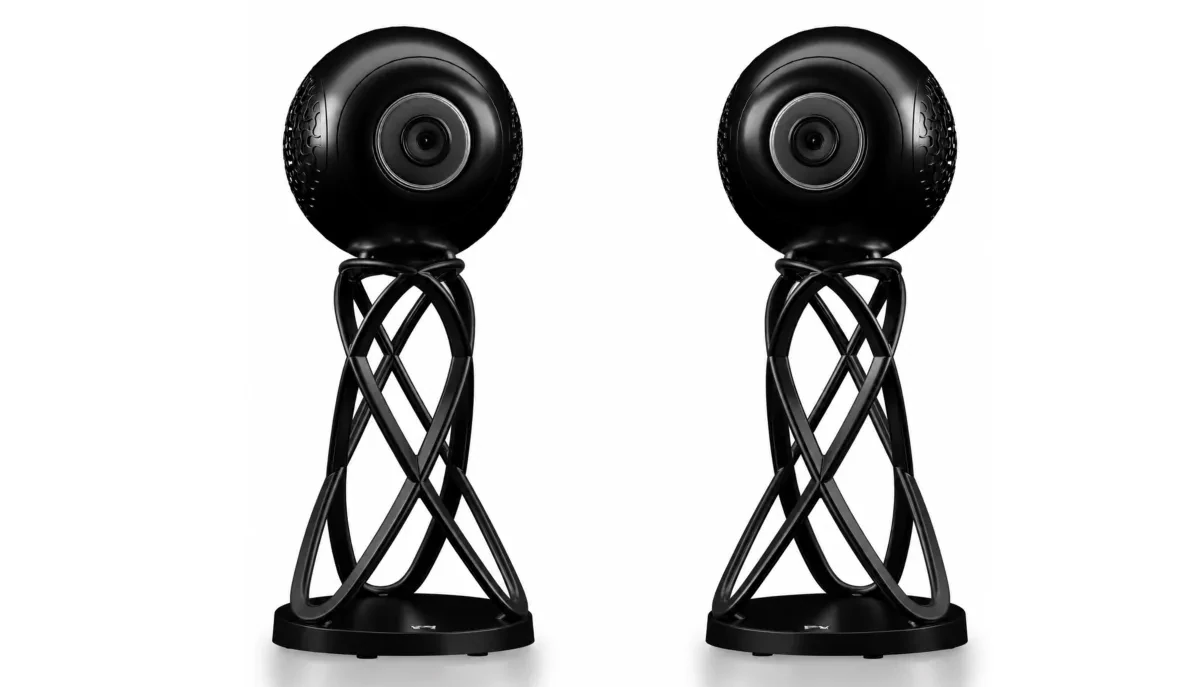
The original La Sphère of 2006 was an extraordinary system - 98 kg per channel, an external processor, eight monoblocks and mandatory calibration by a visiting engineer. For Cabasse's 75th anniversary the French company decided to keep the recognisable silhouette but create a slightly more compact model. The result was La Sphère Evo, shown in May 2025 - it is almost six centimetres lower and almost 40 kg lighter than its predecessor, and the processor, amplifiers, streamer and automatic room calibration are now built into the speaker itself. The design has become even more organic - these speakers literally draw the eye.
The heart of the design is the TCA three-way coaxial driver with aramid cones. The treble, upper midrange and lower midrange radiate from a single point, so the wavefront stays coherent over a wide angle. The bass is handled by two 30HELD woofers in a push-push arrangement - they move towards each other and their reaction forces cancel out, so the sphere does not rock even at high sound pressure levels. Each band has its own amplifier channel, and three of the four get 1,200 W RMS each! HDMI eARC makes the Evo a ready-made centre for a top-class home theatre, while the five-layer matte black lacquer of the sphere and base, the chrome front ring and the mirror-polished stand impress even the most seasoned connoisseurs of luxury.
Specifications
Model name
LA SPHERE EVO
Frequency Response low +/- 3dB (Hz)
14
Frequency Response high +/- 3dB (Hz)
27 000
Sensitivity (dB at 1 W/1m)
N/A
Impedance (Ohms)
N/A
Power amplifier requirements (W)
N/A
Has internal amplification
Yes
Internal amplification power (W)
10 200
Size (sm)
134,2 x 62 x 62
Weight (kg)
60
Official link
7. MBL 101 X-Treme MkII
Premiere of the MkII - 2022, first version - 2007
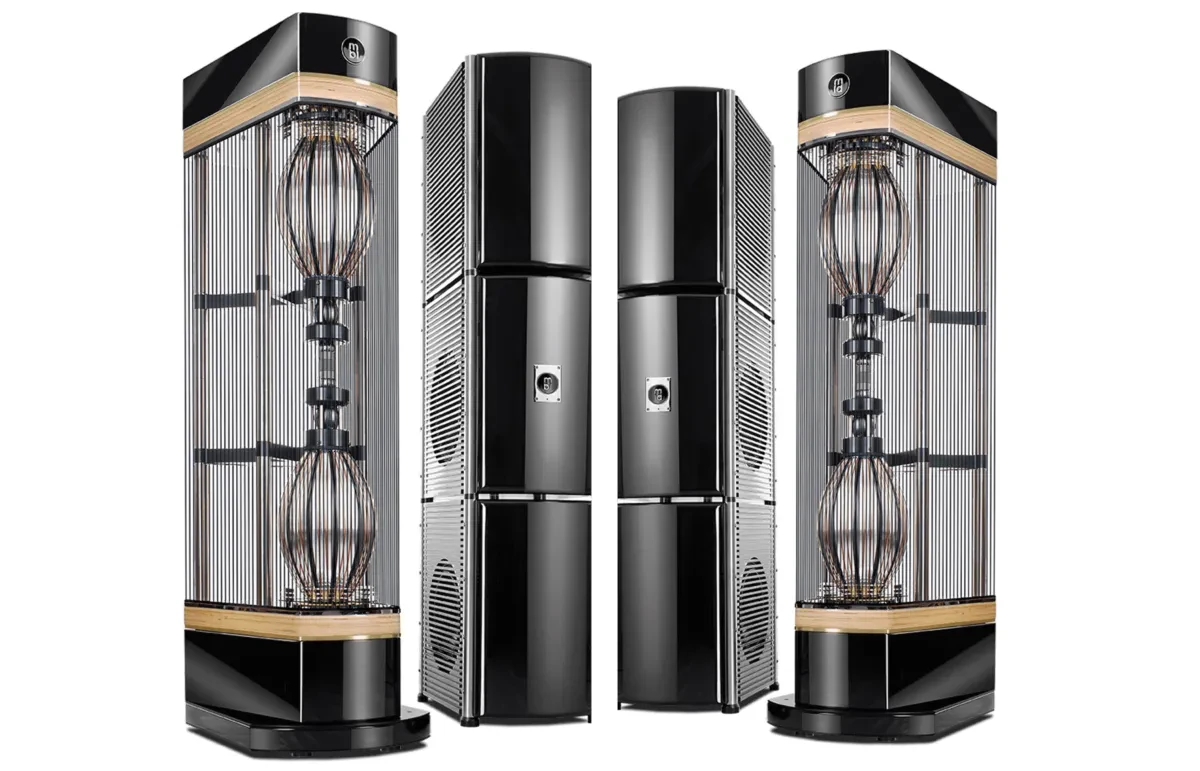
If there is one loudspeaker in the world whose appearance was built strictly around the way it radiates sound, it is the Radialstrahler. MBL showed its first such driver at the IFA in Berlin in 1979, and in 1986 the aluminium petals gave way to carbon-fibre elements. The design is simple and elegant - thin curved lamellae gathered into a "melon" around a central axis pulse like a breathing sphere and radiate sound evenly through 360 degrees. Visual symmetry here literally equals acoustic symmetry, and the familiar idea of a sweet spot disappears - the soundstage stays whole even when the listener moves to a corner of the room.
The X-Treme flagship was first shown as a prototype in 2007, and the second MkII edition was presented in 2022. Each main tower carries two Radialstrahler modules mounted as mirror images of each other. Next to them stand two active bass units housing twelve (!) 12-inch aluminium sandwich woofers, with a total internal volume of more than 500 litres. The system has 26 drivers in all and weighs almost a tonne, and the crossover points are set very high and very low - 82 Hz, 600 Hz and 8,350 Hz. The lamellae are still assembled by hand from carbon fibre, copper, aluminium and magnesium. The low impedance and a very low sensitivity of 85 dB call for a powerful solid-state amplifier with good current delivery.
Specifications
Model name
101 X-Treme MKII
Frequency Response low +/- 3dB (Hz)
N/A
Frequency Response high +/- 3dB (Hz)
85
Sensitivity (dB at 1 W/1m)
85
Impedance (Ohms)
4
Power amplifier requirements (W)
N/A
Has internal amplification
Yes
Internal amplification power (W)
2 x 900, 2 x 1 800
Size (sm)
49.6 x 185.4 x 68.7
Weight (kg)
265
Official link
6. Avantgarde Acoustic MEZZO G3
Premiere of the G3 - 2024
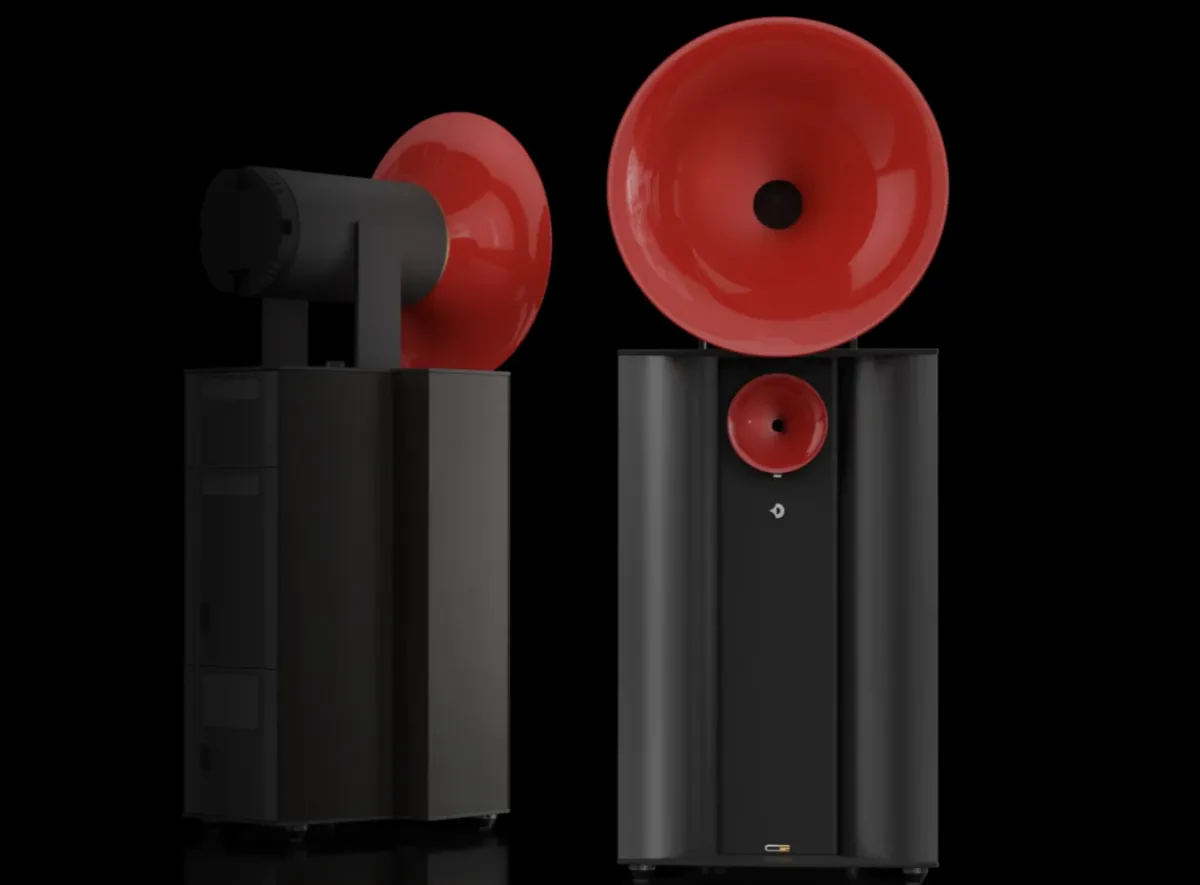
The Trio with SpaceHorn bass modules needs a large room and a separate bass structure. The Mezzo G3 is Avantgarde's attempt to come close to that sound in a single cabinet, and the manufacturer calls it a full-range horn loudspeaker. The horn silhouettes are light and graceful - above the rectangular bass section floats a 670 mm spherical midrange horn with a 180-degree opening angle (a similar one is used in the Duo), and above it a 200 mm XT3 super-tweeter horn playing up to 28,000 Hz. Even the lower part is not just a box but a front-loaded horn with a mouth area of 0.645 m2. At 1,714 mm tall and 135.5 kg, the Mezzo takes up the space of an ordinary large floorstanding speaker but looks like a sculpture.
The 170 mm midrange driver, with an impedance of 27 ohms and its own sensitivity of 107 dB/W/m, and the 25 mm tweeter are driven by an external amplifier. System sensitivity is above 107 dB with a nominal impedance of 18 ohms, so an amplifier from 1 W is enough. The bass section is powered by a built-in 1,000 W RMS amplifier with a digital crossover and an 8-band equaliser. It drives two 12-inch XB12 units with paper and carbon-fibre cones and 153 mm voice coils, and the section works from 18 to 350 Hz, loaded by a horn and a pair of downward-firing bass reflex ports. The passive filter splits the bands at 170 Hz and 3.5 kHz. For those who do not want to choose an amplifier, there is an iTRON version with built-in 2 x 100 W amplifiers without global negative feedback and a patented voltage-to-current converter.
Specifications
Model name
MEZZO
Frequency Response low +/- 3dB (Hz)
170
Frequency Response high +/- 3dB (Hz)
28 000
Sensitivity (dB at 1 W/1m)
107
Impedance (Ohms)
18
Power amplifier requirements (W)
10 - 100
Has internal amplification
Yes
Internal amplification power (W)
100 + 100 + 1000
Size (sm)
67.0 × 171.4 × 72.0
Weight (kg)
135.5
Official link
5. Bang & Olufsen Beolab 90
Premiere - 2015
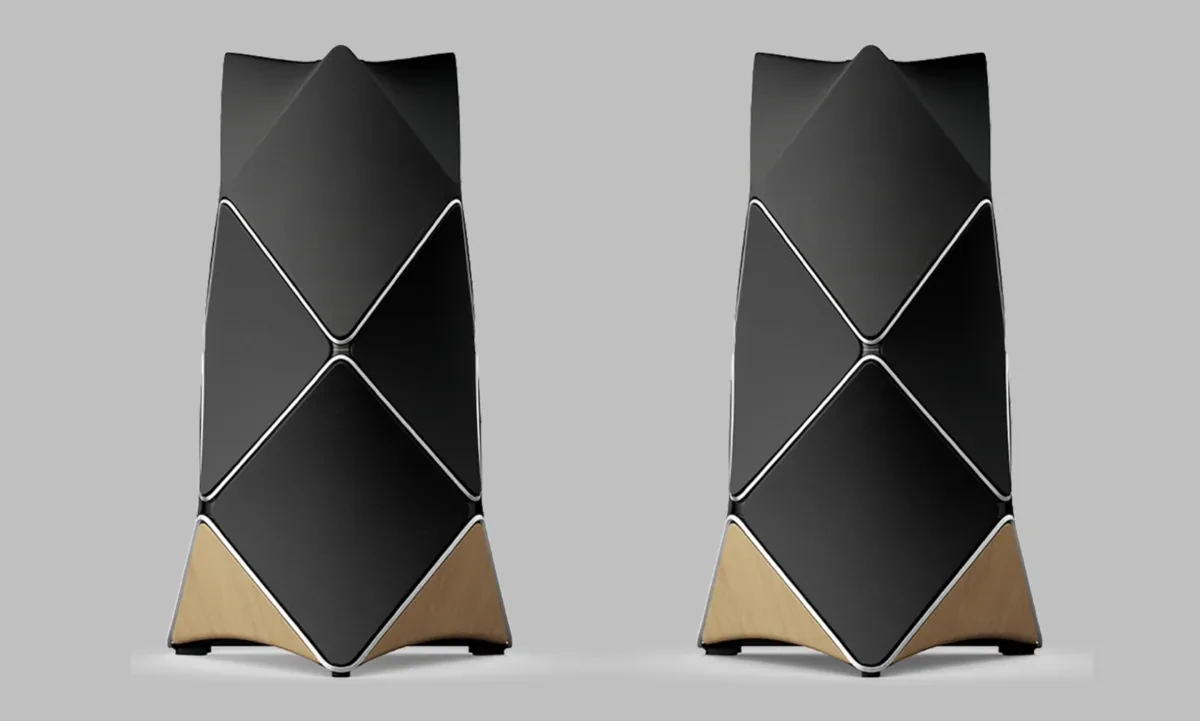
Development of the flagship anniversary speaker for Bang & Olufsen's 90th birthday began with a vast acoustic research project that lasted 12 years. The outcome was a feat of engineering that won over even the most devoted fans of analogue sound. Eighteen Scan-Speak drivers are arranged across the faces of a multi-faceted cabinet so that the processor can form a beam of sound - narrowing it for a single listener or widening it to cover a whole sofa of friends, and also turning it in one of five directions without moving the speaker itself. Every tweeter and every midrange driver gets its own ICEpower channel, while the four bass drivers run on their own class D amplifiers - total power reaches 8,200 W per speaker. The processor controls each driver separately and, by combining their contributions, shapes the directivity pattern like a phased array. Active Room Compensation measures the room and corrects the response, while Adaptive Bass Linearization makes sure the bass drivers stay within their linear excursion at high levels.
From the outside the speakers look like an abstract sculpture - aluminium, fabric panels in front of the drivers and a wooden base, with an angular silhouette that follows directly from the idea of omnidirectional radiation. For the company's 100th anniversary, limited Titan, Monarch and Zenith Editions were released, with the Titan Edition limited to just 10 units.
Specifications
Model name
Beolab 90 Zenith Edition
Frequency Response low +/- 3dB (Hz)
12
Frequency Response high +/- 3dB (Hz)
43 000
Sensitivity (dB at 1 W/1m)
N/A
Impedance (Ohms)
N/A
Power amplifier requirements (W)
N/A
Has internal amplification
Yes
Internal amplification power (W)
N/A
Size (sm)
73.5 × 125.3 × 74.7
Weight (kg)
137
Official link
4. KEF Muon
Premiere - 2007, production run - 100 pairs
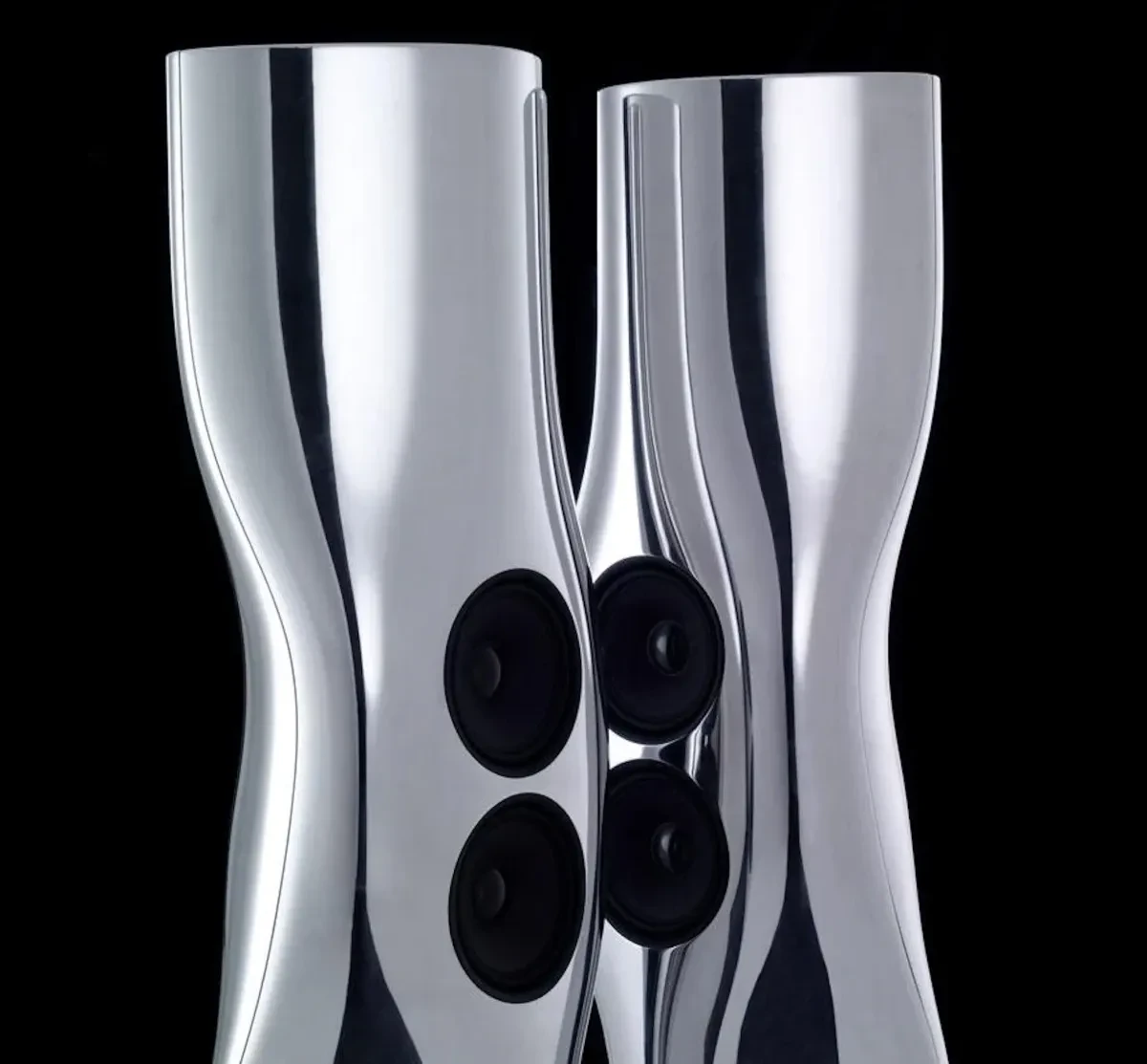
The Muon was the first joint project between KEF and Ross Lovegrove, one of the best-known industrial designers of our time. The speakers premiered at the Salone del Mobile in Milan in April 2007, and the abstract sculpture of Barbara Hepworth and Henry Moore was named as the inspiration for the shape. The designer's freedom was limited - KEF's engineers had fixed the internal volume and the driver set in advance, and the narrowing of the cabinet in its middle section was meant to ensure better dispersion.
Lovegrove chose aluminium for the cabinets - heated sheets were shaped using the superforming technique used in low-volume car making to create sculptural towers whose perfectly smooth surface eliminated reflections and further focused the Uni-Q drivers (a 25 mm tweeter placed at the centre of a 125 mm midrange cone and covered by a Tangerine waveguide). Below them work seven 250 mm drivers - one in the bass and midrange band and six for bass. The sealed cabinet uses the ACE system, in which activated carbon absorbs pressure fluctuations inside the enclosure and acoustically increases its volume. Hence the rated linearity from 25 Hz and a maximum level of 118 dB. Each of the 100 pairs was assembled and tested by hand and came with a certificate showing its individual frequency response.
Specifications
Model name
MUON
Frequency Response low +/- 3dB (Hz)
25
Frequency Response high +/- 3dB (Hz)
60000
Sensitivity (dB at 1 W/1m)
90
Impedance (Ohms)
4
Power amplifier requirements (W)
100 - 400
Has internal amplification
N/A
Internal amplification power (W)
N/A
Size (sm)
200.0 × 60.0 × 38.0
Weight (kg)
115
Official link
3. Vivid Audio Moya M1
Premiere - 2024
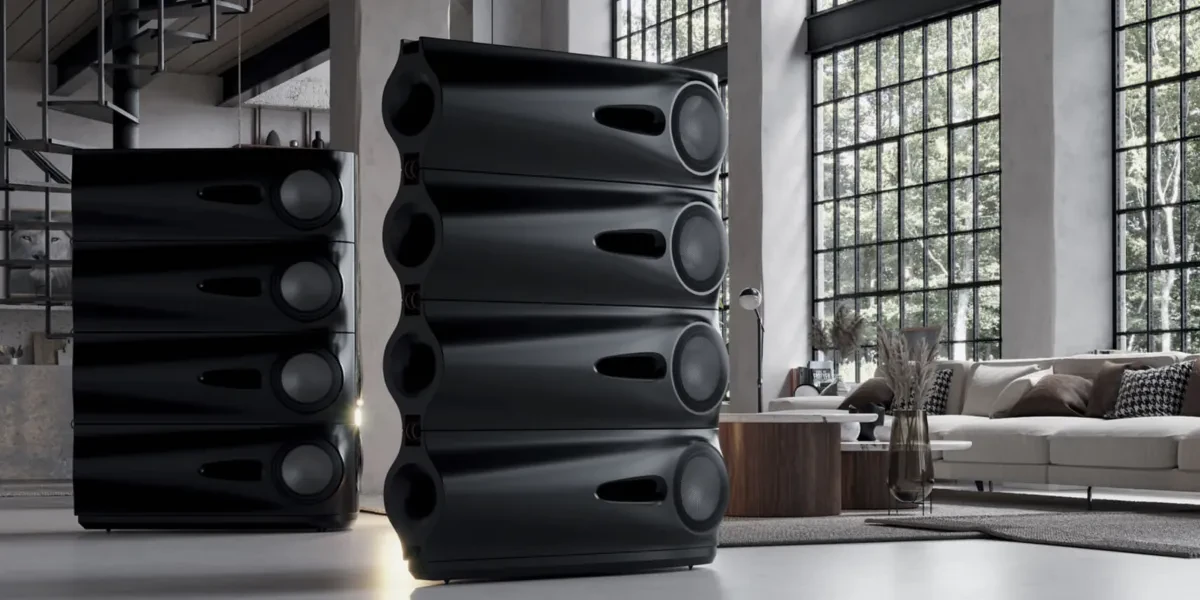
Laurence Dickie, the creator of the Nautilus and co-founder of Vivid Audio, designed the Moya M1 while in quarantine in a hotel room at the height of the pandemic. The world premiere took place in March 2024 in Guangzhou, and the European premiere at the High End show in Munich. The flagship was built to test a hypothesis that Vivid states plainly - extending the bass improves the perception of the higher bands as well. As a result, instead of a single cabinet, four tapering tubes stand behind the front baffle, hand-made from a carbon-reinforced sandwich composite with a balsa core using vacuum infusion. Each tube holds a pair of opposed 225 mm woofers with 100 mm voice coils and 11 kg motors, the magnets of each pair are joined by a steel tie-bar, and aerodynamically optimised ports cancel reaction forces. The eight bass drivers take the low end down to 19 Hz (-6 dB) and provide roughly 6 dB more output than the Giya G1 Spirit.
The front baffle carries five more drivers, all loaded by the company's signature tapered tubes. At the top is the 26 mm D26DLC tweeter with an aluminium dome and diamond-like coating, whose first break-up mode lies above 50 kHz. Below it are the 50 mm D50DLC dome with the same coating, the 100 mm C100SCu midrange driver with a cone reinforced by three carbon-fibre rings, and two 175 mm C175-76 drivers with 76 mm voice coils. In total the system has 13 drivers and five bands, divided by a fourth-order Linkwitz-Riley passive filter at 125, 550, 1,700 and 4,000 Hz. The crossover itself is split into three sections so that the midrange and treble boards are kept away from the bass drivers. The load is spread across many voice coils, so power compression is minimal, and harmonic distortion above 100 Hzstays below -60 dB. Sensitivity is 93 dB with a nominal impedance of 5 ohms (minimum 2.5 ohms at 40 Hz), power handling is 3,000 W, height is 1,660 mm and weight is 346 kg per channel. The cabinet colour can be ordered from the PPG automotive paint range.
Specifications
Model name
MOYA M1
Frequency Response low +/- 3dB (Hz)
19
Frequency Response high +/- 3dB (Hz)
42 000
Sensitivity (dB at 1 W/1m)
93
Impedance (Ohms)
5
Power amplifier requirements (W)
<3000
Has internal amplification
N/A
Internal amplification power (W)
N/A
Size (sm)
166.0 x 66.0 x 121.0
Weight (kg)
346
Official link
2. Acapella Hyperion
Premiere - 2022
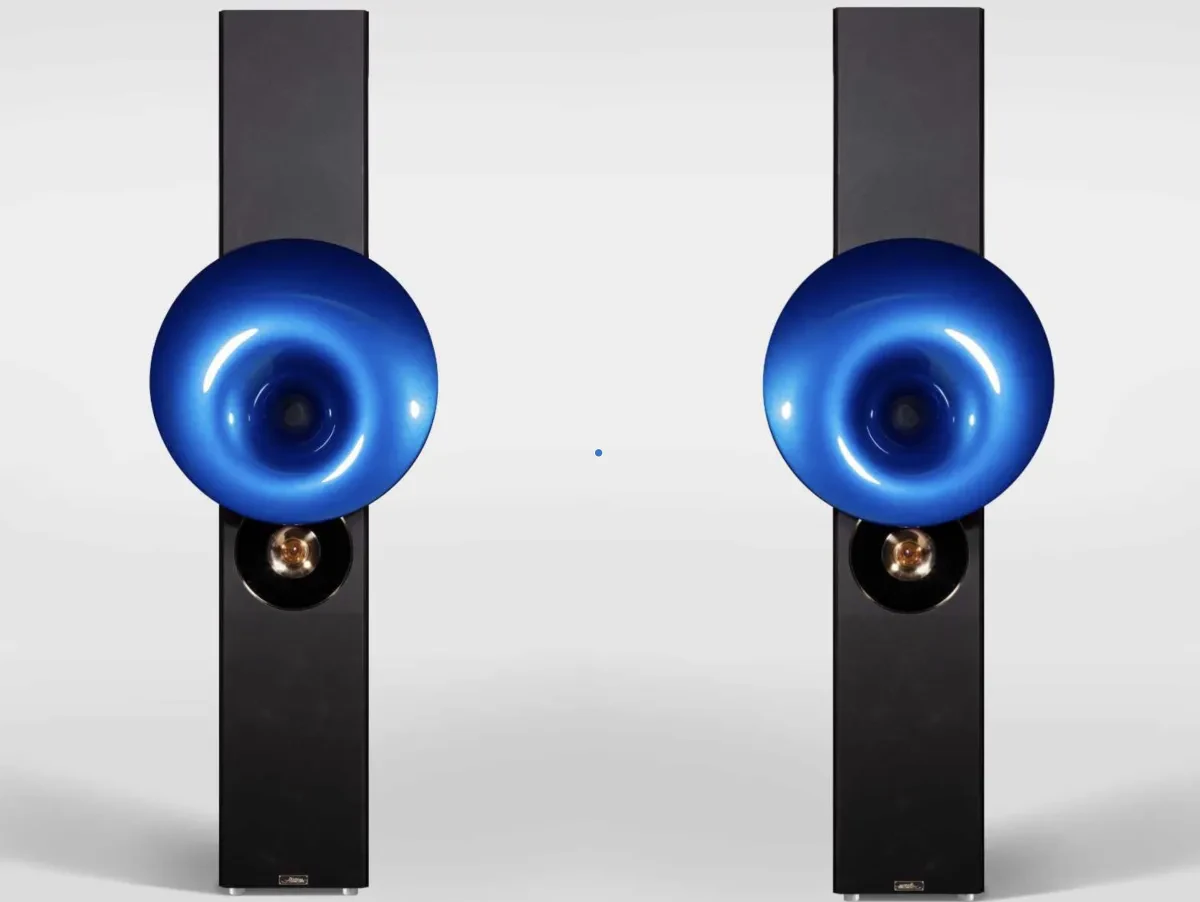
Acapella of Duisburg was founded in 1978 by architect Alfred Rudolph and Hermann Winters. As a student in 1961 Rudolph fell in love with the sound of trumpets and has been building loudspeakers that resemble musical instruments ever since. The company regards itself as the inventor of the spherical horn, and the Hyperion is the latest and perhaps the most elegant expression of that idea. Each speaker is a 2.47 m tall tower in which the bass cabinet, the midrange horn and the plasma tweeter are brought together in a single vertical line. The tower itself is 440 mm wide, or 780 mm with the horn, so at 300 kg per channel the system looks not heavy but light and slender. The key element of the silhouette is the hyperspherical horn with a 780 mm mouth. Its profile develops Acapella's classic spherical horn and provides a smooth expansion of the wavefront, while the deep lacquered flare turns the loudspeaker into an art object.
The midrange is entrusted to a new 2.5-inch dome driver loaded by the horn. The rear output of the dome is absorbed by a damping chamber, so no reflected wave colours the sound. The treble is reproduced by Acapella's signature TW 1-S plasma tweeter - a driver without a diaphragm in which the audio signal modulates a high-voltage discharge, so the air is set in motion directly by a cloud of plasma. There is no moving mass, so in transient response speed and phase accuracy such a tweeter is beyond the reach of any dome. The bass is handled by substantial 15-inch woofers - as a result, the bass starts from 16 Hz, and the claimed range up to 40,000 Hz spans more than 11 octaves. A sensitivity of 96 dB with an impedance of 8 ohms makes the Hyperion an easy load even for tube amplifiers.
Specifications
Model name
Hyperion
Frequency Response low +/- 3dB (Hz)
16
Frequency Response high +/- 3dB (Hz)
40000
Sensitivity (dB at 1 W/1m)
96
Impedance (Ohms)
8
Power amplifier requirements (W)
N/A
Has internal amplification
N/A
Internal amplification power (W)
N/A
Size (sm)
247 x 78 x 94
Weight (kg)
300
Official link
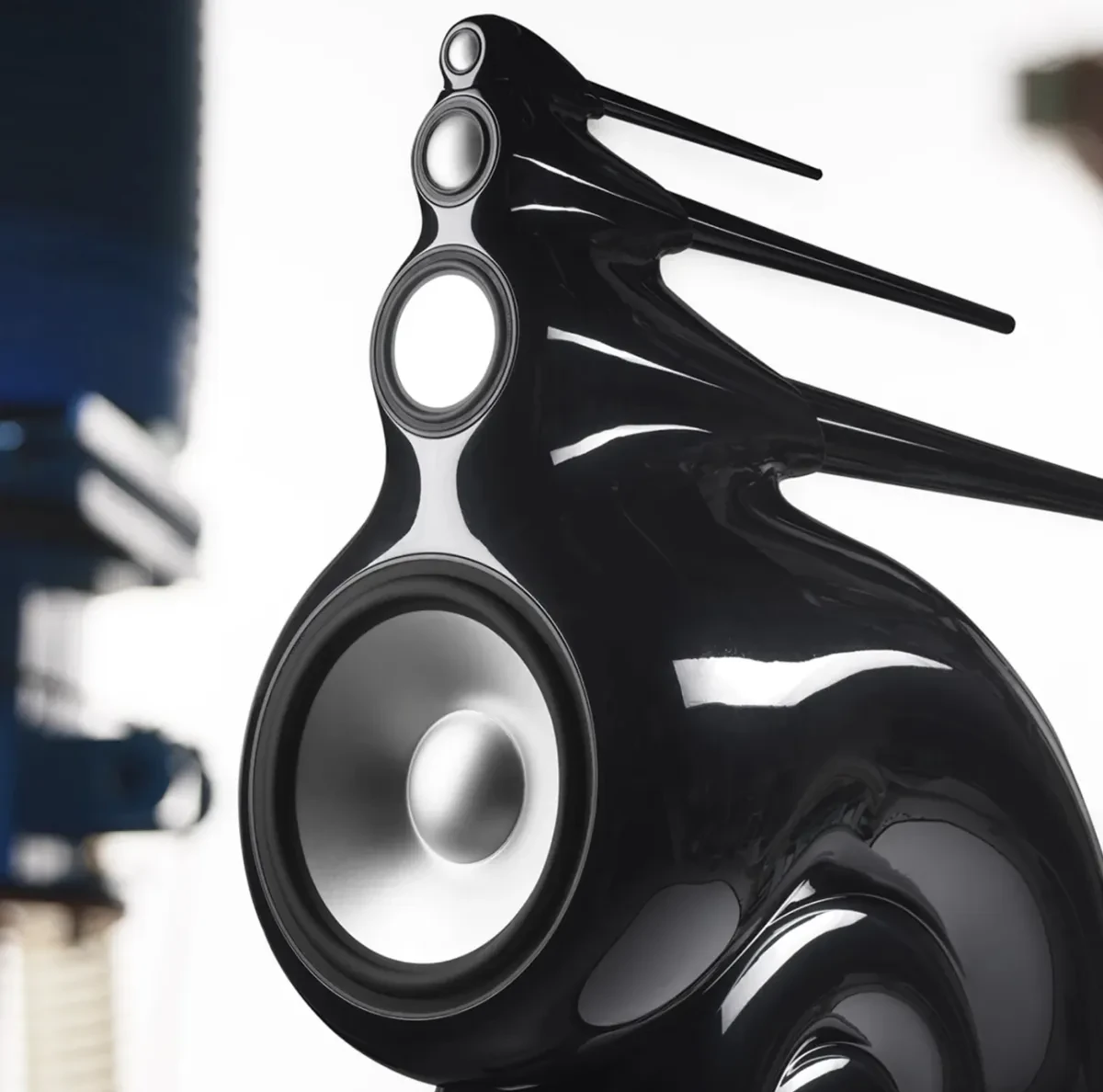
1. Bowers & Wilkins Nautilus
Premiere - 1993
Shortly before his death in 1987, Bowers & Wilkins founder John Bowers set his team of acoustic engineers a task that seemed impossible to achieve - to create a loudspeaker that would not sound like a loudspeaker, completely free of any influence from the cabinet. Five years later Laurence Dickie came up with a way to get rid of the box - behind each driver he fitted an exponentially tapering tube filled with absorbent material (the rear wave dies away inside it and does not return to the cone as an echo). The longest tube, for the bass, was coiled into a spiral resembling a nautilus shell - hence the name.
The Nautilus received an external active crossover, and each of the four bands required its own amplifier channel - eight channels for a pair of speakers. All drivers were mounted on silicone rings and mechanically decoupled from the cabinet, so that even the 250-micron aluminium cone kept its pistonic motion above 1.5 kHz. The external shape of the cabinets is perfected by hand moulding and CAD technology borrowed from the car industry - this preserves the mathematical precision of the tube curves. The Bowers & Wilkins Nautilus earned the company the Queen's Award for Innovation. For the model's 30th anniversary in 2023, a pair was released in a pearlescent Abalone Pearl finish.
Specifications
Model name
Nautilus
Frequency Response low +/- 3dB (Hz)
10 (+/- 6dB)
Frequency Response high +/- 3dB (Hz)
25000 (+/- 6dB)
Sensitivity (dB at 1 W/1m)
93
Impedance (Ohms)
8
Power amplifier requirements (W)
100 - 300
Has internal amplification
N/A
Internal amplification power (W)
N/A
Size (sm)
121.0 × 43.0 × 110.5
Weight (kg)
86.5
Official link