Vinnie Rossi CANTA Integrated Amplifier Combines a Tube Preamp with a 250-Watt MOSFET Output Stage

05.10.2026 18:02 | ~2 min read
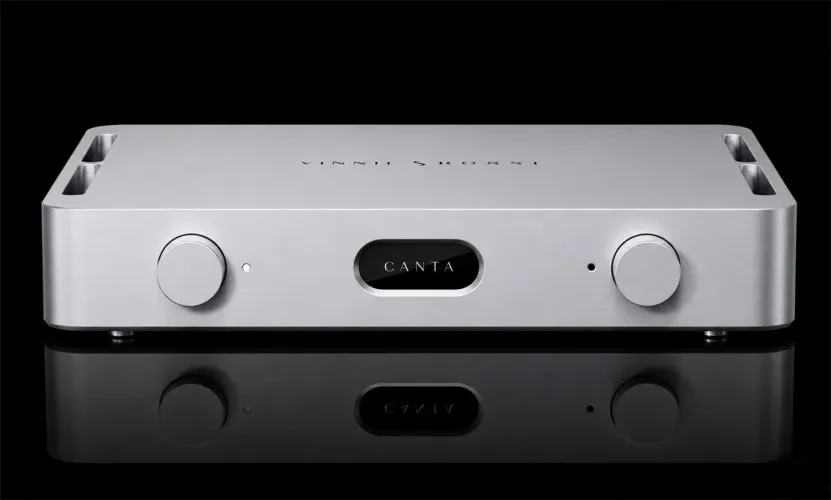
Vinnie Rossi has expanded its CANTA family with the new CANTA Integrated Amplifier. The model builds on the ideas introduced with the debut CANTA Phono Preamplifier, including a dual-mono architecture, proprietary Belleson power regulation, and a substantial aluminum chassis. The amplifier uses a hybrid design, combining a tube preamplifier stage with a powerful solid-state output section.
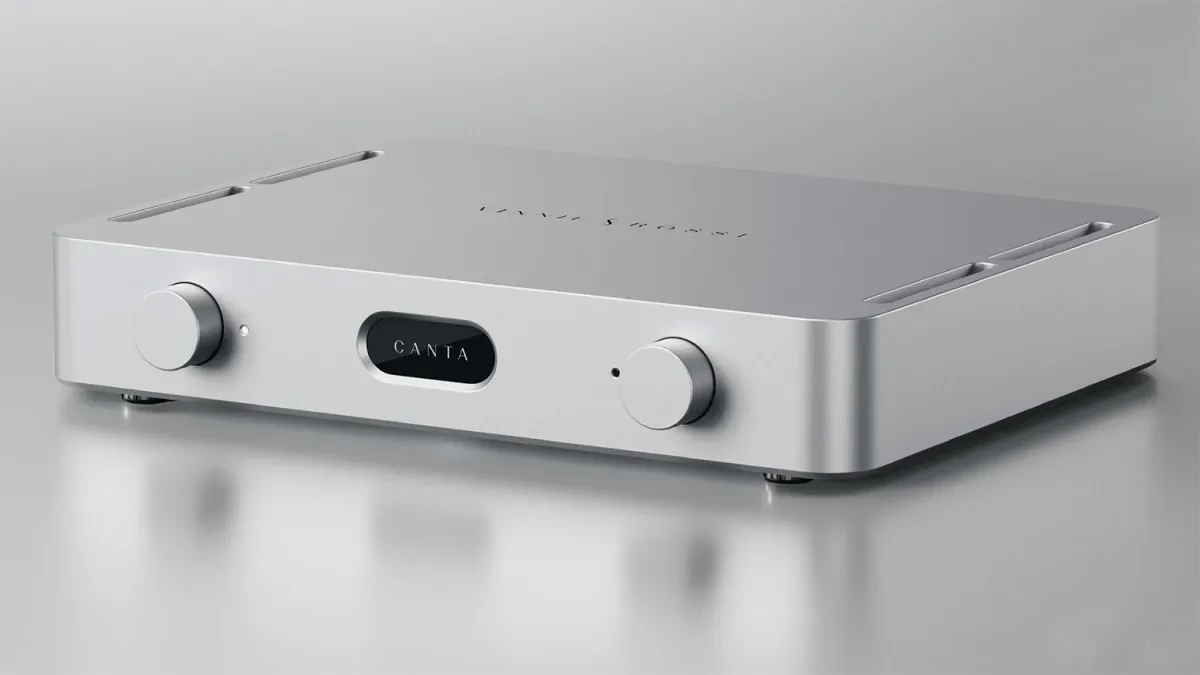
The preamplifier stage operates in Class A and uses one 6SN7 tube per channel, with the tubes employed solely for voltage gain. Vinnie Rossi designed the signal path to be as short and simple as possible in order to preserve the smooth tonal character, spacious presentation, and natural musical expression associated with tubes. The signal is then fed to a Class AB power amplifier built around carefully matched MOSFET transistors. Into a 4-ohm load, the amplifier is capable of delivering 250 watts RMS per channel.
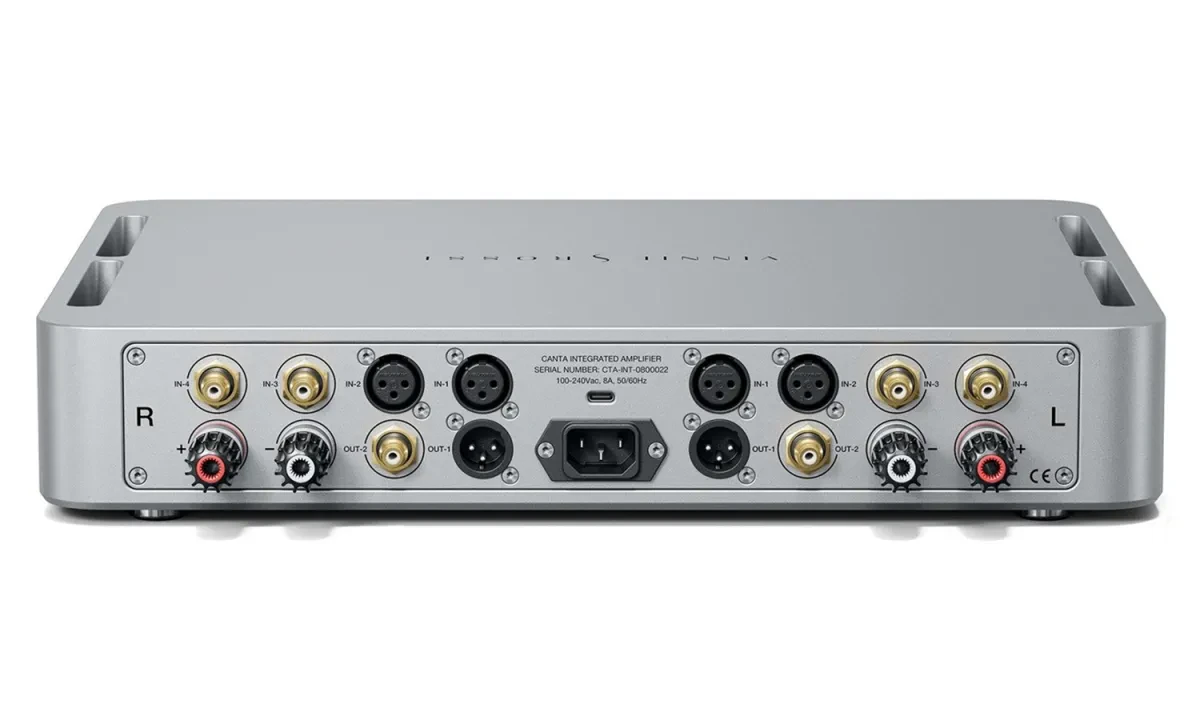
The Vinnie Rossi CANTA Integrated Amplifier uses a custom switch-mode power supply with power factor correction and Belleson regulators, while peak power exceeds 1 kW. According to the manufacturer, this approach is intended to ensure low noise, stable operation under fluctuations in mains voltage, and substantial current reserves. Volume is controlled by a 100-step resistor attenuator. Individual gain and balance settings can be stored for each of the four analog inputs, while a Home Theatre Bypass mode allows the CANTA Integrated Amplifier to be integrated into a multichannel system.
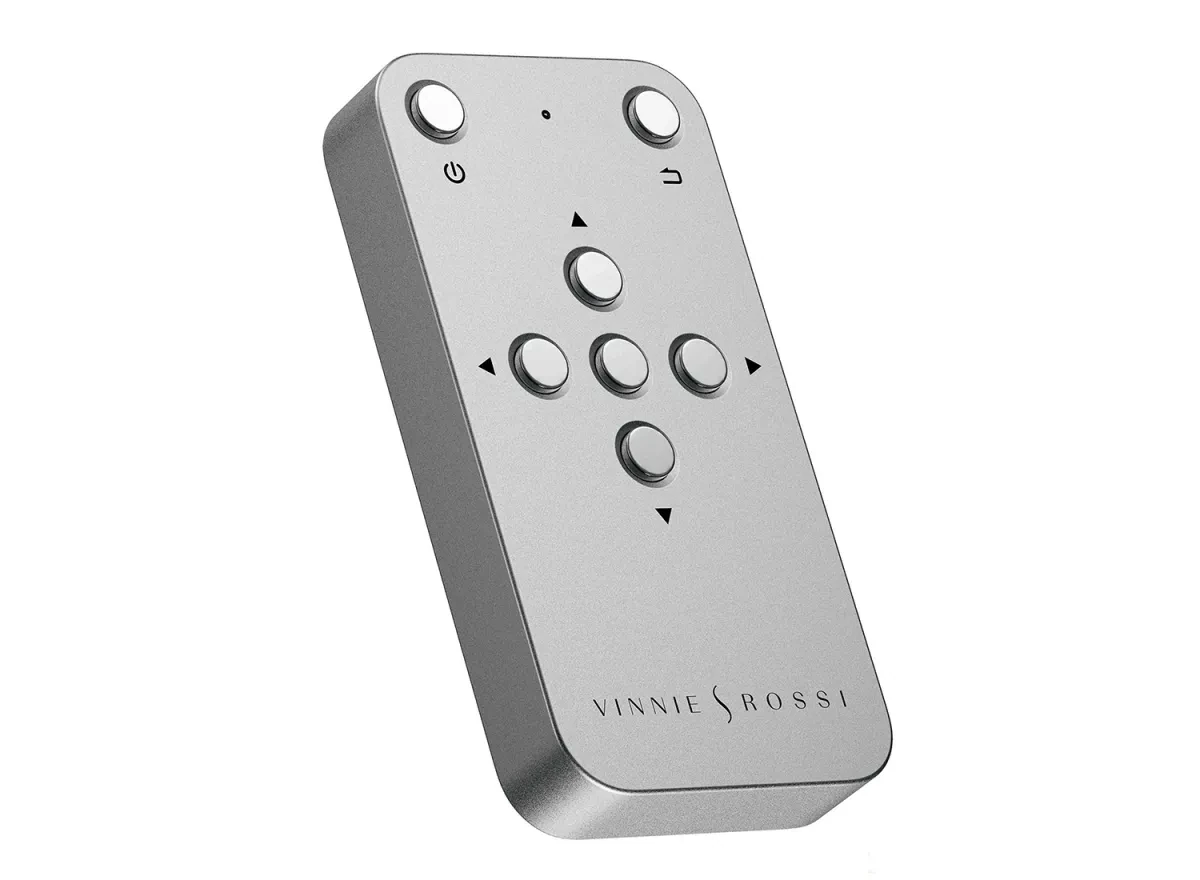
The amplifier’s chassis is CNC-machined from solid aluminum billets, after which the surfaces are sandblasted and anodized. This construction is designed to improve heat dissipation, provide effective shielding for the electronics, and reduce mechanical resonances. Operation is handled via a color LCD display, two rotary encoders, and the supplied aluminum IR remote control. The Vinnie Rossi CANTA Integrated Amplifier carries a recommended retail price of $23,995 in the US, with shipments scheduled to begin in late October 2026.