EvoAria Evo Era – CD Player with Discrete R-2R DAC and Tube-Based Analog Stage

24.10.2026 11:52 | ~3 min read
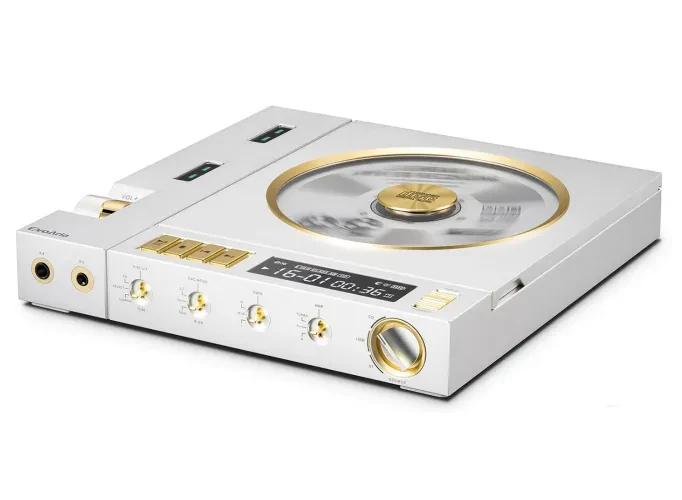
Chinese company EvoAria, founded in 2025 by former Cayin CEO Thomas Liang, has introduced the Evo Era, a High End portable CD player that also functions as a USB DAC, Bluetooth receiver, and powerful headphone amplifier. Following its debut with the Evo One digital audio player, the manufacturer has decided to combine traditional CD playback with advanced digital audio processing technologies. At the heart of the new model is a dual-architecture digital-to-analog conversion system featuring two independent designs: a pair of ESS ES9069Q chips operating in a dual-mono configuration and a discrete R-2R ladder DAC built from more than 170 precision resistors. The latter is controlled by an FPGA with a 100,000-entry correction table, while each channel benefits from an independent power supply. Users can switch between three digital-to-analog conversion modes: ESS, R-2R with oversampling (OS), and R-2R without oversampling (NOS).
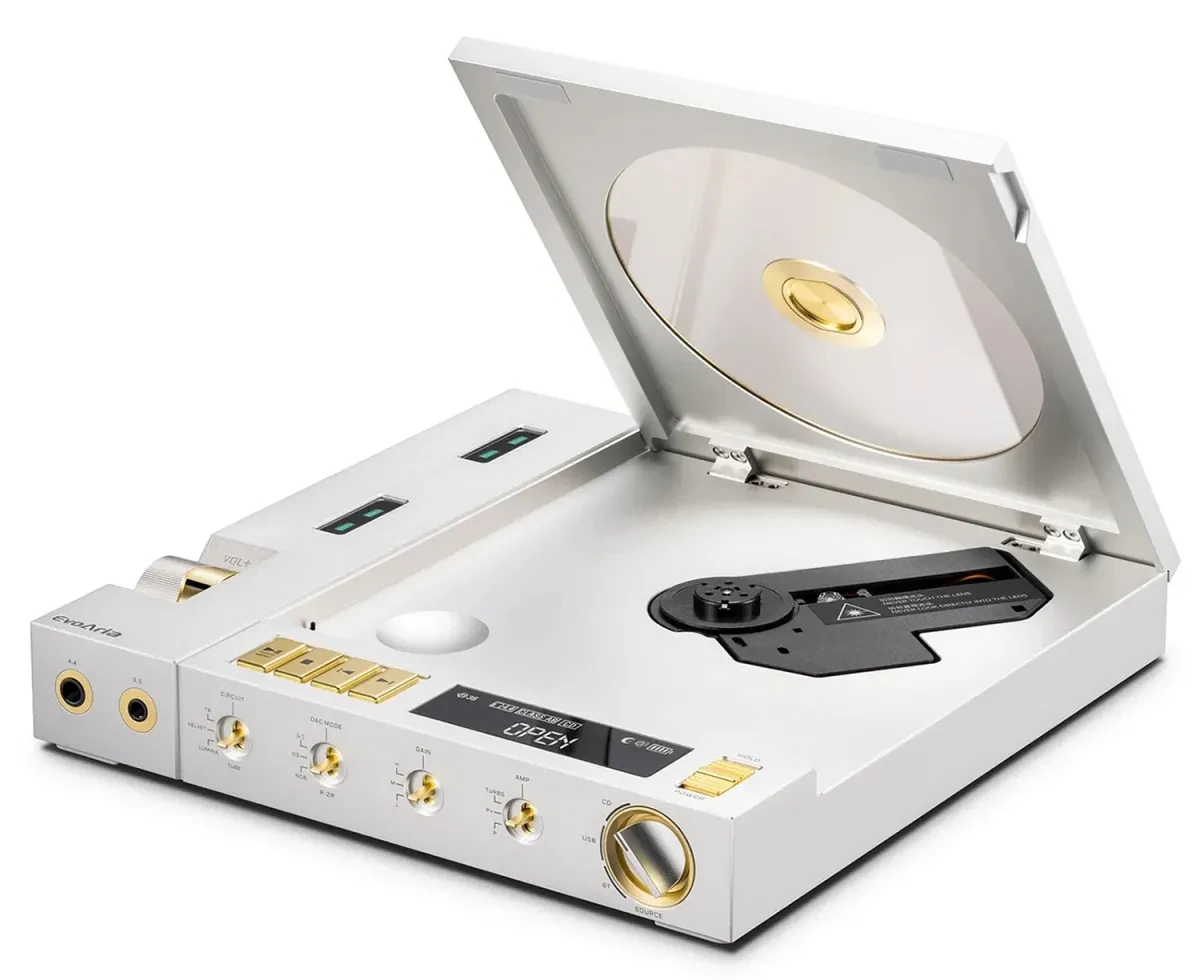
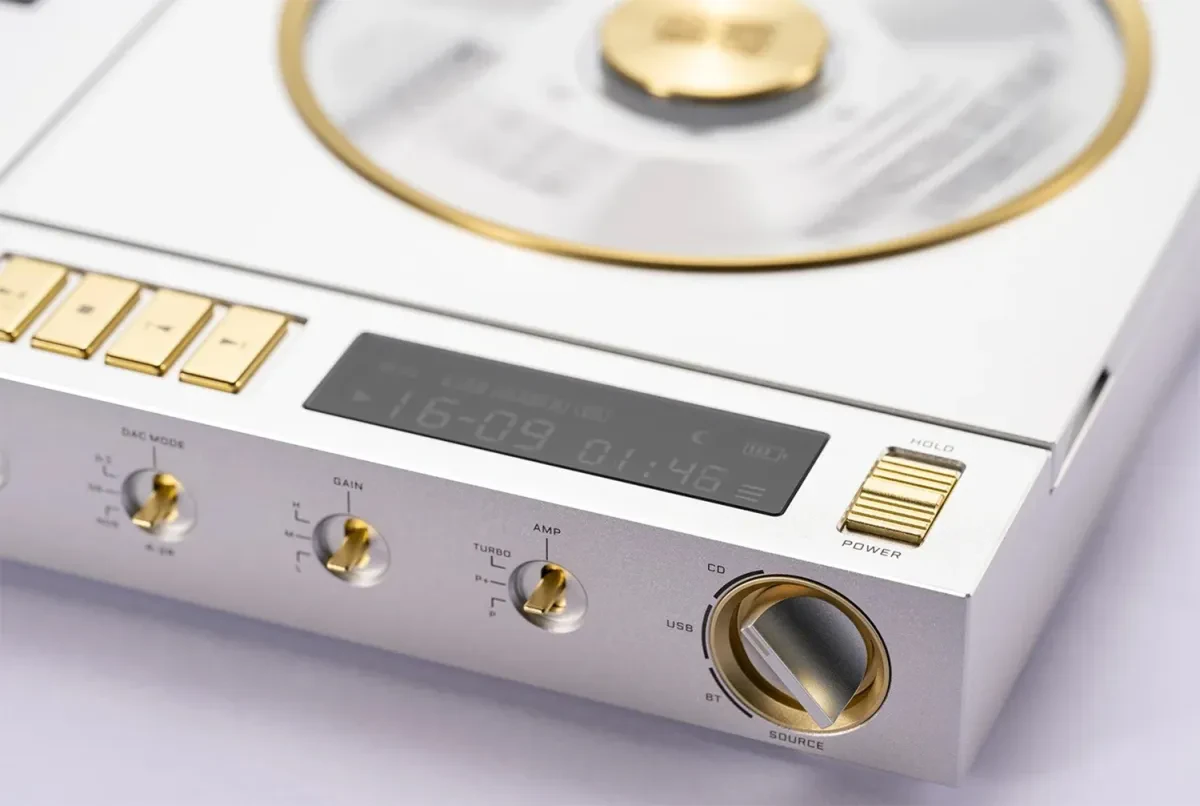
Equally noteworthy is the analog section of the EvoAria Evo Era, which allows users to adjust the sonic character without relying on digital effects. TR mode employs an entirely transistor-based signal path, while VELVET introduces two miniature Korg Nutube 6P1 tubes into the signal chain. The third option, LUMINA, is designed to deliver greater transparency and detail. Combined with the DAC settings, these options provide nine distinct sound configurations. For headphone listening, the player features a fully discrete balanced amplifier capable of operating in Class A or Class AB, with three gain levels and several output power modes. In its highest-performance DC TURBO configuration, available with an external USB PD power supply, the amplifier delivers up to 1,500 mW into 32 ohms through the 4.4 mm balanced output. When running on battery power, this figure reaches 1,050 mW, while the 3.5 mm single-ended output provides up to 550 mW with external power and 465 mW on battery power. In addition to the headphone outputs, the player offers dedicated balanced and single-ended line outputs, as well as a combined optical/coaxial digital interface.
The EvoAria Evo Era's functionality extends well beyond optical disc playback. Thanks to its XMOS XU316 USB controller, the player supports PCM audio at resolutions up to 32-bit/768 kHz and DSD512, while compatibility with UAC 1.0 and UAC 2.0 ensures connectivity with a wide range of digital sources. The Qualcomm QCC5181 wireless module provides Bluetooth 5.4 connectivity with support for LDAC, aptX Lossless, aptX Adaptive, aptX HD, aptX, AAC, and SBC codecs. Another useful feature is the ability to rip audio CDs directly to an external USB storage device in lossless WAV format, with the copying process running simultaneously with music playback. An anti-vibration CD mechanism is employed to ensure reliable disc reading. The digital output allows audio signals to be transmitted to an external DAC at resolutions up to PCM 192 kHz and DSD64. However, SACD playback is not supported, and compatibility with recordable CD-R and CD-RW discs has yet to be officially confirmed.
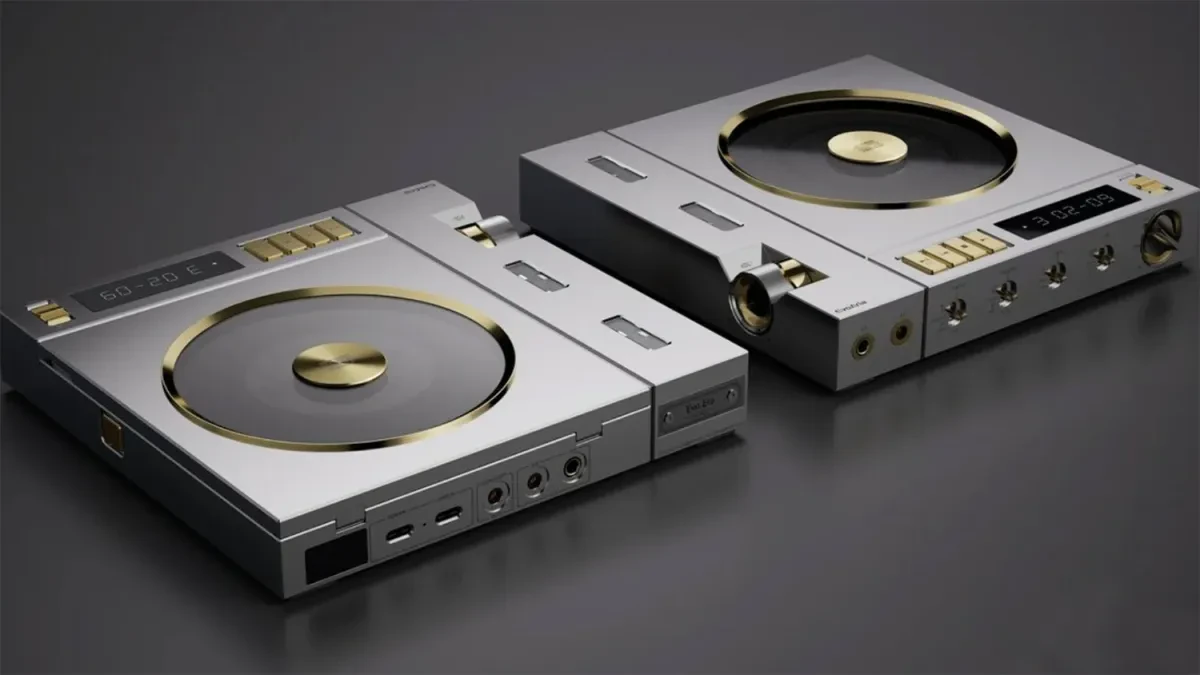
Despite being marketed as a portable device, the EvoAria Evo Era is a relatively substantial player, housed in a chassis made from 6063 aluminum alloy measuring 182 × 182 × 29 mm and weighing just over one kilogram. Its built-in 10,000 mAh battery provides approximately 9–14 hours of CD playback, while a full recharge via USB Power Delivery takes around 3.5 hours. The top panel features a 2.2-inch TFT display accompanied by physical control buttons, a hold switch, and a volume control. Firmware updates are installed via a USB storage device. Given its dimensions, extensive connectivity, and sophisticated amplification circuitry, the Evo Era is best regarded as a versatile desktop audio source with the added convenience of battery-powered operation. The recommended retail price is $1,499 in the United States or €1,699 in Europe.