
All

Bookshelf Speakers — KRK Systems CLASSIC 5
Description, images, technical data and specifications
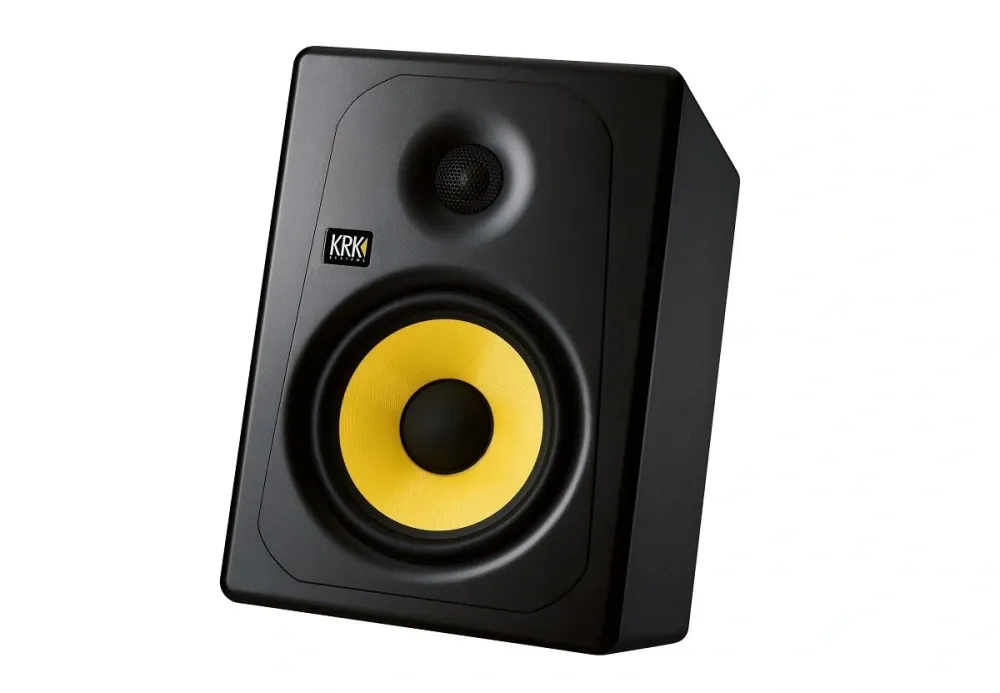
KRK Systems CLASSIC 5
Image source — © KRK Systems
The CLASSIC 5 is the smallest of three powered two-way monitors in the Classic Series from KRK Systems, a company founded in 1986 that now belongs to the Gibson family of brands. KRK describes the series as borrowing concepts from earlier ROKIT lines, and the Classic 5 ships voiced flat by default, with a switchable bass boost for users who want the heavier low end long linked with the brand. It comes in a black vinyl finish and in a silver and black version, and is also offered as a pack.
Key specs that matter
A 5-inch glass aramid woofer is paired with a 1-inch textile soft dome tweeter, with the crossover placed at 2.6 kHz. Two class A-B amplifiers feed the drivers separately - 30 W for the woofer and 20 W for the tweeter, 50 W in total. Response is stated as 56 Hz to 30 kHz within 3 dB, stretching to 46 Hz and 34.5 kHz at the -10 dB points. KRK gives a peak output of 101 dB SPL with the limiter active and 98 dB as the maximum average level. Each cabinet measures 188 mm wide, 284 mm tall and 246 mm deep, and one monitor weighs 5.87 kg.
Engineering and use context
The enclosure is built from 15 mm MDF with a high-impact polystyrene front baffle, and the reflex port is cut into the front panel rather than the back. Foam isolation pads are fitted to the underside to decouple the cabinet from a desk. On the rear panel a volume control runs from -30 dB to +6 dB, a low-frequency switch offers -1 dB, flat, +1 dB and +2 dB below 200 Hz, and a high-frequency switch covers -2 dB to +1 dB above the crossover point. Power draw is about 14 W at idle and under 0.5 W in standby. The monitor drops into auto-standby after 30 minutes without signal and wakes again once the input reaches -50 dBu. The IEC inlet sits above a fuse holder that carries a spare fuse, and KRK covers its studio monitors with a three-year warranty.
Pairing
Three inputs are provided - RCA for unbalanced sources, plus balanced XLR and 1/4-inch TRS. Input impedance is 10 kilohm balanced and 7 kilohm unbalanced, so a computer sound card, a DJ controller or a phone through an adapter can drive the RCA socket, while an audio interface or small mixing desk should use the balanced connections. Only one input should be connected at a time. With amplifiers inside each cabinet there is no separate power amp to buy, and level between the two speakers is matched with the rear volume knobs or set upstream by a controller or interface.
Alternatives
The KRK Classic 7 steps up to a 7-inch glass aramid woofer and a combined 73 W of bi-amplification, split 48 W to the woofer and 25 W to the tweeter.
Key specs that matter
A 5-inch glass aramid woofer is paired with a 1-inch textile soft dome tweeter, with the crossover placed at 2.6 kHz. Two class A-B amplifiers feed the drivers separately - 30 W for the woofer and 20 W for the tweeter, 50 W in total. Response is stated as 56 Hz to 30 kHz within 3 dB, stretching to 46 Hz and 34.5 kHz at the -10 dB points. KRK gives a peak output of 101 dB SPL with the limiter active and 98 dB as the maximum average level. Each cabinet measures 188 mm wide, 284 mm tall and 246 mm deep, and one monitor weighs 5.87 kg.
Engineering and use context
The enclosure is built from 15 mm MDF with a high-impact polystyrene front baffle, and the reflex port is cut into the front panel rather than the back. Foam isolation pads are fitted to the underside to decouple the cabinet from a desk. On the rear panel a volume control runs from -30 dB to +6 dB, a low-frequency switch offers -1 dB, flat, +1 dB and +2 dB below 200 Hz, and a high-frequency switch covers -2 dB to +1 dB above the crossover point. Power draw is about 14 W at idle and under 0.5 W in standby. The monitor drops into auto-standby after 30 minutes without signal and wakes again once the input reaches -50 dBu. The IEC inlet sits above a fuse holder that carries a spare fuse, and KRK covers its studio monitors with a three-year warranty.
Pairing
Three inputs are provided - RCA for unbalanced sources, plus balanced XLR and 1/4-inch TRS. Input impedance is 10 kilohm balanced and 7 kilohm unbalanced, so a computer sound card, a DJ controller or a phone through an adapter can drive the RCA socket, while an audio interface or small mixing desk should use the balanced connections. Only one input should be connected at a time. With amplifiers inside each cabinet there is no separate power amp to buy, and level between the two speakers is matched with the rear volume knobs or set upstream by a controller or interface.
Alternatives
The KRK Classic 7 steps up to a 7-inch glass aramid woofer and a combined 73 W of bi-amplification, split 48 W to the woofer and 25 W to the tweeter.
Specifications
Model name
CLASSIC 5
Frequency Response low +/- 3dB (Hz)
56
Frequency Response high +/- 3dB (Hz)
30 000
Sensitivity (dB at 1 W/1m)
N/A
Impedance (Ohms)
N/A
Power amplifier requirements (W)
N/A
Has internal amplification
Yes
Internal amplification power (W)
50
Size (sm)
24.6 x 18.8 x 28.4
Weight (kg)
5.87
Official link
More components
Bookshelf Speakers
KRK Systems Kreate 8
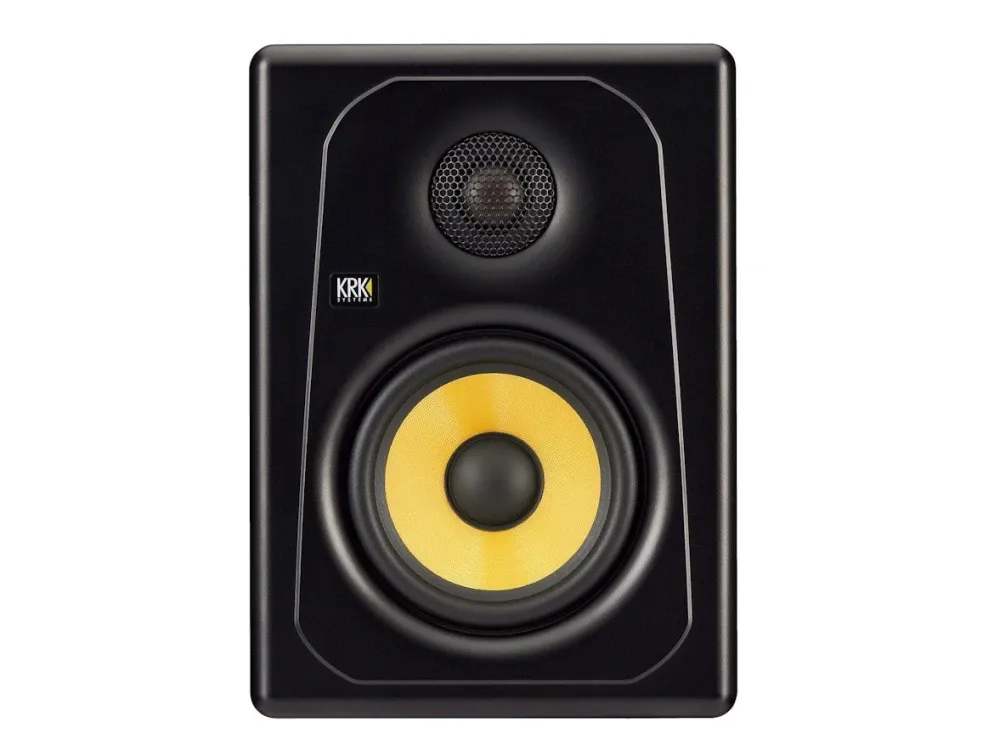
Bookshelf Speakers
KRK Systems Kreate 5
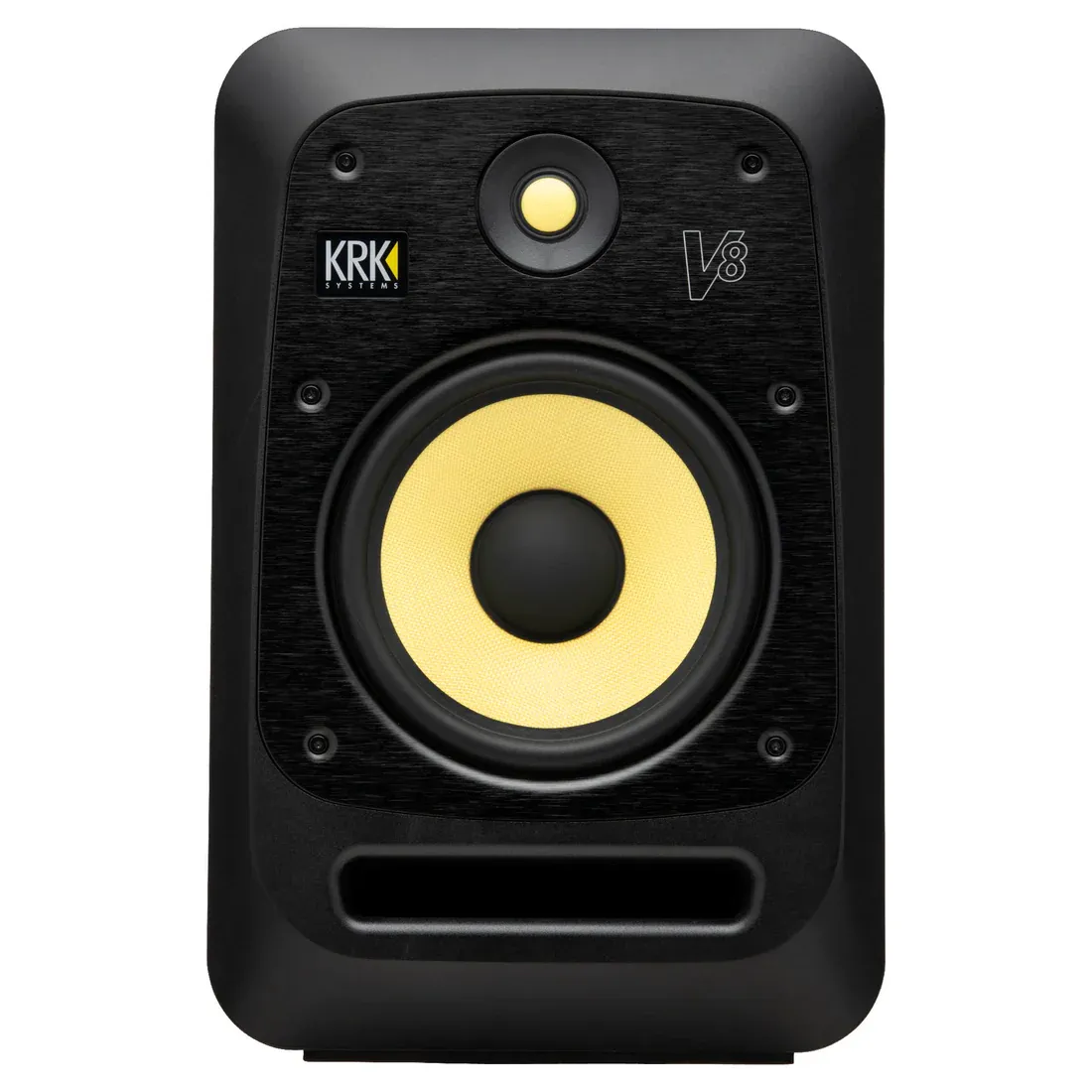
Bookshelf Speakers
KRK Systems V8 SERIES 4
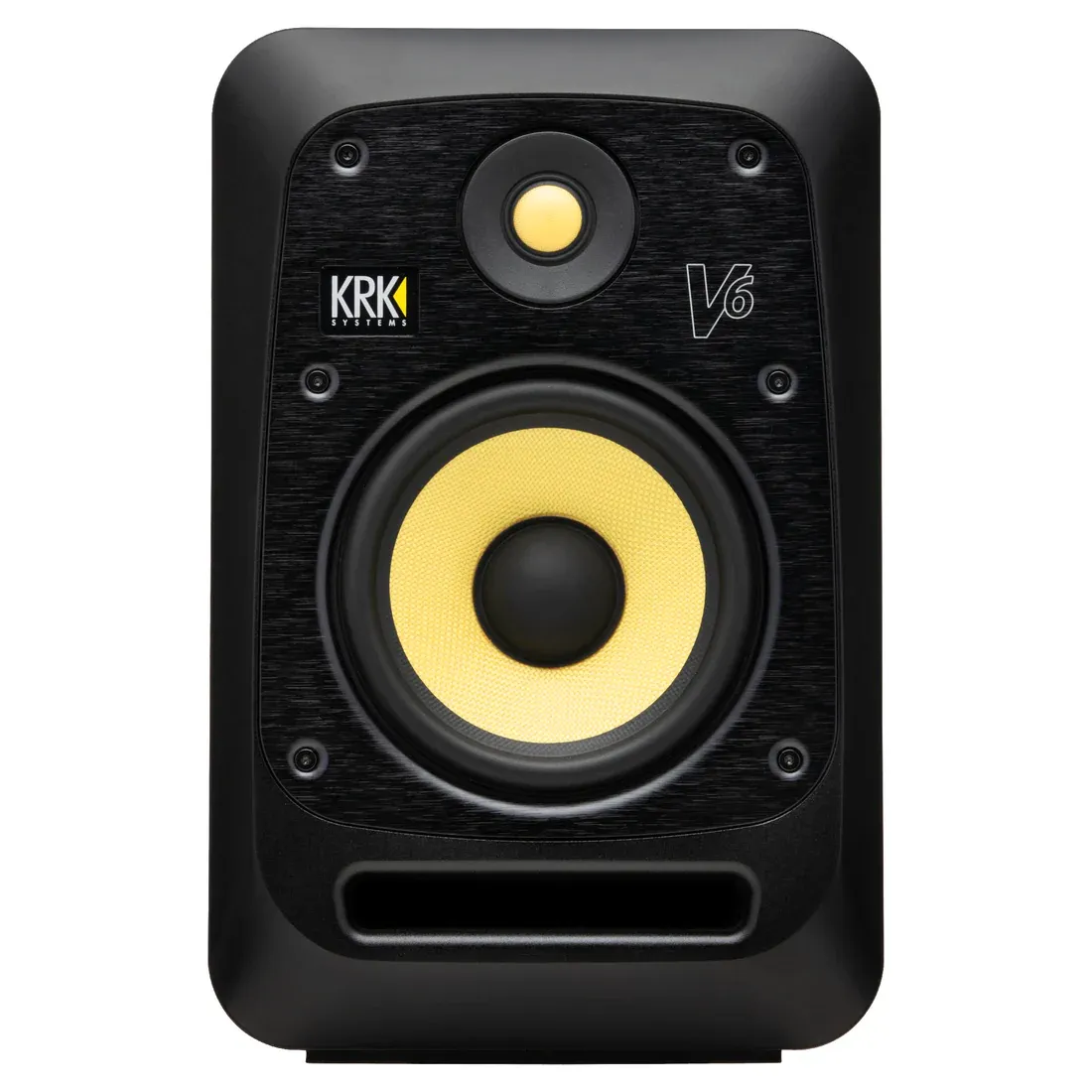
Bookshelf Speakers
KRK Systems V6 Series 4
Bookshelf Speakers
KRK Systems V4 SERIES 4