All


Vinnie Rossi
Website:https://www.vinnierossi.com/
Est. year: 2004
Vinnie Rossi is an American amplifier company headed by the engineer whose name it carries, based in Massachusetts. Rossi first traded as Red Wine Audio, a one-man venture started at age 24 with USD 10,000 of savings, whose first product was a small integrated amplifier powered by a lead-acid battery. After about ten years the company took his own name, partly because buyers kept confusing Red Wine Audio with another firm, and the new name also plays on the Italian phrase vini rossi.
Range & what it's known for
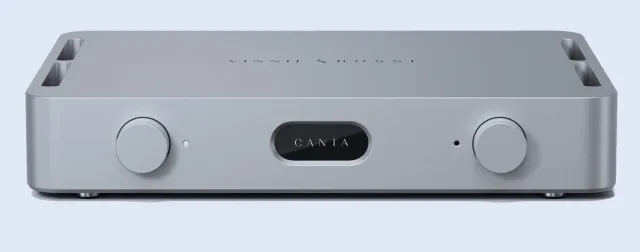
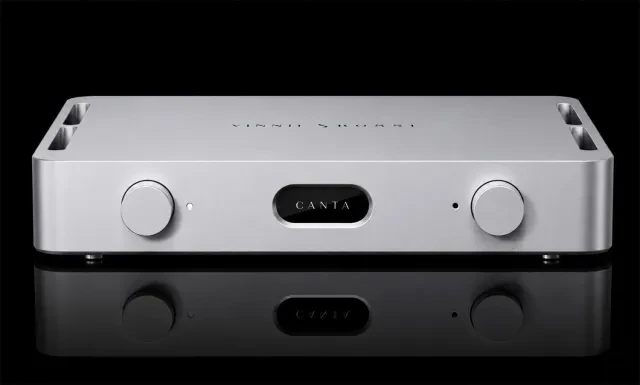
The brand made its name with the LIO, a modular integrated platform that buyers could fit with DAC, phono, headphone amplifier or line stage modules, starting from USD 2,995 for the base unit. Instead of a conventional transformer and capacitor supply, the LIO drew its energy from isolated banks of series-wired ultracapacitors, a direct successor to the battery supplies of the early years. The current upper range is the L2 Signature family, built around the L2 Signature preamplifier, the L2 Signature monoblocks and the L2i Signature integrated amplifier.
Who owns it and where it's made
Ownership is private, with Vinnie Rossi himself in charge. He holds a degree in electrical engineering and, before working in audio full time, designed test equipment for high-speed optics at Lucent and Bell Labs. Every product is manufactured in Massachusetts under full in-house control, Rossi personally carries out the final quality test on each unit, and the products are covered by a ten-year warranty.
The lineup in this catalog
Amplifiers, which cost roughly USD 5,000 in the simplest configuration and over USD 15,000 in the most complete one.
Who it's for
Buying Vinnie Rossi means dealing with a small American workshop where the designer personally takes part in building every unit, plus a long warranty. The modular thinking of the LIO appeals to anyone who wants to add a phono stage, DAC or headphone output later rather than replace the whole box. The L2 Signature components are the step up, letting an owner move from one integrated chassis to a separate preamplifier and monoblock pair within the same family.