

Floorstanding loudspeakers — Sonus Faber AMATI G5
Description, images, technical data and specifications
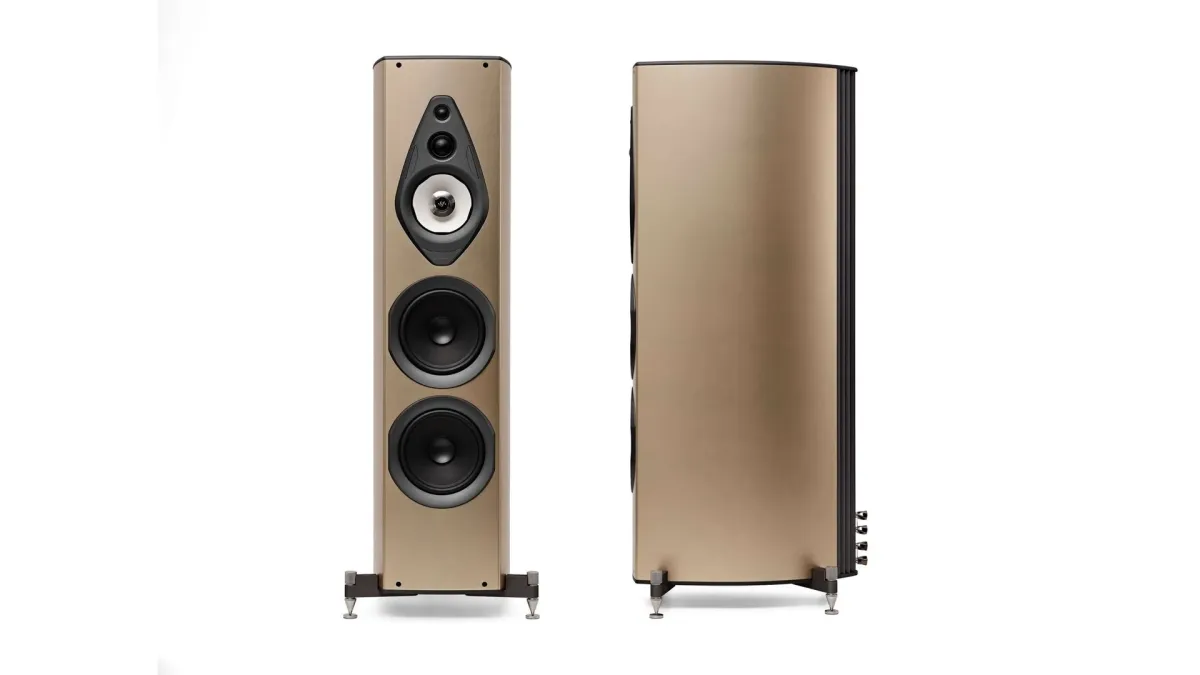
Sonus Faber AMATI G5
Image source — © Sonus Faber
The Amati G5 is a 3.5-way floorstander for rooms of roughly 30-60 m2 where full-range output is wanted without a subwoofer and without a reference-sized cabinet. Its offers the Intono midrange enclosure - a sealed chamber with a controlled pressure leak that linearises back pressure and flattens the impedance peak, which in turn allows a crossover with fewer restrictive parts in the signal path. At 91 dB into a genuine 4 ohm load, the amplifier question is current, not watts.
Position in line
This is the top model of the Homage collection, above the Serafino G2 and well above the two-way Guarneri G5 standmount, which gives up 5 dB of sensitivity and a full octave of bass. The step up from Serafino buys 220 mm woofers in place of 180 mm units and the larger vented enclosure that goes with them. Against the previous Amati Tradition, this generation drops the long tuned-mass damper in favour of aluminium dampshelves plus the Intono chamber, and replaces three rectangular rear ports with the single Stealth Ultraflex slot machined into the rear plate. Midrange and woofers are both new here, the 220 mm units with a 23.6% higher force factor.
Key specs that matter
Sensitivity is 91 dB at 2.83 V/1 m, but the 4 ohm nominal rating is honest rather than courteous - deep bass and high output were bought at the cost of a tougher load than earlier models of this line presented. Rated bandwidth is 28 Hz to 35 kHz, enough to skip a subwoofer in most domestic rooms. Crossover points sit at 200, 270 and 2200 Hz; the two low figures mark the 3.5-way split between the upper and lower woofer. Recommended power is 50-450 W. Each cabinet weighs 61 kg on a 411 x 512 mm footprint at 1176 mm tall, so floor loading and delivery access are real constraints.
Sound and use context
The signature is warm-centred and dense rather than analytical - weight through the lower midrange, a soft-dome top that rounds transient edges instead of sharpening them, full timbre, and a wide stage with softly drawn image outlines that holds together at high level.
Pairing
The split terminals allow bi-wiring and bi-amping. Solid state of 150-300 W into 4 ohms with genuine current reserve is the natural match; the 91 dB figure does not licence low-power single-ended valve amplifiers, because the impedance dips and phase angle set the requirement, not sensitivity. A valve amplifier with a 4 ohm tap and 60 W or more works in a smaller room.
Alternatives
Against the B&W 801 D4, the Amati gives up around 13 Hz of rated extension and 40 kg of mass per side, and takes back a smaller footprint. The Magico A5 is the sealed alternative - no port, so rear-wall distance stops working as a tuning control, and 88 dB into 4 ohms asks for roughly double the amplifier power for the same level. Within the collection, Serafino G2 covers the same territory in smaller rooms.
Position in line
This is the top model of the Homage collection, above the Serafino G2 and well above the two-way Guarneri G5 standmount, which gives up 5 dB of sensitivity and a full octave of bass. The step up from Serafino buys 220 mm woofers in place of 180 mm units and the larger vented enclosure that goes with them. Against the previous Amati Tradition, this generation drops the long tuned-mass damper in favour of aluminium dampshelves plus the Intono chamber, and replaces three rectangular rear ports with the single Stealth Ultraflex slot machined into the rear plate. Midrange and woofers are both new here, the 220 mm units with a 23.6% higher force factor.
Key specs that matter
Sensitivity is 91 dB at 2.83 V/1 m, but the 4 ohm nominal rating is honest rather than courteous - deep bass and high output were bought at the cost of a tougher load than earlier models of this line presented. Rated bandwidth is 28 Hz to 35 kHz, enough to skip a subwoofer in most domestic rooms. Crossover points sit at 200, 270 and 2200 Hz; the two low figures mark the 3.5-way split between the upper and lower woofer. Recommended power is 50-450 W. Each cabinet weighs 61 kg on a 411 x 512 mm footprint at 1176 mm tall, so floor loading and delivery access are real constraints.
Sound and use context
The signature is warm-centred and dense rather than analytical - weight through the lower midrange, a soft-dome top that rounds transient edges instead of sharpening them, full timbre, and a wide stage with softly drawn image outlines that holds together at high level.
Pairing
The split terminals allow bi-wiring and bi-amping. Solid state of 150-300 W into 4 ohms with genuine current reserve is the natural match; the 91 dB figure does not licence low-power single-ended valve amplifiers, because the impedance dips and phase angle set the requirement, not sensitivity. A valve amplifier with a 4 ohm tap and 60 W or more works in a smaller room.
Alternatives
Against the B&W 801 D4, the Amati gives up around 13 Hz of rated extension and 40 kg of mass per side, and takes back a smaller footprint. The Magico A5 is the sealed alternative - no port, so rear-wall distance stops working as a tuning control, and 88 dB into 4 ohms asks for roughly double the amplifier power for the same level. Within the collection, Serafino G2 covers the same territory in smaller rooms.
Specifications
Model name
AMATI G5
Frequency Response low +/- 3dB (Hz)
28
Frequency Response high +/- 3dB (Hz)
35 000
Sensitivity (dB at 1 W/1m)
91
Impedance (Ohms)
4
Power amplifier requirements (W)
50 - 450
Has internal amplification
N/A
Internal amplification power (W)
N/A
Size (sm)
117.6 x 41.1 x 51.2
Weight (kg)
61
Official link
More components
Floorstanding loudspeakers
Sonus Faber Amati Supreme
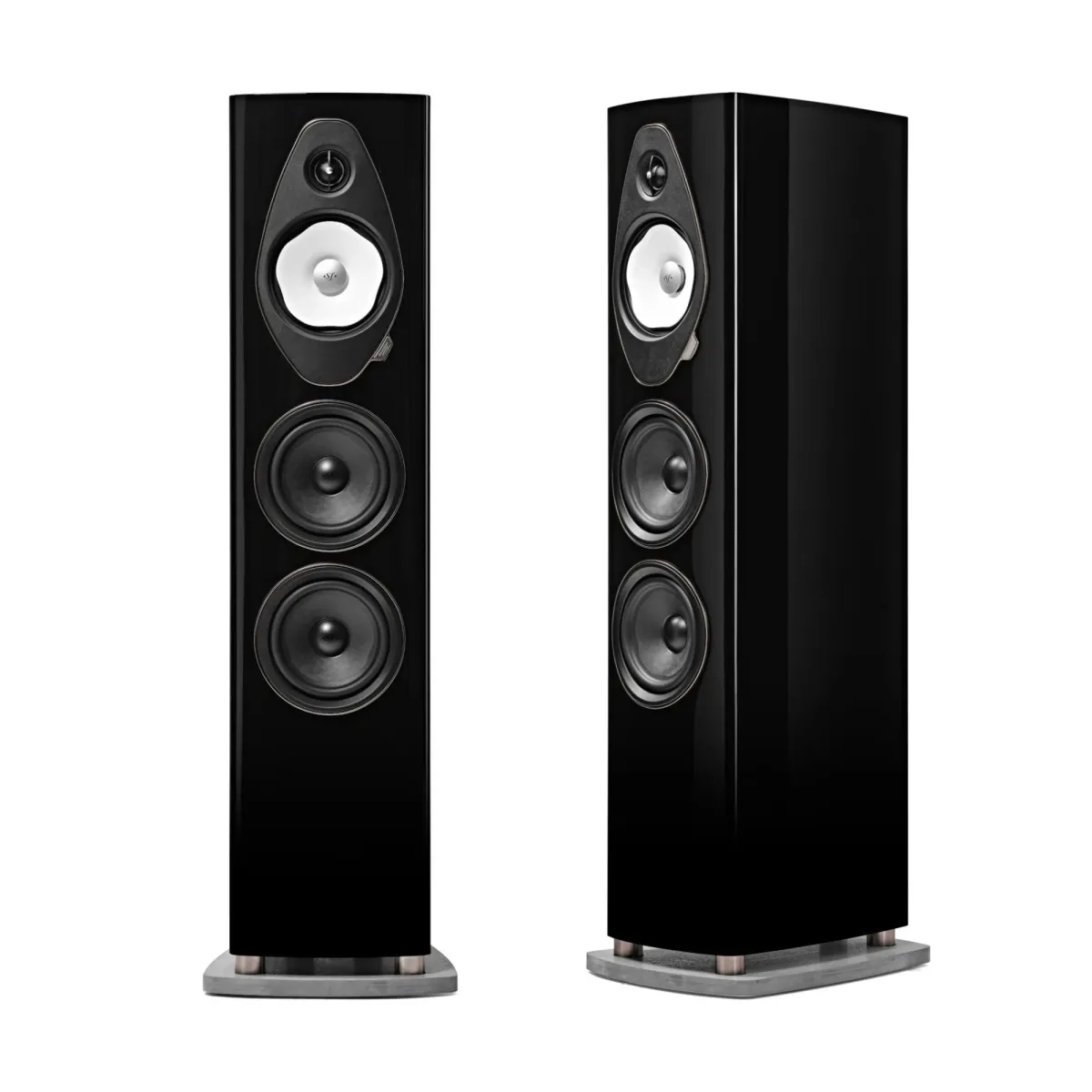
Floorstanding loudspeakers
Sonus Faber Sonetto V G2
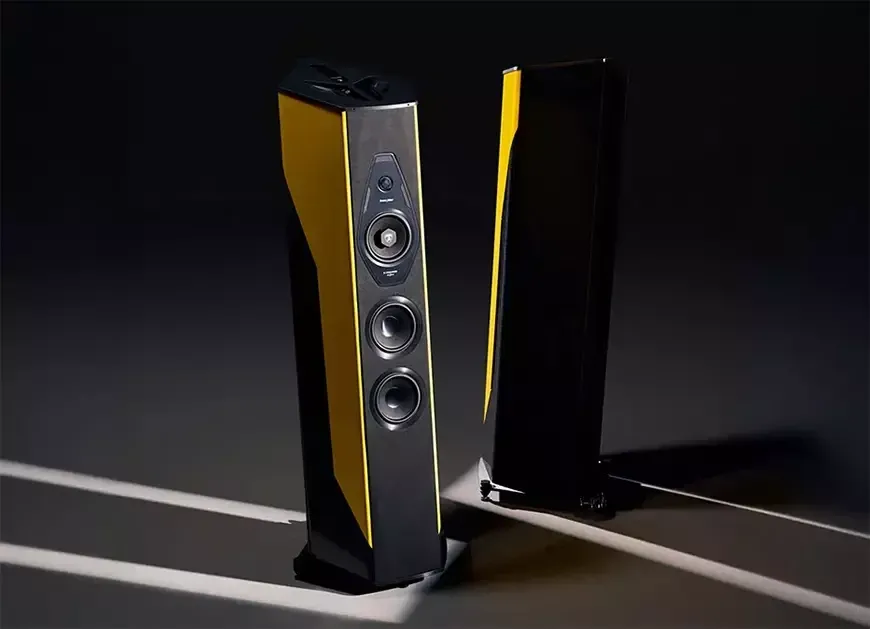
Floorstanding loudspeakers
Sonus Faber Il Cremonese Ex3me Automobili Lamborghini Edition
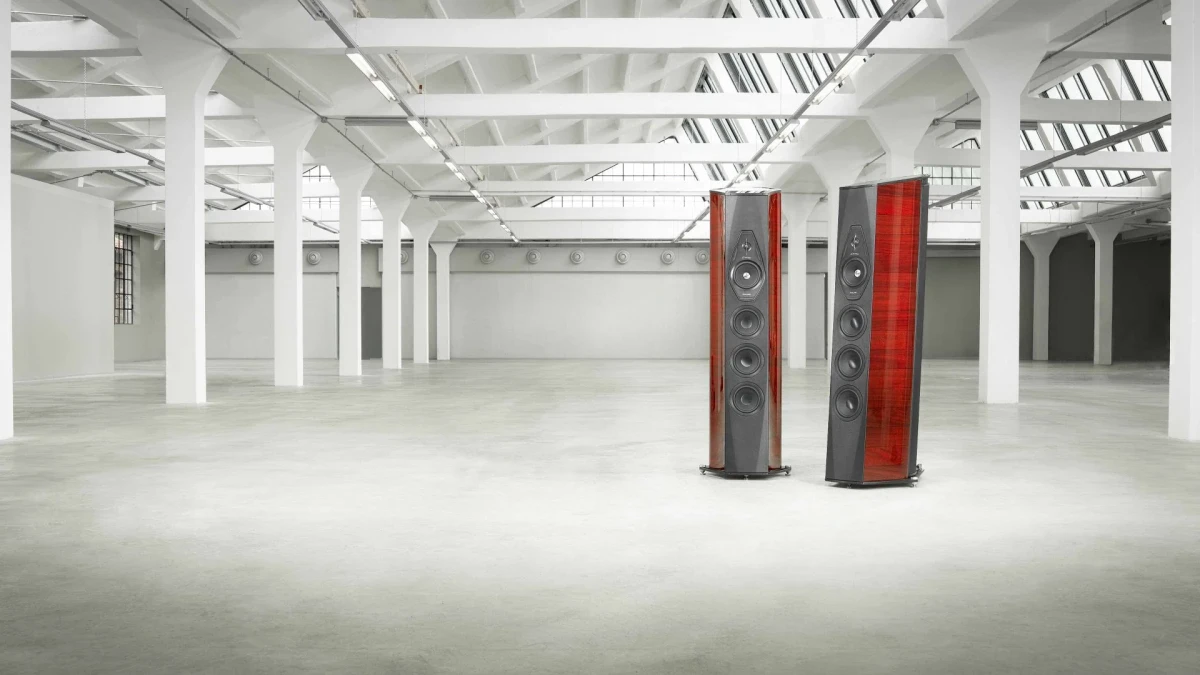
Floorstanding loudspeakers
Sonus Faber LILIUM

Floorstanding loudspeakers
Sonus Faber IL CREMONESE