
Zellaton Stage Loudspeakers - Full Review
Seven Octaves Without a Crossover

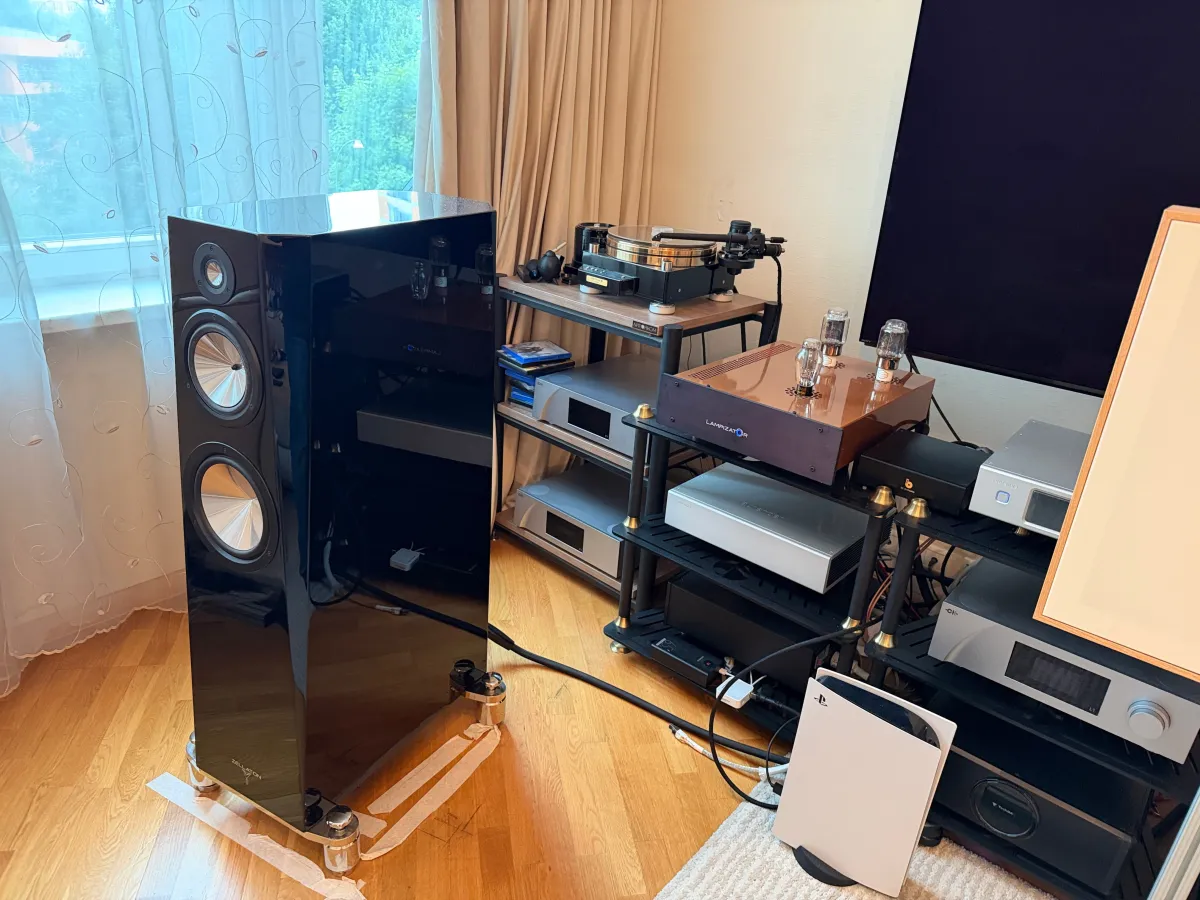
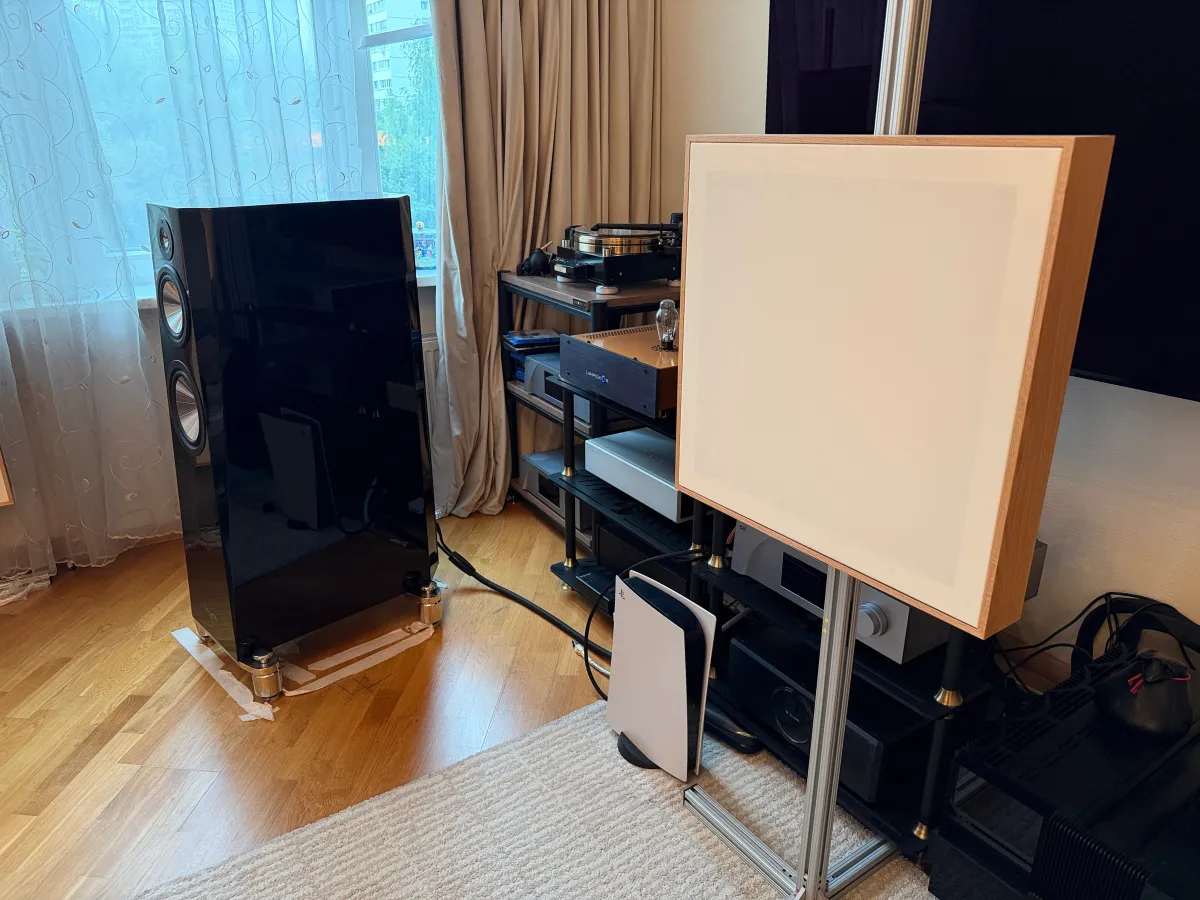
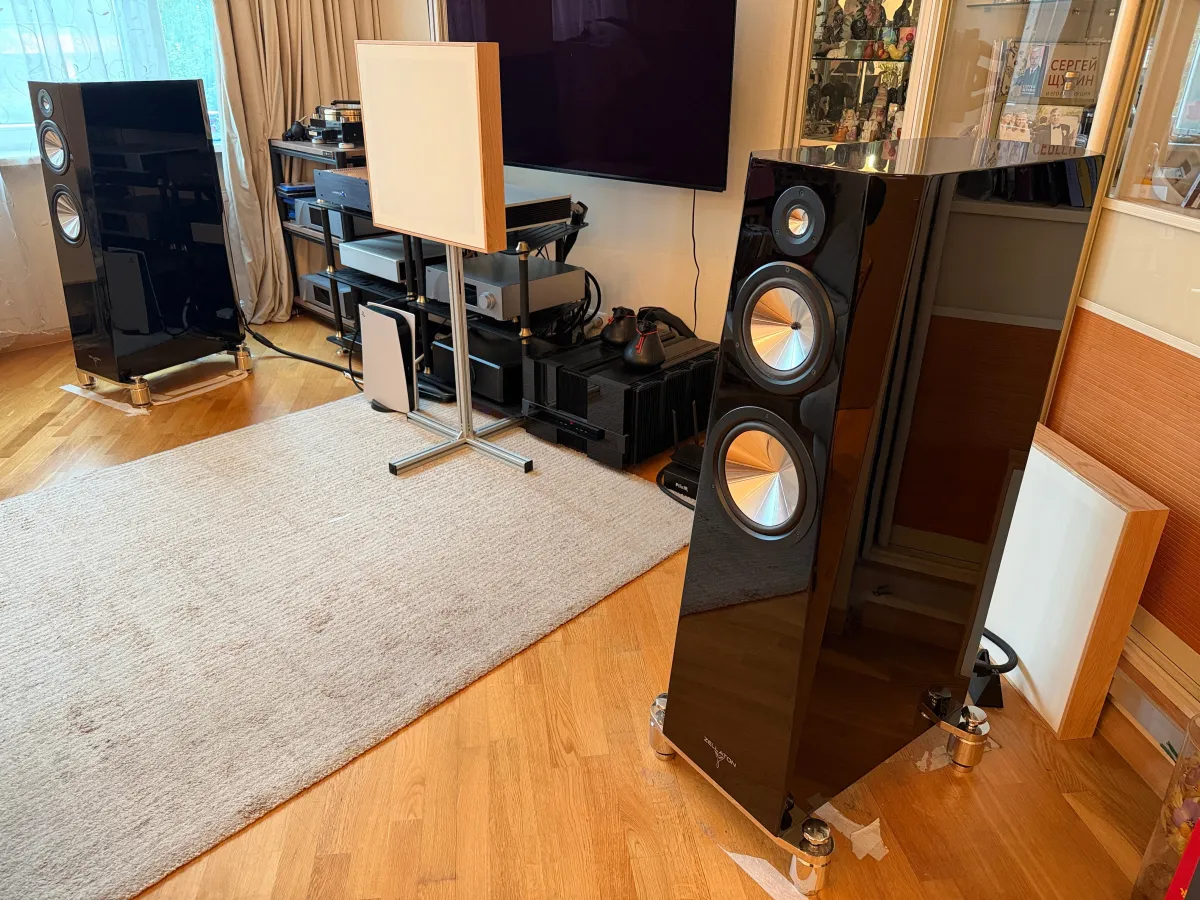
The Zellaton Stage is a three-way loudspeaker employing proprietary drivers with sandwich cone construction - thin aluminium skins bonded to a foam core. This architecture reduces moving mass to a radical minimum, and the fact that the midrange driver operates across a full seven octaves, from 100 Hz to 8,000 Hz, without a crossover, represents a genuinely remarkable engineering achievement even by cost-no-object standards. Where the crossover does come into play, it is built exclusively from audiophile-grade components - hand-wound Duelund CAST capacitors, point-to-point wired throughout. Add a semi-open baffle cabinet alignment and you have an exceptionally compelling candidate for reference status at its price point.
Design
In conventional loudspeaker design, a midrange driver is typically asked to cover two to three octaves - attempts to extend the bandwidth further tend to accumulate distortion and invite parasitic resonances. The Zellaton Stage sets out to demolish the assumption that engineering of this quality is unattainable. The three-layer cone construction - 0.006 mm of aluminium, foam with 80 percent air content by volume, and a further 0.006 mm of aluminium - provides both resonance suppression and the pistonic rigidity the design requires. The result is a midrange driver that covers seven full octaves without a crossover: no phase shift, no time smear, no amplitude error. Pure sound, exactly as it is.
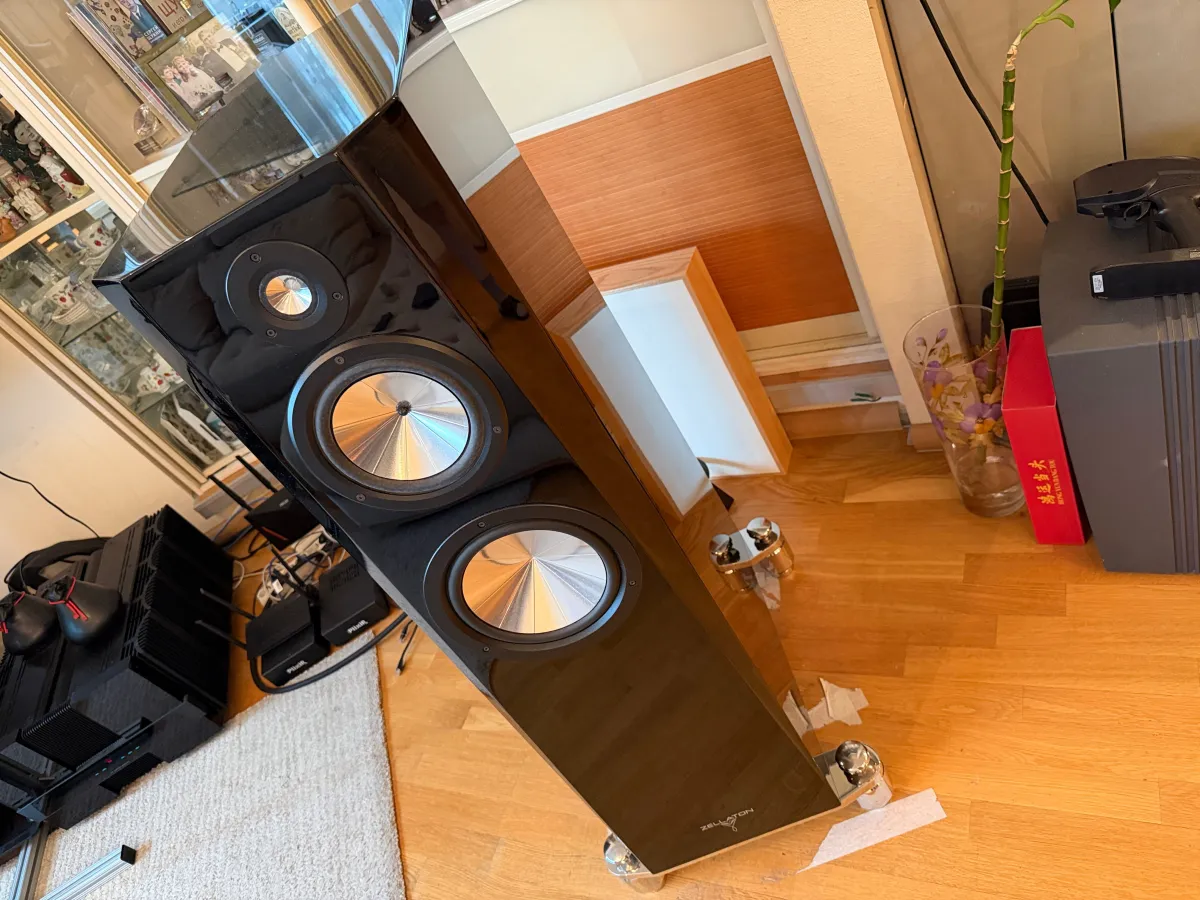
The sandwich cones are produced through a multi-cycle kiln-baking process of considerable duration, which results in a high rejection rate - only the most perfectly formed cones pass quality control. As a direct consequence, production is limited to somewhere between fifty and eighty pairs per year.
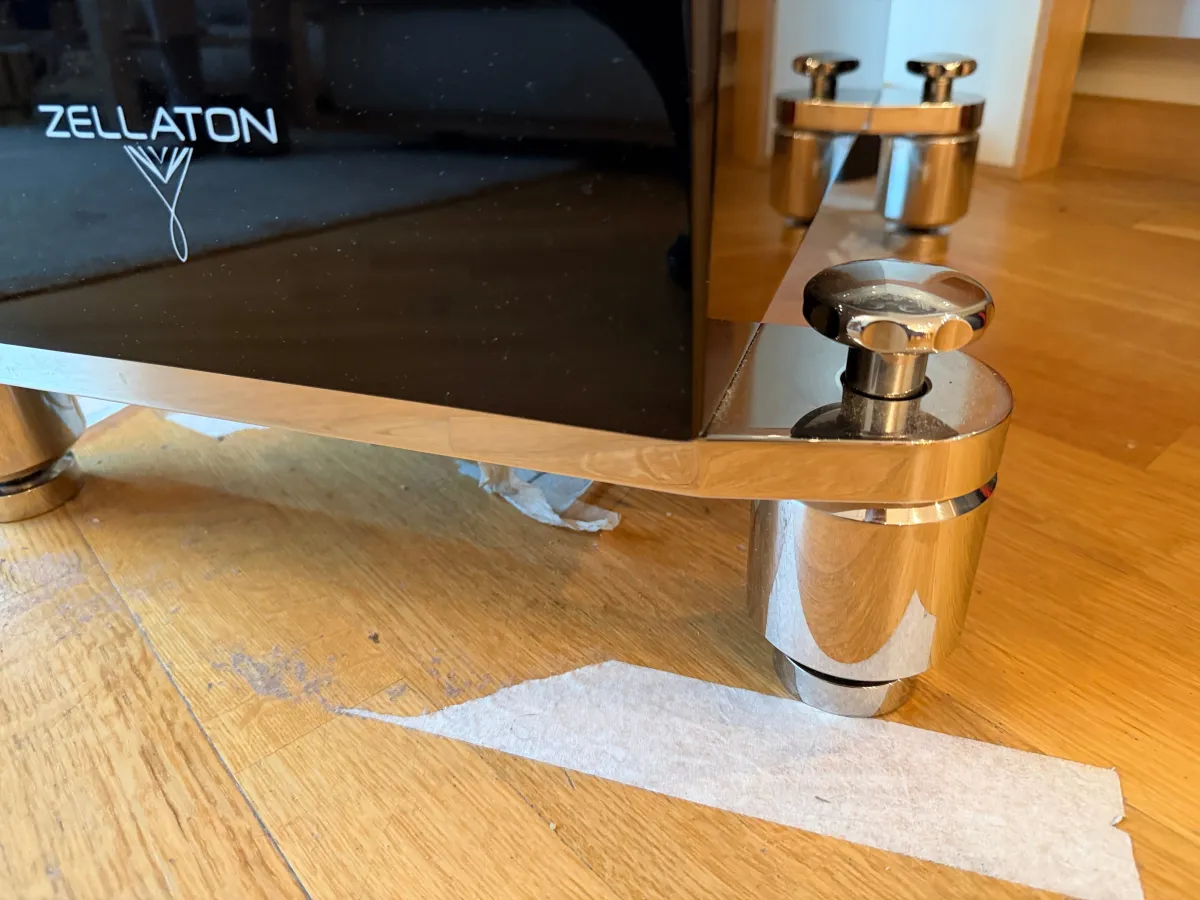
The Zellaton Stage operates across 35 Hz to 25,000 Hz. The crossover points are 100 Hz at the low end and 8,000 Hz at the top. Each cabinet weighs in excess of 100 kg.
Installation
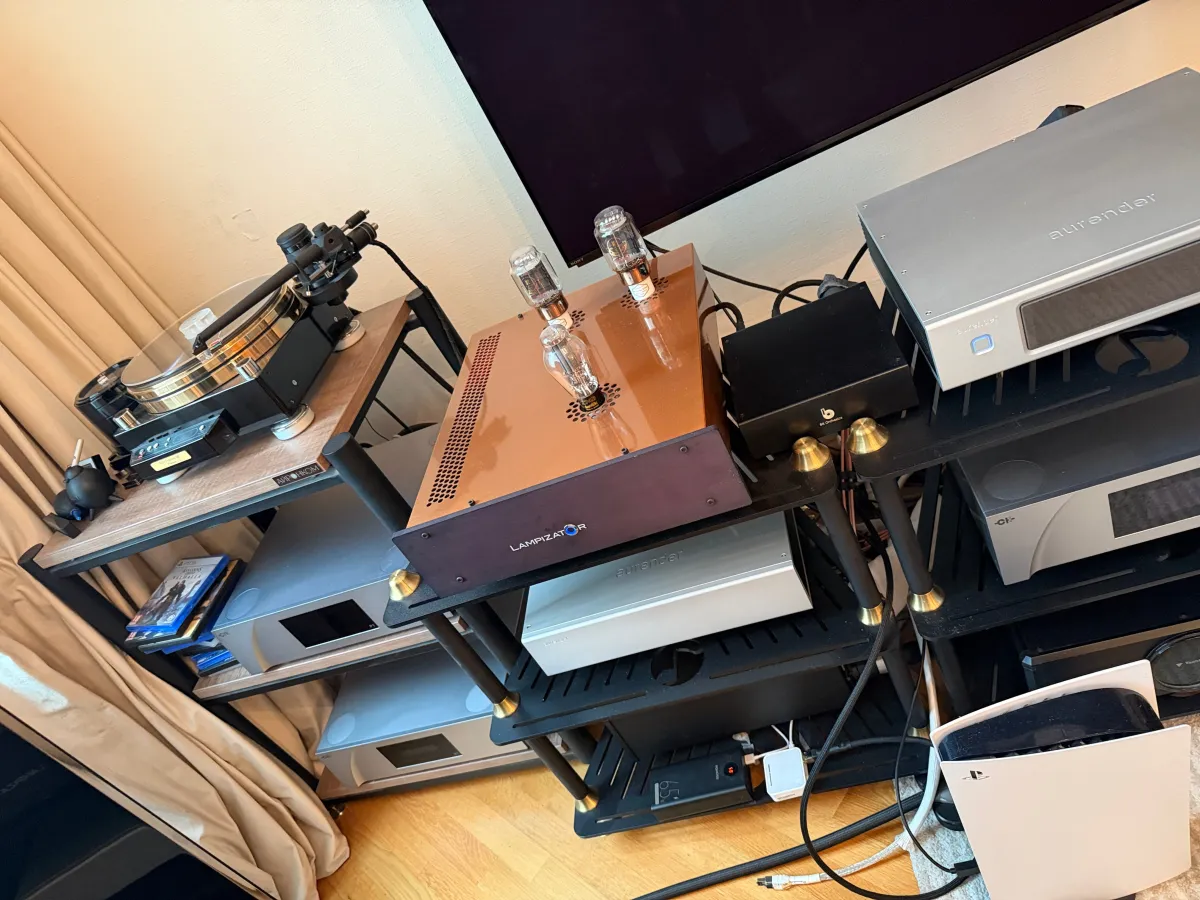
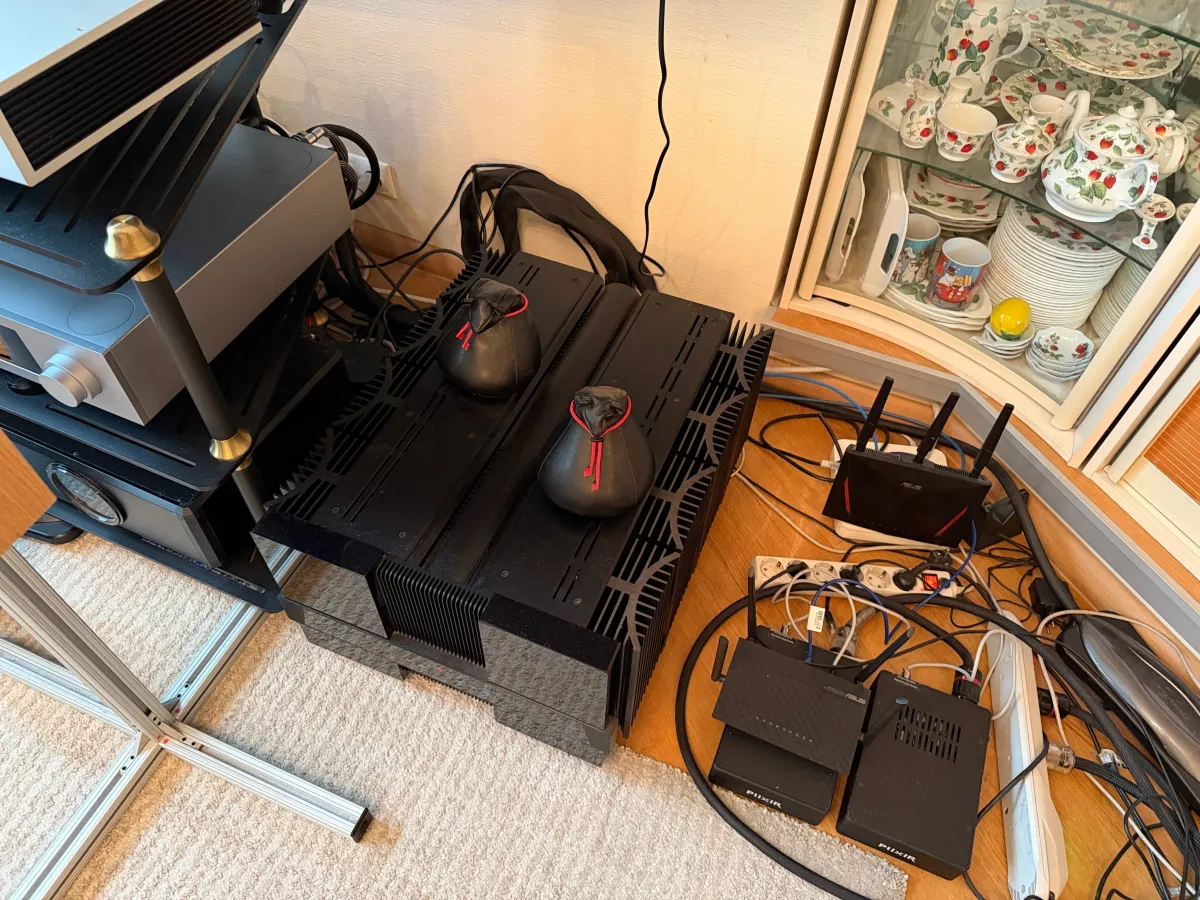
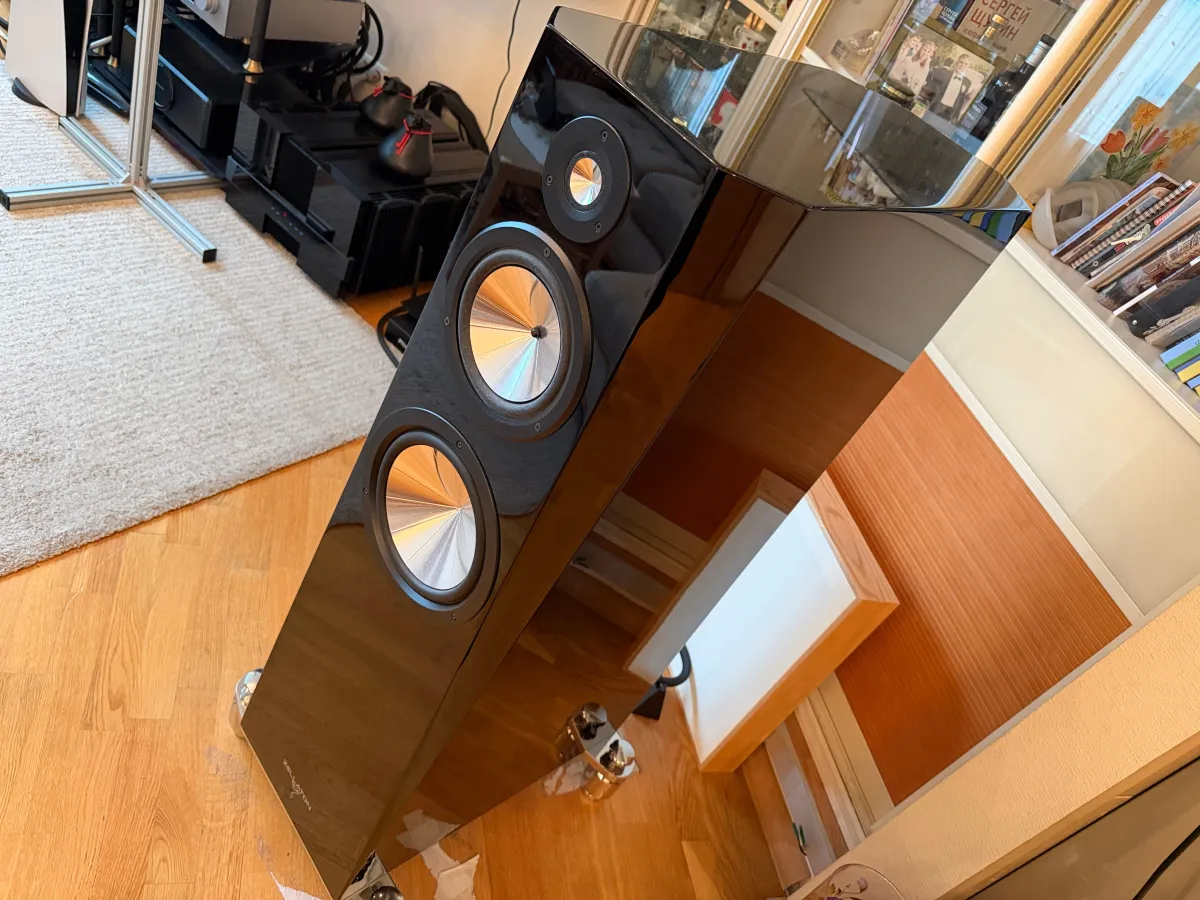
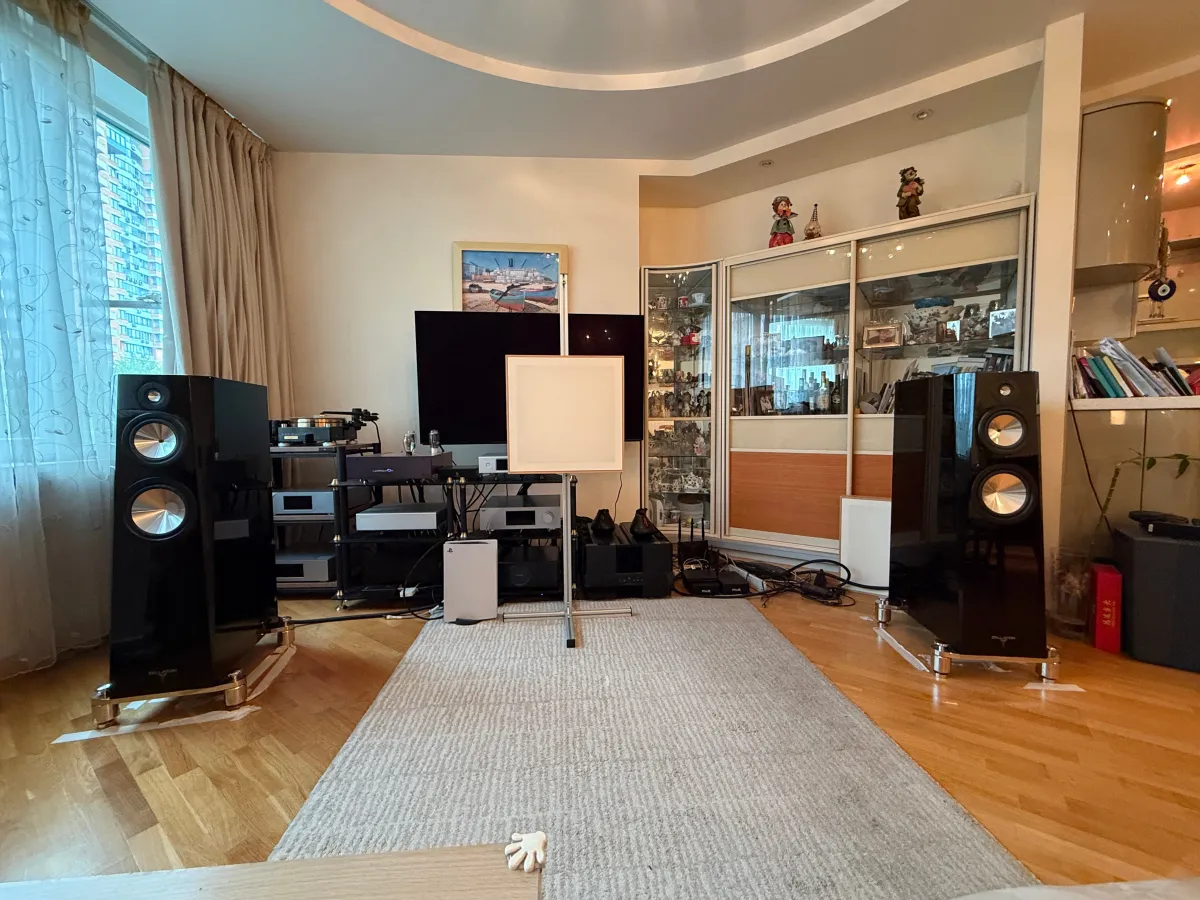
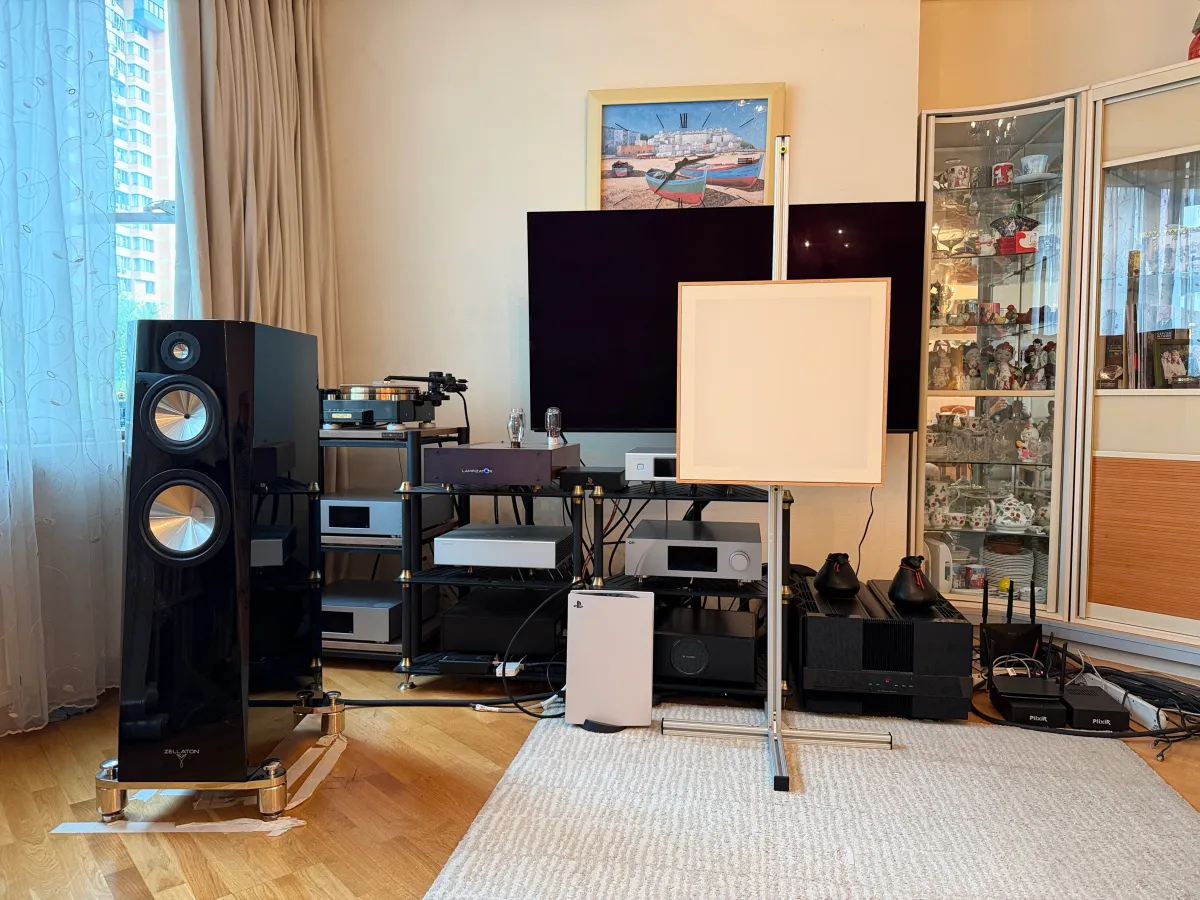
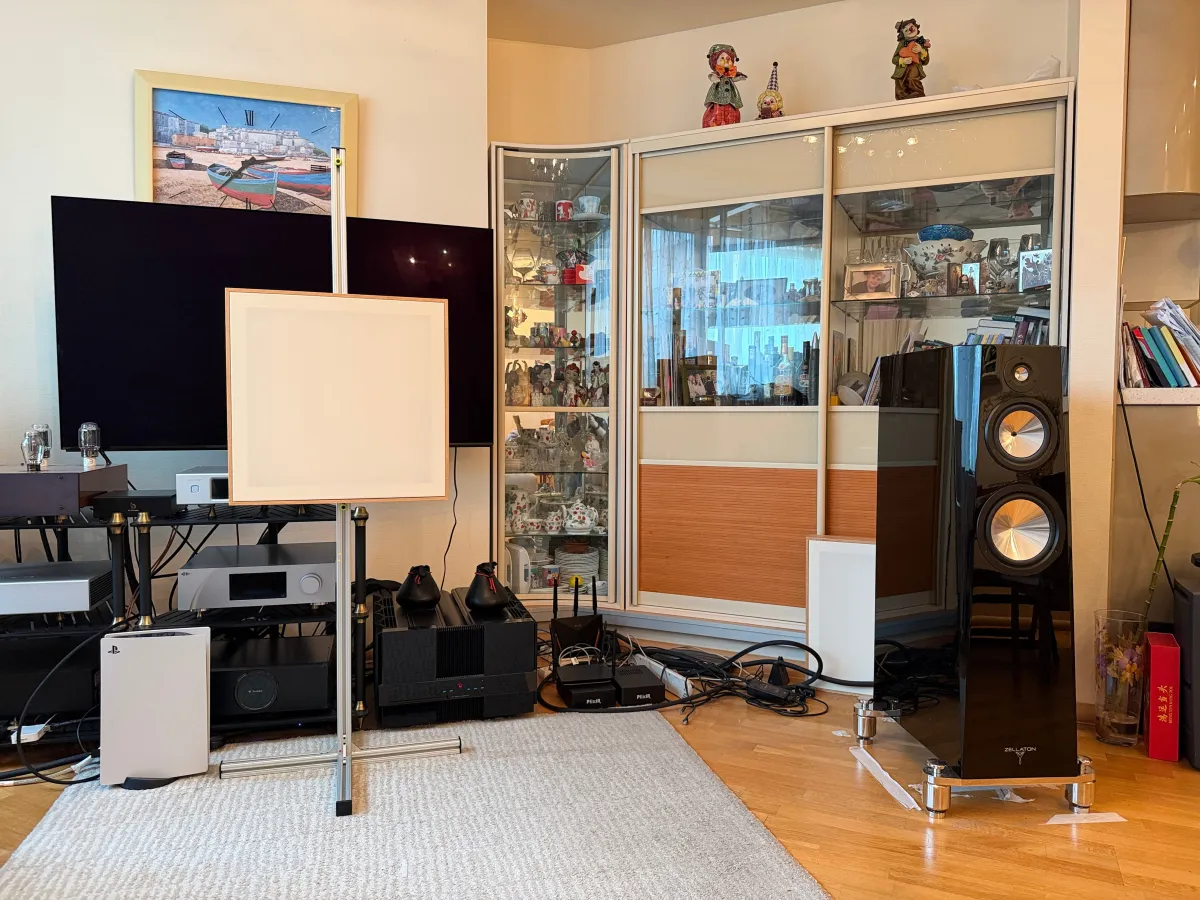
Our review system paired the Zellaton Stage with the Gryphon Mephisto, a Class A solid-state amplifier - ensuring that current delivery was entirely beyond question, and that the quality of electronics upstream would not be a limiting factor. Straight out of the box, the Stage will sound somewhat sharp and forward; the loudspeakers require extended burn-in of 120 to 150 hours. After that process is complete, the design opens up fully - revealing a beautifully warm, transparent, and exceptionally airy presentation with no trace of analytical coldness.
Listening
Bartok's string quartets performed by the Emerson Quartet are demanding musical material, in which the cello must not be swallowed by the three violin lines. With the Zellaton Stage, we finally heard the full potential of this recording - completely natural, utterly unfatiguing, and capable of delivering a torrent of musical information without effort. What struck us most was the general sense of relaxation during the listening session. No longer having to chase individual tonal characteristics or strain to hear detail simply transported us into the front stalls and allowed pure musical enjoyment to take over.
This is where the Zellaton Stage is strongest - in its ability to deliver the listener directly into audiophile nirvana, few loudspeakers come close. The Quad ESL has long been the benchmark for this kind of sonic magic, but with well-known limitations at frequency extremes, in dynamic range, and in musical versatility. The Zellaton Stage simply takes the openness and airiness of the finest electrostatics and combines those specific qualities with the full arsenal of strengths that belong to traditional dynamic driver design.
A second remarkable advantage is transient speed and decay. A cone mass of 0.18 grams is most immediately apparent on Mickey Hart's "Planet Drum." There is simply no latency - the attack is clean, the sense of a metal cymbal's physical character is entirely convincing. The continuation of a drumhead's vibration after the strike behaves exactly as it does in the real world. The sound is not merely accurate, nor even accurate with brilliance in the sense that high-end enthusiasts typically mean - it is simply alive.
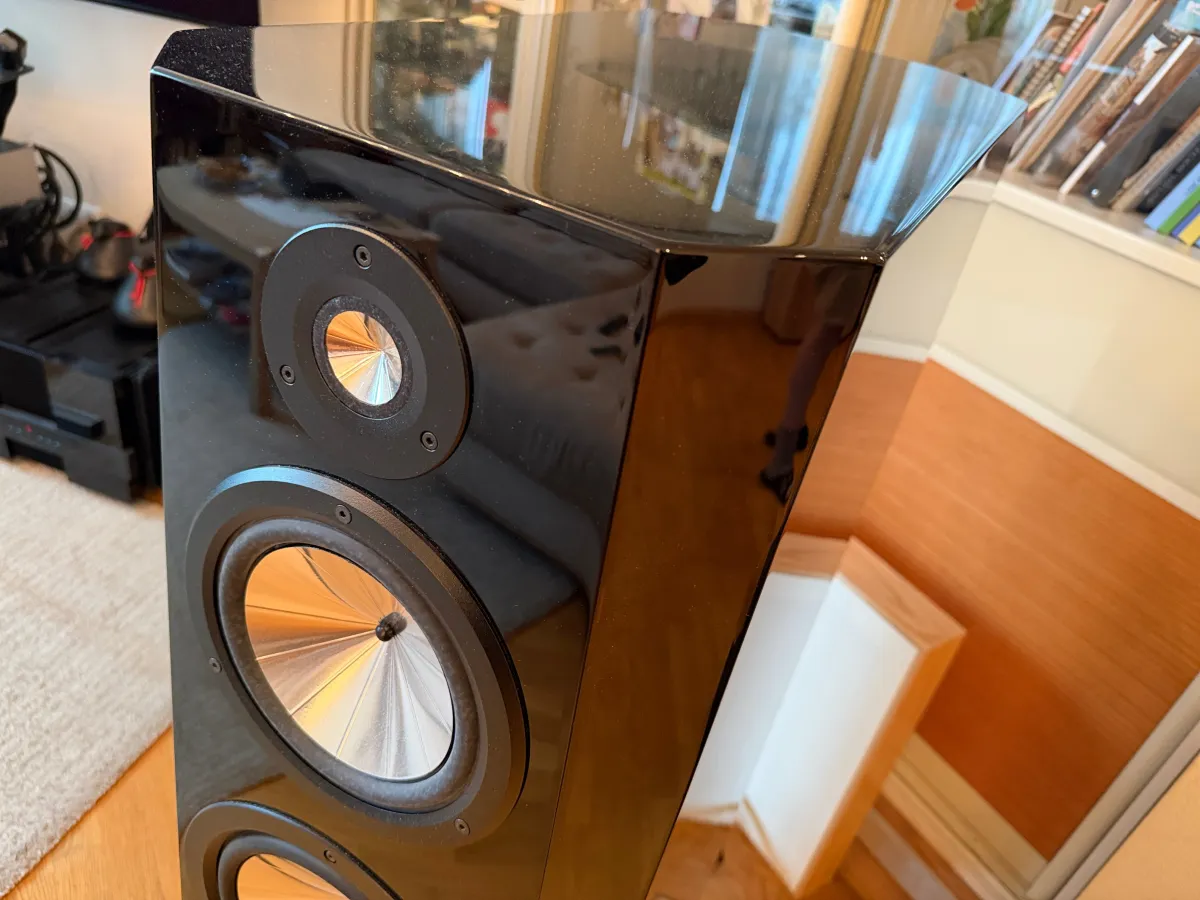
The semi-open baffle alignment, however, carries both advantages and trade-offs. Ray Brown's double bass on "Exactly Like You" sounded magnificent - textured, full-bodied, and entirely convincing. John Hopkins' "Immunity," on the other hand, fell a few steps short of the deepest bass extension delivered by competitors at this level. A reflex-loaded cabinet will yield several additional decibels of low-frequency output; a sealed enclosure will produce extraordinary bass texture, albeit with equally severe demands on amplifier current. In the case of the Stage, the low frequencies were close to ideal on jazz and classical material, but electronic rhythms and rock-and-roll might have benefited from greater aggression at the bottom end.
Where soundstaging is concerned, however, the Zellaton Stage does not merely perform well - it performs exemplarily. Bill Evans Trio, "Sunday at the Village Vanguard": the room simply ceases to exist, replaced by full-scale musical images standing in the space before you. A remarkable achievement.
Verdict
The Zellaton Stage is among the finest loudspeakers we have encountered. Pure, unmediated musical truth.
Particular qualities
The drivers: three-layer cone construction
The semi-open baffle alignment
From 100 Hz to 8,000 Hz without a crossover
Evaluations
Stage
96%
Detailing
96%
Macrodynamics
94%
Microdynamics
95%
Bass extension
90%
Timbral authenticity
96%
Genre versatility
92%
Overall
94%
Specifications
Model name
STAGE
Frequency Response low +/- 3dB (Hz)
24
Frequency Response high +/- 3dB (Hz)
40000
Sensitivity (dB at 1 W/1m)
88
Impedance (Ohms)
4
Power amplifier requirements (W)
N/A
Has internal amplification
N/A
Internal amplification power (W)
N/A
Size (sm)
118 x 45 x 64
Weight (kg)
100
Official link