

Top 7 Phono Preamps to Upgrade Your Turntable in 2026
Or How to Properly Upgrade Your Turntable

18.05.2026 06:32 | ~6 min read
Much debate has been waged over the influence of components in a turntable. Indeed, the contribution of a turntable or cartridge is difficult to overestimate, but the contribution of a phono preamp is sometimes no less, and sometimes even more, important. This issue is extremely relevant in today's audio market, where a phono preamp is, as a rule, already built into an integrated amplifier. Many audiophiles are content with this design, preferring to invest in a "table," that is, a more expensive turntable, saving on a separate phono preamp.
Meanwhile, the functions of a phono preamp (amplifying the signal from the cartridge, restoring the frequency response through equalization) are performed with an extremely low-level signal - highly sensitive to interference and crosstalk. Even minimal correction errors are subsequently multiplied at a much higher signal level in the amplifier circuit. In this article, we've compiled seven of the most impressive phono preamplifiers, sorted in ascending order of price. Looking to upgrade your entry-level hi-fi system? This article is for you. Thinking about upgrading your high-end vinyl audio system? This ranking will point you in the right direction.
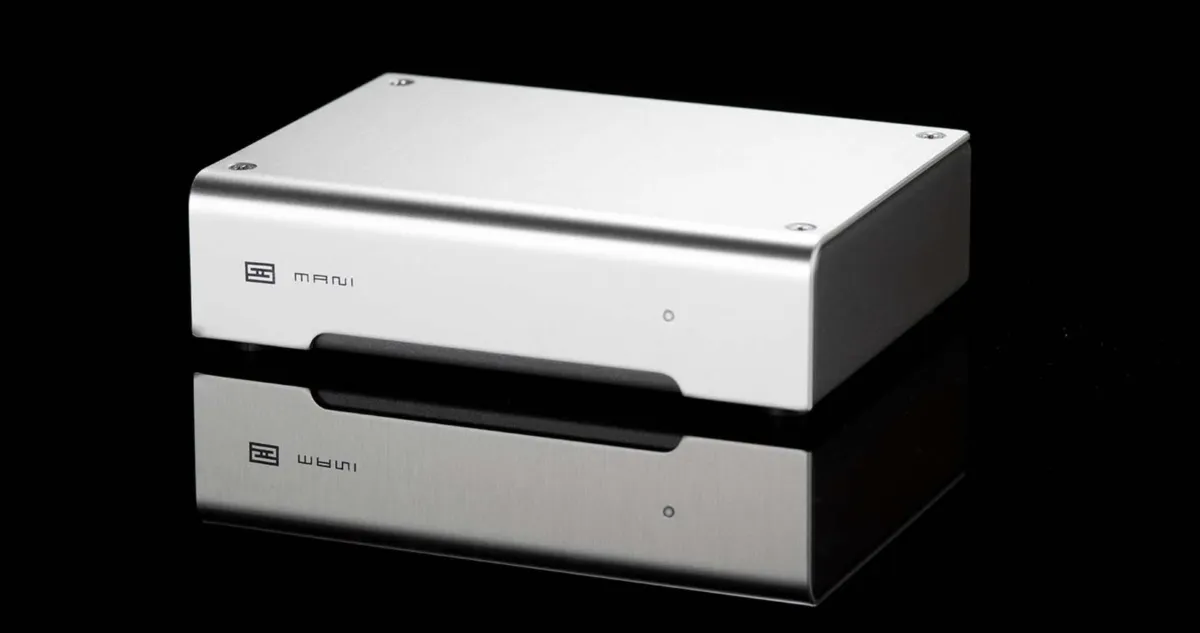
1. Schiit Mani 2 - $149
Small but mighty – a quick summary of this diminutive contender. The brand-new Schiit Mani 2 uses passive RIAA equalization with audiophile-grade components (TI OPA1612 and OP07 operational amplifiers). The signal path is capacitor-free, a rarity in this price range. The device is exceptionally flexible – it offers four gain levels (35, 45, 50, and 60 dB) and works perfectly with moving magnet (MM), moving coil (MC), and moving magnet (MI) cartridges. Resistive loads of 47 kΩ, 200 Ω, 47 Ω, and 38 Ω, and capacitive loads of 47, 100, 150, and 200 pF allow you to easily adjust the phono preamplifier to virtually any mass-market cartridge. Extremely low noise and distortion levels guarantee a truly enjoyable listening experience – the sound is neutral, harmonious, and rich with true blacks in pauses. The unit might be criticized for its less-than-ideal dynamic characteristics, but honestly, look at the price.
Specifications
Model name
Mani 2
Inputs (balanced)
1
Inputs (single-ended)
N/A
MC current-sensing input impedance (Ω)
47KΩ, 200Ω, 47Ω, or 38Ω
MM/MC voltage input impedance (Ω)
N/A
Output impedance (Ω)
75
Gain (dB)
60
Playback EQ curves accuracy (dB)
N/A
Frequency response low +/- 3dB (Hz)
N/A
Frequency response high +/- 3dB (Hz)
N/A
Total Harmonic Distortion + Noise (%)
N/A
Dimensions (mm)
127×88,9×31,75
Weight (kg)
0,45
Official link
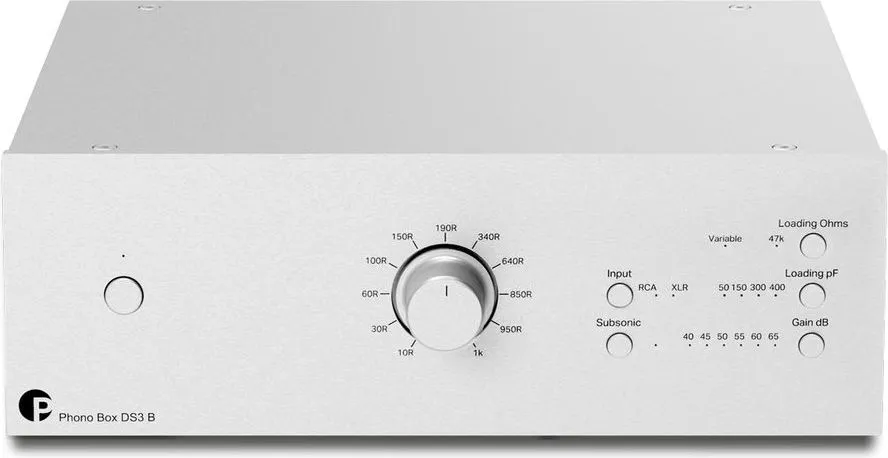
2. Pro-Ject Phono Box DS3 B - $799
The Pro-Ject Phono Box DS3 B is one of the few models in this price range that guarantees balanced circuitry and connections. The engineering solutions carried over from the company's flagship series include a discrete signal path using hundreds of microcircuits, the absence of op-amps, which the company believes can negatively impact sound, and a steel anti-resonance chassis. The Pro-Ject Phono Box DS3 B can operate with two tonearms or turntables simultaneously, with settings stored separately for each input. The phono preamplifier provides smooth (non-stepped) gain adjustment from 40 to 65 dB and equally smooth resistive load adjustment from 10 to 1 ohm (with a 47 kOhm option for MM). The capacitive load is step-adjustable. The Phono Box DS3 B accepts signals via mini-XLR (5-pin) or standard XLR. Its input stage is fully symmetrical—a decision that immediately impacts the sound. The calm, confident, and expansive performance, with precise imaging and excellent attack, clearly exceeds the model's price.
Specifications
Model name
Phono Box DS3 B
Inputs (balanced)
1
Inputs (single-ended)
1
MC current-sensing input impedance (Ω)
Stepless 10 – 1000 or fix 47 000
MM/MC voltage input impedance (Ω)
N/A
Output impedance (Ω)
N/A
Gain (dB)
40, 45, 50, 55, 60, 65
Playback EQ curves accuracy (dB)
N/A
Frequency response low +/- 3dB (Hz)
N/A
Frequency response high +/- 3dB (Hz)
N/A
Total Harmonic Distortion + Noise (%)
<0,005
Dimensions (mm)
206 x 72 x 194
Weight (kg)
1.48
Official link
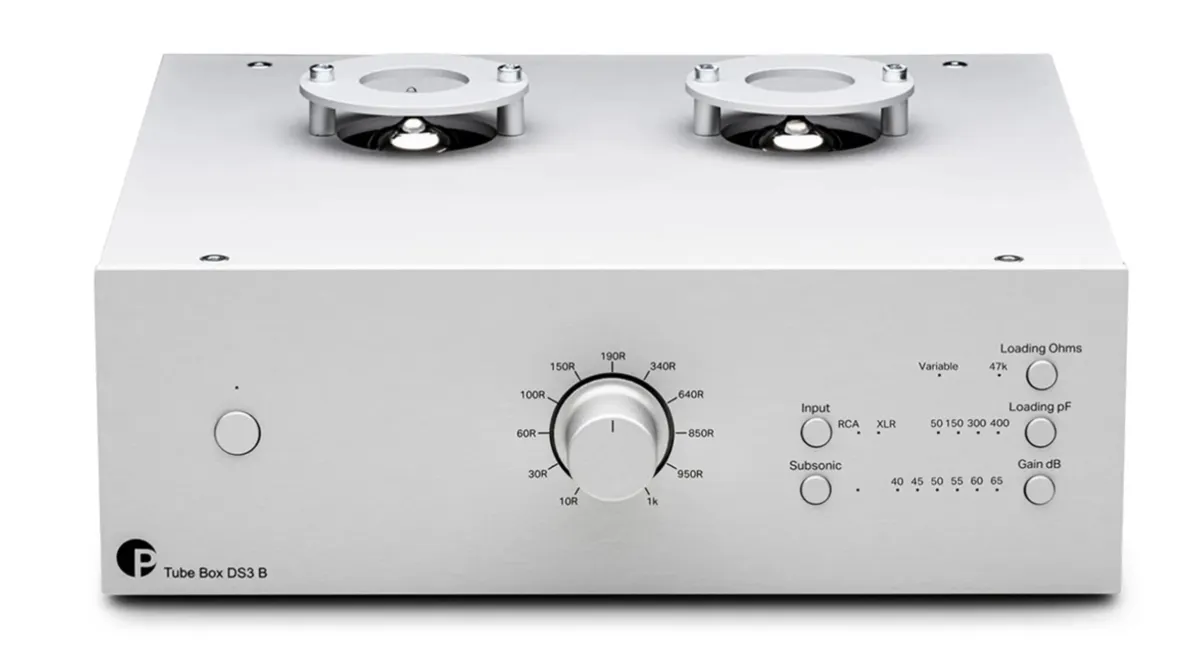
3. Pro-Ject Tube Box DS3 B - $1,099
The Pro-Ject Tube Box DS3 B, unlike the model described above, uses E88CC (6922) NOS Tungsram tubes and operates in pure Class A. Passive RIAA equalization is, of course, combined with a balanced circuit. The signal path uses audiophile-grade polypropylene capacitors, and the steel frame with aluminum panels provides excellent shielding. Cartridge matching parameters are smoothly adjusted and as flexible as in the "neighboring," slightly more affordable Pro-Ject Phono Box DS3 B. This unit exhibits a typically tube-like sound – warm, rich, and fluid, with excellent imaging and scale. If you're willing to sacrifice a bit of edge but gain the magic of analog, the Pro-Ject Tube Box DS3 B is the way to go. Cons? There's no mono/stereo switch, which may be important for collectors of mono recordings.
Specifications
Model name
Tube Box DS3 B
Inputs (balanced)
N/A
Inputs (single-ended)
N/A
MC current-sensing input impedance (Ω)
10-1000, fix 47 000
MM/MC voltage input impedance (Ω)
N/A
Output impedance (Ω)
N/A
Gain (dB)
40 / 45 / 50 / 55 / 60 / 65
Playback EQ curves accuracy (dB)
N/A
Frequency response low +/- 3dB (Hz)
N/A
Frequency response high +/- 3dB (Hz)
N/A
Total Harmonic Distortion + Noise (%)
< 0,03
Dimensions (mm)
206 x 70 x 194
Weight (kg)
1.56
Official link
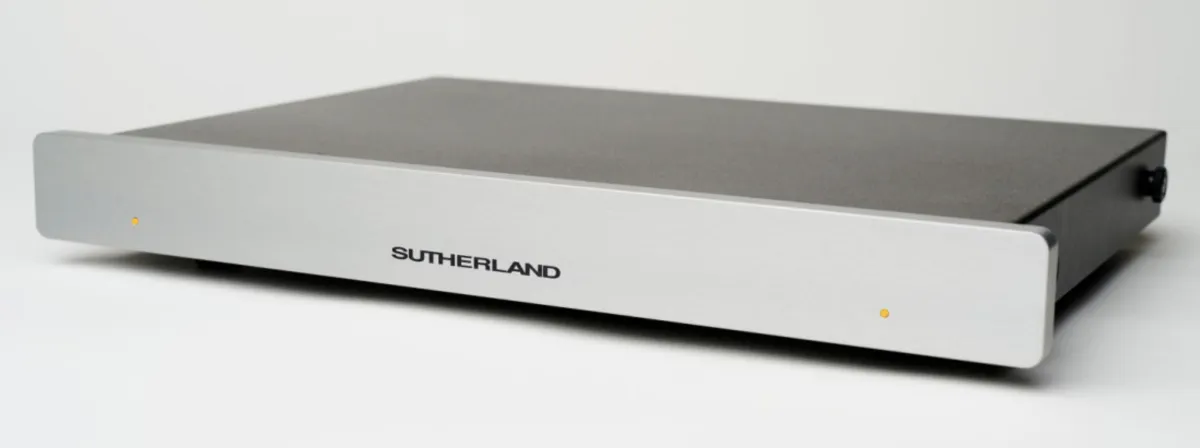
4. Sutherland 20/20 Mk2 – $2,500
A complete dual-mono solution in a single enclosure with maximum separation between the left and right channel paths. The unit comes ready to use out of the box with most moving coil cartridges – the gain is set to 58 dB and the load is 200 ohms. Of course, you can adjust the load stepwise from 100–1000 ohms or 47 kOhms and select gain from 40–64 dB. The latest proprietary FR-4 fiberglass circuit boards, Dale/Vishay resistors, and Wima polypropylene capacitors literally scream quality. The sound is equally impressive – the phono preamplifier delivers exemplary micro- and macro-dynamics, literally tearing off the veil in front of the system.
Specifications
Model name
20/20 MK2
Inputs (balanced)
N/A
Inputs (single-ended)
1
MC current-sensing input impedance (Ω)
100, 200, 475, 1000, 47 500
MM/MC voltage input impedance (Ω)
N/A
Output impedance (Ω)
N/A
Gain (dB)
40, 46, 52, 58, 64
Playback EQ curves accuracy (dB)
N/A
Frequency response low +/- 3dB (Hz)
N/A
Frequency response high +/- 3dB (Hz)
N/A
Total Harmonic Distortion + Noise (%)
N/A
Dimensions (mm)
431,8 × 63,5 × 330,2
Weight (kg)
4.99
Official link
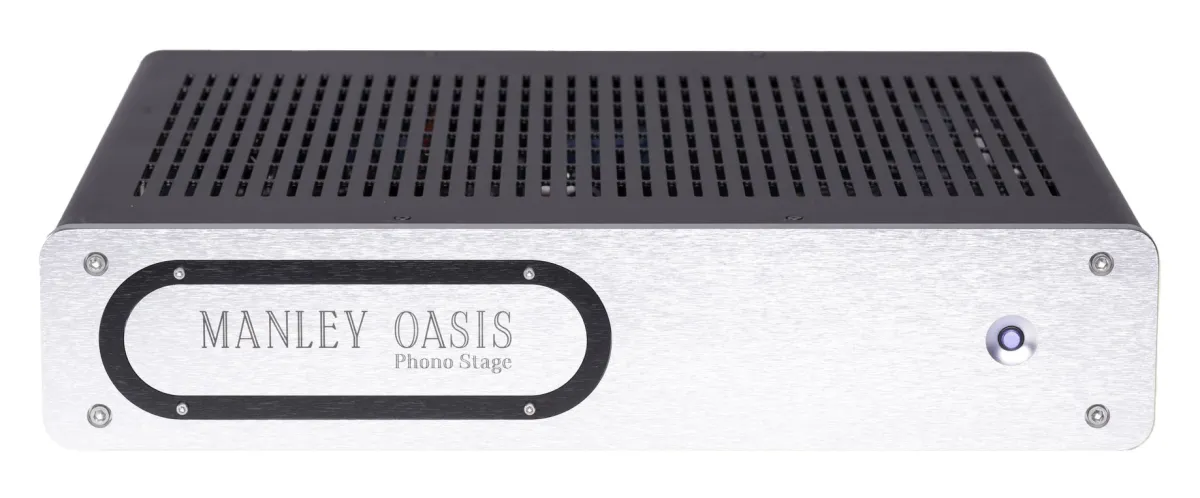
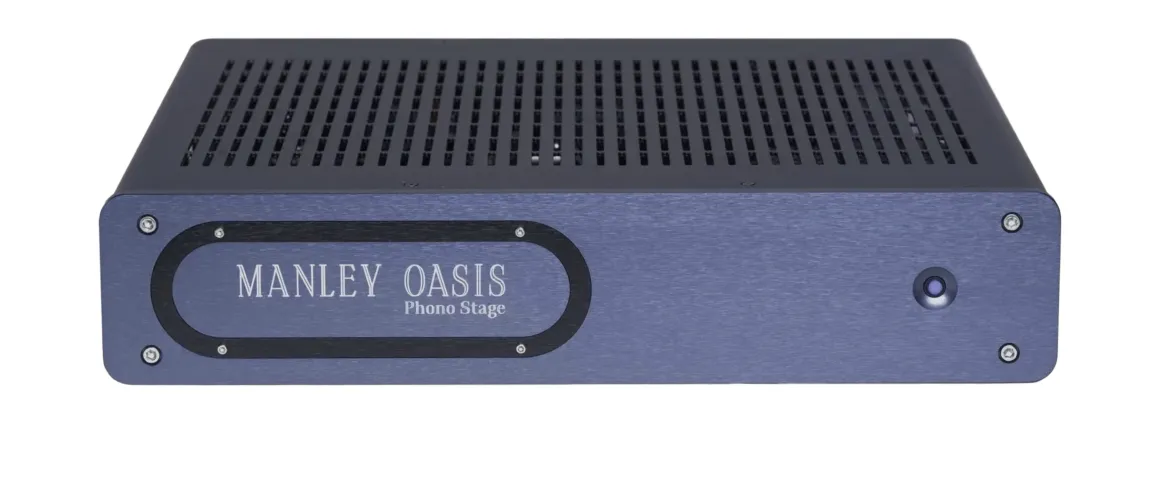
5. Manley Oasis - $3,999
The Manley Oasis has been a true success, replacing the iconic Manley Chinook phono preamplifier. The new model guarantees extremely low output impedance (104 Ω) and works perfectly with even the most demanding cartridges. The unit uses dual 6922 triode amplifier stages and a 6922 vacuum tube as the output driver. But the main innovation is its proprietary power supply, which operates with any mains voltage (90-254 V). With four gain levels (45, 50, 60, 65 dB), 32 resistive load positions from 26 Ω to 47 kΩ, and 8 capacitive positions from 0 to 350 pF, there's likely no cartridge in the world that the Manley Oasis can't handle. You'll fall in love with the velvety, truly three-dimensional sound of this model right away.
Specifications
Model name
Oasis
Inputs (balanced)
N/A
Inputs (single-ended)
1
MC current-sensing input impedance (Ω)
26 - 800 + 47 000
MM/MC voltage input impedance (Ω)
N/A
Output impedance (Ω)
104
Gain (dB)
45, 50, 60, 65
Playback EQ curves accuracy (dB)
N/A
Frequency response low +/- 3dB (Hz)
20
Frequency response high +/- 3dB (Hz)
20 000
Total Harmonic Distortion + Noise (%)
N/A
Dimensions (mm)
N/A
Weight (kg)
N/A
Official link
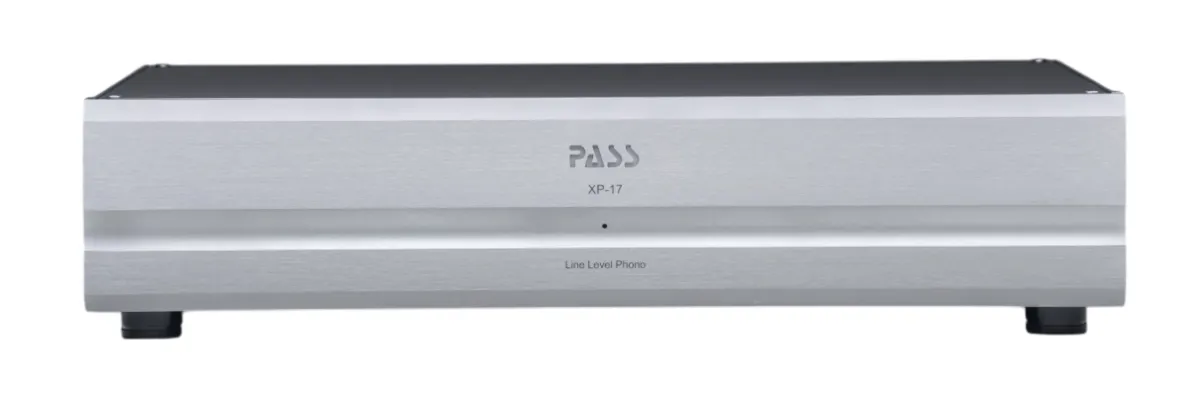
6. Pass Labs XP-17 - $4,950
A classic of the genre, the Pass Labs XP-17 is well-known among audiophiles and highly regarded for its neutral and highly accurate performance with excellent timbre and exceptional resolution. The circuitry is solid-state, discrete, and fully symmetrical. This model operates in Class A. The RIAA equalization uses a proprietary design: the first stage works with the main part of the curve, while the second stage provides fine-tuning with automatic biasing and a higher signal level. Over 200 selectable load values allow for easy matching of the model to the cartridge.
Specifications
Model name
XP-17
Inputs (balanced)
N/A
Inputs (single-ended)
2
MC current-sensing input impedance (Ω)
N/A
MM/MC voltage input impedance (Ω)
N/A
Output impedance (Ω)
N/A
Gain (dB)
55, 60, 67
Playback EQ curves accuracy (dB)
N/A
Frequency response low +/- 3dB (Hz)
20
Frequency response high +/- 3dB (Hz)
20 000
Total Harmonic Distortion + Noise (%)
N/A
Dimensions (mm)
431,8 × 304,8 × 101,6
Weight (kg)
8,62
Official link
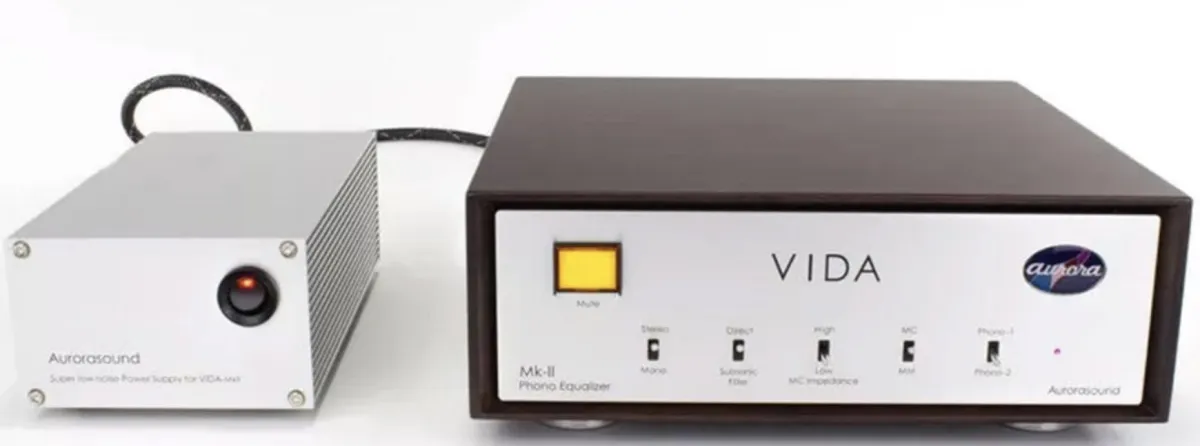
7. Aurorasound VIDA MkII - $5,290
The Japanese-made Aurorasound VIDA "Vinyl Disc Amplifier" MkII phono preamplifier delivers a beautiful performance with a rich tonal image and absolutely natural midrange. Although the model may be slightly inferior in attack to its peers in its class, the pleasure and emotion of listening to the Aurorasound VIDA MkII are hard to surpass. While most modern phono preamplifiers use resistor-capacitor circuits, the VIDA utilizes inductors (L), capacitors (C), and resistors (R) in a series-LCR plus parallel-RC network design, ensuring frequency-independent operation. A beautiful solution that guarantees exquisite sound.
Specifications
Model name
VIDA-MkⅡ
Inputs (balanced)
N/A
Inputs (single-ended)
2
MC current-sensing input impedance (Ω)
12, 47, 120, 240, 410, 1000 (MC), 15 000, 47 000 (MM)
MM/MC voltage input impedance (Ω)
N/A
Output impedance (Ω)
910
Gain (dB)
65 (MC), 40 (MM)
Playback EQ curves accuracy (dB)
N/A
Frequency response low +/- 3dB (Hz)
N/A
Frequency response high +/- 3dB (Hz)
N/A
Total Harmonic Distortion + Noise (%)
N/A
Dimensions (mm)
260 x 250 x 100 (Phono) + 114 x 200 x70 (PSU)
Weight (kg)
2.8 (Phono) + 1.4 (PSU)
Official link
How to choose the optimal phono preamp
Or what budget should you set for this component in a complete system? There's an old audiophile rule: a phono preamp should match the price of the cartridge. However, in today's market, and especially if you're using a moving coil cartridge, the best choice is to combine the cost of the tonearm and cartridge and buy a phono preamp within that price range. The simpler the cartridge, the less attention you can pay to the phono preamp, as moving coil cartridges guarantee a higher, more stable output signal. With a moving coil cartridge, however, a malfunctioning phono preamp can often have a more significant impact, ranging from muffled highs to, conversely, a ringing high end.
Should you choose a tube or transistor phono preamp? It's a matter of taste; a tube will always provide a fuller sound due to second-order harmonic coloration. A transistor will benefit from clarity and bass extension. And, of course, it's worth paying attention to the resistive load options - their number will allow the phono preamp to be matched to a maximum number of cartridges, and even exotic models won't be left out.
Practical Selection Tips
Budget up to $200: Schiit Mani 2
Affordable MC cartridge with balanced output: Pro-Ject Phono Box DS3 B
Looking for a neutral mid-range reference: Sutherland 20/20 Mk2
Considering the entry-level high-end: Aurorasound VIDA MkII