
Все

Напольная акустика — Vivid Giya G1S Cu
Описание, изображения, технические характеристики и спецификации
Vivid Giya G1S Cu
Источник изображения — © Vivid
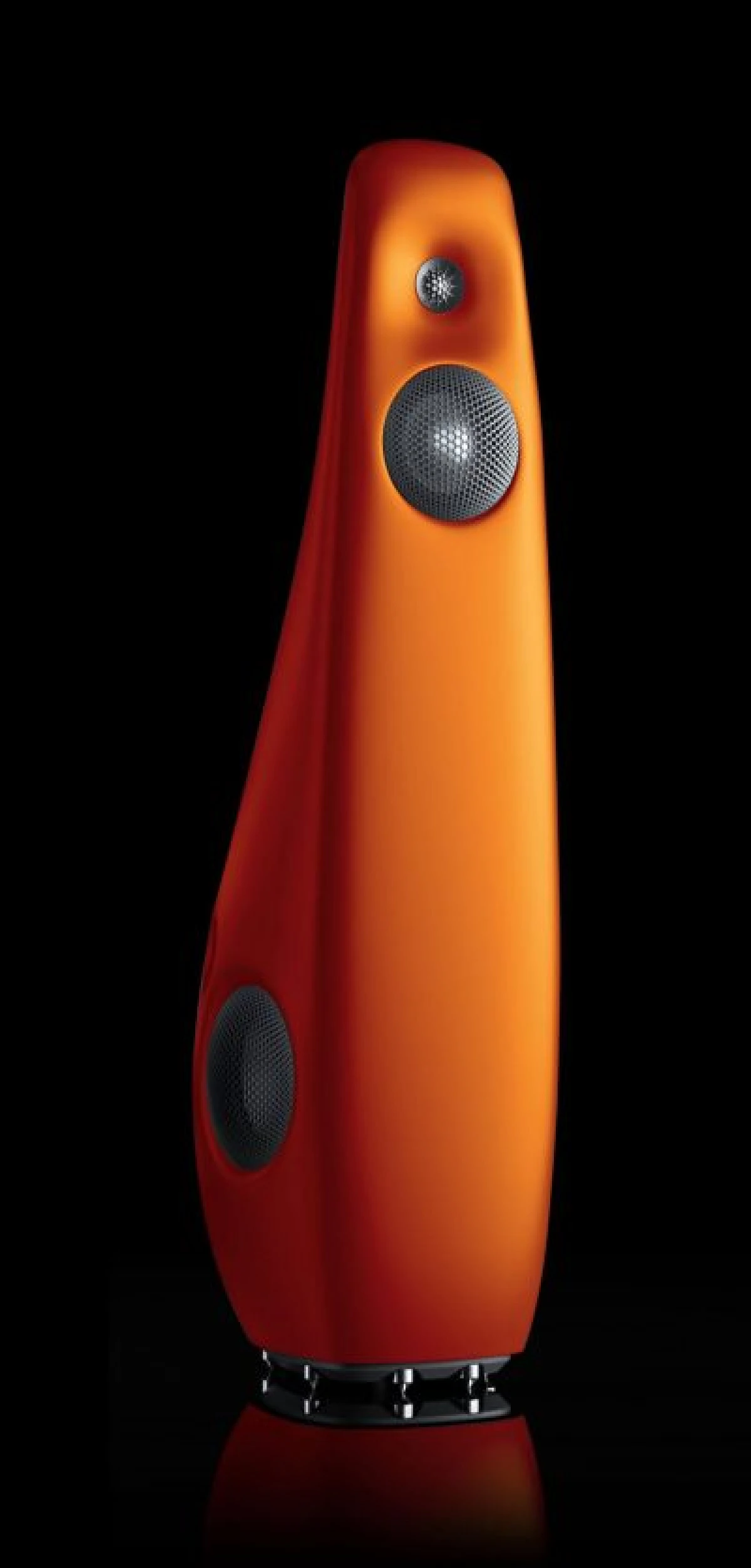
The Giya G1S Cu, which Vivid Audio also calls the G1 Spirit Cu, is the tallest of the four floorstanders in the Giya Cu series from this South African maker, above the G2 Cu, G3 Cu and G4 Cu. The Cu series was first presented in Singapore on 10 October 2025. It carries over copper-capped midrange motors first developed for the Moya M1. The G1 Spirit had already folded lessons from the G2 back into the original G1, including a very large magnet system for the bass drivers. The G1S Cu is listed at EUR 95,000, against EUR 55,000 for the G2 Cu. All parts are made in-house in Durban by a staff of 35 technicians.
Key specs that matter
Five drivers work in four ways. A D26 26 mm alloy and carbon dome handles the top, and a D50Cu 50 mm dome with a copper cap covers the upper midrange. The lower midrange unit is the C125-75SCu, a 125 mm alloy and carbon diaphragm with a 75 mm voice coil and copper cap, rated as equal to a 6.5 inch driver. Two C225-100 bass units have 225 mm alloy diaphragms, equal to 11.5 inch drivers, with 100 mm voice coils in a 45 mm gap. Sensitivity is 92 dB at 2.83 V and 1 m on axis. Impedance is 6 ohm nominal with a 3 ohm minimum at 20 kHz, with no phase shift at that minimum. The -6 dB points are 25 Hz and 36 kHz, and response stays within 2 dB from 29 Hz to 33 kHz. Crossovers sit at 220 Hz, 880 Hz and 3.5 kHz, and music power handling is 1,600 W RMS. The cabinet stands 1600 mm high, 440 mm wide and 820 mm deep, and weight is 67.4 kg with the internal crossover or 62 kg if an external crossover box is used.
Engineering and use context
In the C125-75SCu the copper cap sits on a radially polarised magnet system, and in the D50Cu on a focused-flux radial magnet. Vivid states the caps lower inductance, extend high frequency reach and cut second and third harmonic distortion, the third by up to 20 dB. Quoted harmonic distortion is under 0.3% in the bass band, under 0.1% across the midrange band and under 0.3% in the treble. The first break-up of the D26 dome lies at 44 kHz. Compared with the earlier Giya, the Cu enclosures are lighter and stiffer, re-entrant absorbers keep the tapered tubes inside the main shell, each driver gets its own grille as on the Moya, the crossover is new and the terminals are easier to reach. Bass loading combines a reflex port with an exponentially tapered tube.
Pairing
Because impedance dips low in the treble, the amplifier should cope with low loads, though the high sensitivity keeps power demands moderate. An external crossover in a separate piano gloss case gives the option of bi-wire or bi-amp connection, while the Giya Break Out Unit allows active operation.
Alternatives
The Vivid Giya G2 Cu uses the same four-way layout in a shorter 1383 mm cabinet with two 175 mm bass drivers.
Key specs that matter
Five drivers work in four ways. A D26 26 mm alloy and carbon dome handles the top, and a D50Cu 50 mm dome with a copper cap covers the upper midrange. The lower midrange unit is the C125-75SCu, a 125 mm alloy and carbon diaphragm with a 75 mm voice coil and copper cap, rated as equal to a 6.5 inch driver. Two C225-100 bass units have 225 mm alloy diaphragms, equal to 11.5 inch drivers, with 100 mm voice coils in a 45 mm gap. Sensitivity is 92 dB at 2.83 V and 1 m on axis. Impedance is 6 ohm nominal with a 3 ohm minimum at 20 kHz, with no phase shift at that minimum. The -6 dB points are 25 Hz and 36 kHz, and response stays within 2 dB from 29 Hz to 33 kHz. Crossovers sit at 220 Hz, 880 Hz and 3.5 kHz, and music power handling is 1,600 W RMS. The cabinet stands 1600 mm high, 440 mm wide and 820 mm deep, and weight is 67.4 kg with the internal crossover or 62 kg if an external crossover box is used.
Engineering and use context
In the C125-75SCu the copper cap sits on a radially polarised magnet system, and in the D50Cu on a focused-flux radial magnet. Vivid states the caps lower inductance, extend high frequency reach and cut second and third harmonic distortion, the third by up to 20 dB. Quoted harmonic distortion is under 0.3% in the bass band, under 0.1% across the midrange band and under 0.3% in the treble. The first break-up of the D26 dome lies at 44 kHz. Compared with the earlier Giya, the Cu enclosures are lighter and stiffer, re-entrant absorbers keep the tapered tubes inside the main shell, each driver gets its own grille as on the Moya, the crossover is new and the terminals are easier to reach. Bass loading combines a reflex port with an exponentially tapered tube.
Pairing
Because impedance dips low in the treble, the amplifier should cope with low loads, though the high sensitivity keeps power demands moderate. An external crossover in a separate piano gloss case gives the option of bi-wire or bi-amp connection, while the Giya Break Out Unit allows active operation.
Alternatives
The Vivid Giya G2 Cu uses the same four-way layout in a shorter 1383 mm cabinet with two 175 mm bass drivers.
Характеристики
Название модели
Giya G1S Cu
Нижняя граница частотного диапазона +/- 3дБ (Hz)
N/A
Верхняя граница частотного диапазона +/- 3дБ (Hz)
N/A
Чувствительность (dB at 1 W/1m)
N/A
Импеданс (Ohms)
N/A
Требования к усилителю мощности (W)
N/A
Наличие встроенного усилителя
Н/д
Мощность встроенного усилителя (W)
N/A
Размер (sm)
N/A
Вес (kg)
N/A
Официальная ссылка
Связанные материалы
Другие компоненты
Напольная акустика
Vivid Giya G2 Cu
Напольная акустика
Vivid Giya G3 Cu
Напольная акустика
Vivid Giya G4 Cu
Напольная акустика
Vivid KAYA 25
Напольная акустика
Vivid KAYA 45