All

Western Electric
Website:https://www.westernelectric.com/
Est. year: 1869
Western Electric is an American maker of vacuum tubes and tube audio equipment based in Rossville, Georgia. The name dates to 1869 and the Bell System era, while today's company was re-established in 1996 solely to build electron tubes and high-fidelity products, with the 300B triode at the centre of its work.
Range & what it's known for
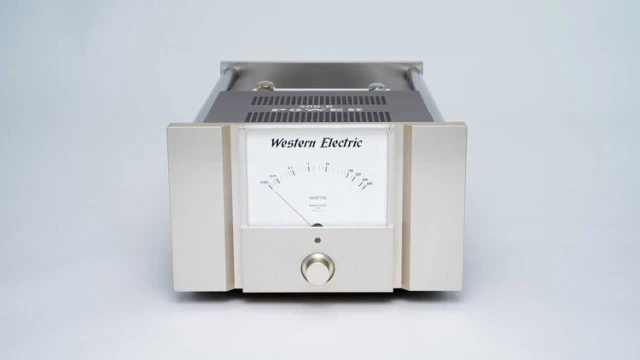
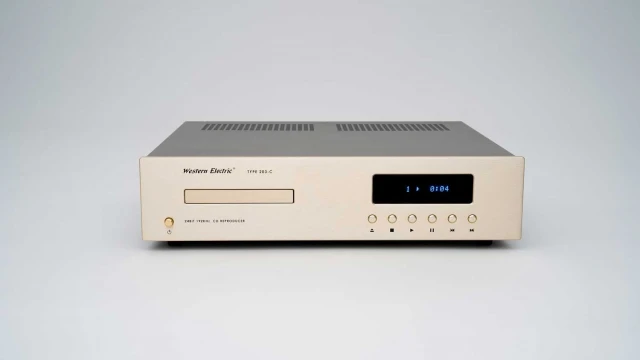
The core of the business is tube production, led by the 300B, a directly heated power triode first made by Western Electric in 1938 for cinema projection rooms. Current tubes use an oxide-coated filament with a strontium and barium mix, original tooling dating back as far as 1943, and filament core material from a 1963 melt made at the Hawthorne Works in Chicago. Matched sets are computer-matched and shipped in cherry wood boxes. Around the tubes sits a small range of complete electronics, including the 91E integrated amplifier, the 97A monoblock power amplifiers and the 203C CD player The parts list adds speaker cones, hookup wire and phono plugs, so restorers and amplifier builders can source period-style components from one maker. The company also supplies output tubes to other amplifier brands, and the E130L appears in German valve integrateds.
Who owns it and where it's made
The original company was formed in Cleveland, Ohio, from a telegraph equipment business run by George Shawk and Enos M. Barton, and from 1881 it was the manufacturing arm of the Bell System. It ceased operating in 1996 during AT&T's restructuring. In 1995 the license for vacuum tubes, audio equipment and the stylised trademark passed to Western Electric Export Corporation, a privately held firm. Production takes place at its Rossville Works plant in Georgia.
The lineup in this catalog
Vacuum tubes and horn components. A matched pair of 300B tubes costs USD 1,499 and a matched quad USD 3,099, and complete horn systems run to well over USD 10,000.
Who it's for
Builders and owners of single-ended triode amplifiers who want 300B tubes from their original maker, and restorers of vintage cinema and studio gear who need matching parts. Buyers who prefer a finished product can start with the 91E integrated and move to the 97A monoblocks, keeping the same tube family through the upgrade.