All


VTL
Website:https://www.vtl.com/
Est. year: 1987
Location: USA
VTL, short for Vacuum Tube Logic, is an American manufacturer of tube amplifiers and preamplifiers for home audio, based in Chino, California. David Manley first designed the circuits in South Africa in 1980, production started in Britain in 1983, and the US company was set up in 1986 by David and his son Luke after the amplifiers drew attention at that year's Chicago CES. High-power tube amplification is the company's core business.
Range & what it's known for
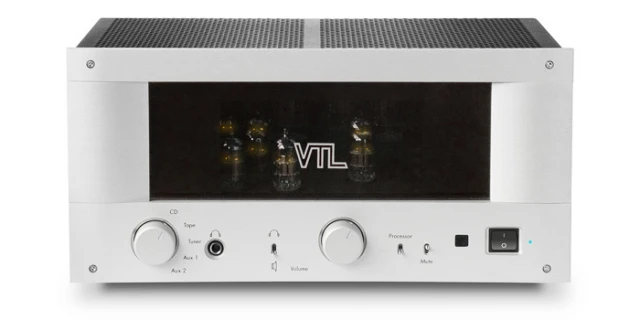
Preamplifiers carry the TL prefix, from the TL-2.5i Performance model through the TL-5.5 Series II and TL-6.5 Series II Signature units to the TL-7.5 Series III Reference. Power amplifiers include the ST-150 and S-200 stereo models, the MB-450 Series III Signature monoblock, the S-400 Series II Reference stereo amplifier and the Siegfried Reference monoblock, launched as an 800-watt design. Earlier landmarks were the de Luxe 500 of 1987 and a 1000-watt monoblock in 1990. Modern VTL amplifiers use logic-controlled automatic biasing that keeps checking each output tube, along with fault-sensing diagnostics.
Who owns it and where it's made
In 1993 the father-and-son partnership split. David Manley left to build professional studio equipment under the Manley name, while Luke Manley and his wife Bea Lam took over the VTL name and inventory and narrowed the business to tube electronics for home systems. The couple still run VTL, and all products are built at the Chino factory, which has been the production base since 1987.
The lineup in this catalog
Tube power amplifiers and line preamplifiers, where a single piece costs from roughly USD 10,000 and the most expensive ones well over USD 100,000.
Who it's for
VTL is for listeners committed to tubes who need real power, for example to drive low-sensitivity loudspeakers. The TL-2.5i and ST-150 form a natural first system, the Signature preamps and monoblocks follow, and the Reference models crown the range. Every piece is remote controllable, and automatic biasing removes routine tube adjustment, so the tubes need little ongoing attention.