Holo Audio May KTE Review - One of the Most Impressive R2R DACs
Beyond the limits of the technology - two matrices are better than one


08.10.2026 14:31 | ~11 min read
For years, R2R DACs have had a reputation as highly musical, almost “analog” devices. But they could never compete with delta-sigma converters on accuracy – and this is where the Holo Audio May comes in - it is the first production discrete ladder DAC to deliver both resolution beyond 22 bits and harmonics at the -120 dB level. Below is a detailed look at how company achieved this.
A few words...
From Holo Audio Spring to Holo Audio May
Today the Holo Audio May sits at the top of the range, above the Cyan 2 and Spring 3 DACs. The architectural evolution is straightforward: the Spring 3 runs a single ladder, while the May uses two modules of the same class – one per channel. And only the May offers oversampling modes; the junior models operate exclusively in NOS.
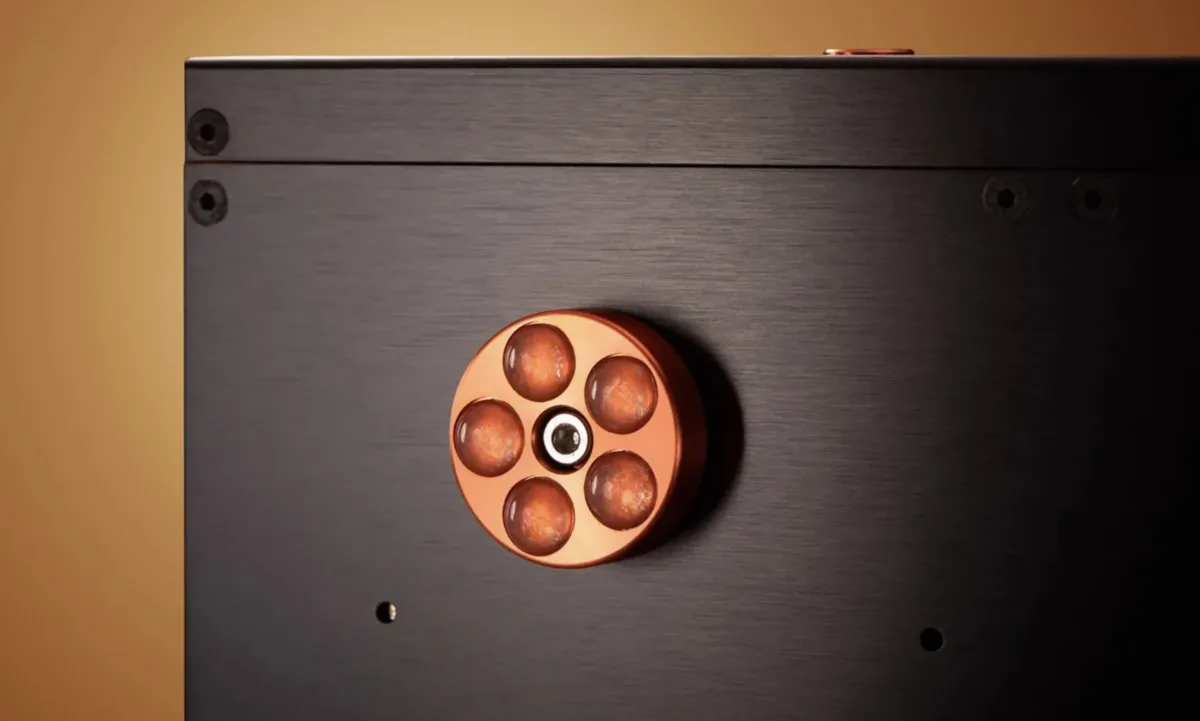
KTE stands for Kitsune Tuned Edition. It is an upgraded version developed by the American distributor Kitsune HiFi (which also operates as Holo Audio USA). Holo Audio later licensed it as the only officially approved modified version of the May, so the KTE is sold through authorized dealers worldwide, not just in the US. Kitsune is Japanese for “fox” – hence the copper fox emblem on the top panel.
What is R2R?
A ladder network converts the signal directly. Each bit of the digital “word” controls a switch that adds a specific fraction of the reference voltage to the output (the most significant bit adds half, the next one a quarter, and so on). For the contribution of the most significant bit not to swamp that of the least significant one, its value must be held to better than 1/2^N, where N is the bit depth.
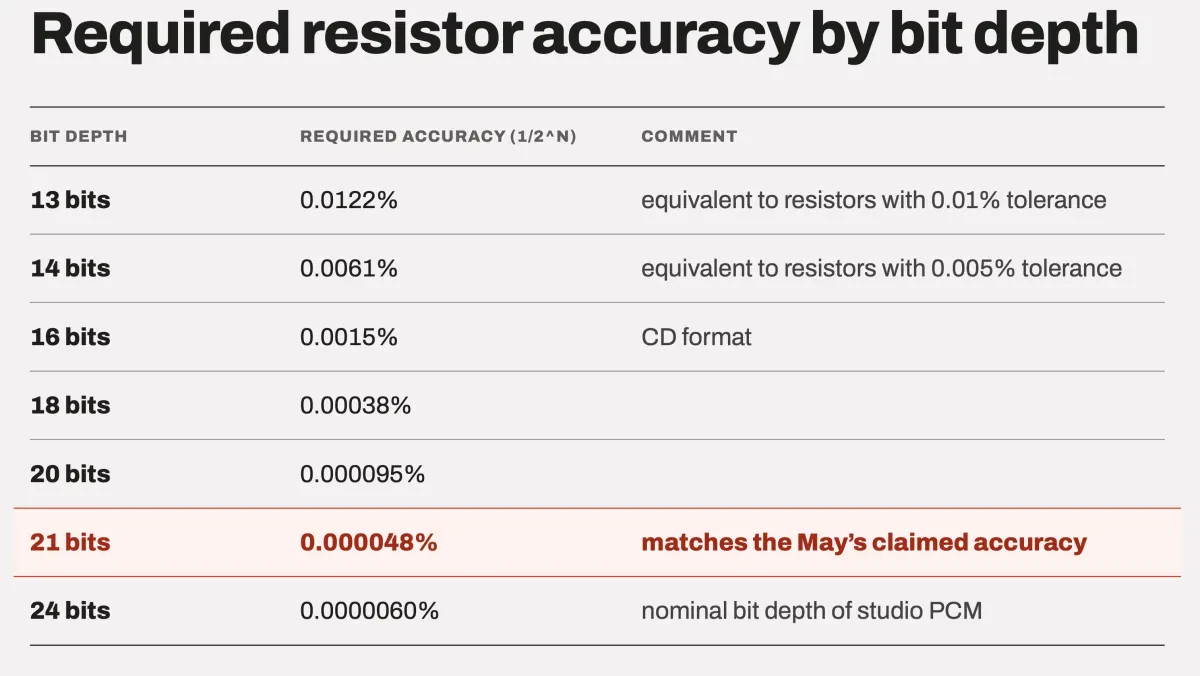
The best production precision resistors have a tolerance of around 0.01–0.005%. That equates to roughly thirteen or fourteen “true” bits – hence R2R’s historical reputation - a pleasing sonic character combined with specifications that trail modern delta-sigma chips. We have already covered the ladder principle, and how it differs from delta-sigma modulation, in detail in our R2R vs Delta-Sigma article.
Resistors are not the only source of error. To take another example, a single PCB via has a resistance of around 50 mΩ – 1/20,000 of a kilohm – while the switches themselves have an on-resistance ranging from a few ohms up to 30 Ω. On the scale of the most significant bit of a 16-bit word (32,768 units), these are significant values, so every via and every trace has to be accounted for in the board layout.
Three ways around the limitation
· Segmented architecture. The few most significant bits are converted by a separate segmented (thermometer-coded) circuit, the rest by the ladder. Rockna designs, for example, take this approach.
· Trimming. The resistor value is physically corrected – by laser or by hand selection – once, at the factory.
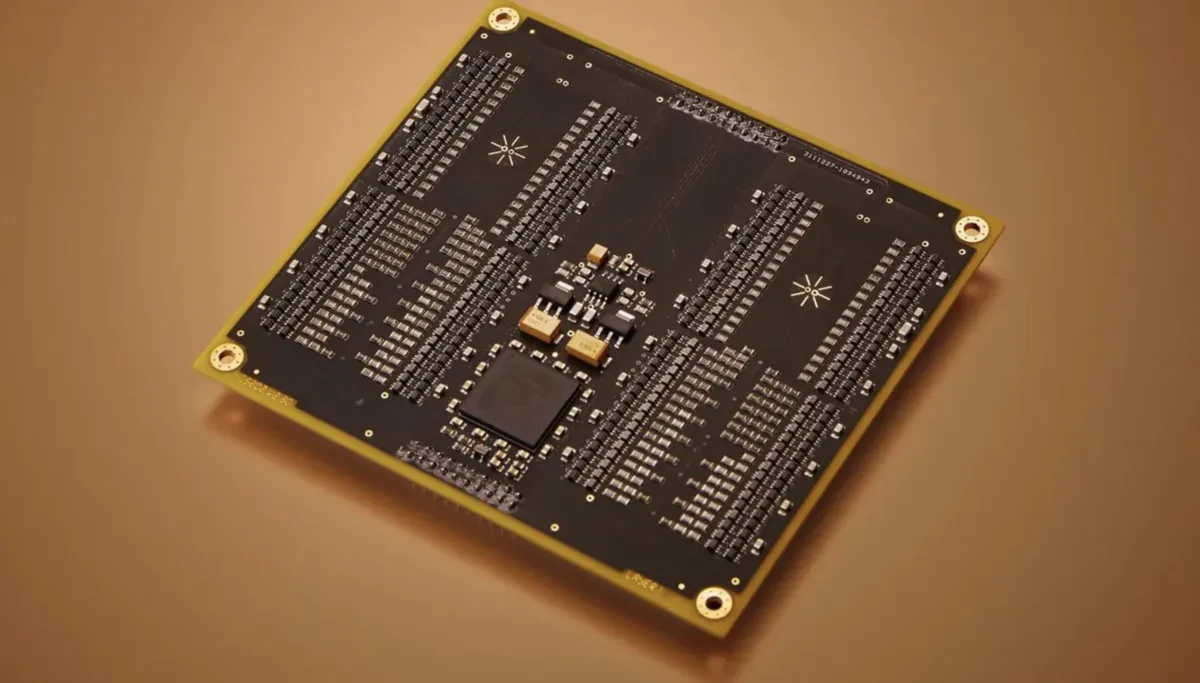
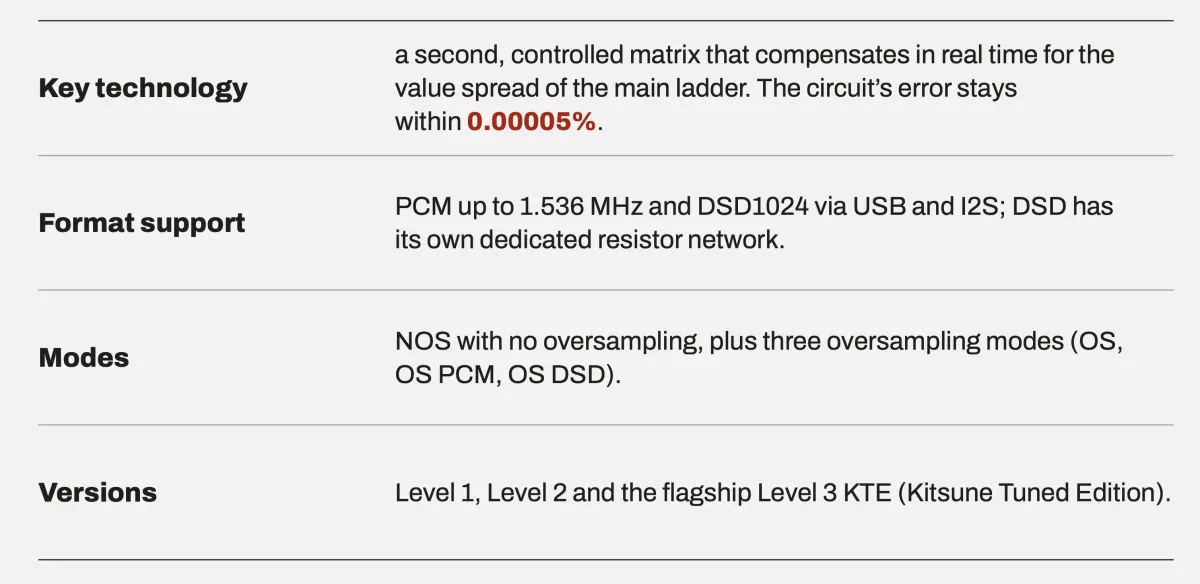
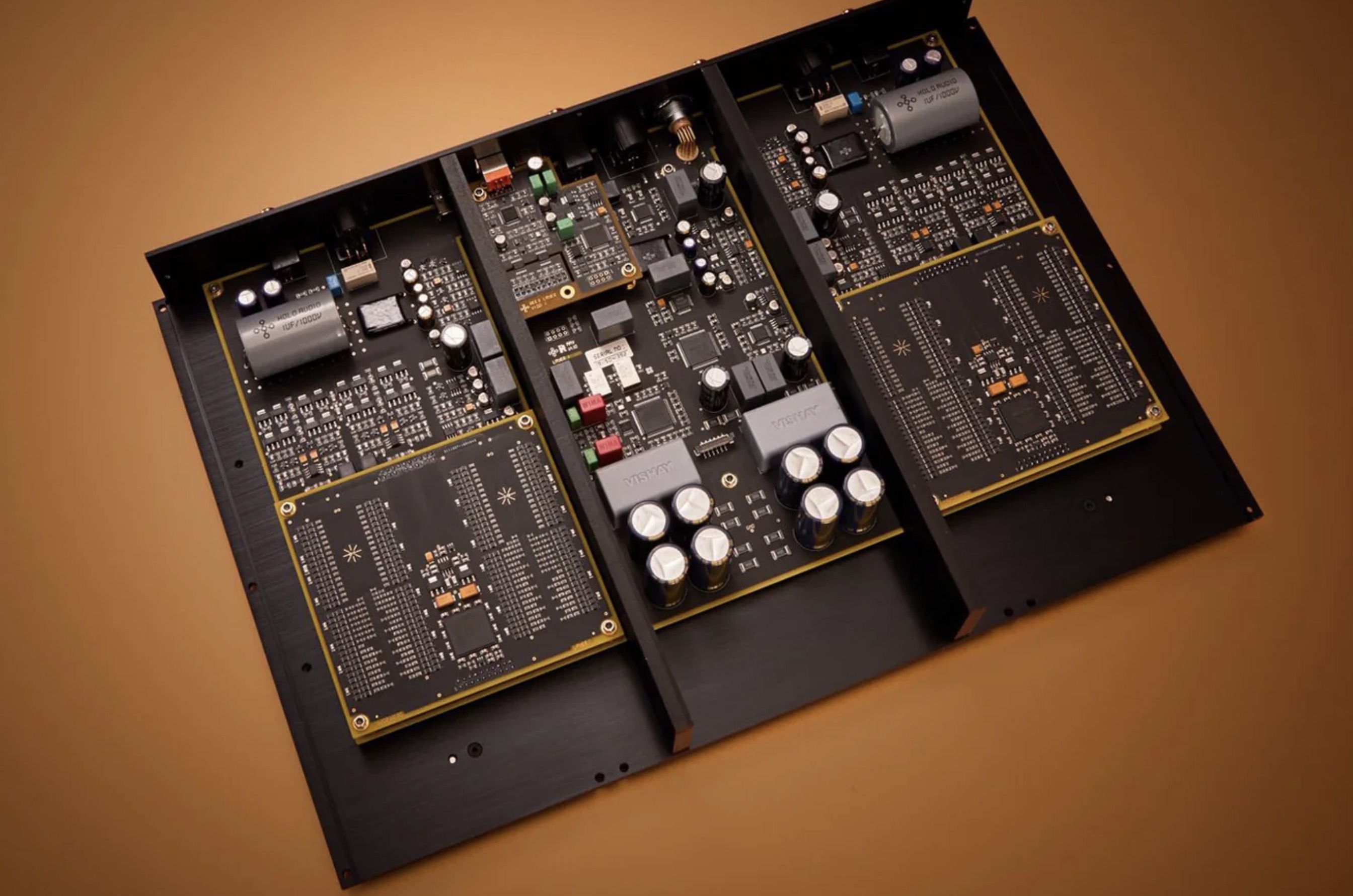
· Compensation. The resistor values are left unchanged, but an additional matrix is introduced that adds the missing amount to the result. This is the approach used in the Holo Audio May.
The compensation matrix – how does it work?
In addition to the main R2R ladder, the Holo Audio May module contains a second, controlled resistor network. It acts as a corrector: the most significant bit of a 16-bit word should produce 32,768 units, but because of resistor tolerance it actually produces 32,700 – so the compensation matrix adds the missing 68 units, and the total is 32,768 once again.
The claimed equivalent error after compensation is an impressive 0.00005%. Converted using the formula from the table above, that is roughly 21 bits. The technology is patented by Holo Audio, and some aspects of it remain strictly confidential.
How does compensation differ from trimming? Trimming changes the physical value of the resistor; compensation corrects the result in the digital domain. Both methods share the same goal – making the effective resistance more accurate in order to reduce linearity error and distortion. But good linearity alone does not guarantee low harmonic distortion: linearity is a static parameter, whereas THD is dynamic and more critical.
What about drift over time?
This is the key question for any calibrated ladder. Resistance values change with temperature and age, and the factory calibration ceases to be accurate. The answer is simple: what matters for a ladder network is not absolute but relative drift. If all the resistors shift in the same direction at the same rate, linearity is unaffected. That is why each board is populated with components from a single production batch – this minimizes divergence during long-term aging. The Holo Audio May KTE has no separate self-calibration system or thermal stabilization of the reference voltage.
What you need to know
Measurements confirm the published specifications of the Holo Audio May KTE: moving from 16-bit to 24-bit data lowers the noise floor by about 38 dB, which corresponds to a resolution of more than 21-22 bits. Linearity error is undetectable down to levels below -120 dBFS.
Two-chassis dual-mono design
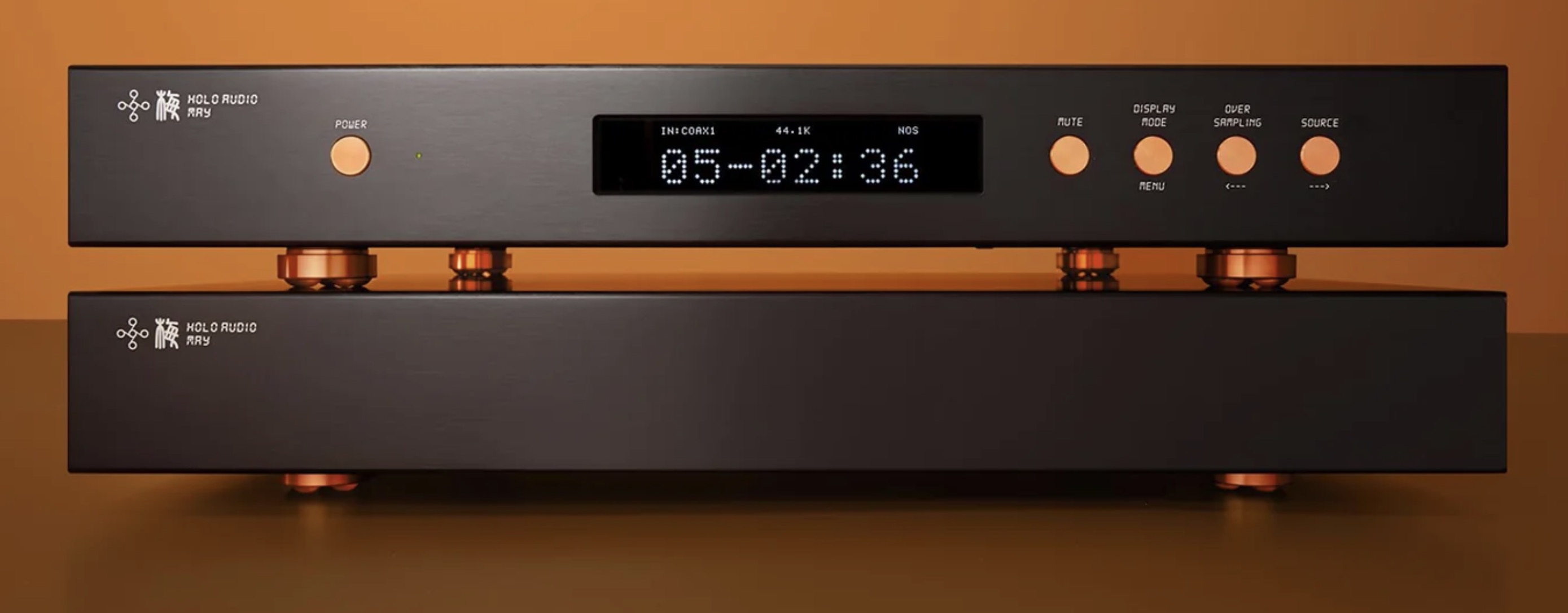
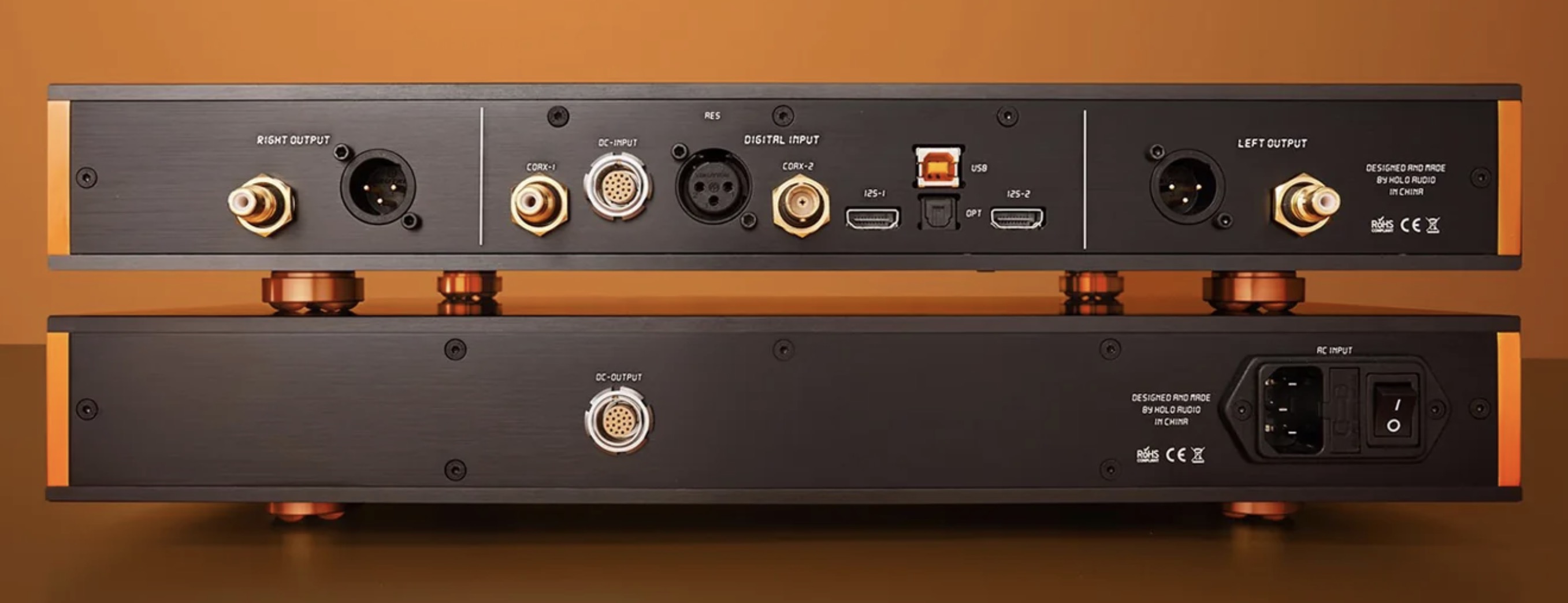
The Holo Audio May is housed in two identically sized chassis – 430 x 300 x 55 mm, plus 12 mm machined feet. Total weight is around 18 kg and power consumption is 60 W. The lower chassis holds the power supply, the upper one the converter; the two are linked by a 1 m cable. The chassis are designed to be stacked.
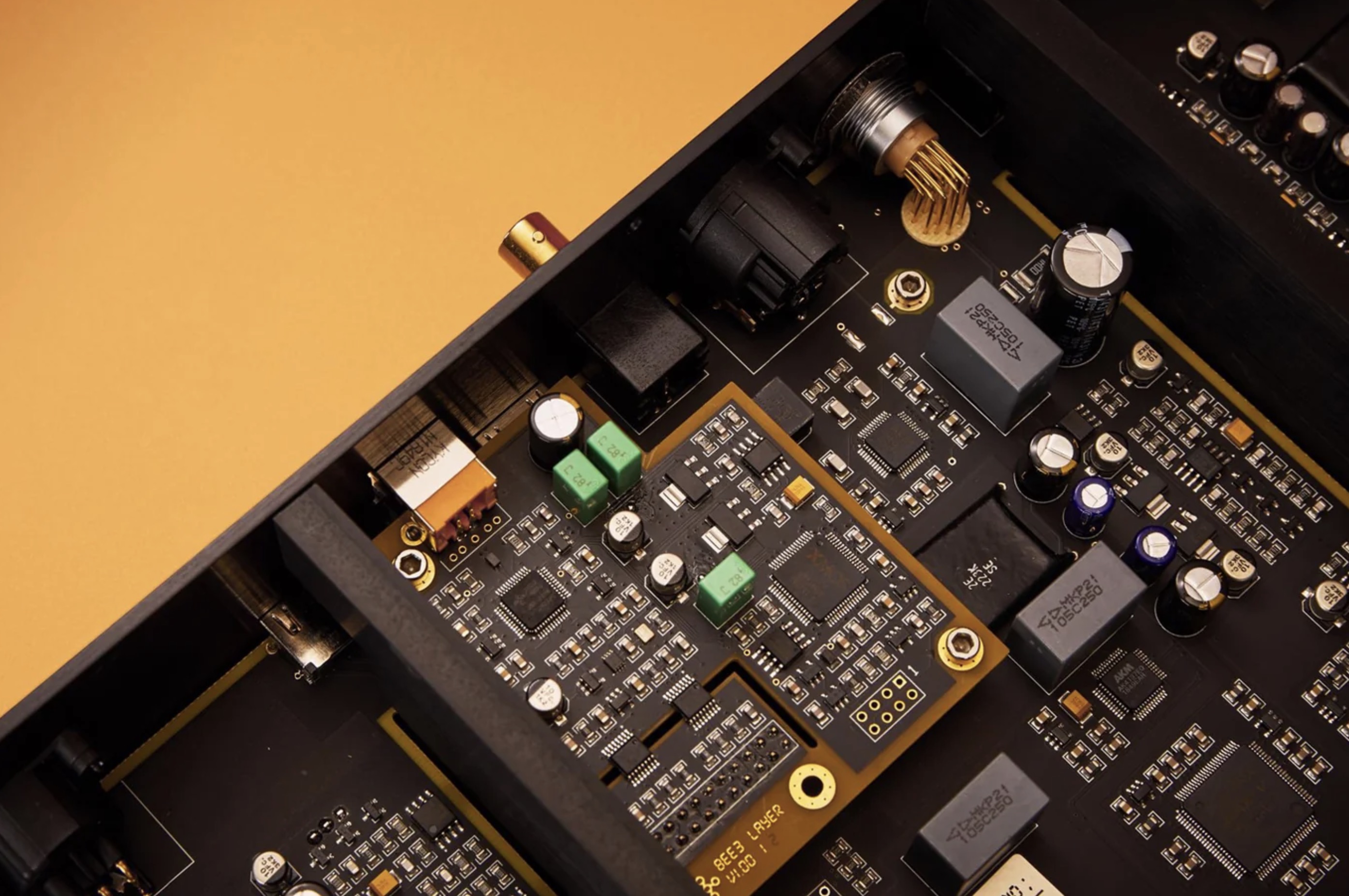
The main unit uses a dual-mono layout: the left and right channels each have their own DAC modules and their own power transformers in the power supply. Inside the converter chassis, the modules sit on either side of the central input board, and all sections are separated by thick metal partitions. The balanced output uses both “halves” of the circuit, the single-ended RCA output only one. A balanced connection is therefore strongly recommended with the Holo Audio May KTE – in addition to a higher signal level, you also get extra rejection of mains interference and RF noise.
Power supply
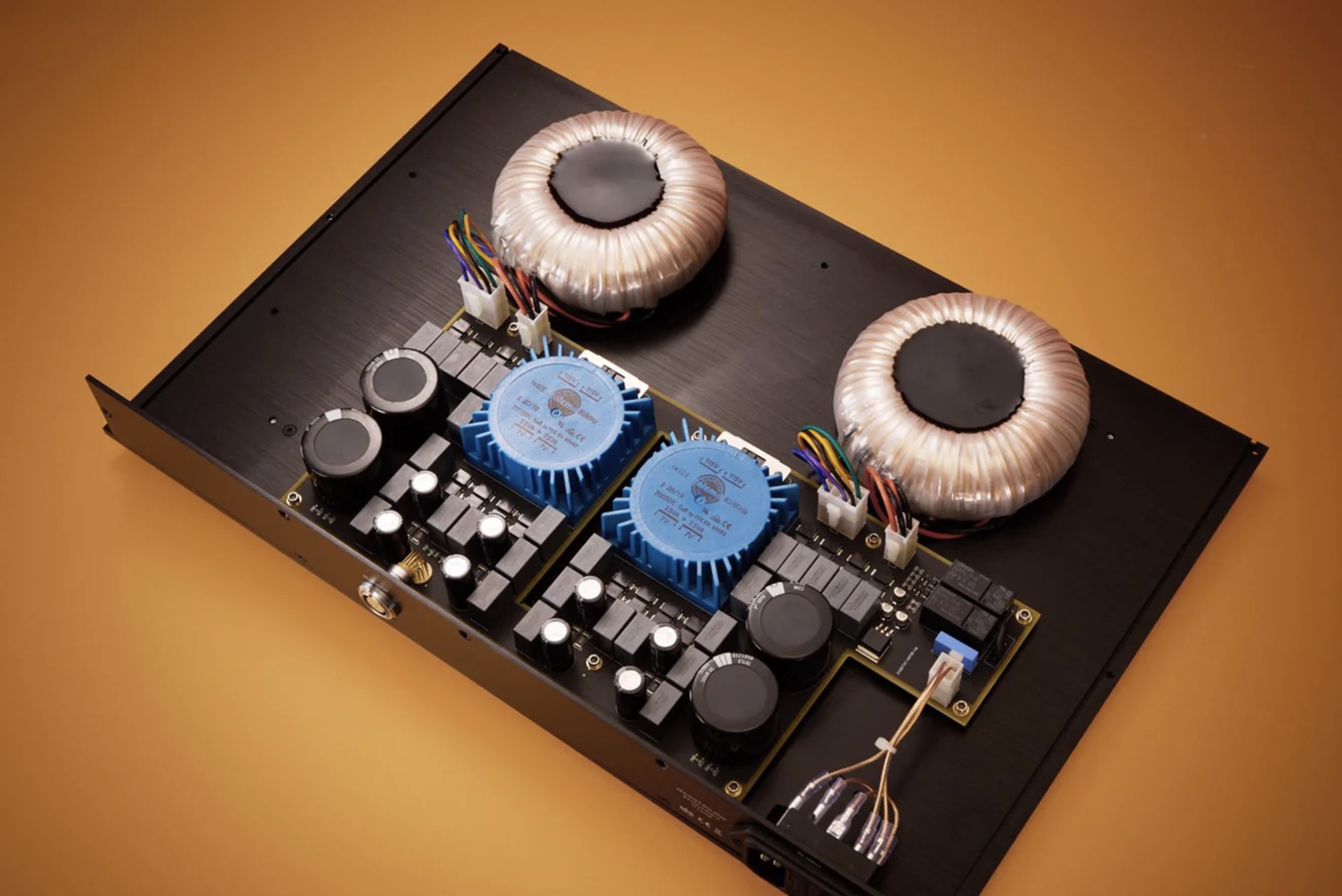
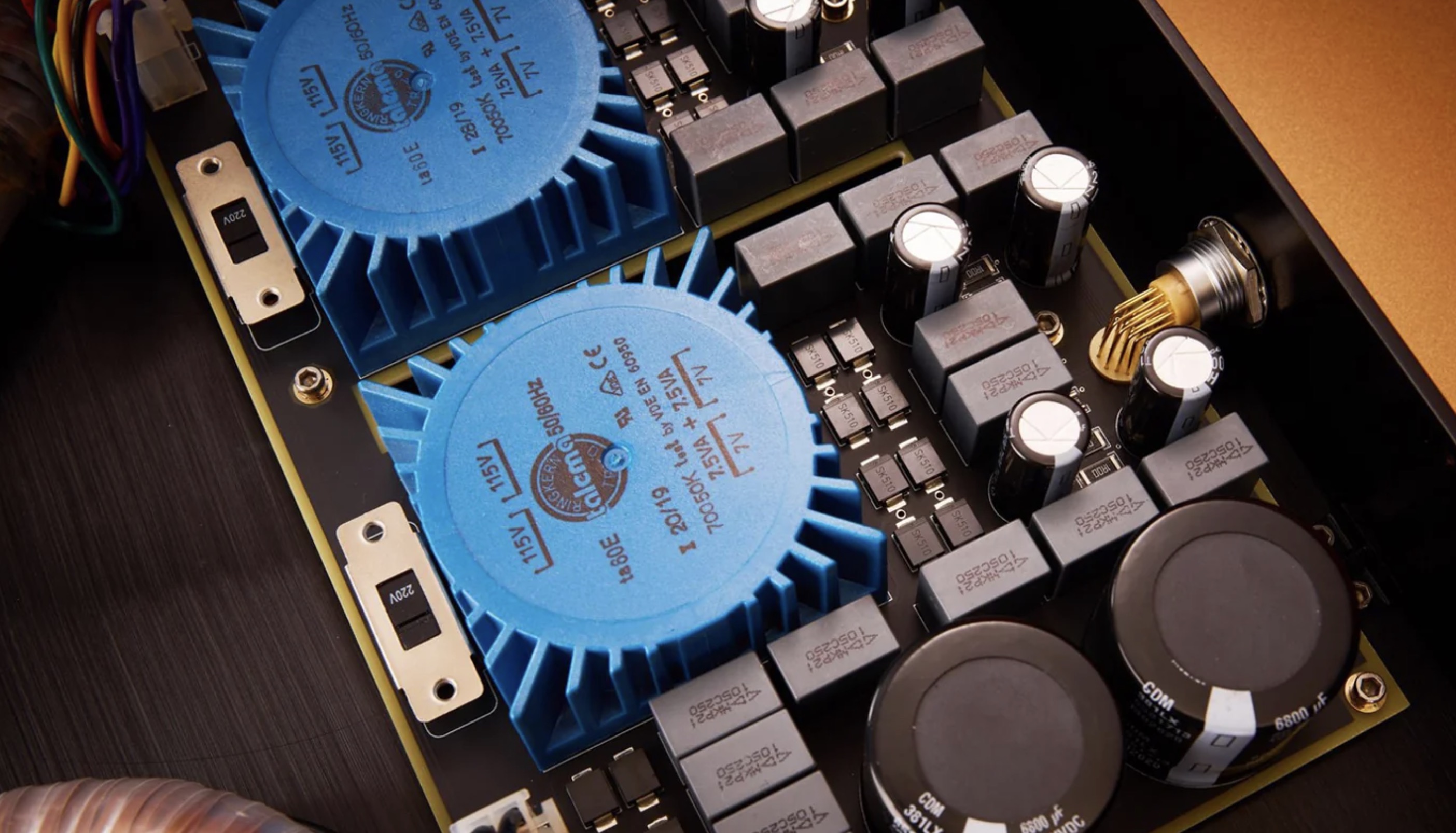
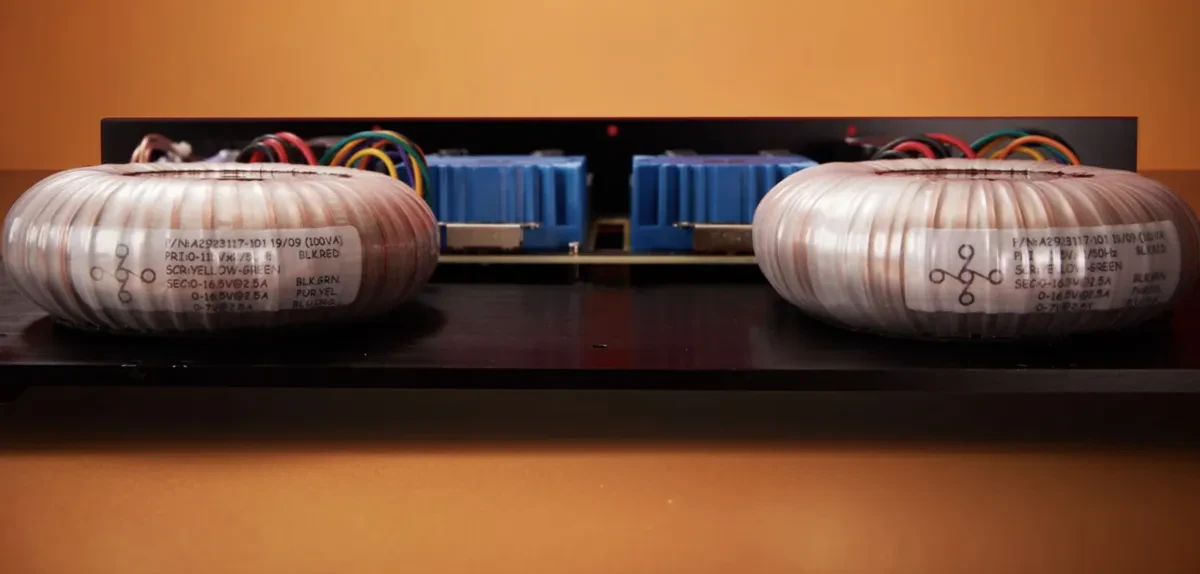
The power transformers are custom-made and hand-wound, with O-type cores (not toroidal) and windings of 6N-purity flat copper wire. The manufacturer quotes a rating of 100 VA for the transformer pair. Transformers of this type are fitted to all three versions of the Holo Audio May, not just the top-of-the-range KTE.
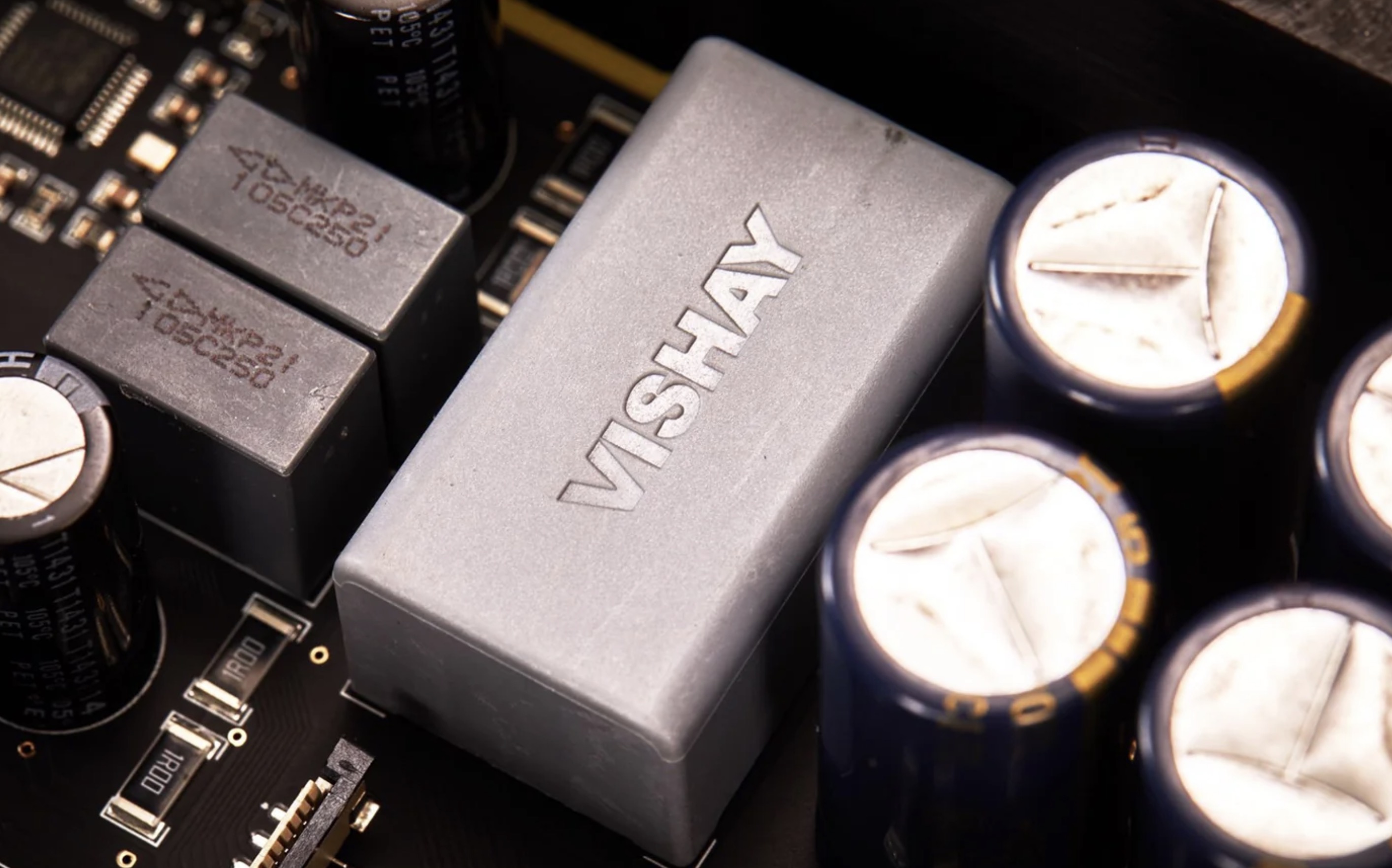
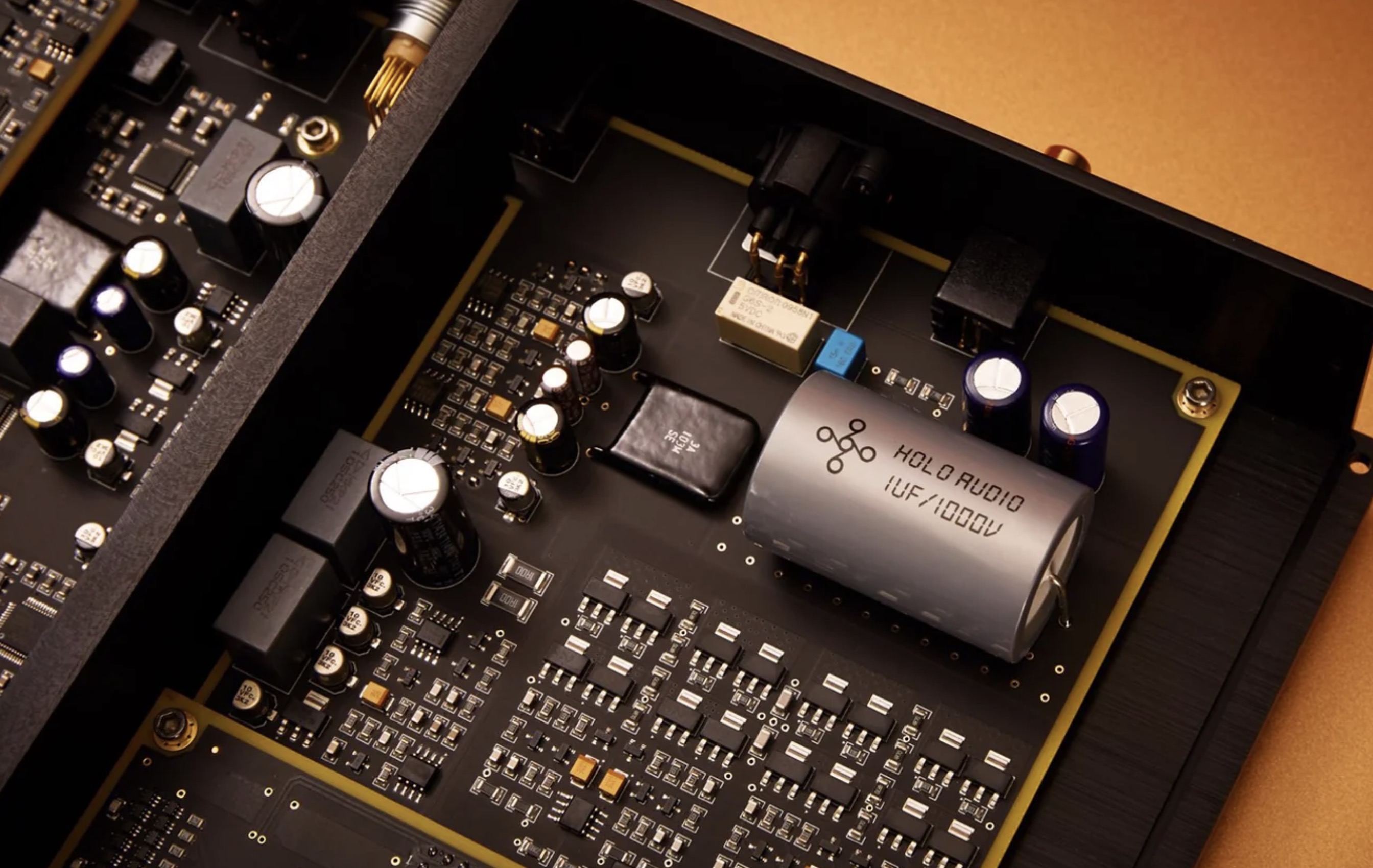
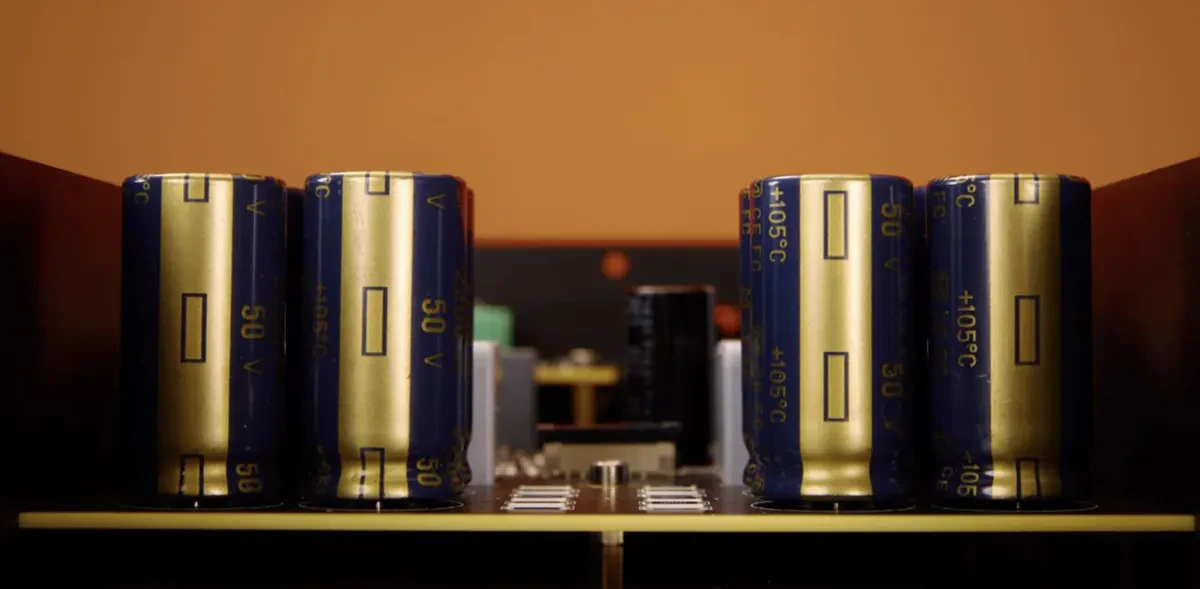
Downstream of the transformers is a multi-stage regulation circuit built from discrete regulators, with a claimed output noise of less than 0.2 µV. The power supply uses Rubycon ZLH, Panasonic FC and Vishay capacitors or, in the L2 and KTE versions, Holo Audios own proprietary capacitors. The power supply also has a soft-start circuit - when switched on with the front-panel button, the unit takes a few seconds to charge its capacitors without inrush current or clicks in the signal path.
Output stage
The output stage uses a hybrid topology. The input section is an op-amp (transistors on a single die are inherently matched, whereas sourcing low-noise matched discrete pairs is difficult today). The output section consists of discrete bipolar transistors operating in pure Class A, direct-coupled, with no coupling capacitors. Bear in mind that the main unit of the Holo Audio May KTE runs noticeably warm and needs clearance above it on the shelf for ventilation.
Clocking and digital inputs
To suppress jitter, the May uses a proprietary phase-locked loop (PLL) with a FIFO buffer. The clock source is a Crystek CVHD-957 voltage-controlled crystal oscillator (VCXO). The loop cut-off frequency is set at 0.05–0.1 Hz with a third-order filter. According to the manufacturer’s calculations, this reduces long-term jitter with a 10 s period by 90%, with a 1 s period by 99%, and with a 0.1 s period by 99.9%.
The Holo Audio May’s oscillator runs at a precise frequency, while the source “wanders”. Instead of recalculating the data with an asynchronous sample rate converter (ASRC), the May “parks” surplus samples in the FIFO and outputs them later. As a result, the circuit maintains lock even with 1.5–2 µs of jitter at 1 kHz, whereas a typical S/PDIF receiver would simply lose stability under such conditions.
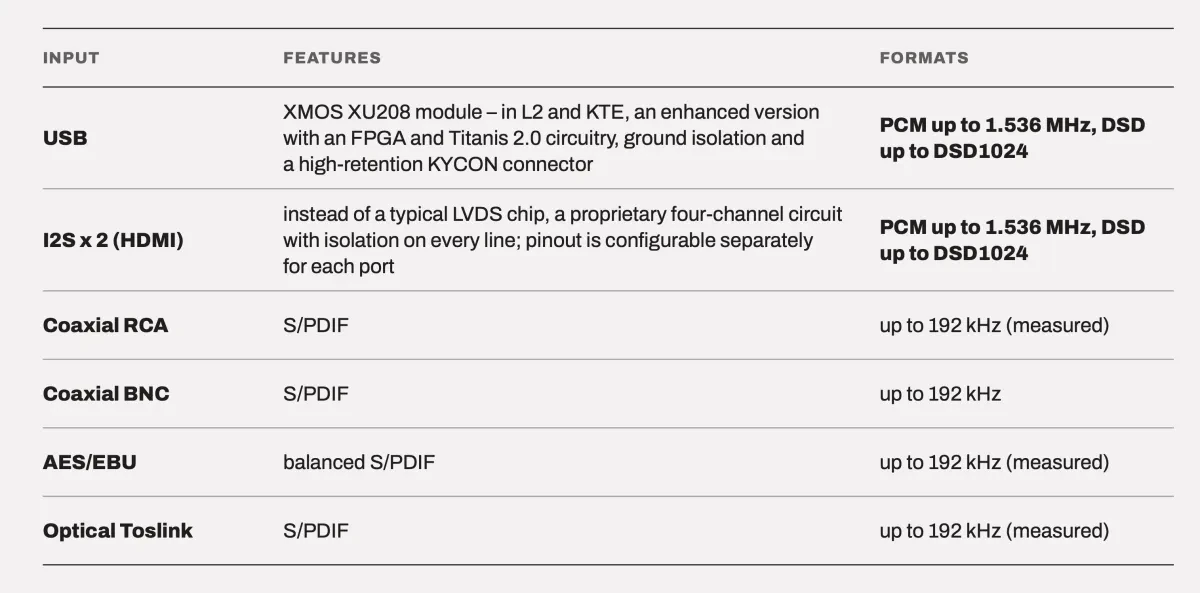
All digital inputs accept DSD in DoP format. The 1.536 MHz and DSD1024 limits are officially confirmed – in theory the unit is also capable of 3.072 MHz PCM and DSD2048, but these have simply not been tested.
Four conversion modes
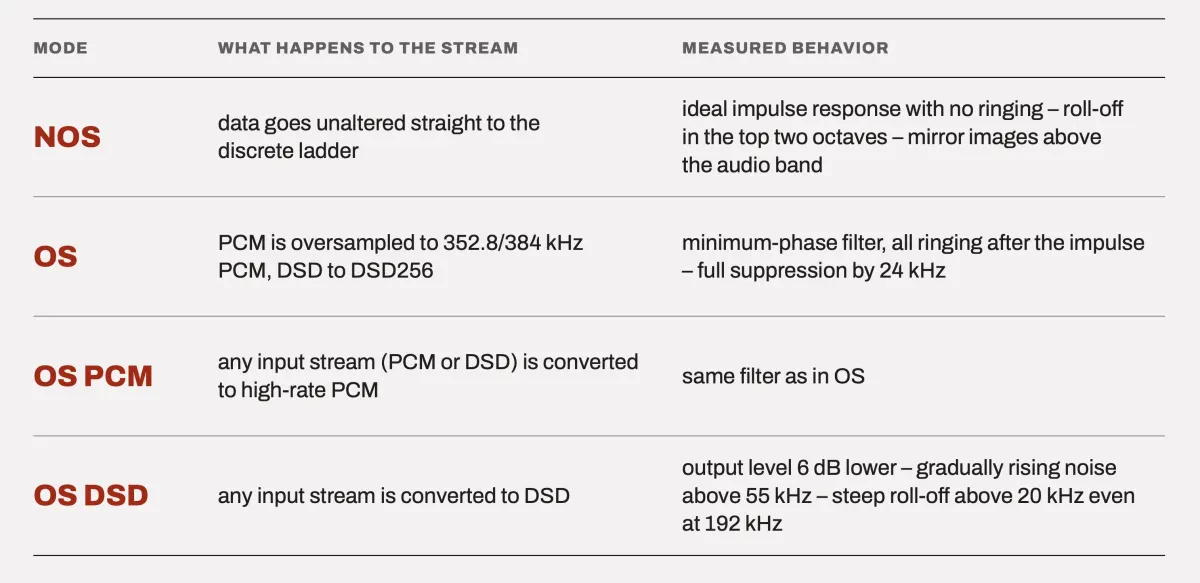
The most unusual thing about the Holo Audio May is that, alongside its R2R ladder, it also carries a chip that handles oversampling. This is the AKM AK4137 – a two-channel, 32-bit asynchronous sample rate converter with bidirectional PCM/DSD conversion. The DAC itself remains discrete in every mode; the only thing that changes is what data is fed to the modules. Modes are selected from the remote control.
NOS mode
With no digital filter, an impulse is reproduced with no ringing whatsoever, either before or after. But every coin has two sides: without a reconstruction filter, the output retains a stepped waveform, and the audio-band spectrum is mirrored around every multiple of the sampling frequency. As a result, in the 44.1 kHz intermodulation test, the images of the 19 and 20 kHz tones (at 24.1 and 25.1 kHz) came out at almost the same level as the tones themselves. Upsampling to high rates in a software player (HQPlayer, for example) and feeding the result to the unit in NOS mode solves this problem, but takes extra effort.
OS modes
Does oversampling inevitably bring pre-ringing? Not in the case of the Holo Audio May. All three OS modes use the same minimum-phase filter – all of the ringing comes after the impulse, with no pre-ringing. At 44.1 kHz the frequency response is down by just 0.65 dB at 20 kHz, followed by a steep roll-off: the 25 kHz image of a 19.1 kHz tone is fully suppressed, and that tone’s harmonics lie below -104 dB. Post-ringing is present, but it is modest.
DSD Native mode
Holo Audio is the first manufacturer to implement native DSD conversion on a resistor ladder, using a separate resistor network optimized specifically for the one-bit stream. The “native” label in specifications often refers only to the USB transport method: DoP packs DSD into a PCM container and spends half the bandwidth on packaging, but does not alter a single bit. Both DoP and native transport are therefore bit-perfect. Where and how the conversion itself takes place is a separate question – and this is precisely where the Holo Audio May takes an original approach: its discrete DSD conversion employs the same switches and precision resistors as the ladder DAC, only in a different architecture.
The published DSD specifications are more modest than those for PCM. For DSD128 the manufacturer quotes THD+N of 0.00025% (-112 dB) and a dynamic range of 115 dB, at half the output level. For 48 kHz PCM in NOS mode, the figures are THD+N of 0.00017% (-115 dB) and a dynamic range of 130 dB.
The flagship KTE and two other versions
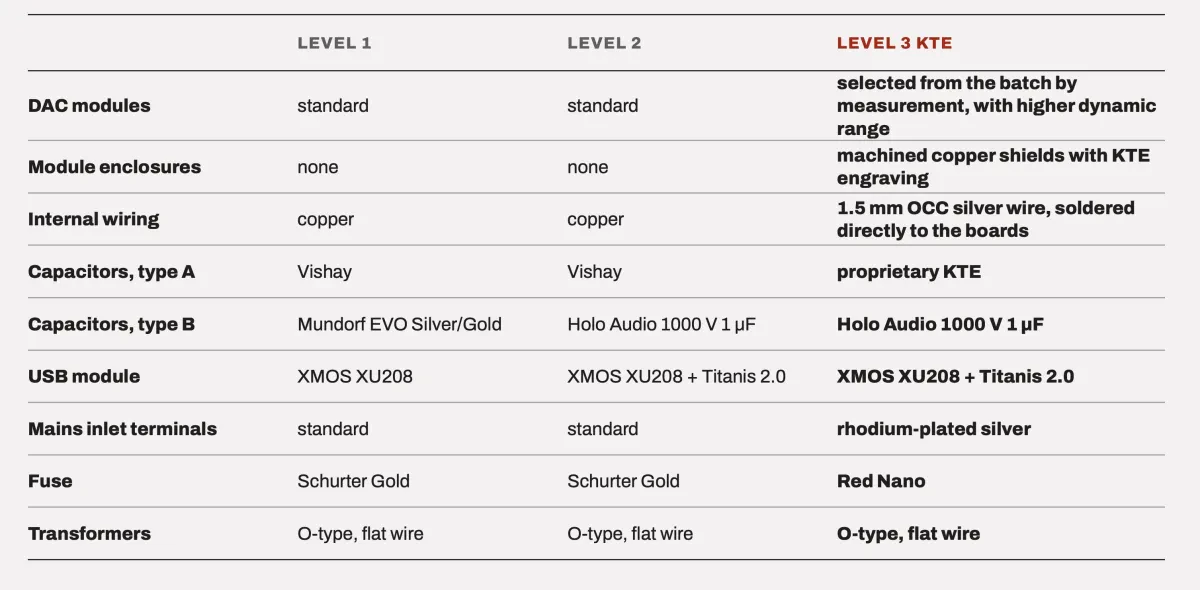
The Holo Audio May is available in three versions.
Test system
The Holo Audio May KTE was evaluated in the following system.
Sound quality
The first thing that strikes you when listening to the Holo Audio May KTE (this is the version we reviewed) is its microdynamics and low-level resolution. The clarity of decaying notes and reverb tails is superb, and the richness of piano tone is on a par with converters costing an order of magnitude more. This correlates directly with the measured linearity below -120 dBFS.
Likewise, the Holo Audio May excels at creating a “black background” – the backdrop is flawless, and this presentation makes textures almost sculptural and tangible. Put on the finale of Dvořák’s Ninth Symphony and everything falls into place: the soundstage is three-dimensional and rock-solid, both the depth and the height of the instruments are easy to read, and the timbral picture gives no grounds for criticism.
The even tonal balance and smooth, flowing presentation (especially in NOS mode – we did not use HQPlayer) made it easy to spend hours simply enjoying albums by Dire Straits and Deep Purple.
And even when we switched to aggressive Infected Mushroom tracks, the Holo Audio May kept its signature silkiness and fluidity – while at the same time delivering explosive dynamics on the peaks.
System integration
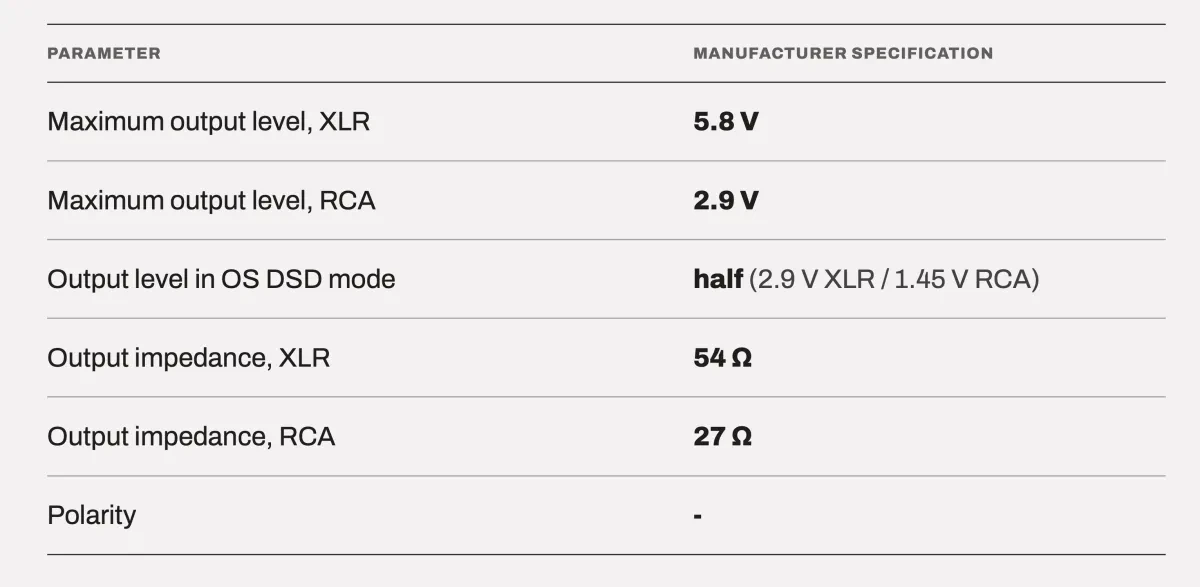
The 5.8 V from the balanced output is 9.3 dB above the 2 V that is standard for consumer equipment, and even the 2.9 V from the RCA output exceeds that benchmark by 3.2 dB. So if your preamplifier has gain adjustment, start at the lowest setting. Also bear in mind that the highest-resolution formats are only available via USB and I2S.
Verdict
The Holo Audio May is a unique R2R DAC that overturns established ideas about the architecture itself. Its compensation matrix removes the main historical limitation of ladder designs – and its sound gives no grounds for criticism, fully meeting the standards of true high-end audio.
Evaluations
Stage
95%
Detailing
97%
Macrodynamics
95%
Microdynamics
98%
Bass extension
95%
Timbral authenticity
96%
Genre versatility
95%
Overall
97%
Frequently asked questions
How does the KTE version differ from Level 2?
The KTE gets measurement-selected DAC modules with copper shields, 1.5 mm OCC silver wiring, proprietary KTE capacitors, rhodium-plated silver mains inlet terminals and a Red Nano fuse. The upgraded USB with Titanis 2.0 and the O-core flat-wire transformers are also found in Level 2.
Does the Holo Audio May have volume control?
No. The outputs are fixed-level, and there is no optional preamp module for the May. You will need an analog preamplifier or digital volume control in your player.
What is the May’s output level?
5.8 V from the balanced XLR outputs and 2.9 V from the single-ended RCA outputs in NOS, OS and OS PCM modes; in OS DSD mode the level is halved. These figures have been confirmed by independent measurements.
Which chip handles oversampling?
The AKM AK4137 – an asynchronous sample rate converter with PCM and DSD conversion. The digital-to-analog conversion itself is performed in every mode by the discrete resistor modules.
Is there pre-ringing in oversampling mode?
No. All three OS modes use a minimum-phase filter, so ringing occurs only after the impulse. In NOS mode there is no ringing at all.
Does the May support DSD1024 on a Mac?
No. Native DSD over USB works on Windows via the proprietary driver; on macOS and Linux, DSD is carried via DoP and tops out at DSD512.
Particular qualities
Two-chassis dual-mono design
Сontains a second, controlled resistor network
A resolution of more than 21-22 bits
Specifications
Model name
MAY DAC KTE
Conversion type
Full discrete R2R
Engine
N/A
DSD compatability
Yes
Parameters
up to PCM 1,536 kHz and DSD1024
Frequency response low +/- 3dB (Hz)
N/A
Frequency response high +/- 3dB (Hz)
N/A
Gain (dBu)
N/A
Output Level (balanced) (V)
5.8
Output Level (single-ended) (V)
2.9
Input Impedance (balanced) (Ω)
N/A
Input Impedance (single-ended) (Ω)
N/A
Output Impedance (balanced) (Ω)
N/A
Output Impedance (single-ended) (Ω)
N/A
Analog outputs
N/A
Signal to Noise Ratio (dB)
N/A
Total Harmonic Distortion + Noise (% at 22 kHz)
N/A
Dimensions (mm)
430 x 300 x 55 and 430 x 300 x 55
Weight (kg)
9 + 9
Official link