
Все

Напольная акустика — Audiovector R 6 SIGNATURE
Описание, изображения, технические характеристики и спецификации
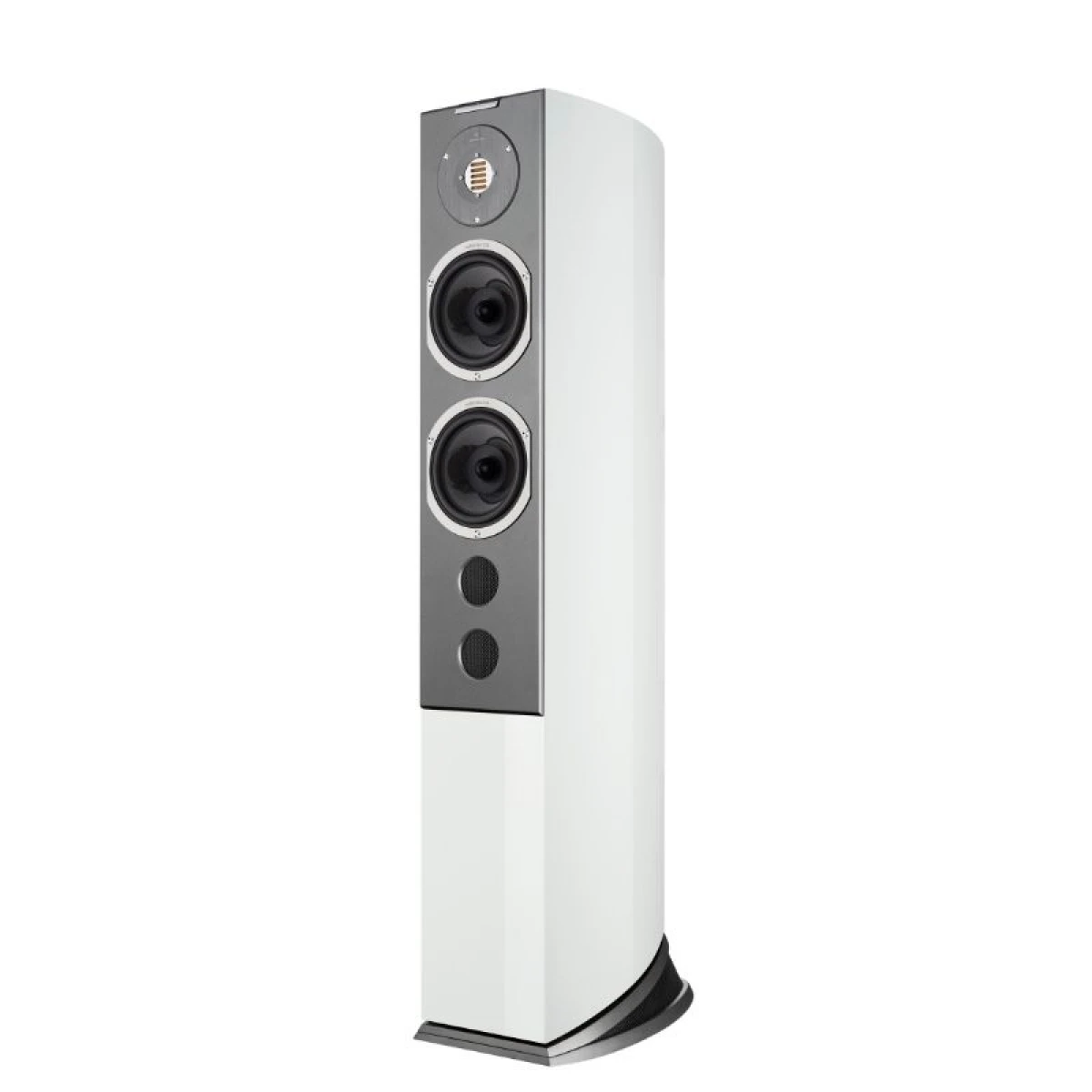
Audiovector R 6 SIGNATURE
Источник изображения — © Audiovector
The R 6 Signature is the entry version of Audiovector's R 6 floorstander, from the Danish company founded in Copenhagen in 1979 by Ole Klifoth and now run by his son Mads Klifoth. The R 6 replaced the SR 6 with what Audiovector counts as 112 improvements, and it is offered in three versions - Signature, Avantgarde and Arreté - on a shared cabinet and bass system. Audiovector's upgrade programme lets Signature owners return their speakers later to be converted to Avantgarde or Arreté specification.
Key specs that matter
The R 6 Signature uses five drivers - a soft-dome tweeter, two 165mm front-firing mid/bass units, and an internal isobaric bass system combining 165mm and 200mm woofers that fires downward. Frequency response is 28Hz to 26kHz, sensitivity is 92.5dB and nominal impedance is 8 ohms, with amplifiers up to 450W recommended. The speaker stands about 1.23m tall and 28cm wide.
Engineering and use context
The two front 165mm drivers look alike but do different jobs - the upper unit covers the midrange from 350Hz to 3kHz, while the lower unit covers only 100Hz to 350Hz, so the design is a four-and-a-half-way system rather than a simple three-way. The mid/bass units use carbon cones, titanium voice coils, large ceramic ferrite magnets and rigid magnesium-alloy baskets suspended at three points. Below 100Hz, an isobaric arrangement takes over - two woofers are mounted inside the cabinet working together on the same air volume, which lets a smaller enclosure deliver the bass extension of a much larger one; the larger driver fires downward through an opening in the plinth, and the system is vented through two front ports. The Signature's soft-dome tweeter is the key difference from the Avantgarde and Arreté, which use Audiovector's own AMT. Drivers are built to Audiovector's specifications by Scan-Speak in Denmark and each is tested and documented by serial number. The crossover sits directly behind the terminals, uses cryogenically treated components connected in series to each driver, and is damped against vibration. The cabinet is built from vacuum-pressed HDF shells in a teardrop shape with non-parallel walls, a laminated heavy rear baffle, internal bracing and Nano Pore damping to suppress standing waves and panel resonances.
Pairing
High sensitivity and an easy nominal load let the R 6 Signature work with many amplifier types, from modest tube designs to powerful solid-state models. M8 spikes couple it to the floor.
Alternatives
Audiovector's own R 6 Avantgarde uses the same cabinet and bass system but replaces the dome with an in-house AMT tweeter.
Key specs that matter
The R 6 Signature uses five drivers - a soft-dome tweeter, two 165mm front-firing mid/bass units, and an internal isobaric bass system combining 165mm and 200mm woofers that fires downward. Frequency response is 28Hz to 26kHz, sensitivity is 92.5dB and nominal impedance is 8 ohms, with amplifiers up to 450W recommended. The speaker stands about 1.23m tall and 28cm wide.
Engineering and use context
The two front 165mm drivers look alike but do different jobs - the upper unit covers the midrange from 350Hz to 3kHz, while the lower unit covers only 100Hz to 350Hz, so the design is a four-and-a-half-way system rather than a simple three-way. The mid/bass units use carbon cones, titanium voice coils, large ceramic ferrite magnets and rigid magnesium-alloy baskets suspended at three points. Below 100Hz, an isobaric arrangement takes over - two woofers are mounted inside the cabinet working together on the same air volume, which lets a smaller enclosure deliver the bass extension of a much larger one; the larger driver fires downward through an opening in the plinth, and the system is vented through two front ports. The Signature's soft-dome tweeter is the key difference from the Avantgarde and Arreté, which use Audiovector's own AMT. Drivers are built to Audiovector's specifications by Scan-Speak in Denmark and each is tested and documented by serial number. The crossover sits directly behind the terminals, uses cryogenically treated components connected in series to each driver, and is damped against vibration. The cabinet is built from vacuum-pressed HDF shells in a teardrop shape with non-parallel walls, a laminated heavy rear baffle, internal bracing and Nano Pore damping to suppress standing waves and panel resonances.
Pairing
High sensitivity and an easy nominal load let the R 6 Signature work with many amplifier types, from modest tube designs to powerful solid-state models. M8 spikes couple it to the floor.
Alternatives
Audiovector's own R 6 Avantgarde uses the same cabinet and bass system but replaces the dome with an in-house AMT tweeter.
Характеристики
Название модели
R 6 SIGNATURE
Нижняя граница частотного диапазона +/- 3дБ (Hz)
28
Верхняя граница частотного диапазона +/- 3дБ (Hz)
26 000
Чувствительность (dB at 1 W/1m)
92.5
Импеданс (Ohms)
8
Требования к усилителю мощности (W)
<450
Наличие встроенного усилителя
Н/д
Мощность встроенного усилителя (W)
N/A
Размер (sm)
123.4 x 27.8 x 43.1
Вес (kg)
N/A
Официальная ссылка
Другие компоненты
Напольная акустика
Audiovector R 5 ARRETÉ
Напольная акустика
Audiovector R 10 ARRETÉ
Напольная акустика
Audiovector R 3 ARRETÉ
Напольная акустика
Audiovector R 3 SIGNATURE
Напольная акустика
Audiovector R 6 ARRETÉ