All

VAC
Website:https://www.vac-amps.com
VAC, short for Valve Amplification Company, is a tube electronics company from the United States, started in 1990 by Kevin Hayes and his father Channing W. Hayes in Sarasota, Florida. The company builds preamplifiers, power amplifiers and integrated amplifiers that rely on tubes almost exclusively, and it sits at the upper end of the high-end market with a range that climbs to five-figure prices per component.
Range & what it's known for
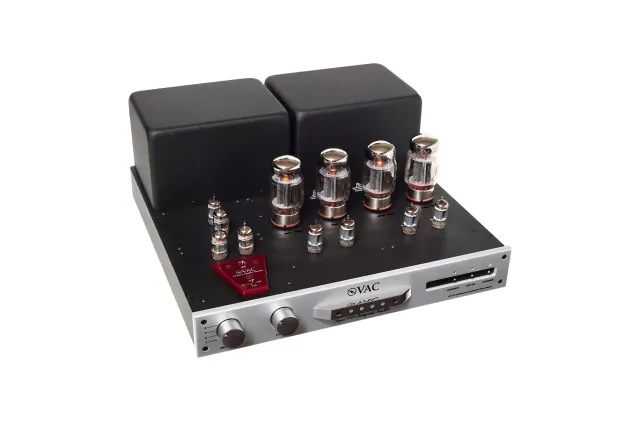
Preamplifiers come in tiers. The Renaissance V line stage opens the range, followed by the Signature Mk IIa SE, the two-box Master and the flagship Statement, each available with or without a phono stage. Power amplifiers include the PA45 and PA90, the Phi series and the Statement 450. The Master borrows circuitry from the Statement and uses hand-wired class A1 stages with a separate power supply chassis and a motorised brass volume control. A signature engineering trait is iQ, an automatic bias system patented by Kevin Hayes in 2014 that holds tube idle current with a precision of 99 percent or better without intervening during playback.
Who owns it and where it's made
VAC is privately held and led by Kevin Hayes, whose interest in tubes began with his father's Heathkit system. Between January 1996 and September 2001 the company worked from Durham, North Carolina, where it took part in the Marantz Classic project, before returning to Sarasota. Design and assembly are carried out at its Florida premises.
The lineup in this catalog
Both power amplifiers and preamplifiers are listed. The line stages start near USD 10,000, and the larger power amplifiers cost well beyond USD 50,000.
Who it's for
VAC is aimed at those who have settled on tube electronics for the long term and prefer one company for the whole amplification chain. The Renaissance line stage is the usual entry, with Signature, Master and Statement forming a clear upgrade ladder that keeps the same design approach. It makes sense for owners of high-sensitivity or tube-friendly loudspeakers who value automatic biasing and hand-wired construction.