All


Rockport
Website:https://rockporttechnologies.com/
Est. year: 1984
Rockport Technologies is a high-end loudspeaker manufacturer on the coast of Maine, USA, which began as Payor Acoustics in 1984 under engineer Andy Payor and adopted the Rockport name in 1990. It is known for molded composite enclosures and drivers designed in-house. Before concentrating on loudspeakers, the company built the Sirius and Capella turntables and the Series 6000 tonearm, and the Procyon of 1993 was the first speaker to carry its name.
Range & what it's known for
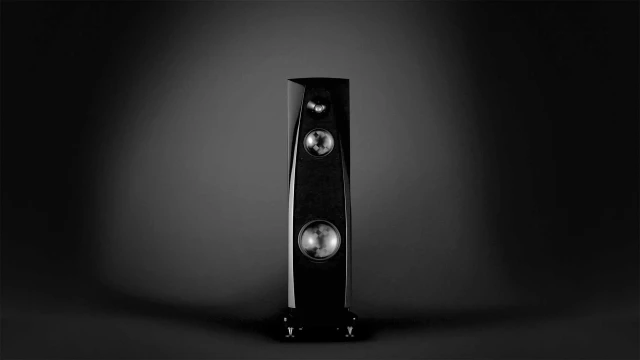
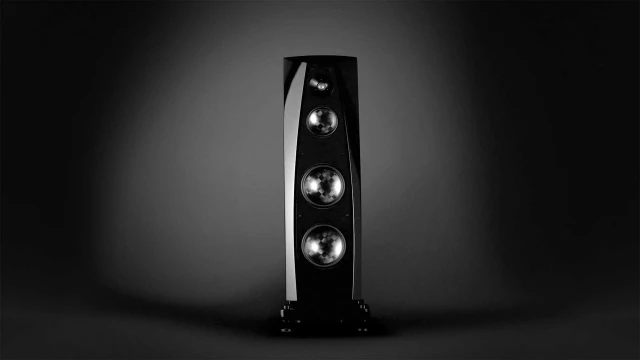
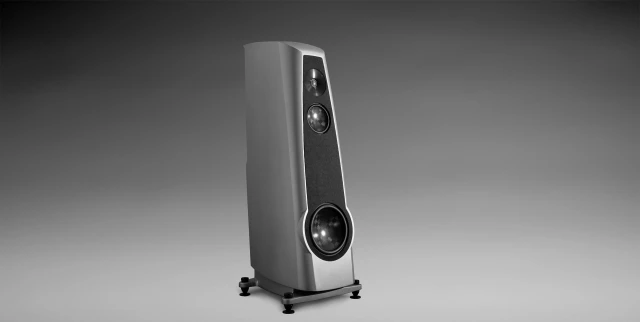
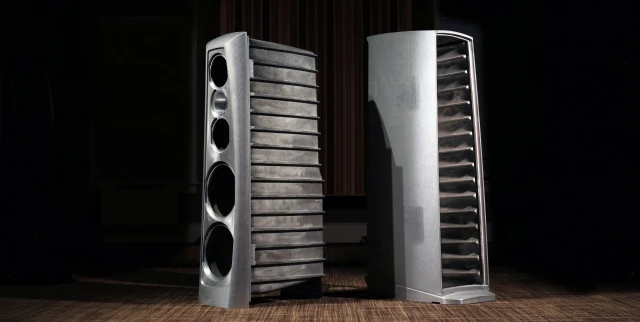
The current lineup consists of five floorstanding models, with the Taurus and Atria II below the Lynx and Orion and the Lyra at the top. Earlier designs include the Mira, Altair, Avior and the Arrakis of 2005, which is no longer produced. Cabinets are monocoque shells of glass fibre reinforced resin bonded to a dense, high-loss epoxy core, shaped with 3D modelling and CNC tooling to suit driver placement and limit diffraction. The Arrakis went further with carbon fibre pre-preg layers cured under heat and pressure. Rockport also designs its own midrange and 9-inch bass drivers, the latter created for the Avior II and Atria II.
Who owns it and where it's made
Rockport remains a privately run company built around its founder, Andy Payor, who still designs and voices each model. Design, assembly, testing and quality control all take place at its facility in South Thomaston, Maine, with skilled local vendors supplying specialised manufacturing work. Speakers are assembled by hand in small production lots rather than on a volume line.
The lineup in this catalog
Loudspeakers. No Rockport pair costs less than about USD 30,000, and the flagship-class models are well over USD 200,000.
Who it's for
In the upper price brackets, Rockport offers a floorstander built around composite enclosures and proprietary drivers from a small American workshop. The Taurus and Atria II open the range, while the Lynx, Orion and Lyra climb in size and price for larger rooms. A custom colour programme lets owners specify cabinet finishes, which matters for a speaker meant to stay in one system for many years.