All

Orpheus Lab
Website:https://www.orpheuslab.com/
Orpheus Lab is a Swiss company building high-end disc players and amplifiers, founded in 2001 and still family owned. It grew out of Anagram, a company that developed digital converters, and takes its name from Orpheus, the bard of Greek mythology. The range is small and expensive, organised in two lines that cover CD and SACD playback, preamplification, stereo and mono power amplification and an integrated amplifier, so a full system, from the disc tray to the speaker terminals, can come from one maker.
Range & what it's known for
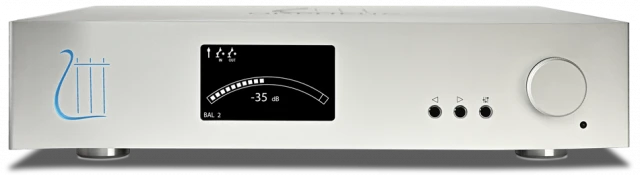
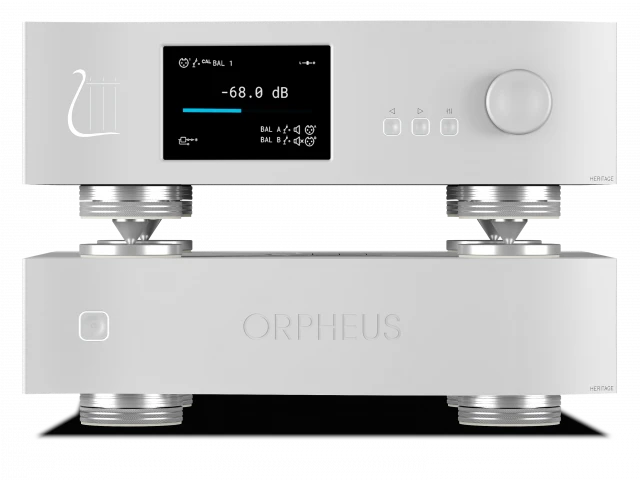
The Absolute line holds five models, a CD player, an SACD player, a stereo preamplifier, a stereo power amplifier and a stereo integrated amplifier, priced from USD 12,900 to USD 22,900 at North American launch. Above it, the Heritage Opus II line has three models, an SACD player, a stereo preamplifier and monoblock power amplifiers, priced from USD 52,900 to USD 73,900. Heritage models double the signal paths of their Absolute counterparts. The monoblocks combine MOSFET and bipolar transistors in the output stage, and the disc players use multiple DAC chips per unit for lower noise and better channel separation.
Who owns it and where it's made
Orpheus Lab is a private, family-owned company. It is affiliated with an engineering firm of about 100 employees that manufactures and assembles cables and electronic components. All Orpheus products are designed, assembled and tuned in-house in Switzerland.
The lineup in this catalog
The catalog lists the A Three S200 stereo power amplifier, the A Four I200 integrated, the H Three M800 Opus II and M1400 Opus II monoblocks, and the A Zero PC and Opus II H Zero PS SACD players.
Who it's for
Orpheus Lab suits buyers building a complete Swiss-made system around disc playback, especially SACD. The A Four I200 integrated is the simplest way in, the Absolute separates are the next step, and the Heritage Opus II preamplifier, SACD player and monoblocks sit at the summit, suited to large, power-hungry speakers.