All


Lumin
Website:https://luminmusic.com/
Est. year: 2003
Location: Hong Kong
LUMIN is a Hong Kong brand of network music players, launched in 2012 by Pixel Magic Systems, a private electronics company founded in 2003. The first LUMIN player was one of the earliest streamers able to play DSD files over a network, and the range has since grown into players, transports, DAC hubs, an amplifier, a music library server and a network switch. Pixel Magic also builds the Magic TV recorders sold in Hong Kong.
Range & what it's known for
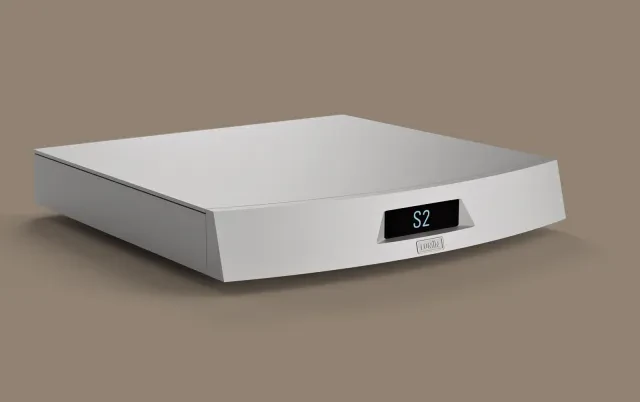
Network players form the core. The flagship X2 introduces LUMIN's own dual discrete DAC with FPGA control, native DSD512 and 32-bit PCM768 playback and an SFP fibre network socket. Below it sit the T3X, with a linear toroidal supply, and the D3, built on an ES9028PRO chip. The P2 and P1 Mini are network hubs with digital, analogue and HDMI inputs, the P2 using dual ES9038PRO chips in mono mode with Lundahl output transformers. The U2X, U2 and U2 MINI are transports without a DAC, feeding an external converter. The Amp is a dual mono class AB power amplifier rated at 160W per channel into 8 ohms. Leedh Processing provides lossless volume control on every current player, and Roon, TIDAL Connect, Qobuz Connect, Spotify Connect and Plex are supported.
Who owns it and where it's made
LUMIN is a trademark of Pixel Magic Systems Ltd, a privately held company headquartered in Hong Kong. The brand says hardware, firmware and the LUMIN control app are developed in-house so that all three are designed together, and players receive continuing firmware updates that have added new streaming services years after launch.
The lineup in this catalog
Network streamers and DACs, from about USD 2,000 for the D3 to more than USD 20,000 for the X2.
Who it's for
LUMIN fits listeners building a system around streaming and stored files who want one app to run everything, including Plex libraries. The D3 is the usual entry, the T3X a step up, and the X2 the top of the player path. Owners who already have a DAC they like can choose a U2-series transport instead, and those who need inputs for a TV or turntable stage can use the P2 as the system hub, adding the L2 library and N1 switch later.