All

First Watt
Website:https://www.firstwatt.com/
Est. year: 1998
First Watt is an American amplifier brand set up by Nelson Pass in 1998 as a small venture running alongside Pass Labs, the company he founded in 1991. It builds low-power solid-state amplifiers in limited numbers, usually Class A circuits with little or no feedback and outputs of about 25 watts or less. The name comes from the remark by writer Dick Olsher that the first watt is the most important one, which sums up the brand's focus on efficient loudspeakers.
Range & what it's known for
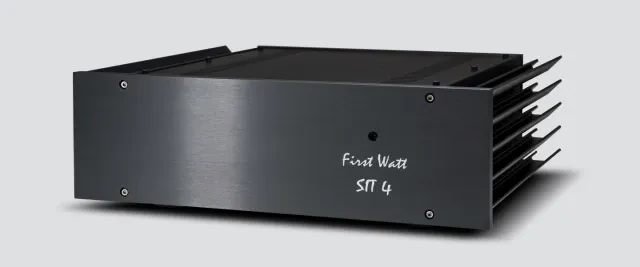
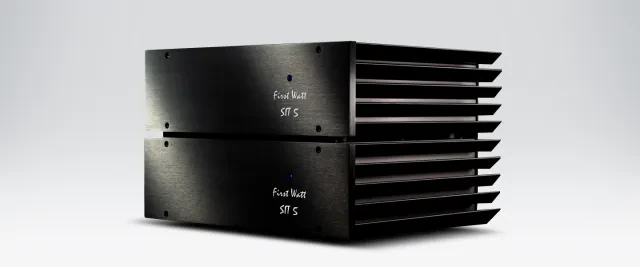
Every First Watt model explores one circuit idea. The F series began with the F1 and F2, current-source amplifiers without feedback, then moved through the single-stage single-ended F3, the F4 current buffer with no voltage gain and the push-pull F5 with feedback. The later F7 combines JFET and MOSFET devices in a two-stage push-pull layout, and the F8 is a two-stage single-ended Class A design. The SIT series, from SIT-1 to the SIT-4 of 2023, uses Static Induction Transistors, which Pass has described as behaving much like a triode tube. The J2 and M2 complete the list.
Who owns it and where it's made
The brand is Nelson Pass's own project, which he has called a kitchen table operation. He began his career by co-founding Threshold in 1974 and holds several US patents on amplifier circuits. Assembly, servicing and customer contact are handled by Pass Laboratories in California. Many retired First Watt circuits are published on passdiy.com, so home builders can study and copy them, and the company reports a near-zero failure rate across its first twelve years.
The lineup in this catalog
Power amplifiers. The F series and SIT amplifiers listed here cost between roughly USD 3,000 and USD 10,000.
Who it's for
First Watt fits owners of high-sensitivity loudspeakers, such as horns or single-driver designs, who need only a few watts. It also appeals to listeners curious about circuit topology, since each model represents a distinct engineering choice of its own. A typical path starts with one of the F models and later moves to a SIT amplifier. Buyers needing high power for low-efficiency speakers should look to the larger Pass Labs range instead.