All


EMT
Website:https://emt-tontechnik.ch/
Est. year: 1940
EMT is a German-founded maker of moving-coil phono cartridges whose roots go back to 1938, when Wilhelm Franz set up Elektromesstechnik Wilhelm Franz KG in Berlin. The firm built control and measurement equipment for radio and later became a supplier of broadcast turntables. Today the name lives on as a cartridge brand built in Switzerland, with a catalogue that still follows the plug-in cartridge design first made for radio studios.
Range & what it's known for
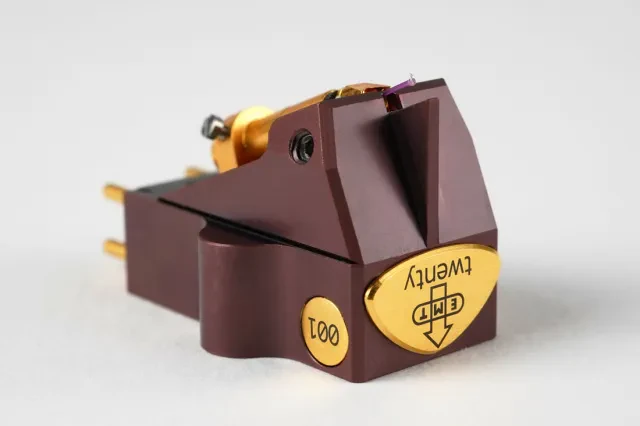
The best known EMT product is the TSD 15, introduced in 1965. TSD stands for Tondose Stereo Diamant with a 15 micron stylus, and the cartridge was designed for instant, toolless changes on air - the whole generator sits in a single body that plugs straight into EMT tonearms without screws or alignment. EMT moved into home hi-fi cartridges in 1974. The current range keeps the Tondose series, including the TSD SFL, TSD MRB, TMD 015 and the TND 065 mono, alongside conventional-mount designs such as the HSD-006 stereo and HMD-025 mono with aluminium bodies.
Who owns it and where it's made
After the war the company moved from Berlin to the Black Forest, first to Schuttertal and then to Lahr, and it also distributed Studer professional equipment. Belgian group Barco bought it in 1989, and Swiss entrepreneur Walter Derrer took over the brand in 2003. Since 2018 the cartridge business belongs to the Swiss firm HiFiction AG, also home of the Thales turntables and tonearms, under Micha Huber. In 2019 production moved to a restored 1833 spinning mill in Turbenthal near Zurich, where watchmakers hand-build each cartridge.
The lineup in this catalog
EMT appears here with cartridges and analogue equipment. Prices start around USD 1,000 and climb past USD 5,000 at the top of the range.
Who it's for
EMT suits vinyl listeners who already own or plan to buy an EMT or compatible broadcast-style tonearm and want the original plug-in Tondose format. Owners of standard tonearms can start with the HSD-006 or HMD-025 and move up to the higher Tondose models later. The mono models make sense for collectors with large mono record libraries who want a dedicated cartridge for them.