All


dCS
Website:https://dcsaudio.com/
Est. year: 1987
Location: UK
dCS (Data Conversion Systems) is a British maker of digital audio equipment founded in 1987 in Cambridge, England, by Oxford graduate Mike Story and a group of engineers from Cambridge Consultants. It began as a signal-conversion consultancy for aviation and defence clients, including work with the Ministry of Defence on the Blue Vixen radar for the Royal Navy Sea Harrier FA 2, before moving into professional and then home audio.
Range & what it's known for
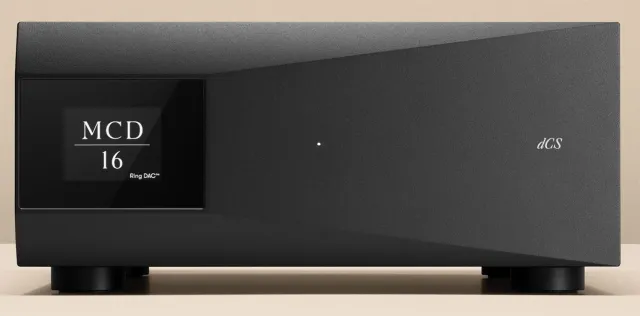
Every current dCS converter is built around the Ring DAC, a discrete conversion design that Mike Story started developing when the company was founded, with the goal of keeping linearity intact down to the lowest signal levels. The home range runs from the one-box Bartok streaming DAC, through the Rossini player, DAC and clock, to the multi-box Vivaldi stack with separate transport, upsampler and master clock. Bartok, Rossini and Vivaldi are all offered in APEX versions with a revised Ring DAC board. Beside them sit the Lina headphone system, built from a DAC, an amplifier and a clock, and Varese, the newest multi-chassis flagship.
Who owns it and where it's made
The company is headquartered in Cambridgeshire, where its products are hand-assembled and tested. In 2005 David M. Steven led a management buyout, and after his death his son David became Managing Director in 2009. In 2019 the company was reported to run with no external funding or debt. Design, software and assembly stay in the same Cambridge base.
The lineup in this catalog
DACs, streamers and transports. A Bartok system costs about GBP 10,000, while a complete four-box Vivaldi stack goes well beyond GBP 100,000.
Who it's for
dCS makes sense for owners wanting their digital source from a company that does almost nothing else and builds its own conversion hardware and streaming software. Bartok is the usual way in, often as a single box feeding a power amplifier or headphones, and Lina covers the headphone-only route. Rossini adds a dedicated clock and transport, while Vivaldi and Varese suit owners ready to split the digital chain into separate chassis.