

Klipsch Klipschorn AK7 Review - a Horn Legend, Updated
The Latest Version of a Loudspeaker in Production Since 1946

29.10.2026 14:00 | ~7 min read
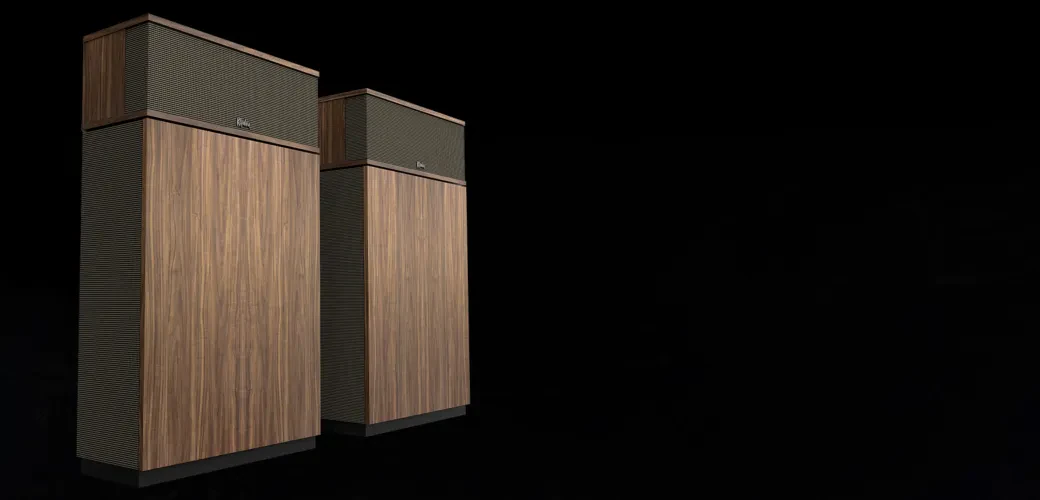
This year marks 85 years of continuous series production of the Klipsch Klipschorn. In our new review we examine a true legend, one that has finally reached its seventh revision. The Klipsch Klipschorn AK7 gains new midrange drivers, revised horns, a new phase plug and, for the first time in the model's history, the option of active operation. In short, the Klipschorn has genuinely moved to a new level, which makes it all the more interesting to hear how this engineering upgrade has affected the sound.
The Klipsch Klipschorn AK7 in Detail
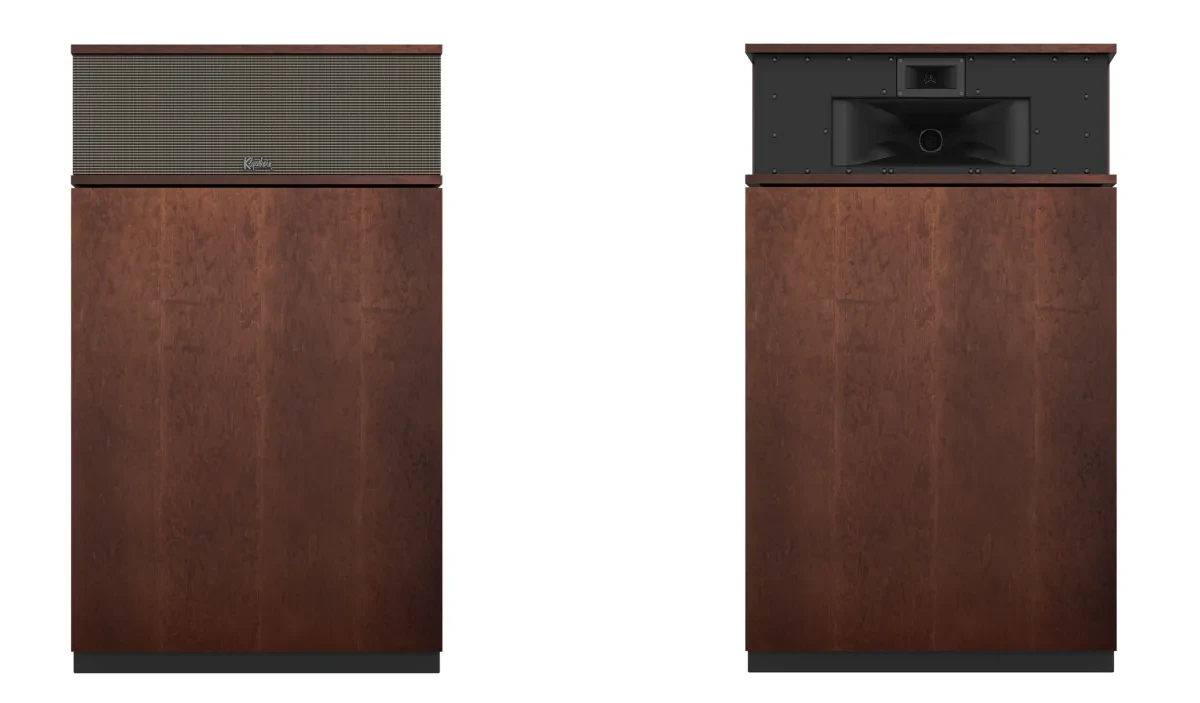
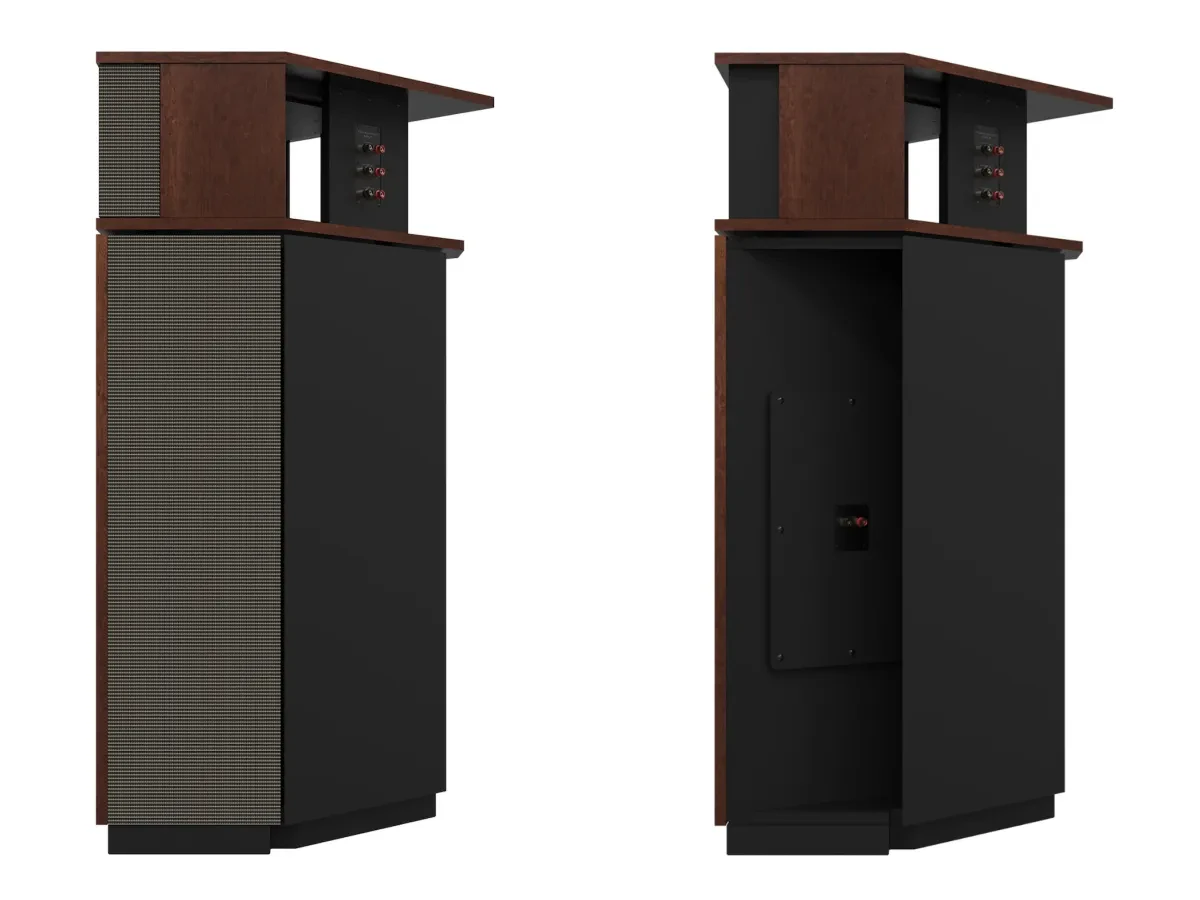
Each of the three drivers in the Klipsch Klipschorn AK7 is loaded by its own horn, designed for its specific frequency band. This sets the design apart from the far more common and simpler approach, in which only the midrange and treble are horn-loaded.
A horn is an acoustic transformer - it matches the high mechanical impedance of the diaphragm to the low impedance of the air. As a result, the efficiency of converting electrical energy into acoustic energy rises several-fold, hence the sensitivity of over 100 dB. The flip side is size, since horn dimensions are dictated by the speaker's lowest operating frequency. The classic Klipsch Klipschorn could only work when placed hard against the corners of the room because the bass horn was folded inside the cabinet and the missing part of its mouth was formed by the room's walls.
Does the Klipsch Klipschorn AK7 Still Need Corner Placement?
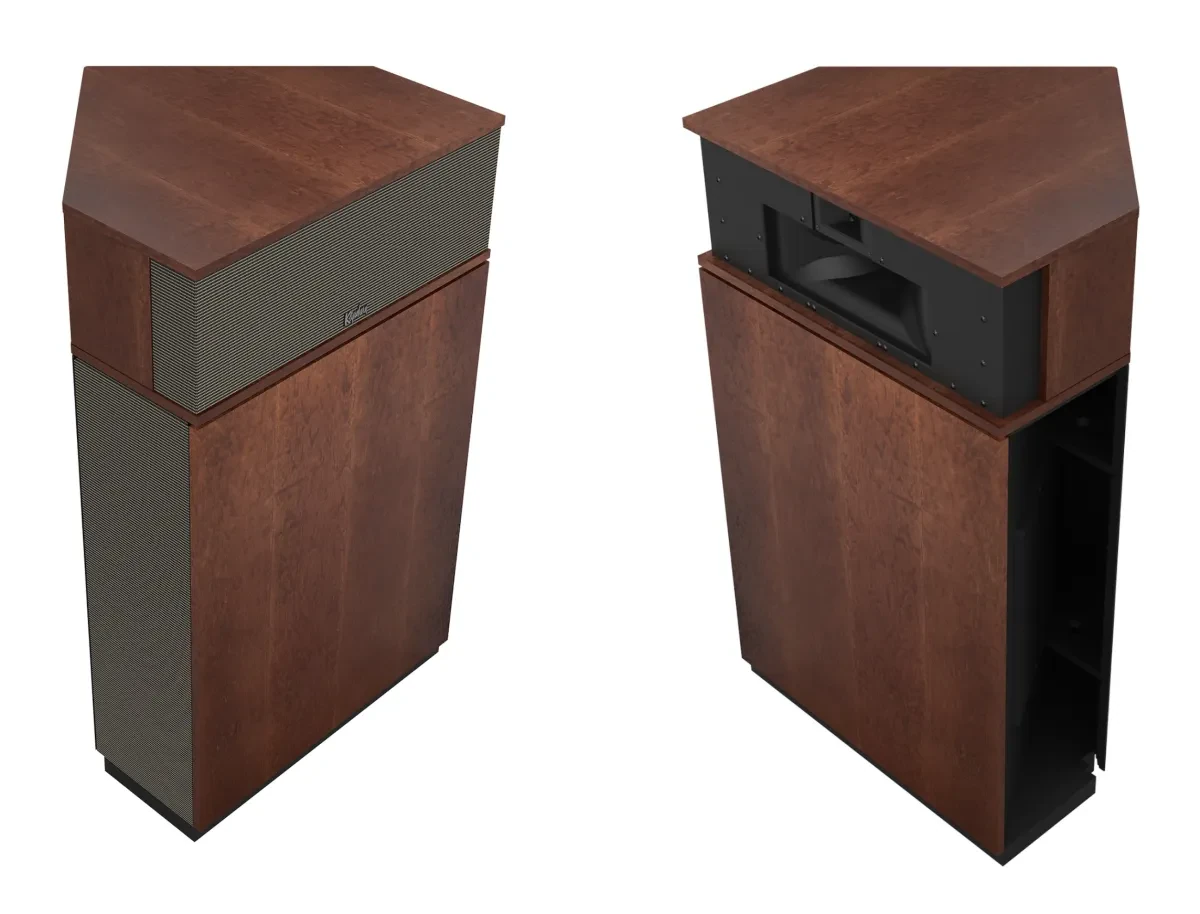
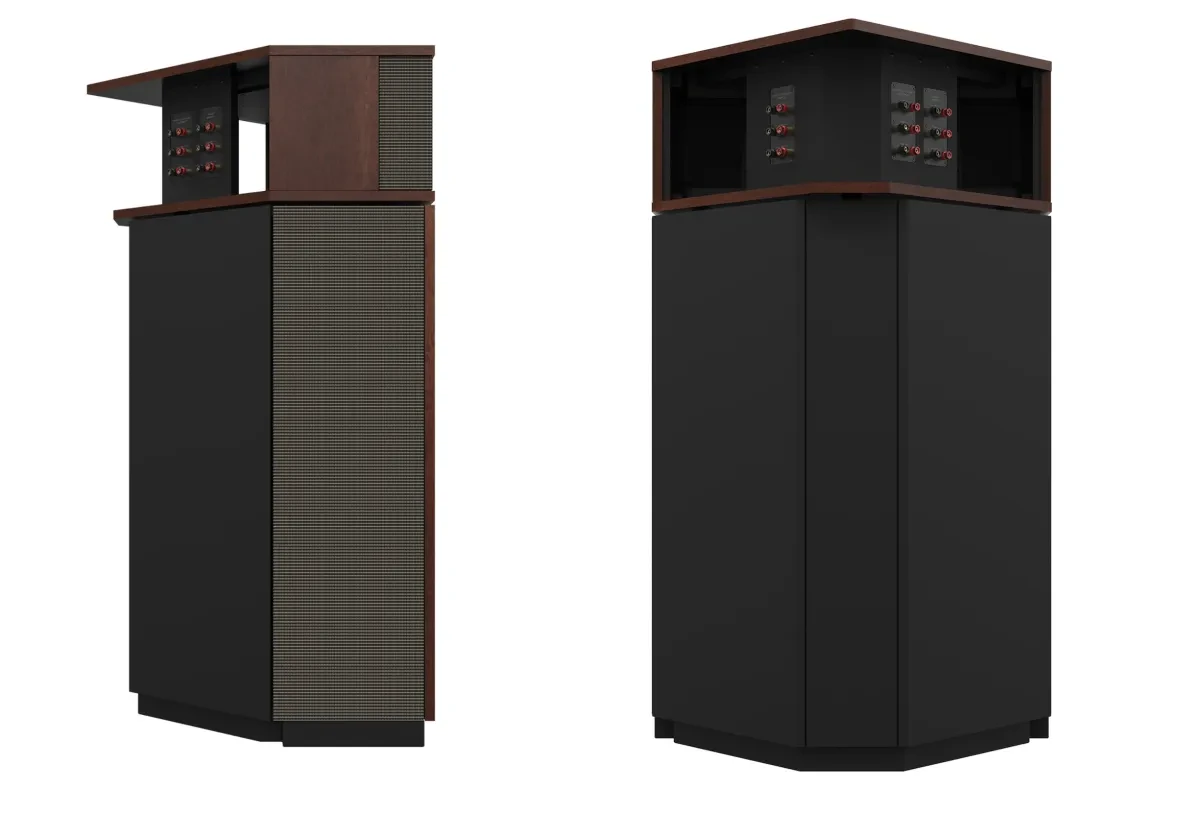
In the original Klipsch Klipschorn design, the rear of the cabinet was open, and the two converging walls of the room together with the floor "completed" the horn to its required length. Starting with the Klipsch Klipschorn AK6, the bass section uses a sealed enclosure - the bass horn now fits entirely within the cabinet.
We know well that sealed-box speakers are tolerant of room placement and work perfectly well both far from and relatively close to walls (the absence of a bass reflex port removes the need to account for its airflow, though it does not eliminate the risks of reflections and standing waves). With the Klipsch Klipschorn AK7, things are somewhat different. The speaker has indeed stopped depending on how flat and even your walls are. But corner placement remains a condition for proper operation, because the geometry of the bass horn itself, even when working with a woofer in a sealed enclosure, is still designed to be loaded by two adjoining surfaces.
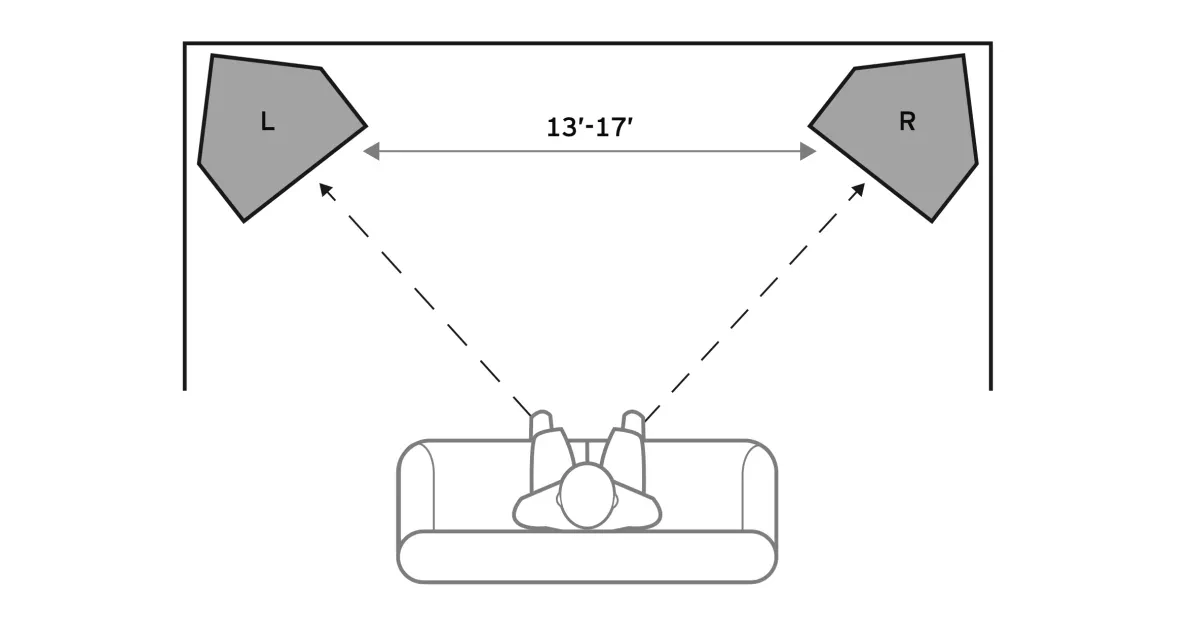
The owner's manual strongly recommends this installation. In other words, bear in mind that if your room lacks two suitable corners on the same wall, this speaker is unlikely to suit you. That said, some relaxation of the original installation requirements has appeared: the speakers no longer have to be pushed hard against the walls.
New Midrange Driver
At the heart of the Klipsch Klipschorn AK7 is the brand's newest K-1133-HP compression driver with a three-inch diaphragm, a full inch larger than in the previous version. The larger area raises the pressure at the horn throat, extending maximum output headroom and lowering distortion at high volume. Maximum sound pressure reaches 120 dB, meaning the speaker will easily handle a room of 100 m².
The driver is mounted on a new K-406M horn with a Tractrix profile and a shortened two-inch throat. In addition, the horn surface features small sculpted contours designed to keep the frequency response even right up to the edge of the mouth. This approach tackles a problem common to many horn designs: at the edge of the mouth the wave re-radiates from the lip, creating a secondary source and a dip in the response. Contouring the surface smears this effect across frequency.
New Tweeter
The K-771 compression tweeter gets a new patented, elongated phase plug. Its job is to equalise the path length from different areas of the diaphragm to the horn throat. Without it, waves from the centre and the periphery of the diaphragm arrive at the throat with different delays and partially cancel each other at the highest frequencies.
Woofer
The 15-inch K-33-E driver operates in a fully sealed folded horn. This part of the design is unchanged from the previous Klipsch Klipschorn AK6.
Active Configuration
The key functional difference between the Klipsch Klipschorn AK7 and every previous version is an optional external active crossover system with digital processing, inherited from the flagship Klipsch Jubilee.
The active configuration ensures time and phase alignment, frequency response correction and band splitting without a passive filter in the signal path. It works only in tri-amped mode, however, meaning three amplifier channels per speaker, or three stereo power amplifiers for the system.
The connection panel of the Klipsch Klipschorn AK7 has been redesigned and includes inputs for passive and active modes as well as an output for passive mode, so you can switch between configurations without modifying the speaker. In other words, moving to active operation is possible even after you have bought the speakers.
The arguments for going active are well known: removing the passive crossover from the power path, precise time alignment of three horns with different path lengths, and a flatter frequency response.
The arguments against are not only about cost (tripled amplification expenditure). Digital signal processing via DSP compromises the "purity" of an analogue chain, above all a vinyl-based one. Here the decision is best made after extended listening and comparison with your own sources. For our testing of the model, we used the passive configuration.
Required Amplifier Power
With a sensitivity of 103 dB, the Klipsch Klipschorn AK7 can work even with single-ended pentode or 300B (etc.) tube amplification. One watt delivers 103 dB at 1 metre from the speaker, and eight watts already guarantee 112 dB. So even a 2 × 8 W single-ended directly heated triode amplifier works here with plenty of headroom, while a 30–40 W push-pull tube amplifier covers any use case.
The Flip Side
Sensitivity cuts both ways, and at 103 dB it can be noticeable. An amplifier whose noise floor is completely inaudible on an 87 dB speaker will produce audible hiss in the pauses here (a 16 dB difference in sensitivity means exactly 16 dB added to the audible noise threshold). The conclusion is simple: look at the measured noise level of the amplifier you are choosing, not the specified signal-to-noise ratio referenced to full power.
Placing the Klipsch Klipschorn AK7
Corners. A mandatory requirement. Both speakers go in the corners of the same wall, flush against both adjoining surfaces.
Wall width. The manufacturer states that the design works in a room of roughly 4 × 5.5 metres or larger. Practical experience from independent observers confirms this lower limit as workable, but not comfortable.
Toe-in. This is set not by the speaker itself but by the geometry of the corners. The distance between the speakers is determined by the width of the wall, which limits the ability to adjust the stereo base and requires careful choice of listening distance.
Height. The horn axes are designed for a seated listener and cannot be adjusted.
First reflections. With corner placement, the side walls are right up against the drivers. Treating the first reflection points matters more here than in a conventional setup.
Test System
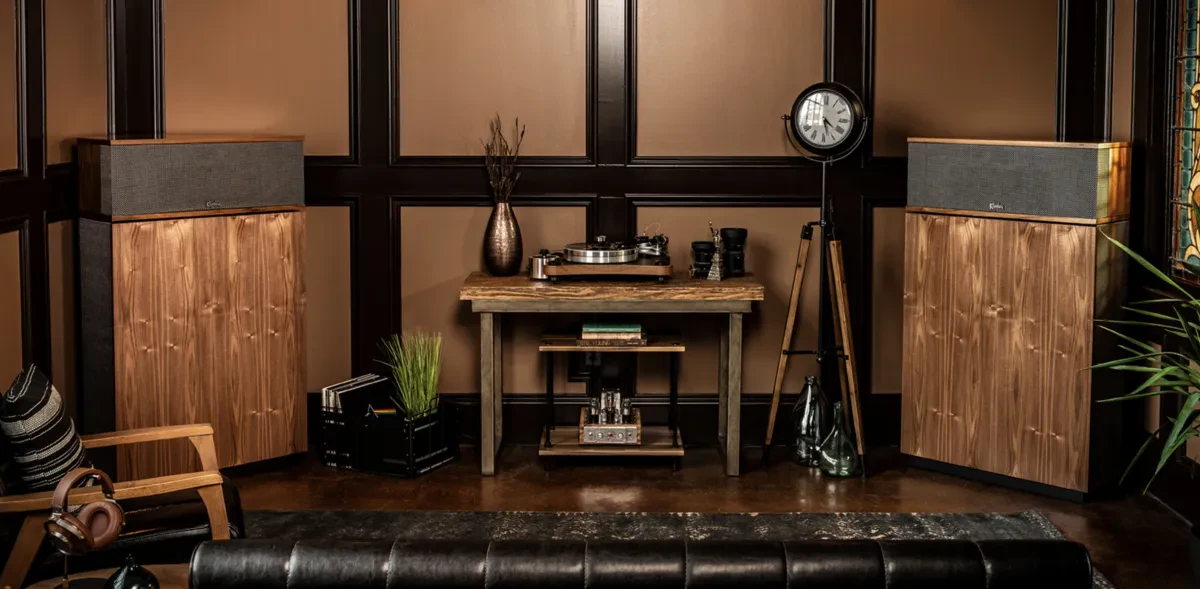
We paired the speakers with the Border Patrol S20EXD power amplifier, which delivers 2 × 18 W per channel using 300B tubes in a parallel single-ended configuration. Thanks to its two outboard power supplies, the amplifier provided reference-grade control of the speakers. Preamplification came from an Audio Note UK M6, with a Luxman EQ-500 phono stage, a TechDas Air Force V turntable, an SME IV tonearm and a My Sonic Lab Ultra Eminent Ex MC cartridge. Cabling was by The Chord Company.
Listening
If the Klipsch Klipschorn AK6 was the king of microdynamics, the Klipsch Klipschorn AK7 has clearly surpassed it. Vocal nuances through these speakers were utterly captivating, while the air and the finest contrasting shades on Milt Jackson's Sunflower made the playback feel more like the flow of a stream than the work of conventional loudspeakers. The contrasts between quiet and loud passages were so distinctly rendered that we wanted to go back and re-listen to many recordings.
But the Klipsch Klipschorn AK7 can also surprise you with attack and macrodynamics. When the recording demands it, they effortlessly build a wall of sound and show complete composure under load. Black Sabbath's Paranoid, for example, literally works like a time machine on the AK7, transporting us to the early 1970s and letting us feel the full drive of the guitars. Still, physical limits should be kept in mind: in our case the bass is dry and very fast, but not fat and voluminous in the way many listeners are used to from direct-radiating speakers.
Where the Klipsch Klipschorn AK7's all-horn design leaves many competitors standing, though, is with full symphony orchestra. Mahler's Ninth Symphony astonishes with its scale, pushes back the walls of the room and moves us into the front rows of the stalls. Bravo. True, the Klipsch Klipschorn AK7 will not give you the flawless treble brilliance of the very top tier of high-end, but in our case it isn't needed. You simply want to lean back in your chair and spend hours enjoying the sense of being present at a live performance, rather than examining timbres under a magnifying glass.
Verdict
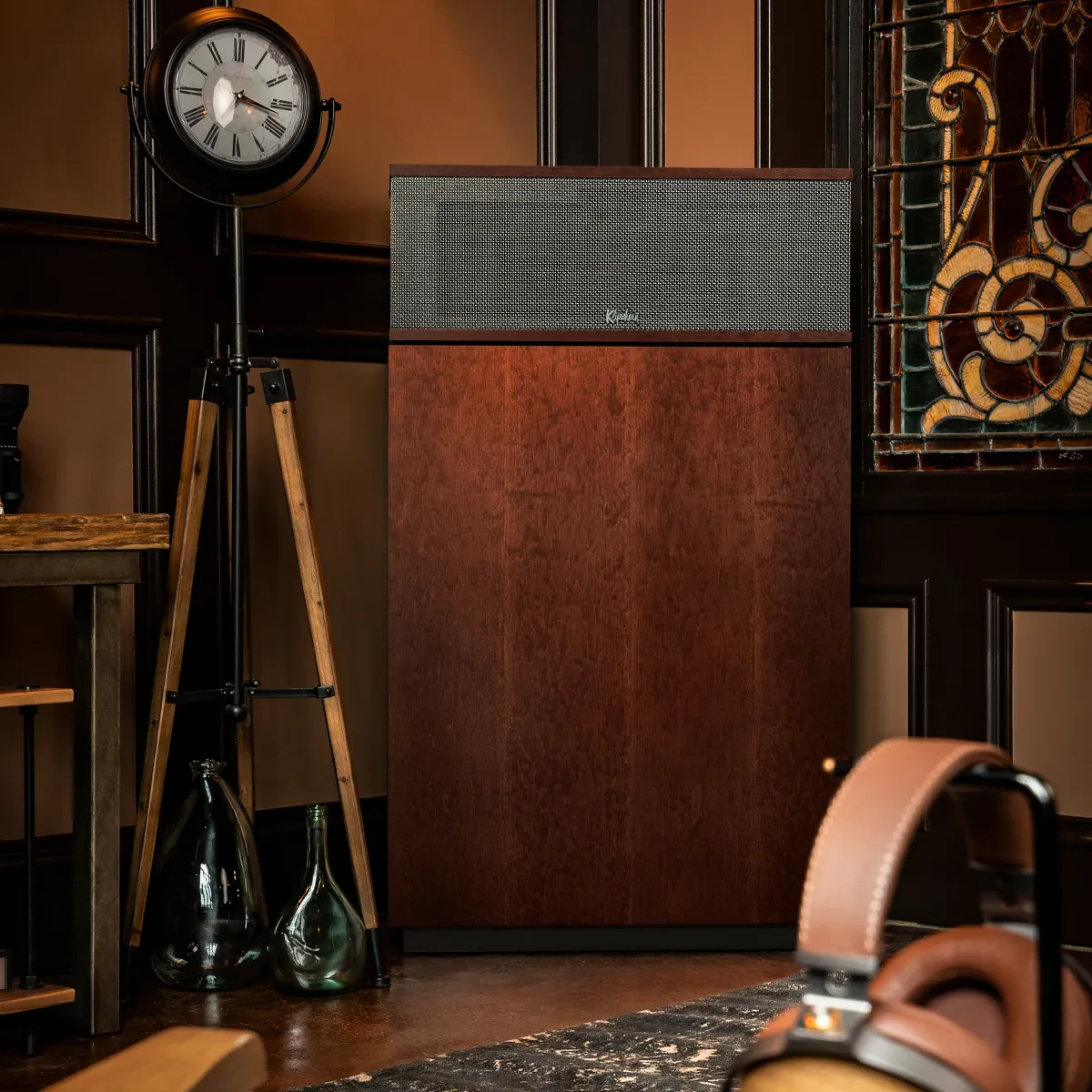
The Klipsch Klipschorn AK7 is not nostalgia but a superb, modern high-end loudspeaker. If you have a room suited to its installation and are not a devotee of "subwoofer-style" bass, all roads lead to Rome.
Evaluations
Stage
98%
Detailing
95%
Macrodynamics
95%
Microdynamics
95%
Bass extension
90%
Timbral authenticity
90%
Genre versatility
90%
Overall
93%
Particular qualities
Brand's newest K-1133-HP compression driver with a 3" diaphragm
The K-771 compression tweeter with a new patented, elongated phase plug
Active configuration is possible
Specifications
Model name
Klipschorn AK7 2025 model
Frequency Response low +/- 3dB (Hz)
34
Frequency Response high +/- 3dB (Hz)
19 000
Sensitivity (dB at 1 W/1m)
103
Impedance (Ohms)
8
Power amplifier requirements (W)
N/A
Has internal amplification
N/A
Internal amplification power (W)
400
Size (sm)
135,25 × 80 × 71,5
Weight (kg)
118
Official link