
Все

Напольная акустика — ProAc Response D30R Cherry
Описание, изображения, технические характеристики и спецификации
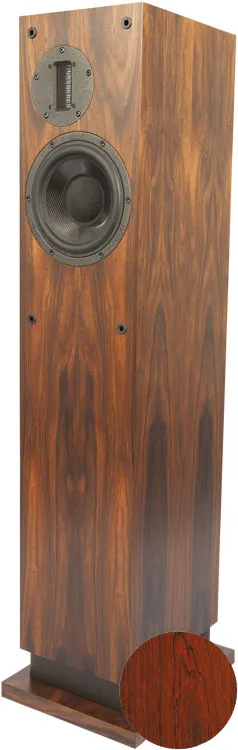
ProAc Response D30R Cherry
Источник изображения — © ProAc
This is the cherry veneer version of the ProAc Response D30R, a slim two-way floorstander designed by Stewart Tyler for the Response Range. When it was introduced, ProAc had already moved to carbon fibre cones in the Response D40 and Carbon Pro 8 and to Kevlar in the Tablette Anniversary and K6, and the D30 became the next model to adopt carbon fibre. The R in the name stands for the ribbon tweeter, while a dome version was sold as the plain D30. ProAc later replaced it with the D30RS, which kept the cabinet size and the price.
Key specs that matter
A single 165 mm (6.5 in) ProAc driver covers bass and midrange, using a carbon fibre cone with a polymer coating on its rear face and concentric damping. Above it sits the ProAc ribbon unit, 60 x 10 mm in size. ProAc rates the speaker at 20 Hz to 30 kHz, 89 dB linear for 1 W at 1 m and 8 ohms nominal, with a suggested amplifier range of 10 to 200 W. The cabinet is 1041 mm tall, 215 mm wide and 266 mm deep, and it sits on a plinth 257 mm wide and 311 mm deep. The weight is 27 kg per cabinet unpacked.
Engineering and use context
ProAc describes the carbon fibre cone as the result of long research into cone materials aimed at a smooth frequency response. The bass loading is a side-vented directional arrangement taken from the larger D40, and the high frequency units are the same ones found in the D40 and D40R. The ribbon diaphragm is described by ProAc as being as light as a human hair, and a damped chamber sits behind it. The crossover network uses dedicated high grade components wired with multistrand oxygen-free copper cable, and the classic ProAc split layout gives bi-wiring and bi-amping options at the rear. ProAc supplies its own spikes, shaped to pass through thick carpet to the floor underneath. The grille is acoustically transparent crimplene. In the D30 period cherry was one of four standard finishes together with black ash, mahogany and maple, and rosewood and ebony were available at extra cost.
Pairing
With its easy load and sensitivity the D30R asks little of an amplifier, and ProAc's lower power suggestion takes in low-output valve amplifiers alongside solid-state ones. Owners who start with one amplifier can add a second one later through the split terminals without changing the speakers.
Alternatives
The ProAc Response D20R is a smaller ribbon-equipped floorstander of the Response Range, 978 mm tall, with a glass fibre weave cone.
Key specs that matter
A single 165 mm (6.5 in) ProAc driver covers bass and midrange, using a carbon fibre cone with a polymer coating on its rear face and concentric damping. Above it sits the ProAc ribbon unit, 60 x 10 mm in size. ProAc rates the speaker at 20 Hz to 30 kHz, 89 dB linear for 1 W at 1 m and 8 ohms nominal, with a suggested amplifier range of 10 to 200 W. The cabinet is 1041 mm tall, 215 mm wide and 266 mm deep, and it sits on a plinth 257 mm wide and 311 mm deep. The weight is 27 kg per cabinet unpacked.
Engineering and use context
ProAc describes the carbon fibre cone as the result of long research into cone materials aimed at a smooth frequency response. The bass loading is a side-vented directional arrangement taken from the larger D40, and the high frequency units are the same ones found in the D40 and D40R. The ribbon diaphragm is described by ProAc as being as light as a human hair, and a damped chamber sits behind it. The crossover network uses dedicated high grade components wired with multistrand oxygen-free copper cable, and the classic ProAc split layout gives bi-wiring and bi-amping options at the rear. ProAc supplies its own spikes, shaped to pass through thick carpet to the floor underneath. The grille is acoustically transparent crimplene. In the D30 period cherry was one of four standard finishes together with black ash, mahogany and maple, and rosewood and ebony were available at extra cost.
Pairing
With its easy load and sensitivity the D30R asks little of an amplifier, and ProAc's lower power suggestion takes in low-output valve amplifiers alongside solid-state ones. Owners who start with one amplifier can add a second one later through the split terminals without changing the speakers.
Alternatives
The ProAc Response D20R is a smaller ribbon-equipped floorstander of the Response Range, 978 mm tall, with a glass fibre weave cone.
Характеристики
Название модели
Response D30R Cherry
Нижняя граница частотного диапазона +/- 3дБ (Hz)
20
Верхняя граница частотного диапазона +/- 3дБ (Hz)
30 000
Чувствительность (dB at 1 W/1m)
89
Импеданс (Ohms)
8
Требования к усилителю мощности (W)
10 - 200
Наличие встроенного усилителя
Н/д
Мощность встроенного усилителя (W)
N/A
Размер (sm)
21.5 х 104.1 х 26.6
Вес (kg)
27
Официальная ссылка
Другие компоненты
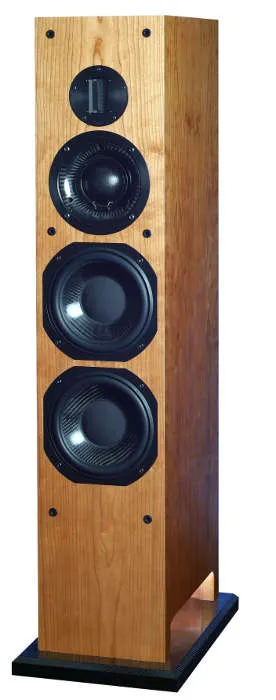
Напольная акустика
ProAc Carbon Pro 8 Light Oak
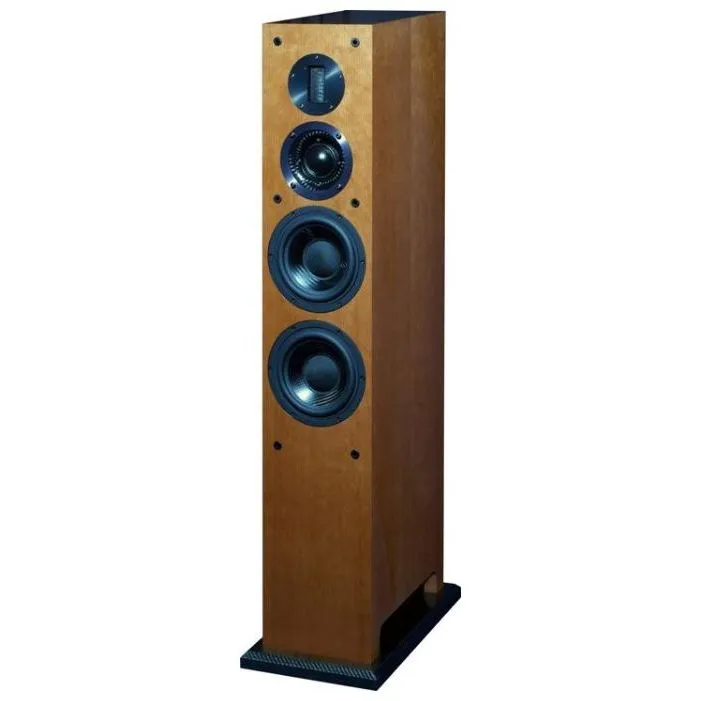
Напольная акустика
ProAc Carbon Pro 6 Cherry
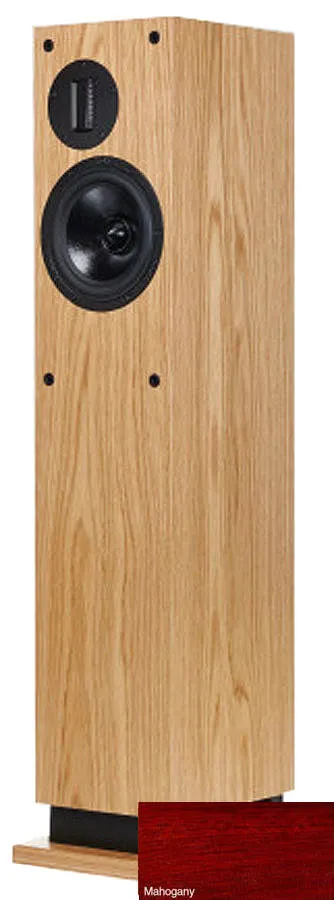
Напольная акустика
ProAc Response D30RS Mahagon
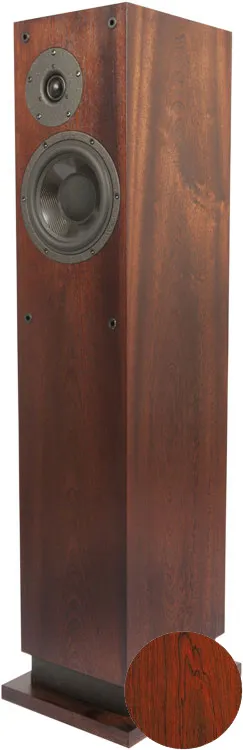
Напольная акустика
ProAc Response D30 Mahagon
Напольная акустика
ProAc Response D30R Mahagon