
Все

Напольная акустика — Albedo Aptica
Описание, изображения, технические характеристики и спецификации
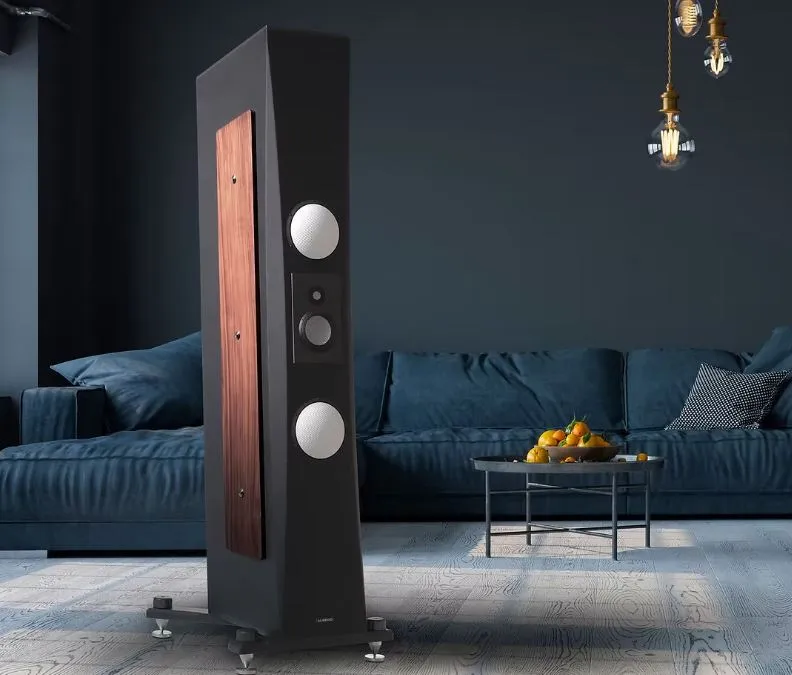
Albedo Aptica
Источник изображения — © Albedo
The Aptica is the slim two-way tower in the Maestro Collection of Albedo Audio from Italy, a range built around cabinets of curved wood. It grew out of the earlier Albedo H2.2 and later borrowed the sculpted front baffle of the three-way Axcentia. The version now offered is the Aptica SG, which brings a new tweeter and revised crossover parts. In New Zealand the earlier Aptica was listed at NZD 14,750 in black oak or Makassar ebony.
Key specs that matter
Both drivers are ceramic units from the German maker Accuton - a 6.25 inch mid-woofer and a 1 inch CELL tweeter with an inverted dome. A single crossover point at 3.0 kHz joins them. Albedo lists 85 dB at 2.83 V and 1 m, an 8 ohm nominal impedance and a range of 45 Hz to 32 kHz. The cabinet stands 102 cm high on a footprint of 19.5 cm by 26.5 cm, and each speaker weighs 24 kg. Buyers choose black oak or glossy black lacquer. The first Aptica was lighter at 19 kg and was rated to 20 kHz, so the SG changes add both weight and treble reach.
Engineering and use context
The mid-woofer works into a transmission line fitted with a Helmholtz-type resonator, the loading method shared by every current Albedo tower. The system is described as linear phase. Its filters combine first and second order slopes, are wired point to point and hand built with Mundorf capacitors and coils. On the SG the CELL tweeter uses a stronger neodymium magnet, and a Diffraction Shaping Device, which Albedo calls an acoustic trap, is fitted around it. The shaped front panel taken from the Axcentia is intended to diffuse reflections along the cabinet face. Accuton cones carry a very thin layer of aluminium oxide, a sapphire-type ceramic that pairs light weight with stiffness and allows tight production tolerances. With only one crossover point in the signal path the Aptica keeps the part count low, and its narrow front makes the tower easy to fit beside furniture.
Pairing
The moderate load and sensitivity suit a solid state or valve amplifier able to deliver steady voltage into a moderate impedance rather than one relying on high current reserves. Despite its transmission line, the Aptica was designed with minimal room requirements in mind, so it can go into smaller spaces where a deeper tower such as the Axcentia would be hard to place.
Alternatives
The Albedo Amira is the other two-way floorstander in the Maestro Collection, also shaped in curved wood.
Key specs that matter
Both drivers are ceramic units from the German maker Accuton - a 6.25 inch mid-woofer and a 1 inch CELL tweeter with an inverted dome. A single crossover point at 3.0 kHz joins them. Albedo lists 85 dB at 2.83 V and 1 m, an 8 ohm nominal impedance and a range of 45 Hz to 32 kHz. The cabinet stands 102 cm high on a footprint of 19.5 cm by 26.5 cm, and each speaker weighs 24 kg. Buyers choose black oak or glossy black lacquer. The first Aptica was lighter at 19 kg and was rated to 20 kHz, so the SG changes add both weight and treble reach.
Engineering and use context
The mid-woofer works into a transmission line fitted with a Helmholtz-type resonator, the loading method shared by every current Albedo tower. The system is described as linear phase. Its filters combine first and second order slopes, are wired point to point and hand built with Mundorf capacitors and coils. On the SG the CELL tweeter uses a stronger neodymium magnet, and a Diffraction Shaping Device, which Albedo calls an acoustic trap, is fitted around it. The shaped front panel taken from the Axcentia is intended to diffuse reflections along the cabinet face. Accuton cones carry a very thin layer of aluminium oxide, a sapphire-type ceramic that pairs light weight with stiffness and allows tight production tolerances. With only one crossover point in the signal path the Aptica keeps the part count low, and its narrow front makes the tower easy to fit beside furniture.
Pairing
The moderate load and sensitivity suit a solid state or valve amplifier able to deliver steady voltage into a moderate impedance rather than one relying on high current reserves. Despite its transmission line, the Aptica was designed with minimal room requirements in mind, so it can go into smaller spaces where a deeper tower such as the Axcentia would be hard to place.
Alternatives
The Albedo Amira is the other two-way floorstander in the Maestro Collection, also shaped in curved wood.
Характеристики
Название модели
Aptica
Нижняя граница частотного диапазона +/- 3дБ (Hz)
45
Верхняя граница частотного диапазона +/- 3дБ (Hz)
32 000
Чувствительность (dB at 1 W/1m)
85
Импеданс (Ohms)
8
Требования к усилителю мощности (W)
N/A
Наличие встроенного усилителя
Н/д
Мощность встроенного усилителя (W)
N/A
Размер (sm)
26 x 19 x 101
Вес (kg)
24
Официальная ссылка
Другие компоненты
Напольная акустика
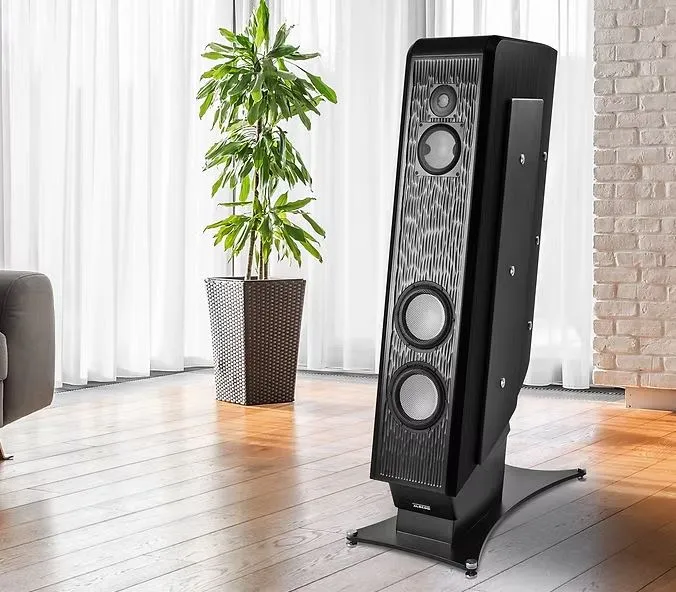
Albedo Axcentia
Напольная акустика
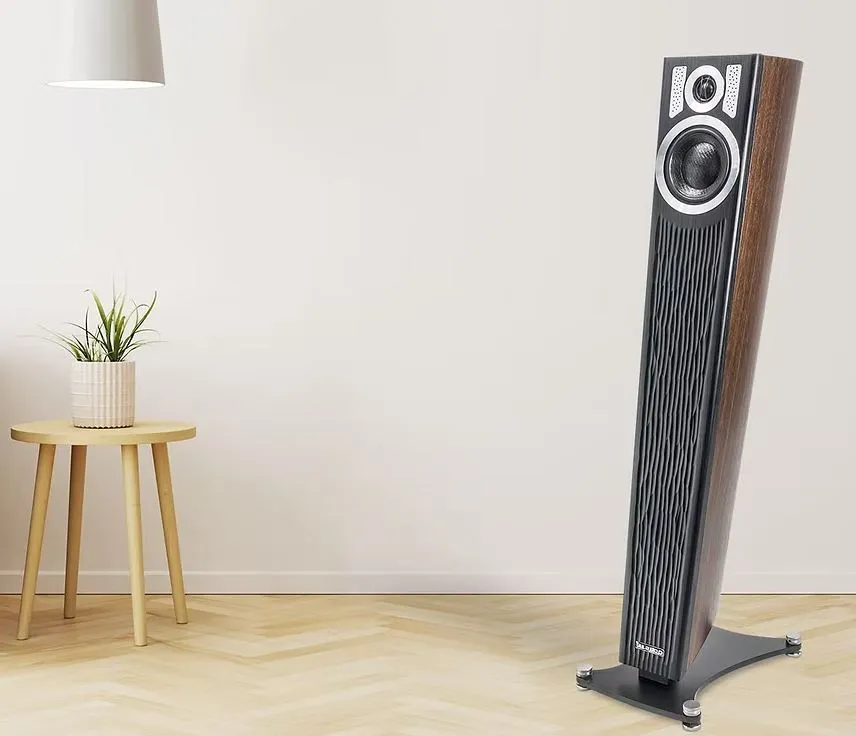
Albedo Amira
Напольная акустика
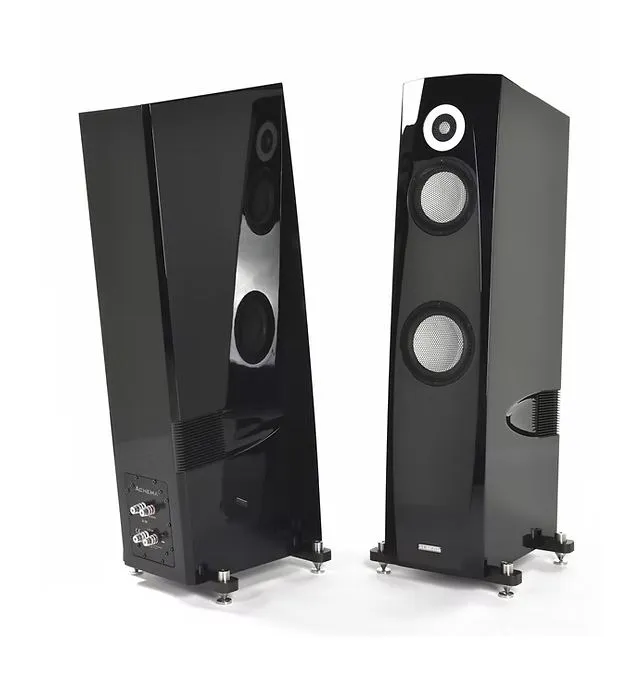
Albedo ACHEMA
Напольная акустика
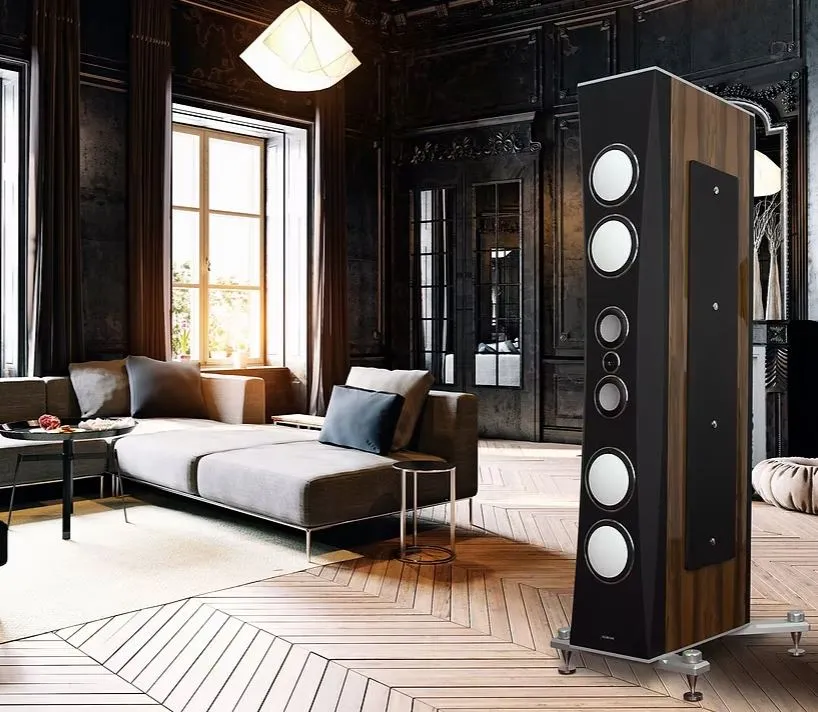
Albedo Atesia
Напольная акустика
Albedo Alecta