
All

Subwoofers — Vandersteen Audio SUB THREE
Description, images, technical data and specifications
Vandersteen Audio SUB THREE
Image source — © Vandersteen Audio
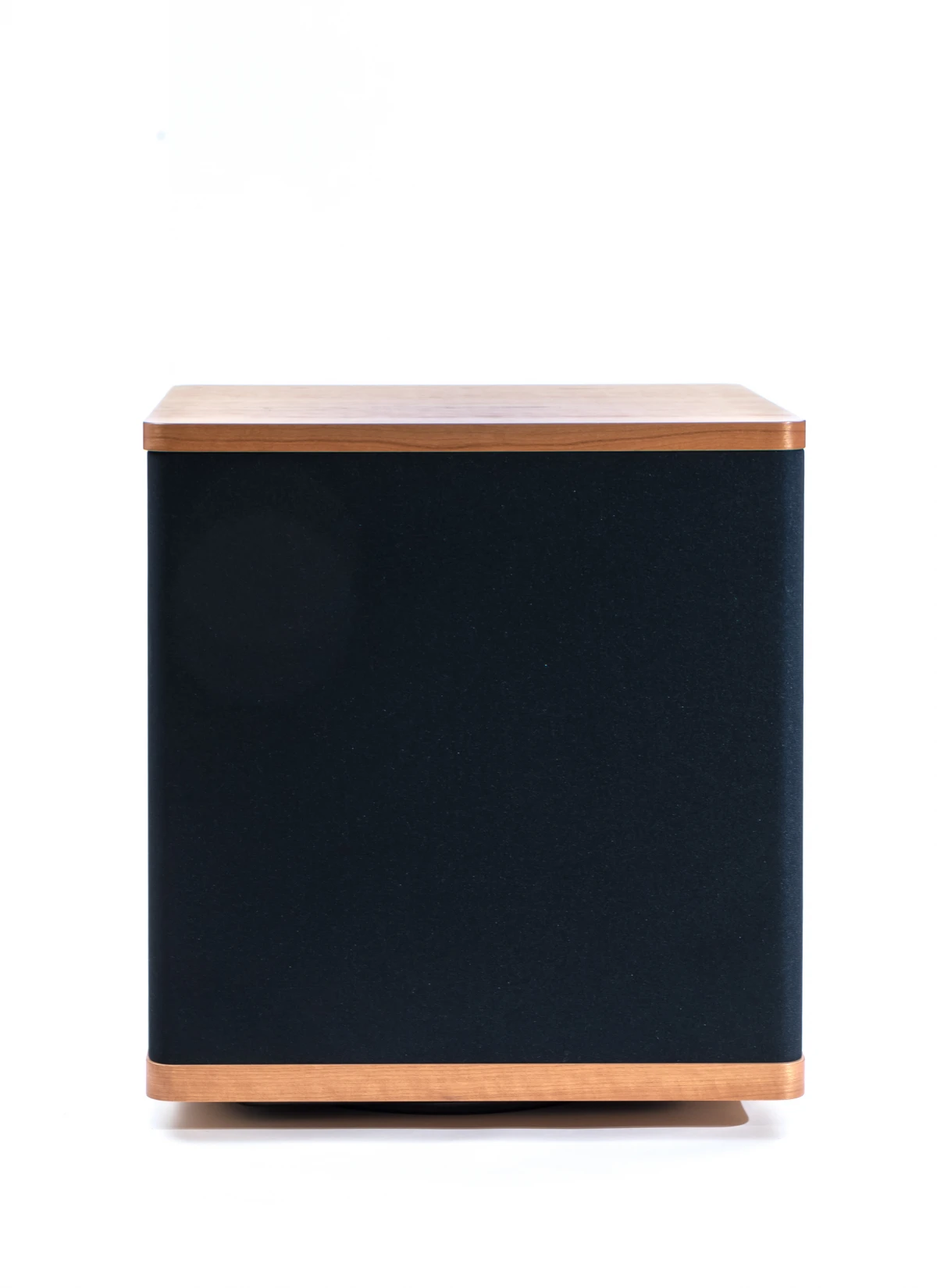
Vandersteen built the SUB THREE on the technology of its earlier 2Wq, adding more amplifier power and stronger driver frames. The line goes back to the original Model 2W, which spent five years as a prototype before it appeared in 1984. With the SUB THREE, the 11-band equaliser that started in the Model 5 and continued in the Quatro, Model Seven and SUB NINE reaches a lower price for the first time. It starts at USD 3,700 each before duty, taxes and freight, in Light Walnut, Maple, Oak, Black, Cherry or Dark Oak.
Key specs that matter
Three 8 inch drivers with cast aluminium baskets replace the stamped steel frames of the 2Wq. Together they equal the cone area of a 14 inch woofer but with a much higher ratio of motor to cone area. Each has a 1.5 inch four-layer voice coil for high temperatures, a 1.1 kg high-gauss magnet, and long-fibre cones on butyl rubber surrounds. A built-in 325 W amplifier with a power factor corrected switch mode supply drives them. Response is within 3 dB from 20 Hz to 80 Hz, and output adjusts for main speakers rated between 82 dB and 100 dB. The cabinet is 46 cm wide, 43 cm deep and 47 cm high, and the subwoofer weighs 41 kg net.
Engineering and use context
The drivers fire downward in a front slot-loaded layout to keep midrange out of the output. Because they work well several octaves past the crossover, no steep high-order filter is needed. The MDF cabinet shape and internal bracing were refined with FFT analysis and listening. Instead of negative feedback or servo control, the amplifier uses Feed-Forward Error Correction, where the inverse of errors measured in spectrum and dynamic analysis is built into the circuit, covering coupling, loading, driver phase and box loss. The crossover is split. A 6 dB per octave high-pass section sits between preamplifier and main power amplifier, while the sub reads the output of that main amplifier through a high input impedance, so the main amplifier stays in the signal path. A rear contour control sets Q from 0.5 to 1.2.
Pairing
The preamplifier and power amplifier must be separable, which rules out receivers and integrated amplifiers without pre-out and main-in, and the input impedance of the main amplifier must be known to set the high-pass filter. Variable crossovers come in single-ended and balanced versions. Vandersteen favours two units for stereo bass, and in multichannel systems a pair can take the LFE content redirected to the main speakers, with more units for surrounds.
Alternatives
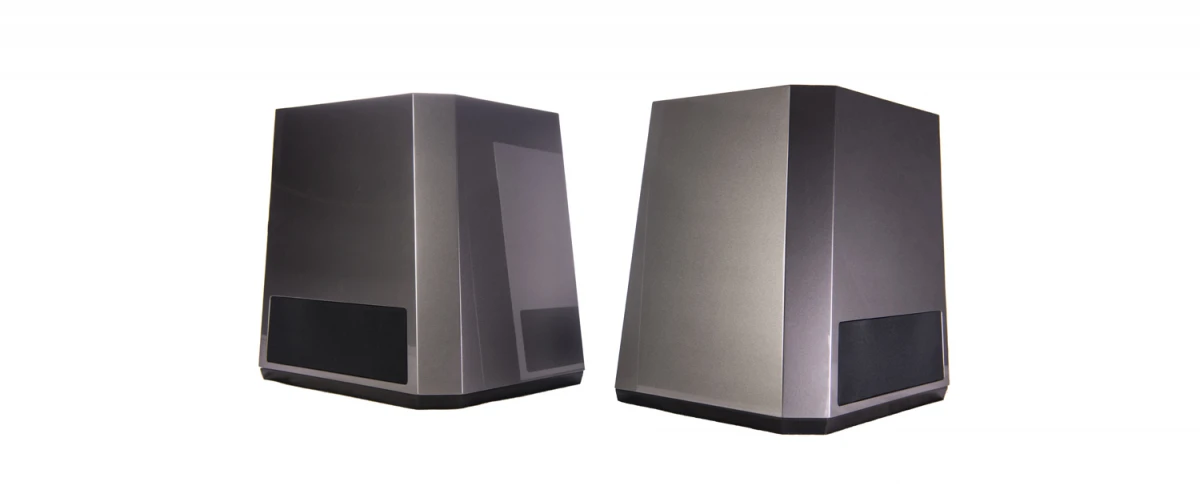
The Vandersteen SUB NINE is the larger model, with one 13 inch woofer and a 400 W amplifier per enclosure, sold only in pairs.
Key specs that matter
Three 8 inch drivers with cast aluminium baskets replace the stamped steel frames of the 2Wq. Together they equal the cone area of a 14 inch woofer but with a much higher ratio of motor to cone area. Each has a 1.5 inch four-layer voice coil for high temperatures, a 1.1 kg high-gauss magnet, and long-fibre cones on butyl rubber surrounds. A built-in 325 W amplifier with a power factor corrected switch mode supply drives them. Response is within 3 dB from 20 Hz to 80 Hz, and output adjusts for main speakers rated between 82 dB and 100 dB. The cabinet is 46 cm wide, 43 cm deep and 47 cm high, and the subwoofer weighs 41 kg net.
Engineering and use context
The drivers fire downward in a front slot-loaded layout to keep midrange out of the output. Because they work well several octaves past the crossover, no steep high-order filter is needed. The MDF cabinet shape and internal bracing were refined with FFT analysis and listening. Instead of negative feedback or servo control, the amplifier uses Feed-Forward Error Correction, where the inverse of errors measured in spectrum and dynamic analysis is built into the circuit, covering coupling, loading, driver phase and box loss. The crossover is split. A 6 dB per octave high-pass section sits between preamplifier and main power amplifier, while the sub reads the output of that main amplifier through a high input impedance, so the main amplifier stays in the signal path. A rear contour control sets Q from 0.5 to 1.2.
Pairing
The preamplifier and power amplifier must be separable, which rules out receivers and integrated amplifiers without pre-out and main-in, and the input impedance of the main amplifier must be known to set the high-pass filter. Variable crossovers come in single-ended and balanced versions. Vandersteen favours two units for stereo bass, and in multichannel systems a pair can take the LFE content redirected to the main speakers, with more units for surrounds.
Alternatives
The Vandersteen SUB NINE is the larger model, with one 13 inch woofer and a 400 W amplifier per enclosure, sold only in pairs.
Specifications
Model name
SUB THREE
Frequency Response low +/- 3dB (Hz)
20
Frequency Response high +/- 3dB (Hz)
80
Sensitivity (dB at 1 W/1m)
N/A
Impedance (Ohms)
N/A
Has internal amplification
Yes
Power amplifier (W)
325
Size (sm)
45.7 × 43.1 × 46.9
Weight (kg)
40.8
Official link
More components
Subwoofers
Vandersteen Audio V2W
Subwoofers
Vandersteen Audio SUB NINE