
All

Floorstanding loudspeakers — Lowther Hegeman
Description, images, technical data and specifications
Lowther Hegeman
Image source — © Lowther
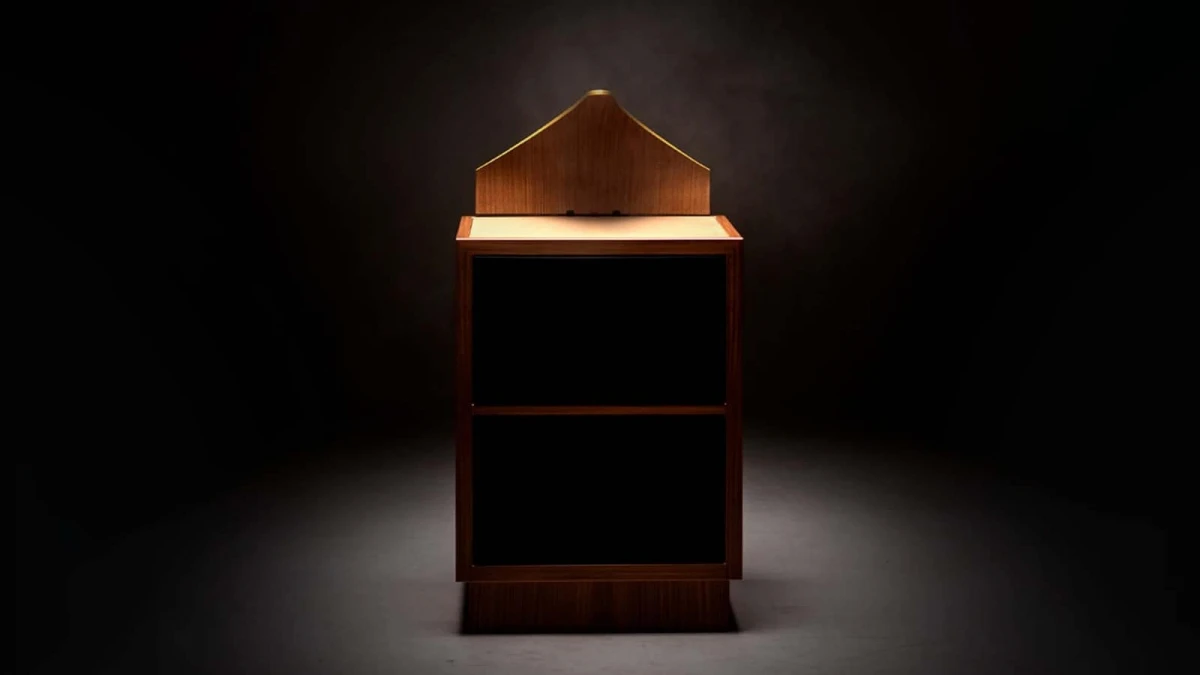
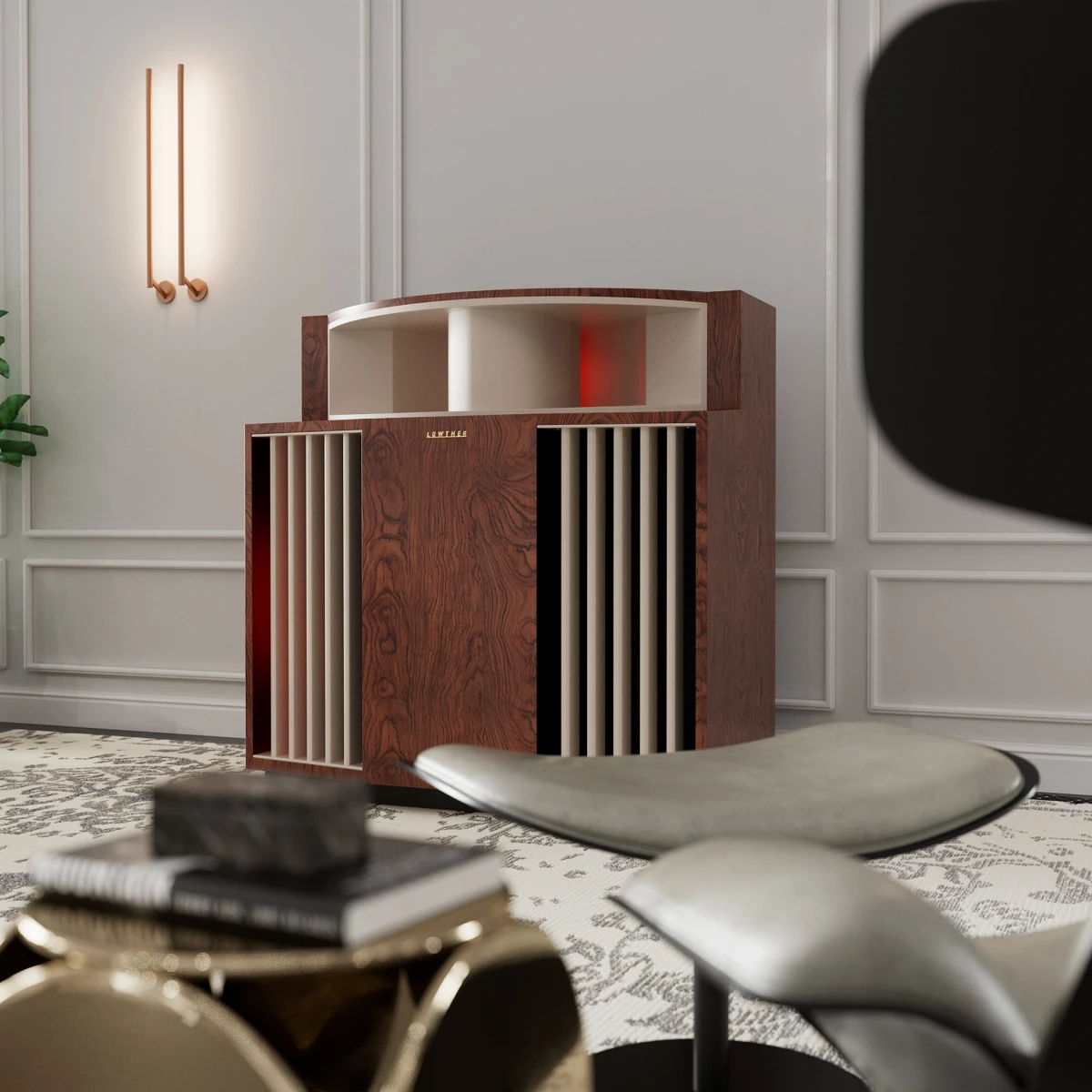
Lowther's Hegeman is a big Voigt-horn floorstander built by hand in Britain and made to order. It revives a cabinet first sold in 1951, the result of a collaboration between the American designer Stewart Hegeman and Lowther founder Donald Chave. The original housed a PM4 drive unit in a large horizontal plaster horn inside a wooden case and cost GBP 150 in its first year, three times the price of the Lowther Voigt domestic corner horn of that period. The modern version replaces the plaster with curved composite construction and current veneers.
Key specs that matter
A single 8 inch full-range Lowther drive unit loads a Voigt horn. Lowther quotes a frequency response of 35 Hz to 20 kHz and a sensitivity of 98 to 105 dB, which the company describes as room dependent and typically above 100 dB of system efficiency. Nominal impedance is given as 8 or 15 ohm, depending on the drive unit chosen. Each cabinet measures 1140 mm high, 1130 mm wide and 600 mm deep and weighs 150 kg.
Engineering and use context
Lowther recommends its own field coil drive unit for the Hegeman, with the PM4A from the Philharmonic collection listed as the alternative. The field coil unit uses a newly developed cone doped with a special formula, and Lowther hand-treats its paper cones and air-dries them in natural sunlight. Drive units are assembled in the Norfolk atelier, while the cabinets are made in a Northampton workshop from high-grade Baltic birch plywood finished in hand-matched veneers, a combination chosen for resonance control. The company builds no more than four pairs of Hegeman cabinets per year, and final pricing depends on the chosen finish and drive unit, confirmed only on enquiry. Lowther designed the speaker for large rooms and salons, with the horn positioned in free space rather than tucked into a corner, so it suits a dedicated listening space well beyond 20 m2.
Pairing
Efficiency of this order means only a handful of watts is needed, and single-ended triode amplifiers of very modest output make a logical partner. The choice between the two impedance versions should follow the output taps of the amplifier. A field coil version also needs its own supply for the magnet, which should be planned alongside the amplifier.
Alternatives
Lowther also builds the Acousta 117, a handcrafted folded-horn floorstander made to order in the veneer and drive units of the buyer's choice.
Key specs that matter
A single 8 inch full-range Lowther drive unit loads a Voigt horn. Lowther quotes a frequency response of 35 Hz to 20 kHz and a sensitivity of 98 to 105 dB, which the company describes as room dependent and typically above 100 dB of system efficiency. Nominal impedance is given as 8 or 15 ohm, depending on the drive unit chosen. Each cabinet measures 1140 mm high, 1130 mm wide and 600 mm deep and weighs 150 kg.
Engineering and use context
Lowther recommends its own field coil drive unit for the Hegeman, with the PM4A from the Philharmonic collection listed as the alternative. The field coil unit uses a newly developed cone doped with a special formula, and Lowther hand-treats its paper cones and air-dries them in natural sunlight. Drive units are assembled in the Norfolk atelier, while the cabinets are made in a Northampton workshop from high-grade Baltic birch plywood finished in hand-matched veneers, a combination chosen for resonance control. The company builds no more than four pairs of Hegeman cabinets per year, and final pricing depends on the chosen finish and drive unit, confirmed only on enquiry. Lowther designed the speaker for large rooms and salons, with the horn positioned in free space rather than tucked into a corner, so it suits a dedicated listening space well beyond 20 m2.
Pairing
Efficiency of this order means only a handful of watts is needed, and single-ended triode amplifiers of very modest output make a logical partner. The choice between the two impedance versions should follow the output taps of the amplifier. A field coil version also needs its own supply for the magnet, which should be planned alongside the amplifier.
Alternatives
Lowther also builds the Acousta 117, a handcrafted folded-horn floorstander made to order in the veneer and drive units of the buyer's choice.
Specifications
Model name
Hegeman
Frequency Response low +/- 3dB (Hz)
35
Frequency Response high +/- 3dB (Hz)
20000
Sensitivity (dB at 1 W/1m)
98 - 105
Impedance (Ohms)
8 - 15
Power amplifier requirements (W)
N/A
Has internal amplification
N/A
Internal amplification power (W)
N/A
Size (sm)
114 x 113 x 60
Weight (kg)
150
Official link
Related content
More components
Floorstanding loudspeakers
Lowther AudioVector
Floorstanding loudspeakers
Lowther TP2
Floorstanding loudspeakers
Lowther Edilia

Floorstanding loudspeakers
Lowther Acousta 117