
All

Floorstanding loudspeakers — Aequo Audio Ensis
Description, images, technical data and specifications
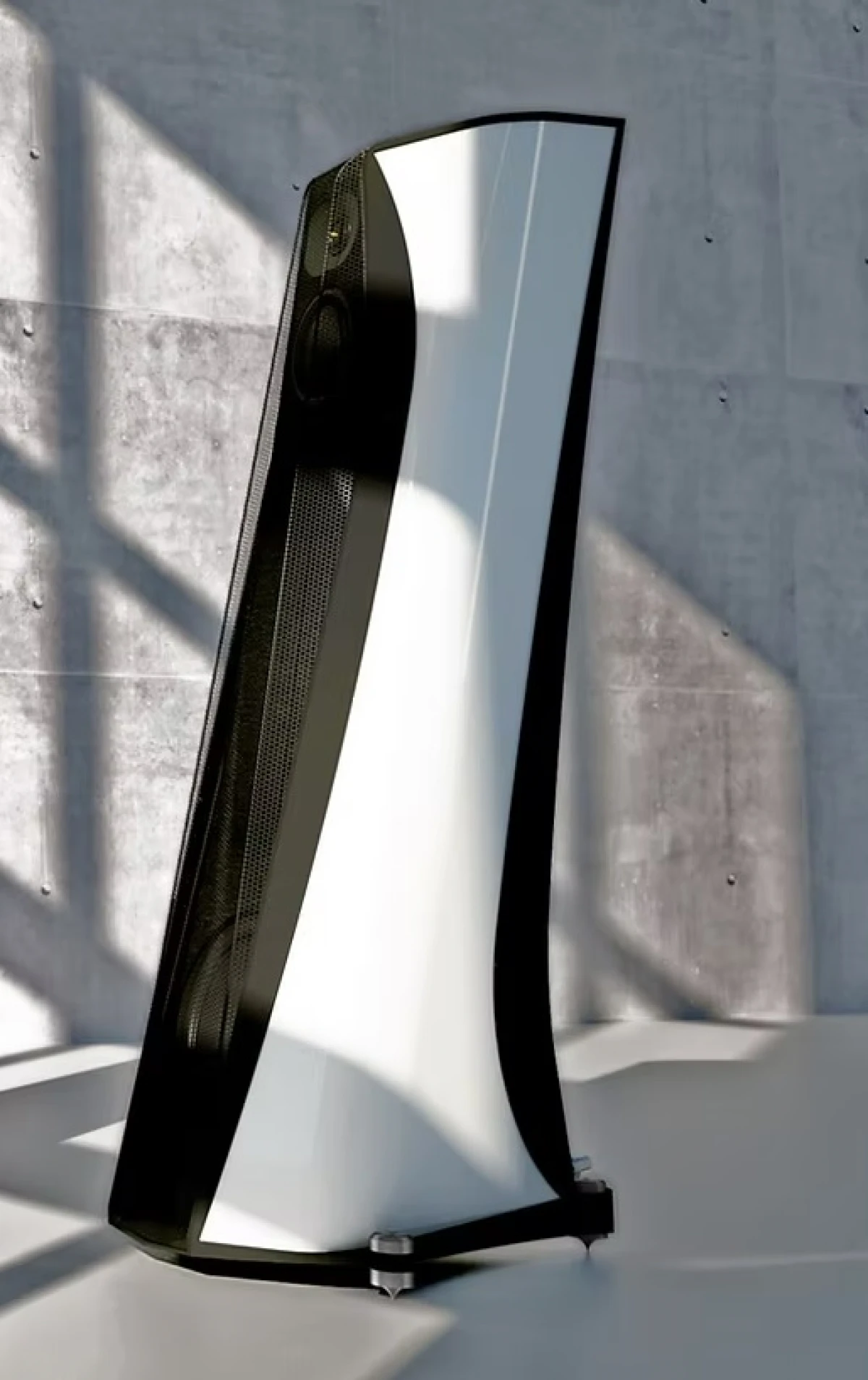
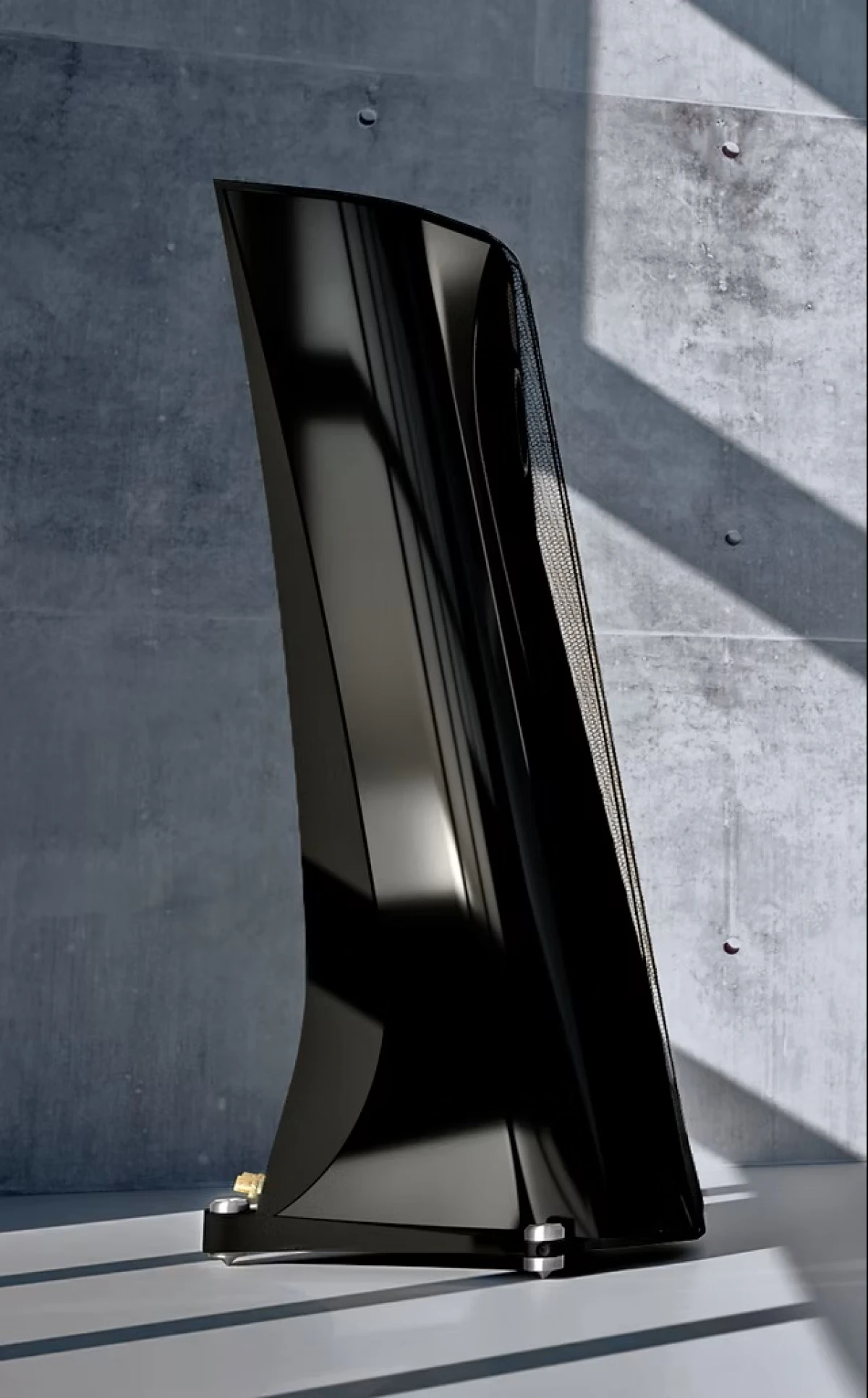
Aequo Audio Ensis
Image source — © Aequo Audio
Built by Aequo Audio in Eindhoven, the Netherlands, the Ensis is a floorstanding three-way design and was the company's first loudspeaker produced in series. Introduced in 2015 and announced to the press in April 2016, it is semi-active - the midrange and tweeter are passive and driven by the owner's amplifier, while the bass section carries its own amplifier. Aequo now lists it among its legacy models, and it was priced at EUR 24,000.
Key specs that matter
At the bottom of each cabinet sits a side-firing 10-inch aluminium subwoofer in a sealed box, driven by a 500 W N-Core amplifier per side. Above it a 5-inch mid-bass driver uses a Hexacon voice coil on a Kapton-aluminium former, and the soft fabric dome tweeter is fixed at its centre by a carbon rod, with a billet aluminium dispersion cone and an acoustic lens. The passive section has a sensitivity of 90 dB and a nominal impedance of 8 ohm. The cabinet stands 116 cm tall. Aequo describes the speaker as full-range, with the subwoofer covering the lowest octaves and its extension adjustable.
Engineering and use context
Crossover between the active bass and the passive section is set at 100 Hz. The mid and tweeter filter uses matched polypropylene capacitors and air-core baked wire coils, and there are no capacitors in the mid-bass signal line. Aequo describes the drivers as time and phase aligned, and the cabinet slopes backward to achieve this. The closed, heavily braced enclosure is built from four types of wood of different density, with damping material between layers, a front panel of mineral-filled polymer and a damping compound called Grey Matter. Its curved panels give the outline of a note on a music stave. The drivers are mounted in a narrow front, which keeps the footprint small for a speaker of this height. The ARPEC system, short for Analog Room and Placement Extension Controller, is fully analogue and sets how low the active subwoofer extends and at what level, to suit rooms from small to large and positions from corners to open floor.
Pairing
With the subwoofer powered internally, the owner's amplifier handles just the passive mid and treble part, so bass behaviour does not depend on the amplifier chosen. WBT terminals accept bananas, spades or bare wire. Finishes were white, black or a custom colour, and the enclosure materials, including the damping compound, were developed in-house by Aequo.
Alternatives
The Aequo Ensium is the later floorstander built on the Ensis concept, with a Diluvite cabinet and a crossover to its bass section raised to 170 Hz.
Key specs that matter
At the bottom of each cabinet sits a side-firing 10-inch aluminium subwoofer in a sealed box, driven by a 500 W N-Core amplifier per side. Above it a 5-inch mid-bass driver uses a Hexacon voice coil on a Kapton-aluminium former, and the soft fabric dome tweeter is fixed at its centre by a carbon rod, with a billet aluminium dispersion cone and an acoustic lens. The passive section has a sensitivity of 90 dB and a nominal impedance of 8 ohm. The cabinet stands 116 cm tall. Aequo describes the speaker as full-range, with the subwoofer covering the lowest octaves and its extension adjustable.
Engineering and use context
Crossover between the active bass and the passive section is set at 100 Hz. The mid and tweeter filter uses matched polypropylene capacitors and air-core baked wire coils, and there are no capacitors in the mid-bass signal line. Aequo describes the drivers as time and phase aligned, and the cabinet slopes backward to achieve this. The closed, heavily braced enclosure is built from four types of wood of different density, with damping material between layers, a front panel of mineral-filled polymer and a damping compound called Grey Matter. Its curved panels give the outline of a note on a music stave. The drivers are mounted in a narrow front, which keeps the footprint small for a speaker of this height. The ARPEC system, short for Analog Room and Placement Extension Controller, is fully analogue and sets how low the active subwoofer extends and at what level, to suit rooms from small to large and positions from corners to open floor.
Pairing
With the subwoofer powered internally, the owner's amplifier handles just the passive mid and treble part, so bass behaviour does not depend on the amplifier chosen. WBT terminals accept bananas, spades or bare wire. Finishes were white, black or a custom colour, and the enclosure materials, including the damping compound, were developed in-house by Aequo.
Alternatives
The Aequo Ensium is the later floorstander built on the Ensis concept, with a Diluvite cabinet and a crossover to its bass section raised to 170 Hz.
Specifications
Model name
Ensis
Frequency Response low +/- 3dB (Hz)
10
Frequency Response high +/- 3dB (Hz)
40 000
Sensitivity (dB at 1 W/1m)
90
Impedance (Ohms)
8
Power amplifier requirements (W)
N/A
Has internal amplification
N/A
Internal amplification power (W)
N/A
Size (sm)
116 x 31 x 29
Weight (kg)
25
Official link
More components

Floorstanding loudspeakers
Aequo Audio Ensium
Floorstanding loudspeakers
Aequo Audio Adamantis
Floorstanding loudspeakers
Aequo Audio Stilla