
All

Integrated amplifiers — Vincent SV-237MKII
Description, images, technical data and specifications
Vincent SV-237MKII
Image source - (c) Vincent
The Vincent SV-237MKII is a hybrid integrated amplifier that includes its own DAC and uses a valve preamplifier stage ahead of a solid-state power section. It is the third edition of the most successful amplifier Vincent has ever sold, revised inside and out with a more modern appearance and better connectivity than its predecessor.
Key specs that matter
Rated output is 150W per channel into 8 ohms and 250W per channel into 4 ohms, with the first 10W running in pure Class A. The amplifier covers 20Hz to 20kHz within plus or minus 0.5dB and extends to 50kHz within plus or minus 2dB. Signal-to-noise ratio is better than 90dB and distortion stays under 0.1% at 1kHz and 1W. There are three single-ended analogue inputs with 300mV sensitivity and 47,000 ohm input impedance, alongside optical and coaxial digital connections and a Bluetooth 5.0 receiver. The chassis measures about 427 x 152 x 432mm and weighs about 20.4kg.
Engineering and use context
The preamplifier section runs two 6N1P NOS valves in a circuit developed by Frank Blohbaum. In the power stage, four output transistors supply the current needed to drive difficult loudspeaker loads. The internal DAC is based on a Burr-Brown PCM5102 chip and accepts signals up to 24-bit/192kHz. The front-mounted tone controls for bass and treble can be bypassed, and a Loudness switch adds compensation for listening at low volume. The large case recalls the style of classic amplifiers from the 1970s to the 1990s.
Pairing
A stereo preamplifier output on the rear panel feeds a powered subwoofer while the amplifier itself drives the main speakers. Doubled speaker terminals, four pairs in total, make bi-wiring straightforward. Thanks to the digital inputs and Bluetooth, a CD transport, a TV or a phone plugs straight in, no outboard converter required.
Alternatives
The Vincent SV-500 is a step up among the brand's integrated amplifiers, with a fully symmetrical circuit aimed at even lower distortion and crosstalk.
Specifications
Model name
SV-237MKI
Type
Integrated Amplifier with DAC
Analog inputs (balanced)
N/A
Analog inputs (single-ended)
3
Input sensitivity (mV)
300
Input impedance (balanced) (Ω)
N/A
Input impedance (single-ended) (Ω)
47 000
Output impedance (balanced) (Ω)
N/A
Output impedance (single-ended) (Ω)
N/A
D/A conversion
Yes
Phono MM/MC current-sensing input impedance (Ω)
N/A
Output power (8Ω) (W)
150
Output power (4Ω) (W)
250
Gain (dBu)
N/A
Frequency response low +/- 3dB (Hz)
20
Frequency response high +/- 3dB (Hz)
20 000
Signal to Noise Ratio (dB)
>90
Total Harmonic Distortion + Noise (%)
<0.1
Damping factor
N/A
Dimensions (mm)
430 x 152 x 435
Weight (kg)
20.4
Official link
More components
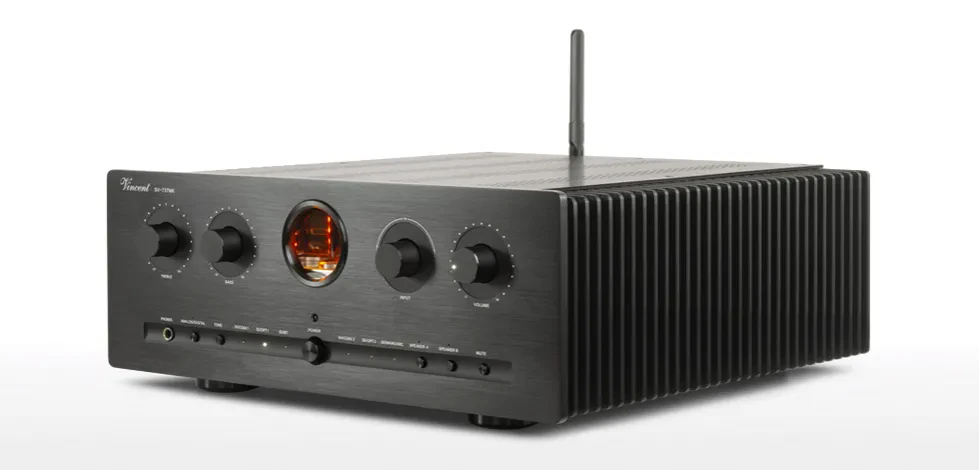
Integrated amplifiers
Vincent SV-737MK
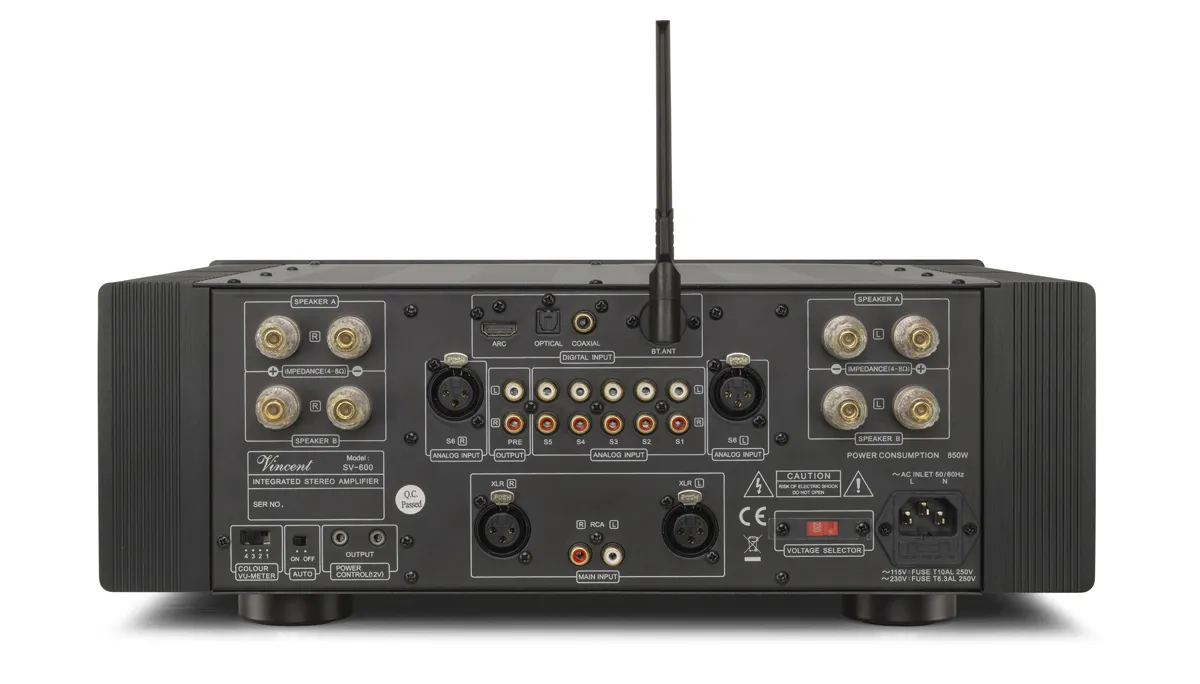
Integrated amplifiers
Vincent SV-600
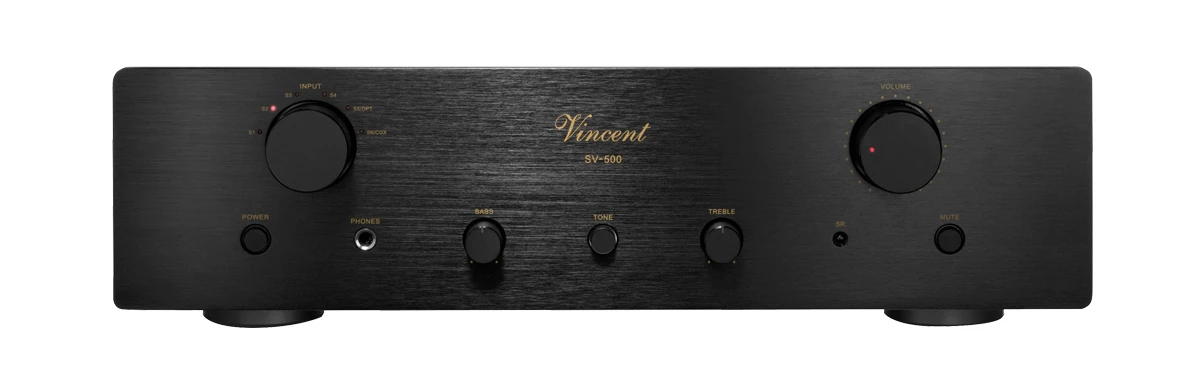
Integrated amplifiers
Vincent SV-500
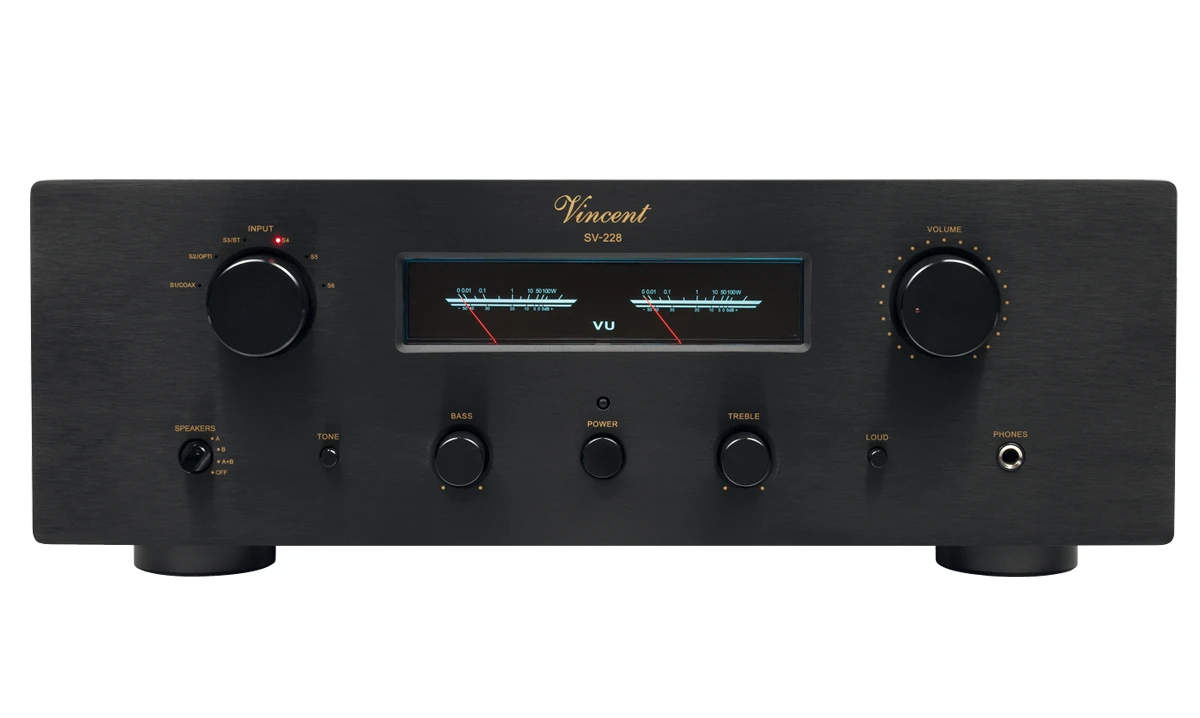
Integrated amplifiers
Vincent SV-228
Integrated amplifiers
Vincent SV-200