
All

Integrated amplifiers — Yamaha A-S801
Description, images, technical data and specifications
Yamaha A-S801
Image source — © Yamaha
The A-S801 is a solid-state integrated amplifier built as a mid-range two-channel hub, with enough analogue inputs to anchor a modest multi-source system. Yamaha's A-S series spans a considerable range of integrated amplifiers, and the A-S801 sits at a capable mid-tier position within that broader lineup.
Position in line
It sits above the A-S501 and below the A-S2200 in Yamaha's integrated amplifier range, with five analogue inputs and a wide rated bandwidth typical of the series' mid tier. This positioning places the A-S801 as a sensible upgrade path for a listener who has outgrown Yamaha's more entry-level A-S models but is not yet ready to commit to the considerably pricier A-S2200 flagship.
Key specs that matter
Rated output is 100 W into 8 ohms, rising to 160 W into 4 ohms, a healthy but not exceptional doubling that indicates a solid, if not oversized, power supply. Rated bandwidth is 10 Hz to 100 kHz. Signal-to-noise is 100 dB with 0.019% distortion. Damping factor is 240, giving firm control over typical bookshelf and floorstanding loads. At 12.1 kg it is a moderate weight for the output class, suggesting a competently but not extravagantly specified power supply and transformer.
Sound and use context
Expect a controlled, even-handed presentation consistent with the damping factor and moderate distortion figures - built for accuracy across a wide input range rather than a single strong tonal signature, a sensible, versatile choice for a system with several different source types.
Pairing
Five single-ended inputs at 47 kOhm impedance accept virtually any source without gain-matching issues; the 100/160 W output suits most bookshelf and floorstanding speakers without needing high sensitivity.
Alternatives
The A-S301 is the smaller, lower-power model below this one in the range. The A-S2200 moves into a higher output and build tier for larger rooms or less sensitive speakers, worth the further investment if this model's already solid 100 W figure proves insufficient. Yamaha extensive dealer network makes arranging a direct comparison against both the A-S501 below and the A-S2200 above a practical option for most buyers, helping clarify exactly where the meaningful performance jumps occur within this broad amplifier range. The five-input connectivity here should comfortably accommodate a typical multi-source system without needing an external switcher.
Position in line
It sits above the A-S501 and below the A-S2200 in Yamaha's integrated amplifier range, with five analogue inputs and a wide rated bandwidth typical of the series' mid tier. This positioning places the A-S801 as a sensible upgrade path for a listener who has outgrown Yamaha's more entry-level A-S models but is not yet ready to commit to the considerably pricier A-S2200 flagship.
Key specs that matter
Rated output is 100 W into 8 ohms, rising to 160 W into 4 ohms, a healthy but not exceptional doubling that indicates a solid, if not oversized, power supply. Rated bandwidth is 10 Hz to 100 kHz. Signal-to-noise is 100 dB with 0.019% distortion. Damping factor is 240, giving firm control over typical bookshelf and floorstanding loads. At 12.1 kg it is a moderate weight for the output class, suggesting a competently but not extravagantly specified power supply and transformer.
Sound and use context
Expect a controlled, even-handed presentation consistent with the damping factor and moderate distortion figures - built for accuracy across a wide input range rather than a single strong tonal signature, a sensible, versatile choice for a system with several different source types.
Pairing
Five single-ended inputs at 47 kOhm impedance accept virtually any source without gain-matching issues; the 100/160 W output suits most bookshelf and floorstanding speakers without needing high sensitivity.
Alternatives
The A-S301 is the smaller, lower-power model below this one in the range. The A-S2200 moves into a higher output and build tier for larger rooms or less sensitive speakers, worth the further investment if this model's already solid 100 W figure proves insufficient. Yamaha extensive dealer network makes arranging a direct comparison against both the A-S501 below and the A-S2200 above a practical option for most buyers, helping clarify exactly where the meaningful performance jumps occur within this broad amplifier range. The five-input connectivity here should comfortably accommodate a typical multi-source system without needing an external switcher.
Specifications
Model name
A-S801
Type
Integrated Amplifier
Analog inputs (balanced)
N/A
Analog inputs (single-ended)
5
Input sensitivity (mV)
N/A
Input impedance (balanced) (Ω)
N/A
Input impedance (single-ended) (Ω)
47 000
Output impedance (balanced) (Ω)
N/A
Output impedance (single-ended) (Ω)
N/A
D/A conversion
Yes
Phono MM/MC current-sensing input impedance (Ω)
N/A
Output power (8Ω) (W)
100
Output power (4Ω) (W)
160
Gain (dBu)
N/A
Frequency response low +/- 3dB (Hz)
10
Frequency response high +/- 3dB (Hz)
100 000
Signal to Noise Ratio (dB)
100
Total Harmonic Distortion + Noise (%)
0.019
Damping factor
240
Dimensions (mm)
435x152x387
Weight (kg)
12.1
Official link
Related content
More components
Integrated amplifiers
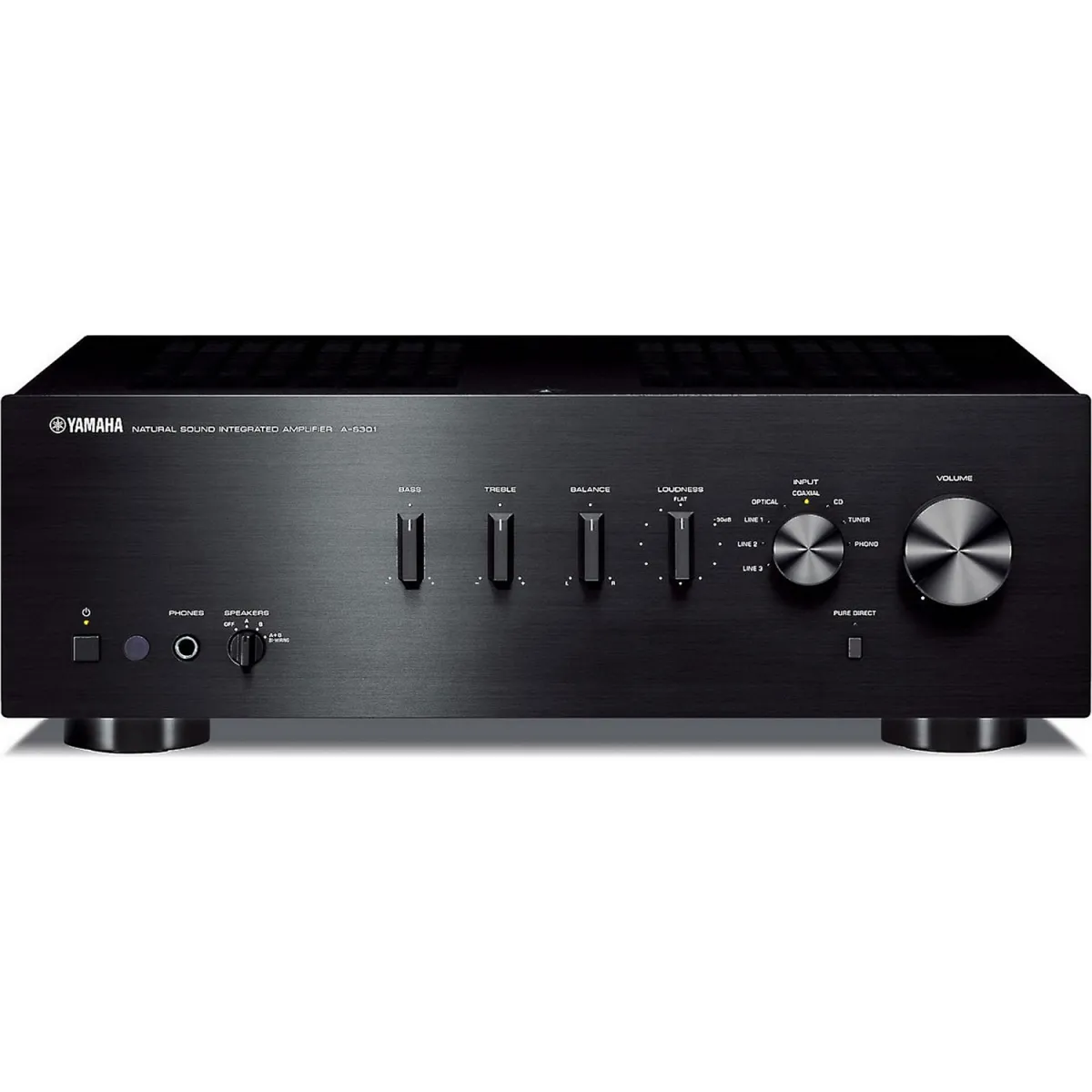
Yamaha A-S301
Integrated amplifiers
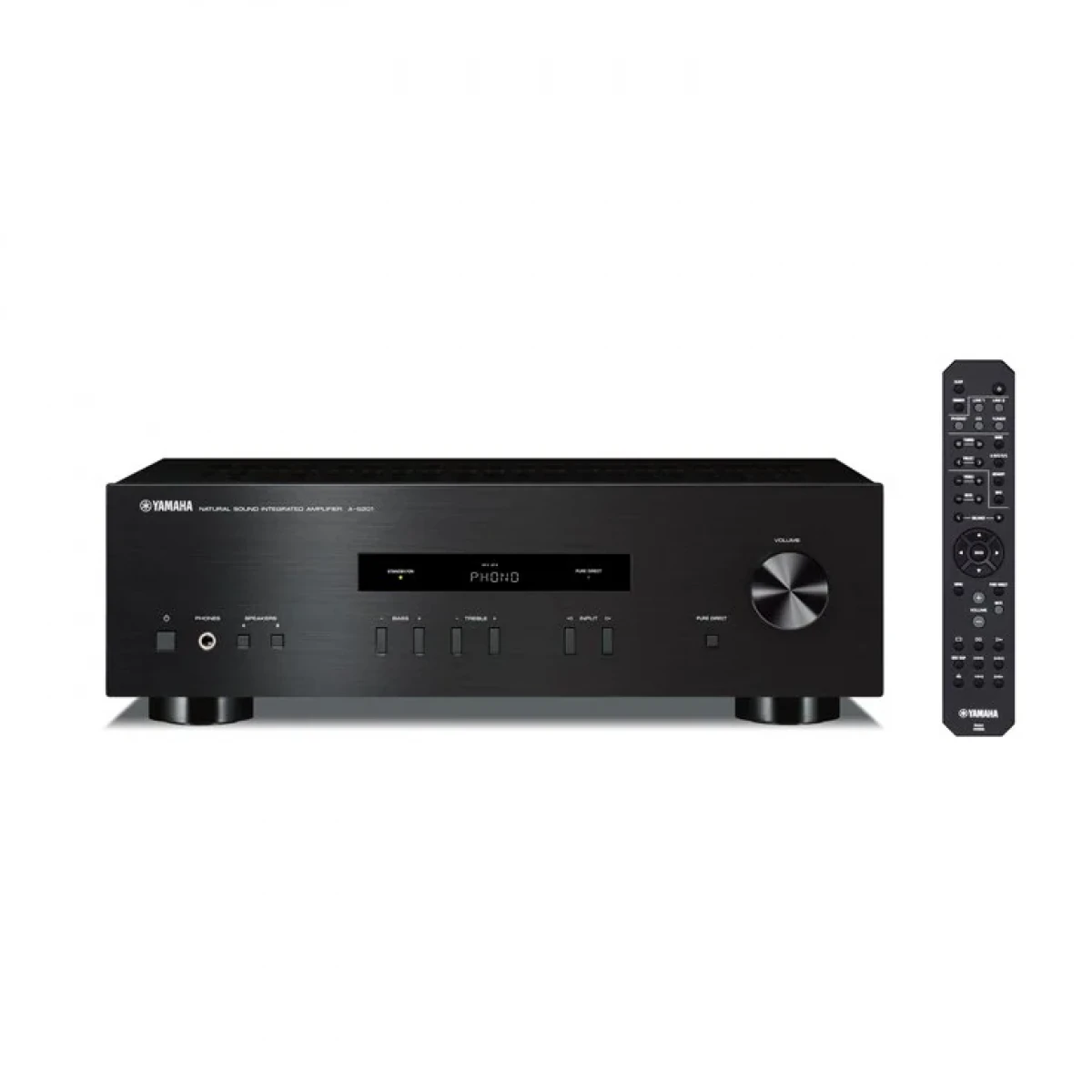
Yamaha A-S201

Integrated amplifiers
Yamaha A-S501

Integrated amplifiers
Yamaha A-S701

Integrated amplifiers
Yamaha A-S2200