All


Manger
Website:https://mangeraudio.com/
Manger Audio is a German loudspeaker company based in Mellrichstadt in northern Bavaria, built around one invention, the Manger sound transducer, or MSW. Inventor Josef W. Manger filed his first loudspeaker patent in 1968 after returning from Australia, and spent the following decades refining a flat bending-wave driver that replaces the conventional cone. The transducer entered small-scale series production in 1990, and the firm is now run by his daughter, Daniela Manger.
Range & what it's known for
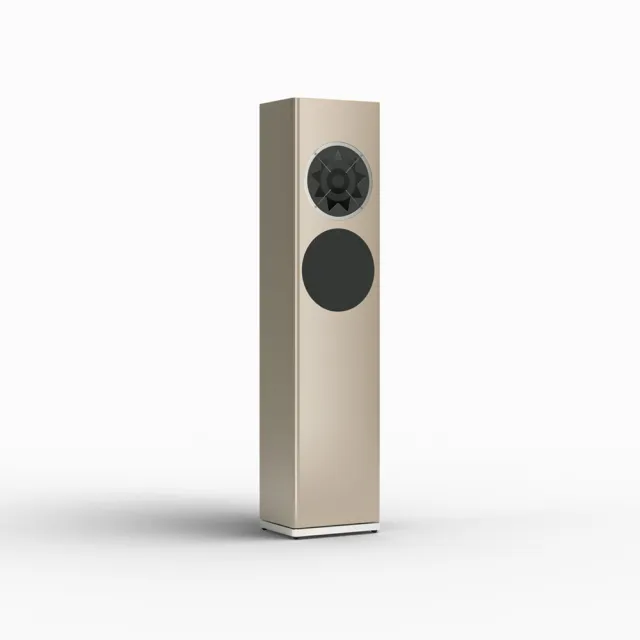
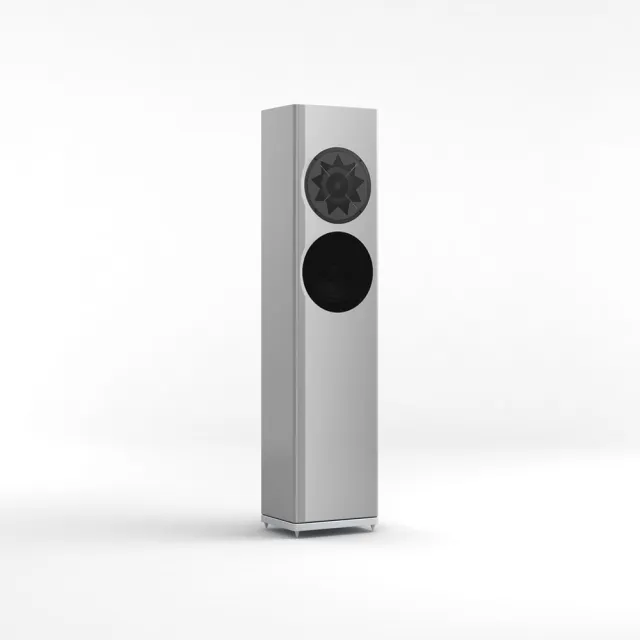
The current range comprises the S1, P1, P2, C1, Z1 and W1, plus accessories. The P1 is the passive floorstander, the P2 is the reference model first shown in 2018, the S1 is an active floorstander introduced in 2011, and the C1 is a studio monitor launched in 2009. Every model is built around the MSW, a thin, multilayer disc that is elastic in its plane but resists bending, so sound travels outward across the surface as a bending wave rather than being pushed by a rigid piston. In 2024 the company released the W06 version of the transducer with a 1.48 Tesla magnetic field.
Who owns it and where it's made
Manger Audio is a family business. Josef W. Manger led it from 1968 until his death in October 2016 at age 87, and Daniela Manger took over operations from her parents, marking 25 years with the company in 2016. Design and production are both in Mellrichstadt, where series production began in 1990, and products carry a Made in Germany mark. The early Zerobox 103, 107 and 109 models were developed there between 1990 and 1996.
The lineup in this catalog
Loudspeakers, from roughly 10,000 euros for the least expensive model to well over 30,000 euros at the top.
Who it's for
Manger appeals to a buyer looking for a loudspeaker built around a single wide-band bending-wave driver instead of a conventional cone-and-dome layout. The Z1 and P1 are the more compact ways into the brand, the active S1 suits owners who prefer built-in amplification, and the P2 is the top of the range. The C1 serves studio users who need the same transducer in a monitor format.
Range & what it's known for
The current range comprises the S1, P1, P2, C1, Z1 and W1, plus accessories. The P1 is the passive floorstander, the P2 is the reference model first shown in 2018, the S1 is an active floorstander introduced in 2011, and the C1 is a studio monitor launched in 2009. Every model is built around the MSW, a thin, multilayer disc that is elastic in its plane but resists bending, so sound travels outward across the surface as a bending wave rather than being pushed by a rigid piston. In 2024 the company released the W06 version of the transducer with a 1.48 Tesla magnetic field.
Who owns it and where it's made
Manger Audio is a family business. Josef W. Manger led it from 1968 until his death in October 2016 at age 87, and Daniela Manger took over operations from her parents, marking 25 years with the company in 2016. Design and production are both in Mellrichstadt, where series production began in 1990, and products carry a Made in Germany mark. The early Zerobox 103, 107 and 109 models were developed there between 1990 and 1996.
The lineup in this catalog
Loudspeakers, from roughly 10,000 euros for the least expensive model to well over 30,000 euros at the top.
Who it's for
Manger appeals to a buyer looking for a loudspeaker built around a single wide-band bending-wave driver instead of a conventional cone-and-dome layout. The Z1 and P1 are the more compact ways into the brand, the active S1 suits owners who prefer built-in amplification, and the P2 is the top of the range. The C1 serves studio users who need the same transducer in a monitor format.