
Все

Фонокорректоры — Soulnote E-2
Описание, изображения, технические характеристики и спецификации
Soulnote E-2
Источник изображения — © Soulnote
The E-2 is a phono equalizer from the Japanese maker Soulnote, sold in silver as the E-2SE and in black as the E-2BE. Developed with technical input from DigitalStream, it handles moving coil and moving magnet cartridges as well as the photoelectric cartridges made by DS Audio, so a single case covers every common pickup type. Soulnote now lists it among discontinued models released after 2016, and the E-2 ver.2 carries the design on.
Key specs that matter
Gain is 72 dB for MC, 52 dB for MM and 30 dB for the optical input, with input sensitivity of 0.4 mV, 4 mV and 50 mV respectively. MC load resistance can be set to 3, 10, 30, 100 or 300 ohm or 1 kohm. The MM input is fixed at 47 kohm, with capacitance of 100, 200 or 350 pF. RIAA deviation is within 0.2 dB. Rated output is 2.8 V balanced and 1.4 V unbalanced. All four inputs can be wired up together and switched as needed - one balanced MC, two unbalanced MC/MM and one dedicated to photoelectric pickups. The E-2 draws 48 W, measures 430 x 160 x 410 mm and weighs 20 kg.
Engineering and use context
Beyond RIAA, the MC and MM paths offer six roll-off points between 1.59 kHz and flat, four turnover points from 250 Hz to 630 Hz and six low-limit settings from 50 Hz to flat, each set on its own knob. Together they give 144 curves, from Decca and Columbia to flat response for the earliest 78 rpm discs, and mechanical relays switch the equalization networks. The MC/MM stage is a fully balanced circuit with no negative feedback, and the left and right boards are completely separate in a dual mono layout. The optical input has its own feedback-free equalizer built around a differential emitter bypass circuit with lowered impedance, and it cannot be used with the old Toshiba or Trio photoelectric cartridges. Power comes from a single 400 VA bifilar-wound toroidal transformer and a fast regulator, also without feedback, fed by many small capacitors in parallel. A chimney-shaped heat sink was designed for cooling efficiency and low resonance. Further switches offer polarity inversion of the balanced output, a low gain setting, mono summing and a degauss function that shorts the input, which also works as a mute while the stylus is lowered.
Pairing
A preamplifier with XLR inputs gets the most from the output stage, a fully balanced buffer without feedback that Soulnote rates as able to drive loudspeakers, and the low gain setting exists for line stages with little headroom. A DS Audio optical cartridge plugs straight into its own input, so no separate optical equalizer is needed, and owners of one MC and one MM arm can keep both connected.
Alternatives
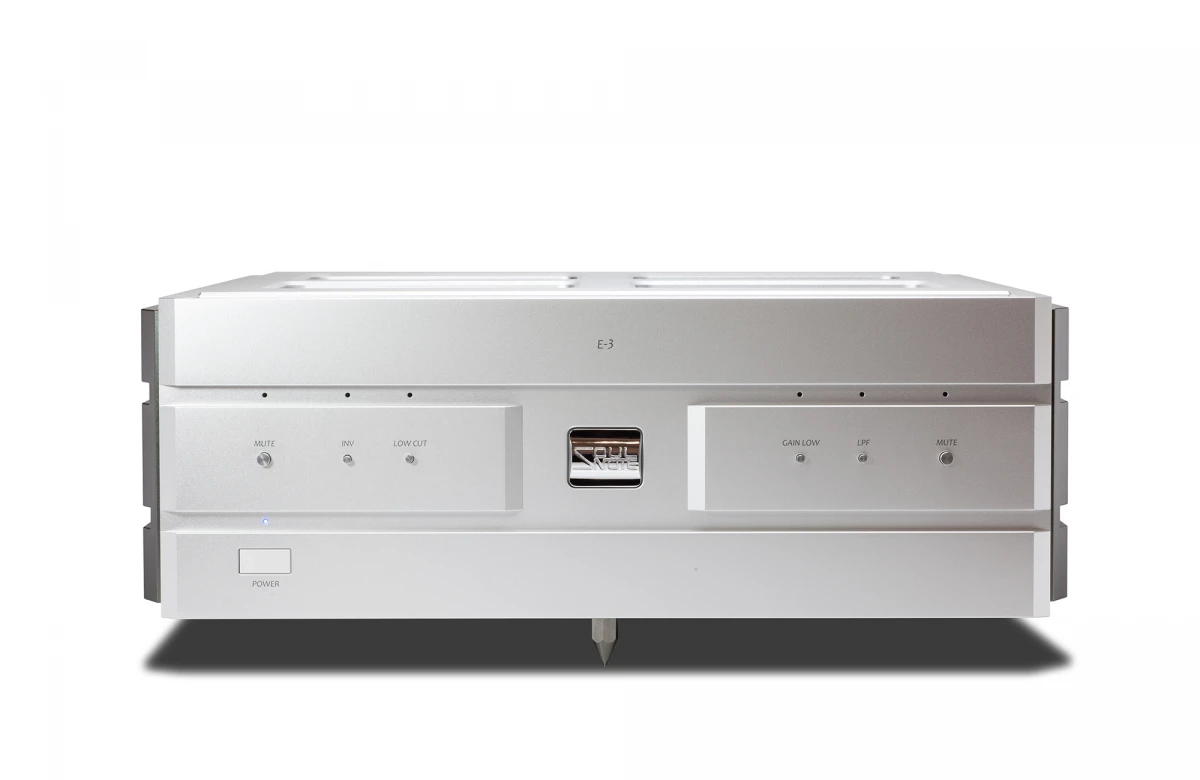
The Soulnote E-3 is another phono equalizer from the brand.
Key specs that matter
Gain is 72 dB for MC, 52 dB for MM and 30 dB for the optical input, with input sensitivity of 0.4 mV, 4 mV and 50 mV respectively. MC load resistance can be set to 3, 10, 30, 100 or 300 ohm or 1 kohm. The MM input is fixed at 47 kohm, with capacitance of 100, 200 or 350 pF. RIAA deviation is within 0.2 dB. Rated output is 2.8 V balanced and 1.4 V unbalanced. All four inputs can be wired up together and switched as needed - one balanced MC, two unbalanced MC/MM and one dedicated to photoelectric pickups. The E-2 draws 48 W, measures 430 x 160 x 410 mm and weighs 20 kg.
Engineering and use context
Beyond RIAA, the MC and MM paths offer six roll-off points between 1.59 kHz and flat, four turnover points from 250 Hz to 630 Hz and six low-limit settings from 50 Hz to flat, each set on its own knob. Together they give 144 curves, from Decca and Columbia to flat response for the earliest 78 rpm discs, and mechanical relays switch the equalization networks. The MC/MM stage is a fully balanced circuit with no negative feedback, and the left and right boards are completely separate in a dual mono layout. The optical input has its own feedback-free equalizer built around a differential emitter bypass circuit with lowered impedance, and it cannot be used with the old Toshiba or Trio photoelectric cartridges. Power comes from a single 400 VA bifilar-wound toroidal transformer and a fast regulator, also without feedback, fed by many small capacitors in parallel. A chimney-shaped heat sink was designed for cooling efficiency and low resonance. Further switches offer polarity inversion of the balanced output, a low gain setting, mono summing and a degauss function that shorts the input, which also works as a mute while the stylus is lowered.
Pairing
A preamplifier with XLR inputs gets the most from the output stage, a fully balanced buffer without feedback that Soulnote rates as able to drive loudspeakers, and the low gain setting exists for line stages with little headroom. A DS Audio optical cartridge plugs straight into its own input, so no separate optical equalizer is needed, and owners of one MC and one MM arm can keep both connected.
Alternatives
The Soulnote E-3 is another phono equalizer from the brand.
Характеристики
Название модели
E-2
Входы (балансные)
1
Входы (небалансные)
3
Входное сопротивление MC (по току) (Ω)
3, 6, 12, 24, 40, 100
Входное сопротивление MM/MC (по напряжению) (Ω)
N/A
Выходное сопротивление (Ω)
N/A
Усиление (dB)
72 (MC) + 52 (MM)
Точность кривых коррекции воспроизведения (dB)
N/A
Нижняя граница частотного диапазона +/- 3дБ (Hz)
N/A
Верхняя граница частотного диапазона +/- 3дБ (Hz)
N/A
Коэффициент гармонических искажений + шум (%)
N/A
Габариты (mm)
430 × 160 × 410
Вес (kg)
20
Официальная ссылка
Другие компоненты
Фонокорректоры
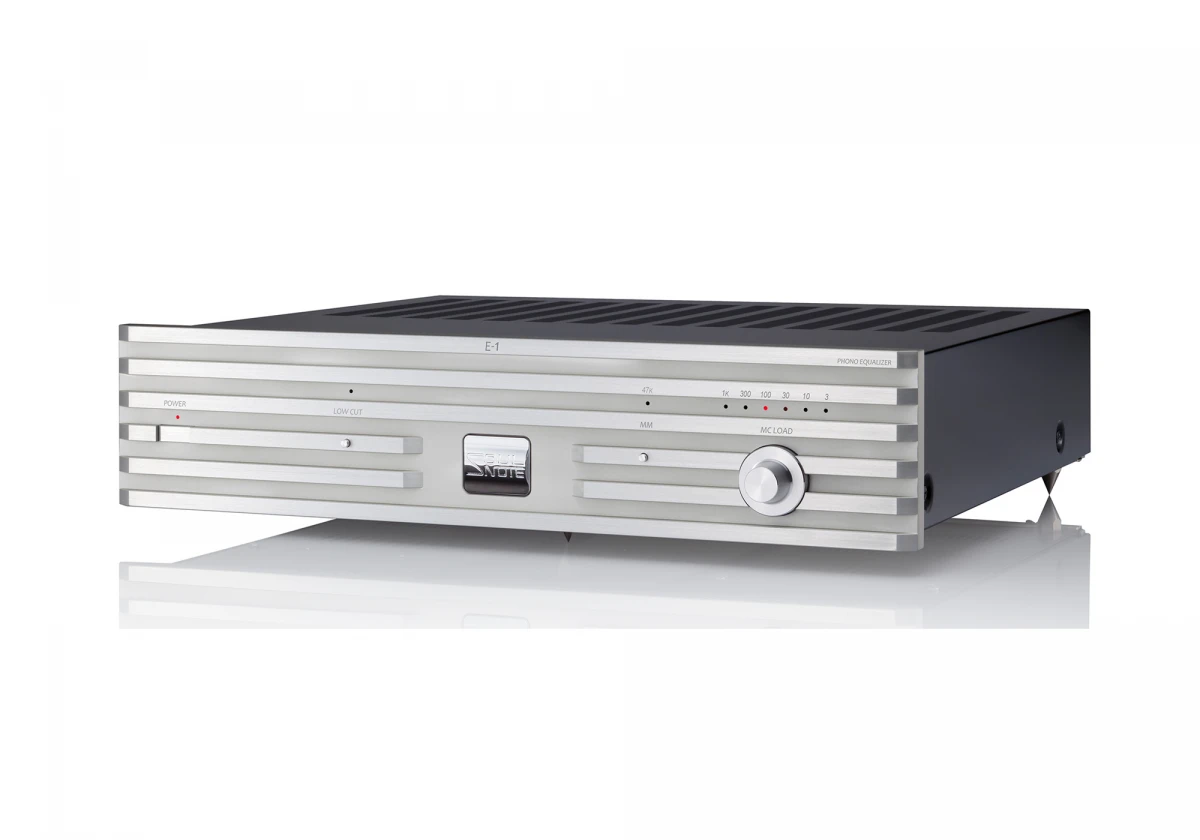
Soulnote E-1
Фонокорректоры
Soulnote E-3