Все

ЦАПы — FiiO QX13
Описание, изображения, технические характеристики и спецификации
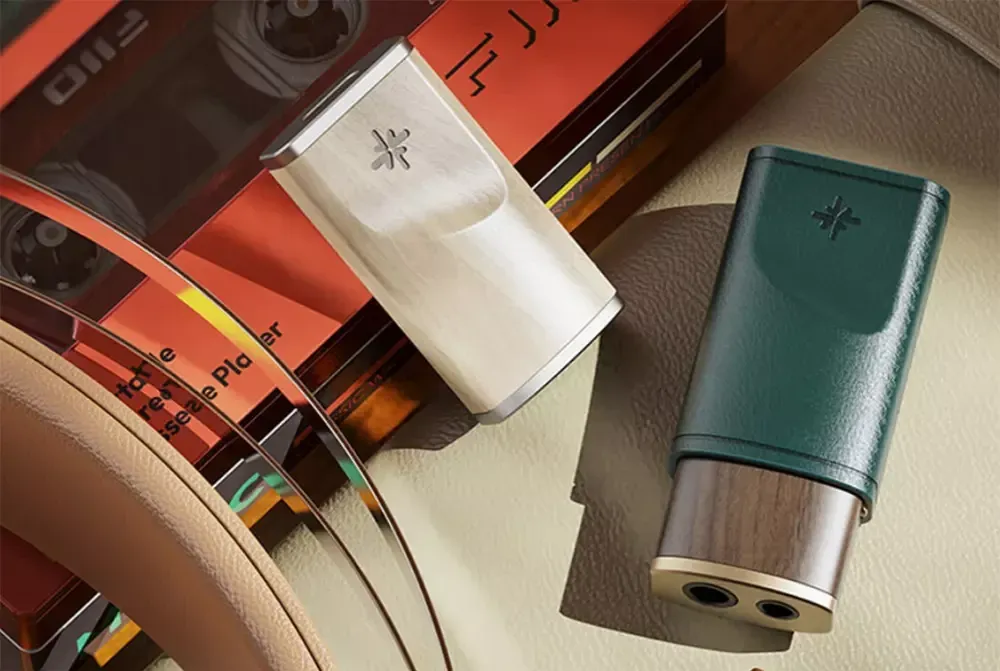
FiiO QX13
Источник изображения — © FiiO
The QX13 is a FiiO dongle that combines a USB converter and headphone amplifier with its own screen. It is built around a single ESS ES9027SPRO converter and comes in two versions, black with a carbon fibre body or titanium gold in aluminium alloy. Its chosen converter belongs to the ESS SABRE PRO family.
Key specs that matter
USB decoding is handled by a 16-core XMOS XU316 chip, and the unit accepts PCM up to 768 kHz and 32 bit, native DSD512 and full MQA decoding over USB. The coaxial path is limited to 96 kHz and 24 bit. Balanced output from the 4.4 mm socket in desktop mode on high gain reaches 900 mW per channel into 32 ohm with a peak voltage of 17.5 Vp-p, while the 3.5 mm single-ended socket gives 310 mW per channel into 32 ohm. Rated SNR is 124 dB or better, A-weighted, and the noise floor is below 2 microvolts on the single-ended output and below 3.4 microvolts balanced. Headphone impedance support runs from 8 to 350 ohm on both outputs. The body measures about 64.2 x 30.7 x 13 mm and weighs about 33.7 g in carbon fibre or 39.2 g in aluminium.
Engineering and use context
After the DAC, two OPA1692 op-amps and four TI INA1620 amplifier chips form the output stage. The 5 cm IPS display with 170 x 320 resolution sits under third-generation Corning glass and can be rotated. Two USB Type-C ports are fitted, one for data and power and a second dedicated power input. When external 5 V power of at least 1 A is connected, FiiO's patented adaptive desktop mode raises output, so the phone or laptop battery no longer limits drive. Volume runs in either 60 or 120 steps, there are high and low gain settings, and a 10-band parametric EQ with plus or minus 12 dB and eight presets is set through the FiiO Control app or through FiiO's browser-based tool. The QX13 also monitors temperature and DC at the output, supports a driver-free USB DAC mode and takes firmware updates over USB.
Pairing
As a bus-powered device the QX13 connects directly to a smartphone, tablet or laptop over USB-C. In-ear monitors and efficient headphones work from the single-ended output, while planar or high impedance headphones are better served by the balanced output with the auxiliary power port in use. The single-ended socket doubles as a coaxial digital output, so the dongle can also feed an external DAC or receiver.
Alternatives
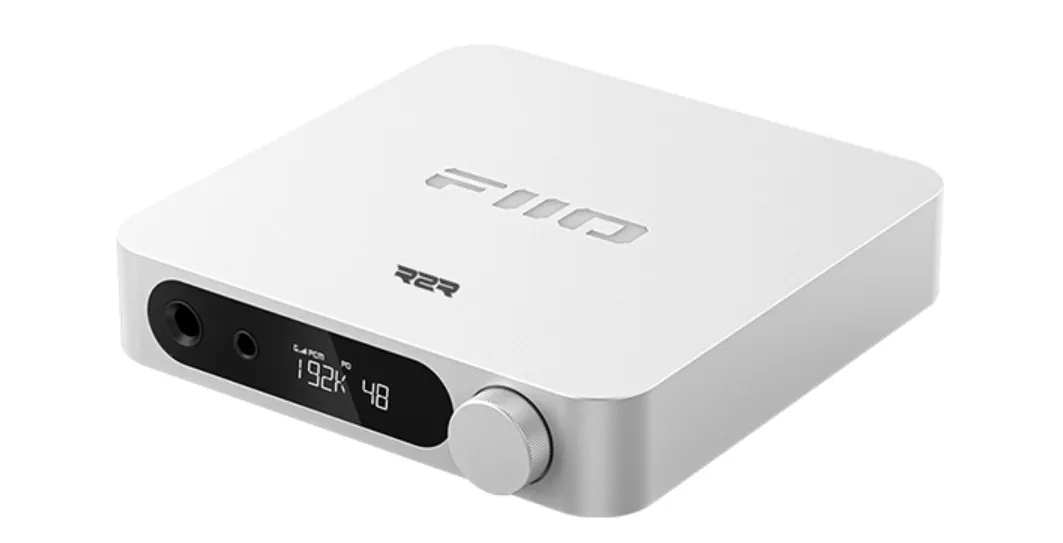
The FiiO K11 R2R pairs a desktop headphone amp and DAC around a resistor ladder converter and a 12 V external supply.
Key specs that matter
USB decoding is handled by a 16-core XMOS XU316 chip, and the unit accepts PCM up to 768 kHz and 32 bit, native DSD512 and full MQA decoding over USB. The coaxial path is limited to 96 kHz and 24 bit. Balanced output from the 4.4 mm socket in desktop mode on high gain reaches 900 mW per channel into 32 ohm with a peak voltage of 17.5 Vp-p, while the 3.5 mm single-ended socket gives 310 mW per channel into 32 ohm. Rated SNR is 124 dB or better, A-weighted, and the noise floor is below 2 microvolts on the single-ended output and below 3.4 microvolts balanced. Headphone impedance support runs from 8 to 350 ohm on both outputs. The body measures about 64.2 x 30.7 x 13 mm and weighs about 33.7 g in carbon fibre or 39.2 g in aluminium.
Engineering and use context
After the DAC, two OPA1692 op-amps and four TI INA1620 amplifier chips form the output stage. The 5 cm IPS display with 170 x 320 resolution sits under third-generation Corning glass and can be rotated. Two USB Type-C ports are fitted, one for data and power and a second dedicated power input. When external 5 V power of at least 1 A is connected, FiiO's patented adaptive desktop mode raises output, so the phone or laptop battery no longer limits drive. Volume runs in either 60 or 120 steps, there are high and low gain settings, and a 10-band parametric EQ with plus or minus 12 dB and eight presets is set through the FiiO Control app or through FiiO's browser-based tool. The QX13 also monitors temperature and DC at the output, supports a driver-free USB DAC mode and takes firmware updates over USB.
Pairing
As a bus-powered device the QX13 connects directly to a smartphone, tablet or laptop over USB-C. In-ear monitors and efficient headphones work from the single-ended output, while planar or high impedance headphones are better served by the balanced output with the auxiliary power port in use. The single-ended socket doubles as a coaxial digital output, so the dongle can also feed an external DAC or receiver.
Alternatives
The FiiO K11 R2R pairs a desktop headphone amp and DAC around a resistor ladder converter and a 12 V external supply.
Характеристики
Название модели
QX13
Тип преобразования
N/A
Чип преобразования
ESS Sabre Pro ES9027PRO
Совместимость с DSD
Да
Параметры
up to 32 bit / 768 kHz and DSD512
Нижняя граница частотного диапазона +/- 3дБ (Hz)
N/A
Верхняя граница частотного диапазона +/- 3дБ (Hz)
N/A
Усиление (dBu)
N/A
Уровень выхода (балансный) (V)
N/A
Уровень выхода (небалансный) (V)
N/A
Входное сопротивление (балансное) (Ω)
N/A
Входное сопротивление (небалансное) (Ω)
N/A
Выходное сопротивление (балансное) (Ω)
N/A
Выходное сопротивление (небалансное) (Ω)
N/A
Аналоговые выходы
N/A
Отношение сигнал/шум (dB)
124
Коэффициент гармонических искажений + шум (% at 22 kHz)
0.0004
Габариты (mm)
64.2 x 30.7 x 13
Вес (kg)
0.033
Официальная ссылка
Другие компоненты
ЦАПы
FiiO K17 R2R Pro
ЦАПы
FiiO K11
ЦАПы
FiiO K11 R2R
ЦАПы
FiiO M33 R2R