
Все

ЦАПы — Chord QUTEST
Описание, изображения, технические характеристики и спецификации
Chord QUTEST
Источник изображения — © Chord
The Qutest is a compact standalone digital-to-analogue converter from Chord Electronics of Kent, England. It was launched at CES in Las Vegas on 9 January 2018 at GBP 1,195 as the direct replacement for the 2Qute, the most affordable mains-free desktop converter in the Chord range at the time. It uses the same internal conversion architecture and custom code that Rob Watts wrote for the Hugo 2, but leaves out the battery, volume control and headphone output, which is why it cost GBP 605 less than the Hugo 2 at launch. Rob Watts designed the digital architecture, and company founder John Franks is credited with the mechanical design.
Key specs that matter
The converter is built on a Xilinx Artix 7 (XC7A15T) FPGA programmed by Chord, with a WTA filter of 49,152 taps, double the length used in the 2Qute, feeding a 10-element pulse array and a Class A output stage. The galvanically isolated USB Type B input accepts PCM from 44.1 kHz to 768 kHz at 16 to 32 bits and native DSD64 to DSD512. Two BNC coaxial inputs take up to 384 kHz each, or 768 kHz when used together in dual data mode, and the optical input accepts 44.1 kHz to 96 kHz at up to 24 bits. Analogue signal leaves through one stereo RCA pair at a selectable level of 1 V, 2 V or 3 V RMS. Chord quotes a frequency response of 20 Hz to 20 kHz within 0.2 dB, THD under 0.0001% at 1 kHz and 3 V into 300 ohm, noise of 2.6 microvolts A-weighted, 138 dB of channel separation and a THD+N figure of 117 dB referenced to 2.5 V. The case measures 4.5 cm high, 16 cm wide and 8.8 cm deep and weighs 770 g.
Engineering and use context
Rather than buying a finished DAC chip, Chord codes its own interpolation filter into programmable logic, so the tap count and filter shape are set by software written in-house. Four frequency-shaping filters can be picked by the user, and both the filter and the input are chosen with two illuminated spheres on the top panel that change colour to show the current setting, while a circular magnifying porthole window is set into the casework. The chassis is machined from a billet of aircraft-grade aluminium and comes only in Jett Black. Power arrives through a 5 V 2 A micro USB socket rather than a mains lead. Each Qutest is assembled by hand in Britain, with a three-year guarantee from Chord.
Pairing
With a fixed-level output and no volume control, the Qutest has to feed a line-level amplifier input, and the 1 V, 2 V and 3 V settings let the owner match the gain of that input. Its dual BNC inputs accept the 768 kHz stream from a Chord M Scaler upsampler over two cables.
Alternatives
The Chord DAVE is the larger standalone DAC in the range and the converter that the Quartet upscaler was built to partner.
Key specs that matter
The converter is built on a Xilinx Artix 7 (XC7A15T) FPGA programmed by Chord, with a WTA filter of 49,152 taps, double the length used in the 2Qute, feeding a 10-element pulse array and a Class A output stage. The galvanically isolated USB Type B input accepts PCM from 44.1 kHz to 768 kHz at 16 to 32 bits and native DSD64 to DSD512. Two BNC coaxial inputs take up to 384 kHz each, or 768 kHz when used together in dual data mode, and the optical input accepts 44.1 kHz to 96 kHz at up to 24 bits. Analogue signal leaves through one stereo RCA pair at a selectable level of 1 V, 2 V or 3 V RMS. Chord quotes a frequency response of 20 Hz to 20 kHz within 0.2 dB, THD under 0.0001% at 1 kHz and 3 V into 300 ohm, noise of 2.6 microvolts A-weighted, 138 dB of channel separation and a THD+N figure of 117 dB referenced to 2.5 V. The case measures 4.5 cm high, 16 cm wide and 8.8 cm deep and weighs 770 g.
Engineering and use context
Rather than buying a finished DAC chip, Chord codes its own interpolation filter into programmable logic, so the tap count and filter shape are set by software written in-house. Four frequency-shaping filters can be picked by the user, and both the filter and the input are chosen with two illuminated spheres on the top panel that change colour to show the current setting, while a circular magnifying porthole window is set into the casework. The chassis is machined from a billet of aircraft-grade aluminium and comes only in Jett Black. Power arrives through a 5 V 2 A micro USB socket rather than a mains lead. Each Qutest is assembled by hand in Britain, with a three-year guarantee from Chord.
Pairing
With a fixed-level output and no volume control, the Qutest has to feed a line-level amplifier input, and the 1 V, 2 V and 3 V settings let the owner match the gain of that input. Its dual BNC inputs accept the 768 kHz stream from a Chord M Scaler upsampler over two cables.
Alternatives
The Chord DAVE is the larger standalone DAC in the range and the converter that the Quartet upscaler was built to partner.
Характеристики
Название модели
QUTEST
Тип преобразования
N/A
Чип преобразования
Xilinx Artix 7 (XC7A15T) FPGA
Совместимость с DSD
Н/д
Параметры
N/A
Нижняя граница частотного диапазона +/- 3дБ (Hz)
20
Верхняя граница частотного диапазона +/- 3дБ (Hz)
20 000
Усиление (dBu)
N/A
Уровень выхода (балансный) (V)
N/A
Уровень выхода (небалансный) (V)
N/A
Входное сопротивление (балансное) (Ω)
N/A
Входное сопротивление (небалансное) (Ω)
N/A
Выходное сопротивление (балансное) (Ω)
N/A
Выходное сопротивление (небалансное) (Ω)
N/A
Аналоговые выходы
N/A
Отношение сигнал/шум (dB)
N/A
Коэффициент гармонических искажений + шум (% at 22 kHz)
<0.0001
Габариты (mm)
45 x 160 x 88
Вес (kg)
0.77
Официальная ссылка
Другие компоненты
ЦАПы
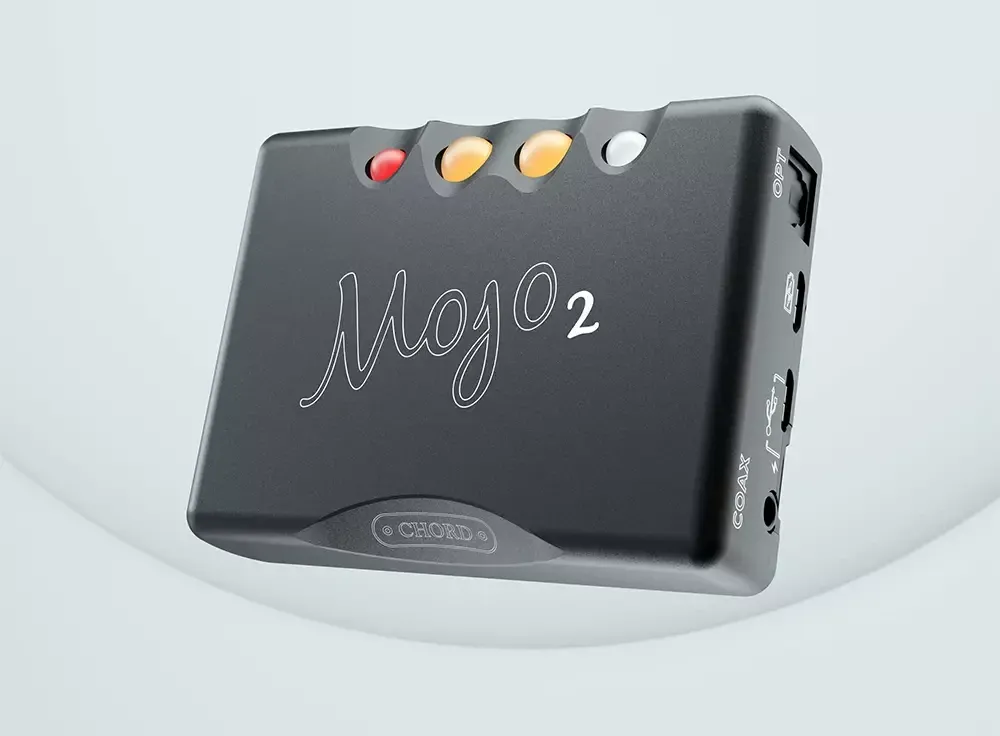
Chord Mojo 2
ЦАПы
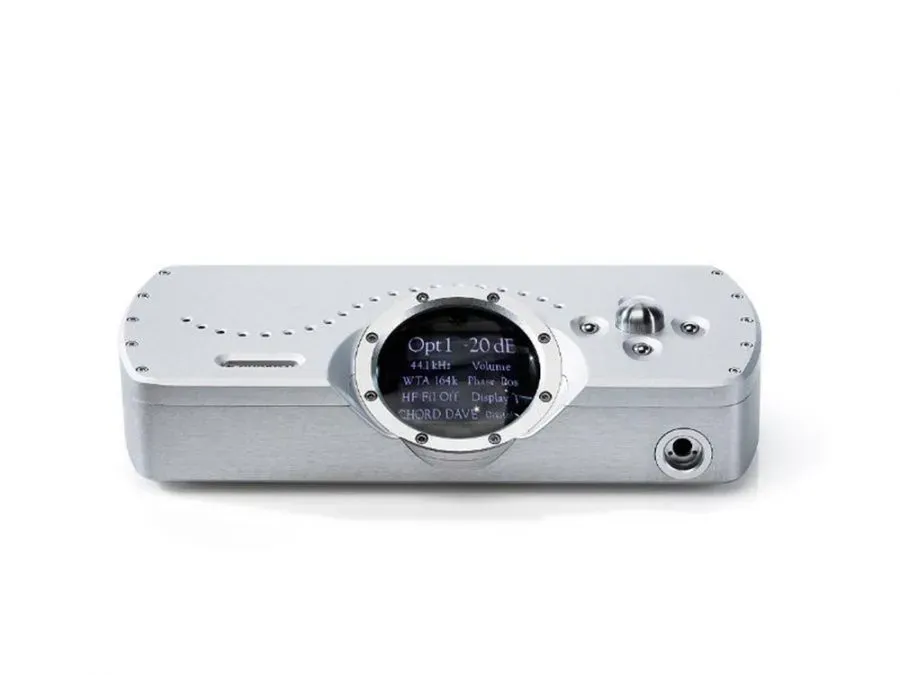
Chord DAVE
ЦАПы
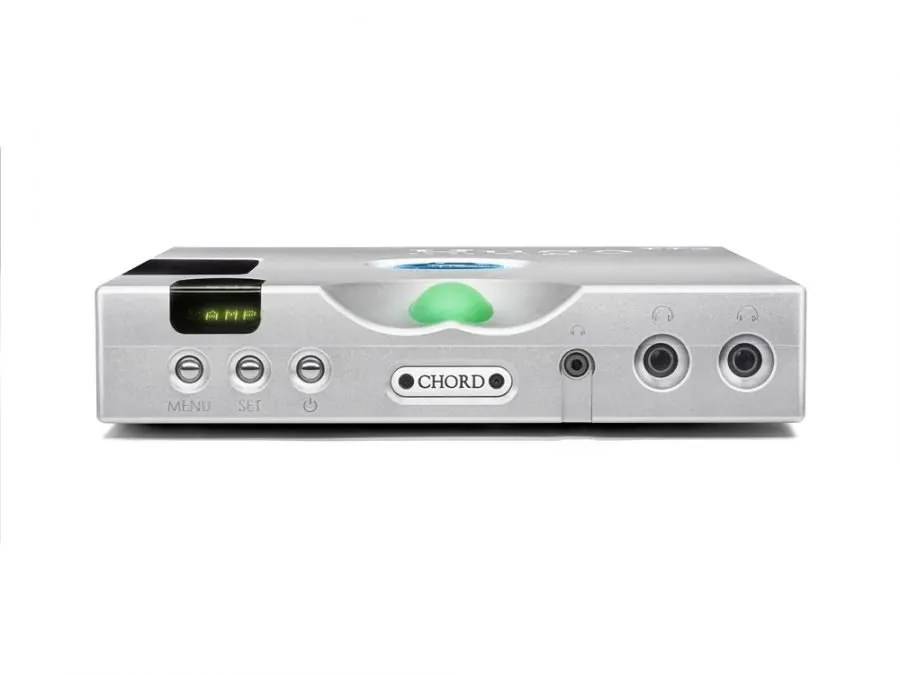
Chord HUGO TT 2
ЦАПы
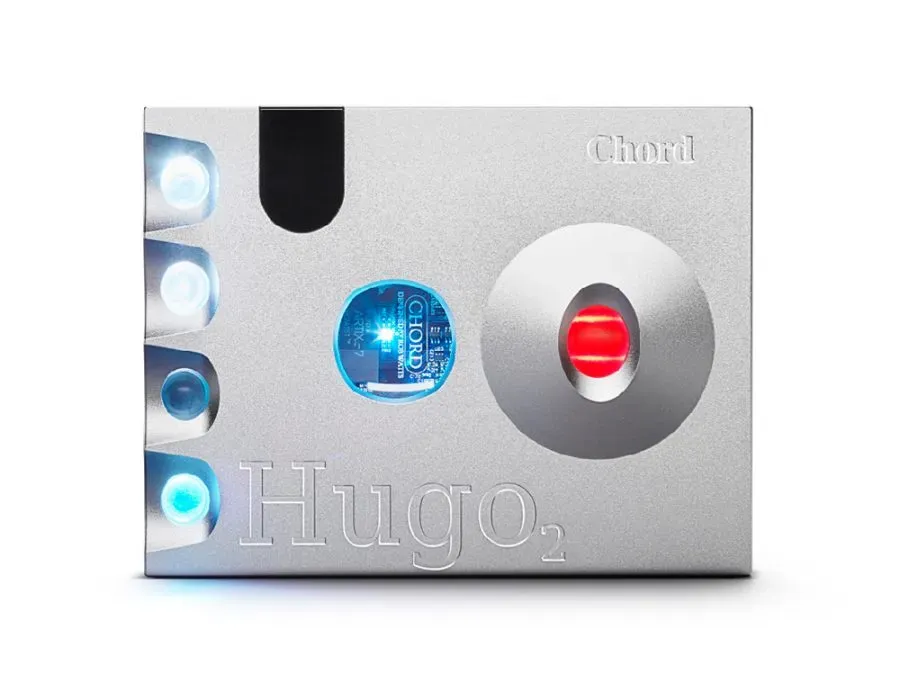
Chord HUGO 2
ЦАПы
Chord Hugo TT2