Все

ЦАПы — Mytek Liberty DAC
Описание, изображения, технические характеристики и спецификации
Mytek Liberty DAC
Источник изображения — © Mytek
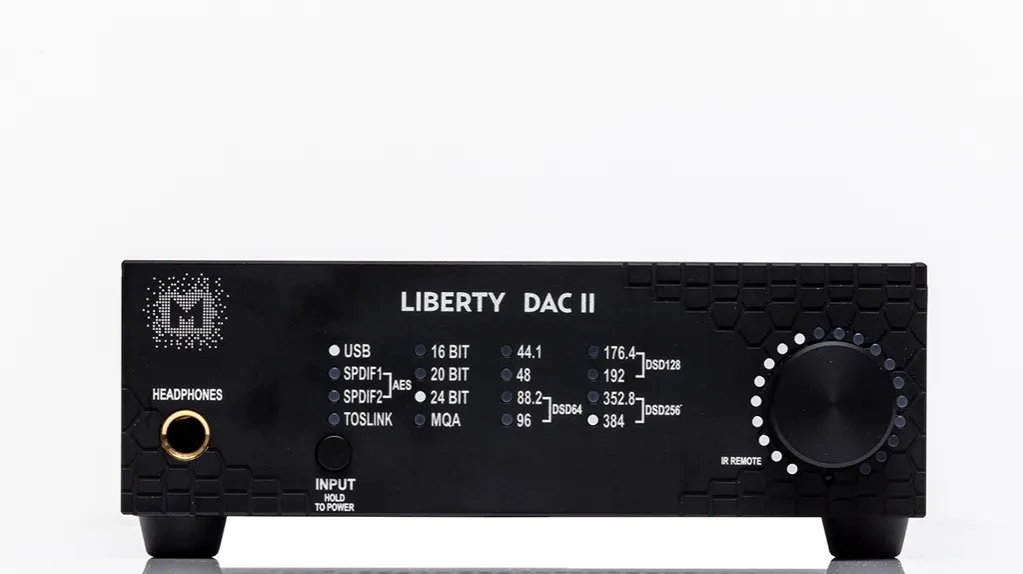
Mytek's Liberty DAC is a small desk-sized converter that combines conversion, a built-in MQA decoder and a headphone stage in a single low-profile box. It was later followed by the Liberty DAC II, which kept the same basic concept. The unit is aimed at users who want to connect computers, transports and optical sources to a single converter without taking up much space on a desk or rack shelf.
Key specs that matter
Conversion covers PCM up to 384 kHz at 32 bit, native DSD up to DSD256 and DXD. Mytek quotes 127 dB of dynamic range. MQA files are unfolded by a certified decoder implemented in hardware inside the unit. Digital inputs include USB2 Class 2, which works without drivers on OSX and Linux and accepts all formats, one AES/EBU and two S/PDIF inputs that each take PCM up to 192 kHz and DSD64 via DoP, plus a Toslink input that also accepts ADAT. Analogue outputs are one pair of unbalanced RCA and one pair of balanced TRS jacks. The chassis measures 140 mm wide, 216 mm deep and 44 mm high, and weighs 1.5 kg.
Engineering and use context
The internal clock generator is specified as low noise with 10 ps of jitter. The headphone section is described by Mytek as a high current, high transient design delivering 300 mA and 3 W, with an output impedance of 0.1 ohm, and it feeds a single unbalanced headphone jack. That combination of current and low output impedance is intended for hard to drive headphones. In addition, firmware can be updated over USB through the Mytek Control Panel software, so the decoder and converter behaviour can be revised after purchase. An optional 12 VDC input accepts an external DC supply or battery. The warranty period set by Mytek is two years. Because the TRS outputs are balanced, cable runs to monitors across a studio desk or a living room are less prone to picking up hum.
Pairing
High resolution and DSD files arrive from a computer by USB, while a disc transport or a TV may use the coaxial, AES/EBU or optical inputs. The balanced TRS outputs suit active monitors or amplifiers with balanced inputs through TRS to XLR cables, and the RCA pair feeds a conventional integrated amplifier. Since the headphone amplifier sits in the same box and runs from the same volume control path, listeners who rely mainly on headphones can use the unit as a complete desktop system with no separate headphone amplifier.
Alternatives
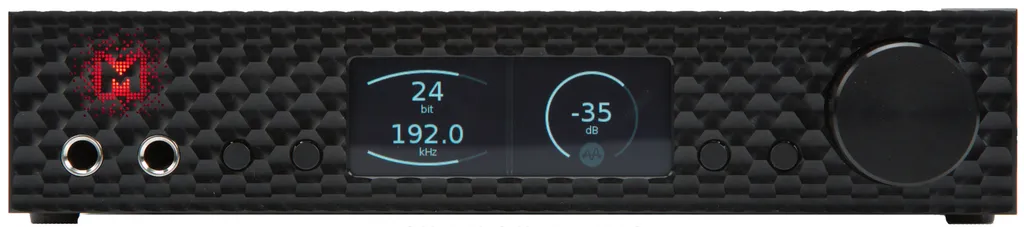
From the same maker, the later Liberty DAC II is a follow-up converter, adding PCM up to 768 kHz over USB and a balanced XLR output pair.
Key specs that matter
Conversion covers PCM up to 384 kHz at 32 bit, native DSD up to DSD256 and DXD. Mytek quotes 127 dB of dynamic range. MQA files are unfolded by a certified decoder implemented in hardware inside the unit. Digital inputs include USB2 Class 2, which works without drivers on OSX and Linux and accepts all formats, one AES/EBU and two S/PDIF inputs that each take PCM up to 192 kHz and DSD64 via DoP, plus a Toslink input that also accepts ADAT. Analogue outputs are one pair of unbalanced RCA and one pair of balanced TRS jacks. The chassis measures 140 mm wide, 216 mm deep and 44 mm high, and weighs 1.5 kg.
Engineering and use context
The internal clock generator is specified as low noise with 10 ps of jitter. The headphone section is described by Mytek as a high current, high transient design delivering 300 mA and 3 W, with an output impedance of 0.1 ohm, and it feeds a single unbalanced headphone jack. That combination of current and low output impedance is intended for hard to drive headphones. In addition, firmware can be updated over USB through the Mytek Control Panel software, so the decoder and converter behaviour can be revised after purchase. An optional 12 VDC input accepts an external DC supply or battery. The warranty period set by Mytek is two years. Because the TRS outputs are balanced, cable runs to monitors across a studio desk or a living room are less prone to picking up hum.
Pairing
High resolution and DSD files arrive from a computer by USB, while a disc transport or a TV may use the coaxial, AES/EBU or optical inputs. The balanced TRS outputs suit active monitors or amplifiers with balanced inputs through TRS to XLR cables, and the RCA pair feeds a conventional integrated amplifier. Since the headphone amplifier sits in the same box and runs from the same volume control path, listeners who rely mainly on headphones can use the unit as a complete desktop system with no separate headphone amplifier.
Alternatives
From the same maker, the later Liberty DAC II is a follow-up converter, adding PCM up to 768 kHz over USB and a balanced XLR output pair.
Характеристики
Название модели
Liberty DAC
Тип преобразования
N/A
Чип преобразования
N/A
Совместимость с DSD
Да
Параметры
up to 32 bit / 384 kHz and DSD256
Нижняя граница частотного диапазона +/- 3дБ (Hz)
N/A
Верхняя граница частотного диапазона +/- 3дБ (Hz)
N/A
Усиление (dBu)
N/A
Уровень выхода (балансный) (V)
N/A
Уровень выхода (небалансный) (V)
N/A
Входное сопротивление (балансное) (Ω)
N/A
Входное сопротивление (небалансное) (Ω)
N/A
Выходное сопротивление (балансное) (Ω)
N/A
Выходное сопротивление (небалансное) (Ω)
N/A
Аналоговые выходы
N/A
Отношение сигнал/шум (dB)
N/A
Коэффициент гармонических искажений + шум (% at 22 kHz)
N/A
Габариты (mm)
140 x 216 x 44
Вес (kg)
1.5
Официальная ссылка