
Все

Напольная акустика — Castle Knight 3
Описание, изображения, технические характеристики и спецификации
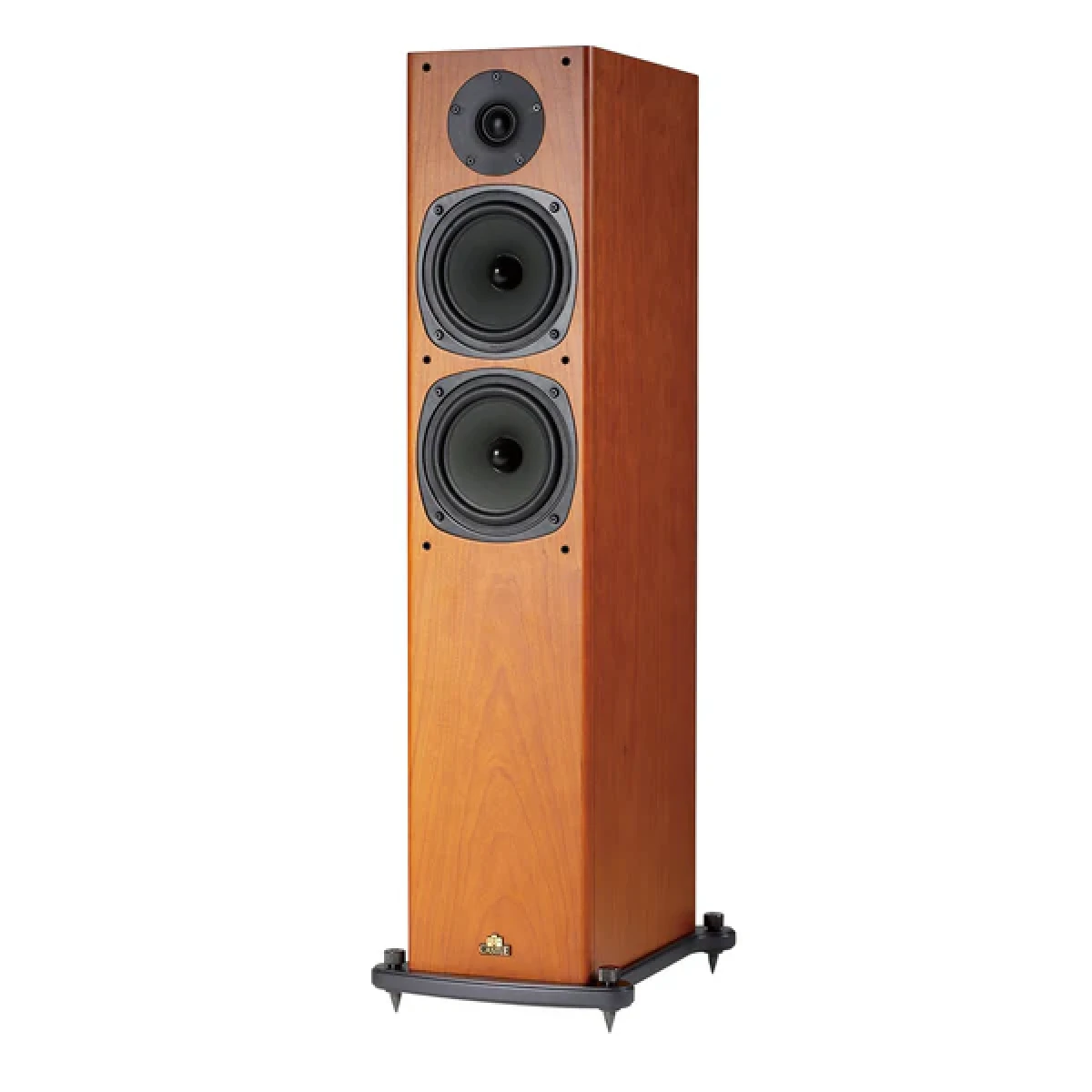
Castle Knight 3
Источник изображения — © Castle
The Knight 3 is a two-way floorstanding loudspeaker made by the British company Castle as part of its Knight Series, one of three towers in that range. Castle presents Knight as a five-strong family that pairs real-wood veneers with its own cabinet technology, and the owner manual describes the series as the new entry level of the Castle catalogue, with hand built veneered cabinets combined with value-engineered parts and simpler construction.
Key specs that matter
A single 130mm bass driver is joined by a 25mm tweeter, crossing over at 3 kHz. The quoted frequency range is 38Hz to 24kHz, sensitivity is 88 dB at 1W and 1m, and nominal impedance is 8 ohms. Castle recommends amplifiers of 15 to 100W. The cabinet measures 760mm high, 165mm wide and 265mm deep, rising to 820mm once the plinth and spikes are fitted, and each speaker weighs 10.7 kg. Three veneers are listed for this model - Cherry, Mahogany and Black Oak - taken from deep figured stock under a semi matt clear lacquer.
Engineering and use context
Castle lists the operating mode as Quarter Wave. Rather than a reflex port, the Knight 3 uses Castle's quarter wavelength loading, which the manual calls a special form of transmission line. Castle states that it gives smooth low frequency extension without the upper bass hot zones it associates with many reflex loaded boxes. The line ends in an opening beneath the cabinet, and its output adds to that of the main driver. For this reason the plinth is treated as an integral part of the design and the speaker is not meant to be used without it. Spacers raise the base of the cabinet above the plinth by a precisely calculated gap, and that gap forms the exit path of the line, so Castle warns that leaving out or substituting the spacers would seriously impair the low bass. The spike kit uses locknuts and knobs on each spike, and spike seats are supplied for wood or stone floors.
Pairing
Connection is through a bi-wireable panel with four screw posts, bridged by removable straps for normal single cable use. With the straps removed, the tweeter and the bass unit can each receive their own twin core run from the amplifier, an arrangement Castle credits with lower intermodulation and more headroom. Stripped cable or spade connectors both fit the terminals. Castle groups the series around a short list of traditional priorities, with real wood veneer, driver choice and innovative bass control named among them.
Alternatives
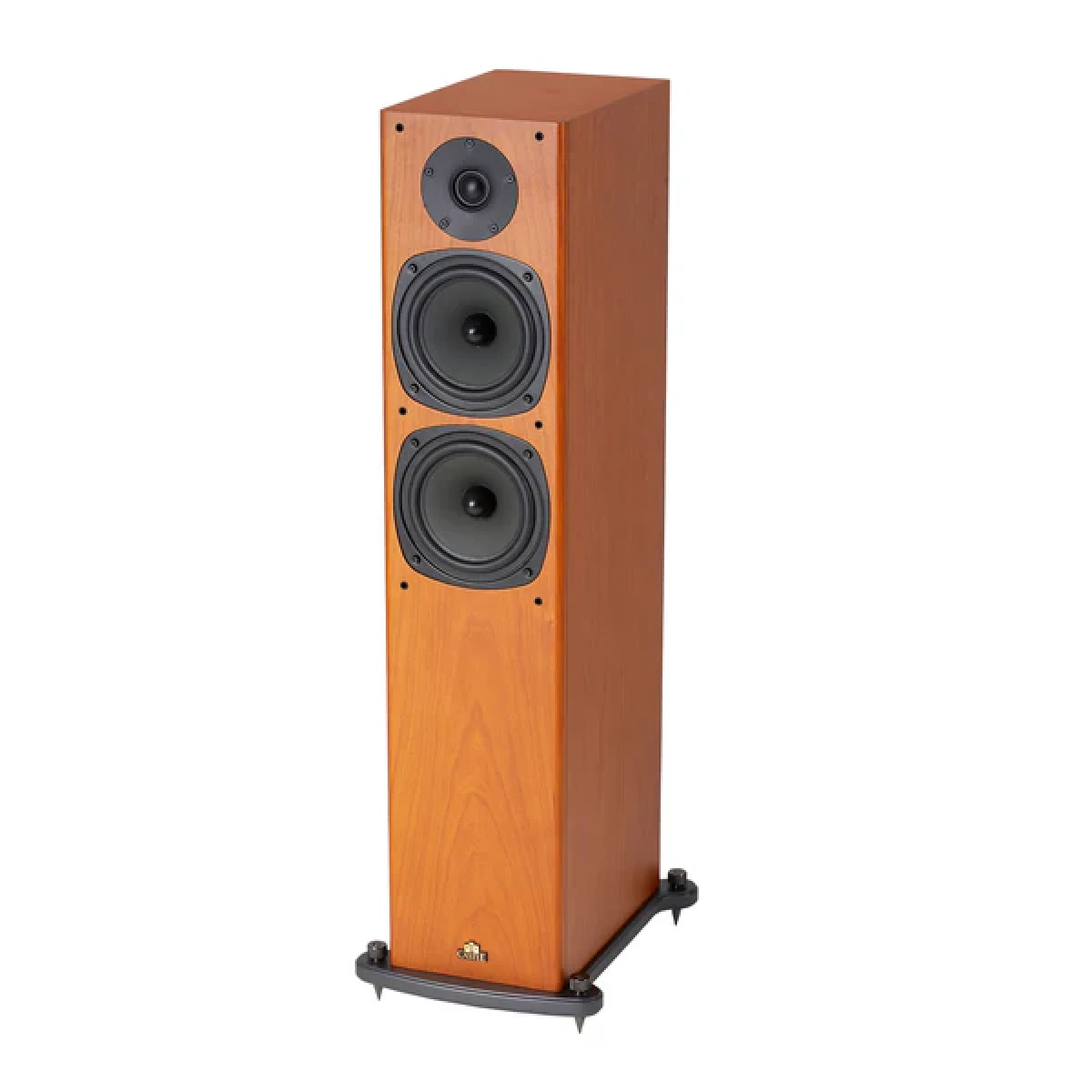
The Castle Knight 4 steps up within the Knight towers with two 130mm bass drivers and a 25mm tweeter in an 840mm tall cabinet.
Key specs that matter
A single 130mm bass driver is joined by a 25mm tweeter, crossing over at 3 kHz. The quoted frequency range is 38Hz to 24kHz, sensitivity is 88 dB at 1W and 1m, and nominal impedance is 8 ohms. Castle recommends amplifiers of 15 to 100W. The cabinet measures 760mm high, 165mm wide and 265mm deep, rising to 820mm once the plinth and spikes are fitted, and each speaker weighs 10.7 kg. Three veneers are listed for this model - Cherry, Mahogany and Black Oak - taken from deep figured stock under a semi matt clear lacquer.
Engineering and use context
Castle lists the operating mode as Quarter Wave. Rather than a reflex port, the Knight 3 uses Castle's quarter wavelength loading, which the manual calls a special form of transmission line. Castle states that it gives smooth low frequency extension without the upper bass hot zones it associates with many reflex loaded boxes. The line ends in an opening beneath the cabinet, and its output adds to that of the main driver. For this reason the plinth is treated as an integral part of the design and the speaker is not meant to be used without it. Spacers raise the base of the cabinet above the plinth by a precisely calculated gap, and that gap forms the exit path of the line, so Castle warns that leaving out or substituting the spacers would seriously impair the low bass. The spike kit uses locknuts and knobs on each spike, and spike seats are supplied for wood or stone floors.
Pairing
Connection is through a bi-wireable panel with four screw posts, bridged by removable straps for normal single cable use. With the straps removed, the tweeter and the bass unit can each receive their own twin core run from the amplifier, an arrangement Castle credits with lower intermodulation and more headroom. Stripped cable or spade connectors both fit the terminals. Castle groups the series around a short list of traditional priorities, with real wood veneer, driver choice and innovative bass control named among them.
Alternatives
The Castle Knight 4 steps up within the Knight towers with two 130mm bass drivers and a 25mm tweeter in an 840mm tall cabinet.
Характеристики
Название модели
Knight 3
Нижняя граница частотного диапазона +/- 3дБ (Hz)
38
Верхняя граница частотного диапазона +/- 3дБ (Hz)
24 000
Чувствительность (dB at 1 W/1m)
88
Импеданс (Ohms)
8
Требования к усилителю мощности (W)
15 - 100
Наличие встроенного усилителя
Н/д
Мощность встроенного усилителя (W)
N/A
Размер (sm)
76.0 x 16.5 x 26.5
Вес (kg)
10.7
Официальная ссылка
Другие компоненты
Напольная акустика
Castle Knight 5
Напольная акустика
Castle Knight 4
Напольная акустика
Castle Avon 5

Напольная акустика
Castle Avon 4