

Усилители мощности стерео — Boulder 2160
Описание, изображения, технические характеристики и спецификации
Boulder 2160
Источник изображения — © Boulder
Key specs that matter
Output is 600 W continuous into 8, 4 or 2 ohms, with peaks of 1200 W into 4 ohms and 2400 W into 2 ohms. Measured at 600 W, THD into 8 ohms is 0.0008% from 20 Hz to 2 kHz and 0.0040% at 20 kHz, into 4 ohms 0.0012% and 0.0065%, and into 2 ohms 0.0018% and 0.0100%. The -3 dB points are 0.015 Hz and 200 kHz, with the 20 Hz to 20 kHz magnitude response held within +0.00 and -0.04 dB. Voltage gain is 26 dB, and input-referred noise over a 20 kHz bandwidth is 1.5 uV. Balanced input impedance is 200 kohm, falling to 100 kohm unbalanced, and common mode rejection is 90 dB at 60 Hz and 70 dB at 10 kHz. Nominal consumption is 250 W, and the maximum draw is 5000 W.
Engineering and use context
The 2160 is a dual-mono design with isolated, physically symmetrical channels. Its Class A bias runs to full rated output, with analog control lifting the bias quicker than the signal on each peak and then lowering it over 28 seconds, limiting heat and consumption. A dual-stage layout puts most of the gain in the first stage for wider bandwidth and lower distortion, using four discrete 99H2 gain stages potted in machined shells for thermal stability. Signal paths are differentially balanced from inputs to outputs. Power supplies are linear throughout, and a brute section with two toroidal transformers, one per channel, feeds the audio circuits, while a separate regulated supply serves the microprocessor. Mains enters through a detachable 32 A IEC connector, since peaks near 30 A are possible into low impedance loads, and versions for 100, 120 and 240 VAC keep full rated output. The billet chassis is milled on in-house CNC machines, and surface-mount boards cut connection resistance and lead inductance.
Pairing
Inputs are 3-pin balanced XLR, and each channel has two sets of 6 mm wingscrews for bi-wired loudspeakers. Boulder Link integrates the amplifier with a preamplifier such as the 2110, and a 12 V trigger allows remote activation.
Alternatives
In the Boulder 3000 Series, the 3060 fills the stereo power amplifier role.
Характеристики
Название модели
2160
Чувствительность входа (mV)
N/A
Входное сопротивление (балансное) (Ω)
200 000
Входное сопротивление (небалансное) (Ω)
100 000
Выходное сопротивление (балансное) (Ω)
N/A
Выходное сопротивление (небалансное) (Ω)
N/A
Максимальный ток (A)
N/A
Выходная мощность (8Ω) (W)
600
Выходная мощность (4Ω) (W)
1200
Усиление (dBu)
26
Нижняя граница частотного диапазона +/- 3дБ (Hz)
0.015
Верхняя граница частотного диапазона +/- 3дБ (Hz)
200 000
Отношение сигнал/шум (dB)
N/A
Коэффициент гармонических искажений + шум (0% обратной связи) (%)
N/A
Коэффициент гармонических искажений + шум (100% обратной связи) (%)
20-2 kHz: 0.0008%, 20 kHz: 0.0040% (8 Ohms)
Максимальное энергопотребление (W)
N/A
Коэффициент демпфирования
N/A
Габариты (mm)
342.5 x 180.0 x 107.5
Вес (kg)
99.8
Официальная ссылка
Другие компоненты
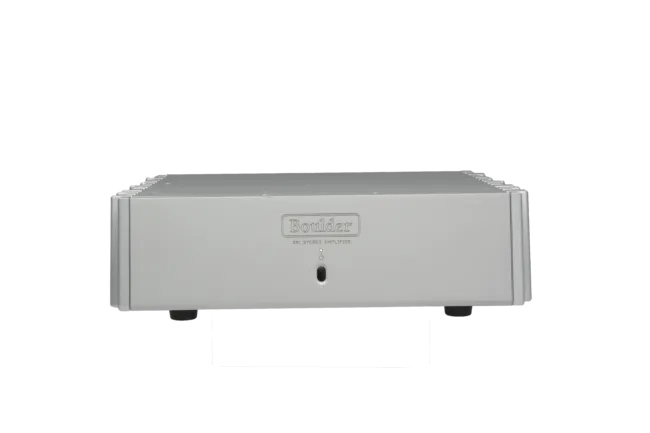
Усилители мощности стерео
Boulder 861
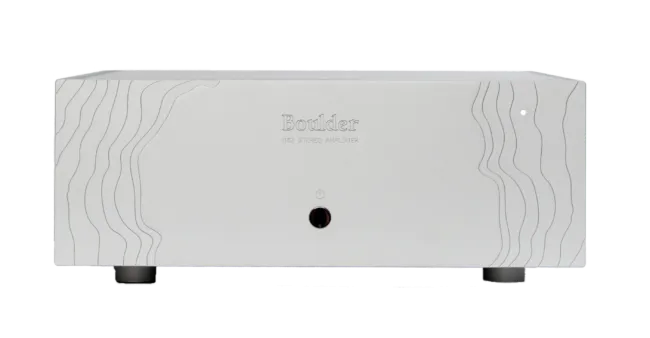
Усилители мощности стерео
Boulder 1163
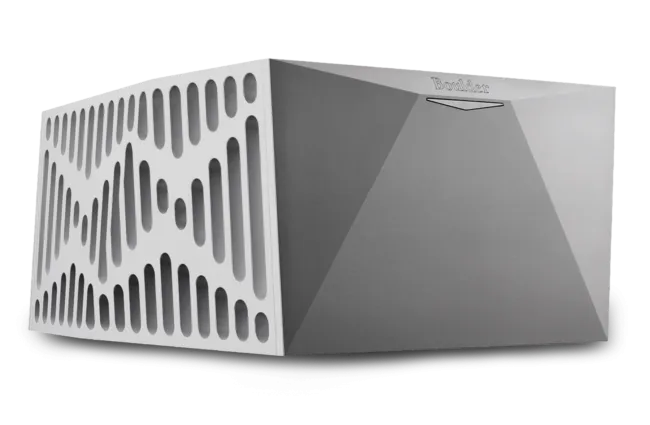
Усилители мощности стерео
Boulder 3060

Усилители мощности стерео
Boulder 1162